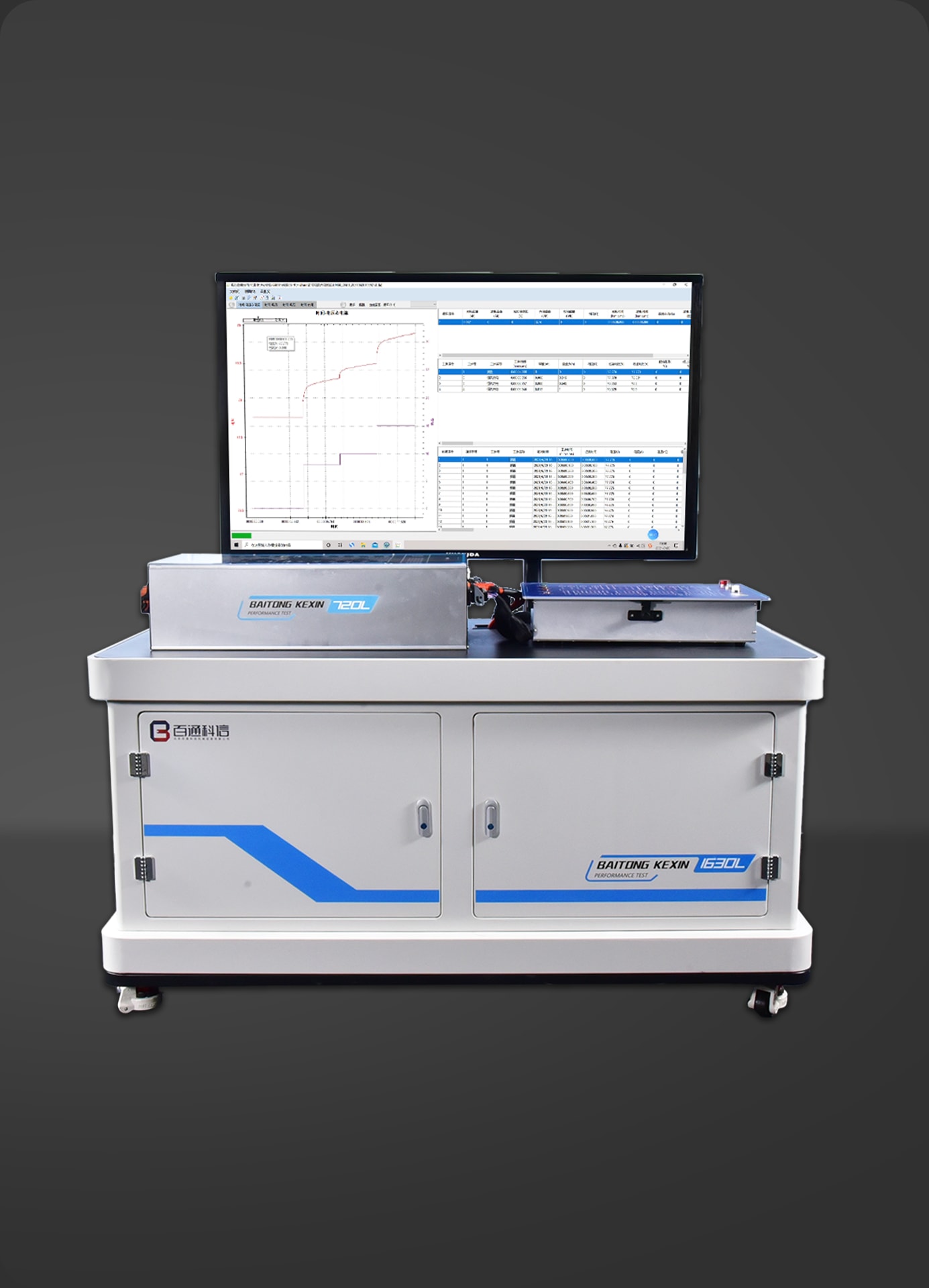
The platform brings controlled battery performance testing into the teaching laboratory. Students configure a test mode, connect a compatible pack, run charge-discharge work and interpret capacity, internal resistance and characteristic data through the host software.
Battery Performance Testing
Battery Performance Test & Analysis Platform
A 12 kW charge-discharge test system for teaching capacity measurement, DC internal resistance testing, test-profile control and quantitative battery quality evaluation.
- System Power
- 12 kW
- Test Range
- 0–100 V / 0–±100 A
- Accuracy
- 0.05%FS+0.05%RD
- Energy Recovery
- ≥90%
Product Brief
Move From Battery Operation to Defensible Test Data.
Its 0–100 V and 0–±100 A operating range, 0.05%FS+0.05%RD measurement and control accuracy, sampling at ≤10 ms and ≥90% energy recovery support repeatable quantitative exercises rather than demonstration-only observation.
Key Training Functions
Four Measurements, One Evaluation Path.
The workflow moves from controlled test setup to capacity, internal resistance and curve-based evaluation, with each result recorded as technical evidence.
- 01
Charge-Discharge Control
Mode-specific test profiles support controlled charging and discharging within the confirmed voltage and current limits.
- 02
Capacity Testing
Recorded test data supports quantitative battery capacity measurement and comparison across exercises.
- 03
DC Internal Resistance Testing
Students can carry out internal resistance tests and relate the result to battery performance and condition.
- 04
High-Speed Data Sampling
Sampling at ≤10 ms captures changes during the test process and supports curve-based analysis.
- 05
Energy Recovery
During discharge, the system returns ≥90% of the energy to the grid side instead of dissipating it as heat.
- 06
Battery Quality Evaluation
Capacity, resistance and charge-discharge evidence can be assessed against the test criteria used in the teaching task.
Training Tasks
From Test Setup to Evaluation.
The exact task sequence is confirmed with the course plan and final platform configuration.
- 01
Review the battery pack rating, test objective and connection requirements
- 02
Confirm site power, system status and pre-test safety conditions
- 03
Set voltage, current, time and stop conditions for a test profile
- 04
Run mode-specific charge and discharge tests under instructor control
- 05
Complete a capacity test and review the recorded result
- 06
Carry out a DC internal resistance test
- 07
Read voltage, current and time curves in the host software
- 08
Compare test evidence with the defined evaluation criteria
- 09
Document the setup, results, conclusions and any abnormal observations
System Composition
A Complete Performance-Test Workstation.
Final contents are documented in the project specification after technical confirmation.
Metal Test Bench
A mobile teaching workstation that organizes the battery interface, test equipment and supporting controls.
Traction Battery Interface
Connection provisions for compatible teaching packs within the confirmed 0–100 V and 0–±100 A test range.
Charge-Discharge Test Equipment
The 12 kW measurement and control system executes the configured test profile and records operating data.
Test-System Software
Host software supports parameter setup, process monitoring, curve review and result analysis.
Manual Fault Box
A supervised teaching interface supports selected fault-based exercises according to the supplied configuration.
Teaching Display
A 55-inch touchscreen terminal provides a clear interface for software demonstration and group instruction.
Technical Specifications
The Numbers That Define the Test Envelope.
These verified values define the platform’s core operating range and measurement performance. Pack compatibility and destination-site conditions are confirmed before order.
- Overall Dimensions
- 1,630 × 780 × 1,730 mm
- System Power
- 12 kW
- Power Supply
- 380 V AC ±15%, three-phase five-wire, 50 Hz ±5 Hz
- Charge-Discharge Voltage
- 0–100 V
- Charge-Discharge Current
- 0–±100 A
- Measurement and Control Accuracy
- 0.05%FS+0.05%RD
- Voltage and Current Resolution
- ≤0.05% FSR
- Voltage Ripple
- ≤0.5% FSR
- Sampling Rate
- ≤10 ms
- Minimum Step Time
- ≤100 ms
- Energy Recovery Efficiency
- ≥90%
- Teaching Display
- 55-inch touchscreen; Windows; Intel Core i5; 8 GB RAM + 512 GB storage
Teaching Resources Included
Prepare the Instructor and the Equipment Together.
Resource depth, language and assessment format are aligned during project planning.
System Operation Guide
Preparation, parameter setup, operating sequence, shutdown and routine inspection guidance.
Test Worksheets
Structured exercises for charge-discharge control, capacity testing and DC internal resistance testing.
Result Records
Templates for documenting setup values, curves, measured results, evaluation criteria and conclusions.
Software Guidance
Instructor support for test-profile configuration, process monitoring and result review in the host software.
Safety and Quality Design
Safe Testing Starts Before the First Cycle.
Site Power Confirmation
The laboratory must provide a compatible 380 V three-phase supply with adequate 12 kW capacity before installation.
Controlled Pack Connection
Battery compatibility, connector arrangement, polarity and operating limits are confirmed before a pack is connected.
Pre-Test Verification
Students verify the test profile, stop conditions, system status and supervised work area before a test starts.
Production Acceptance
The configured system is inspected and functionally tested before shipment and checked again during commissioning.
Typical Lab Applications
Where the Platform Fits.
- 01Higher Vocational College Battery Performance Labs
- 02Technician College Battery Evaluation Courses
- 03NEV Battery Testing and Maintenance Programs
- 04Applied Engineering Charge-Discharge Exercises
- 05Battery Capacity and Internal Resistance Assessment
- 06Instructor Demonstration and Student Test Reports
Technical Record
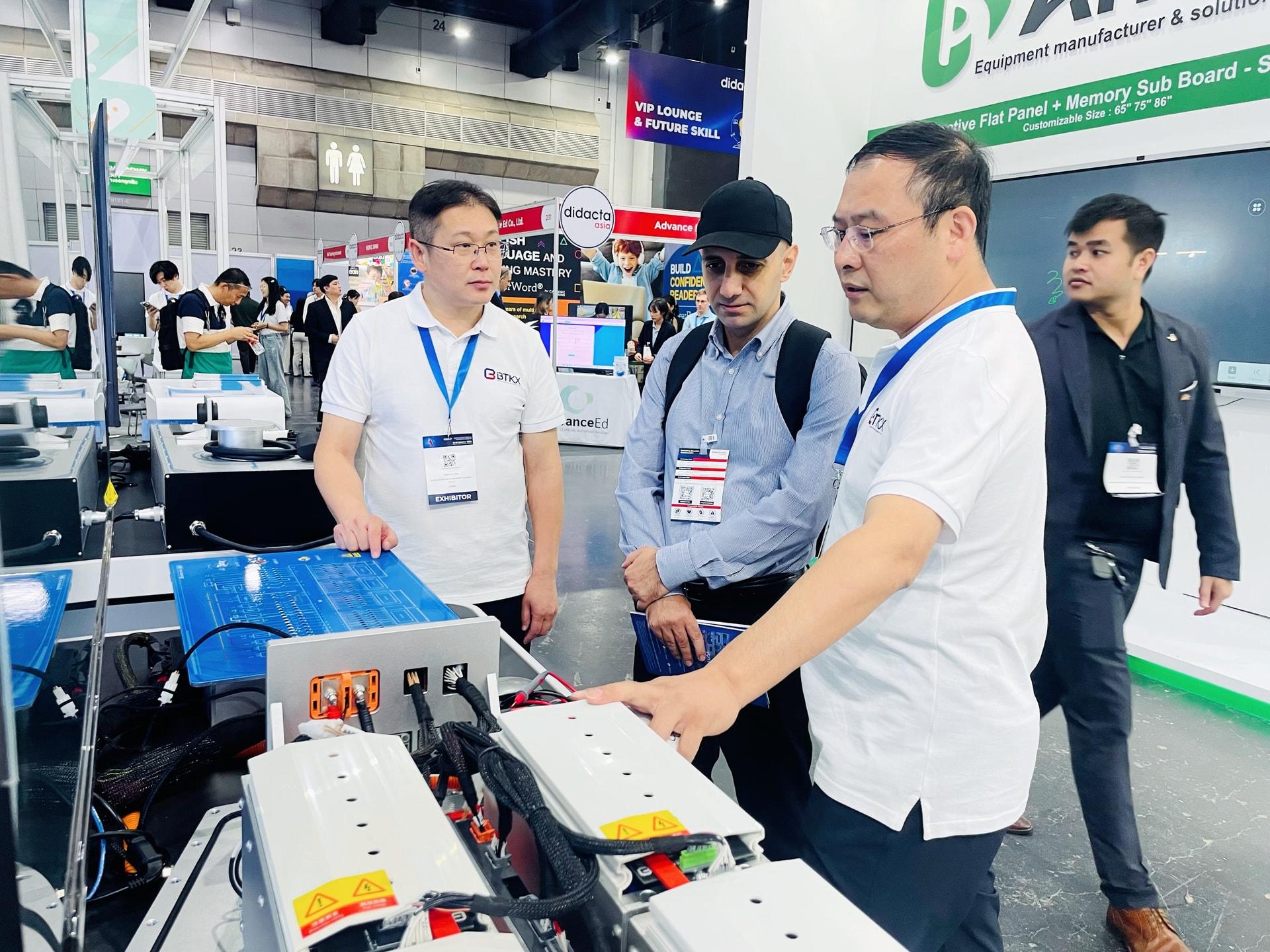
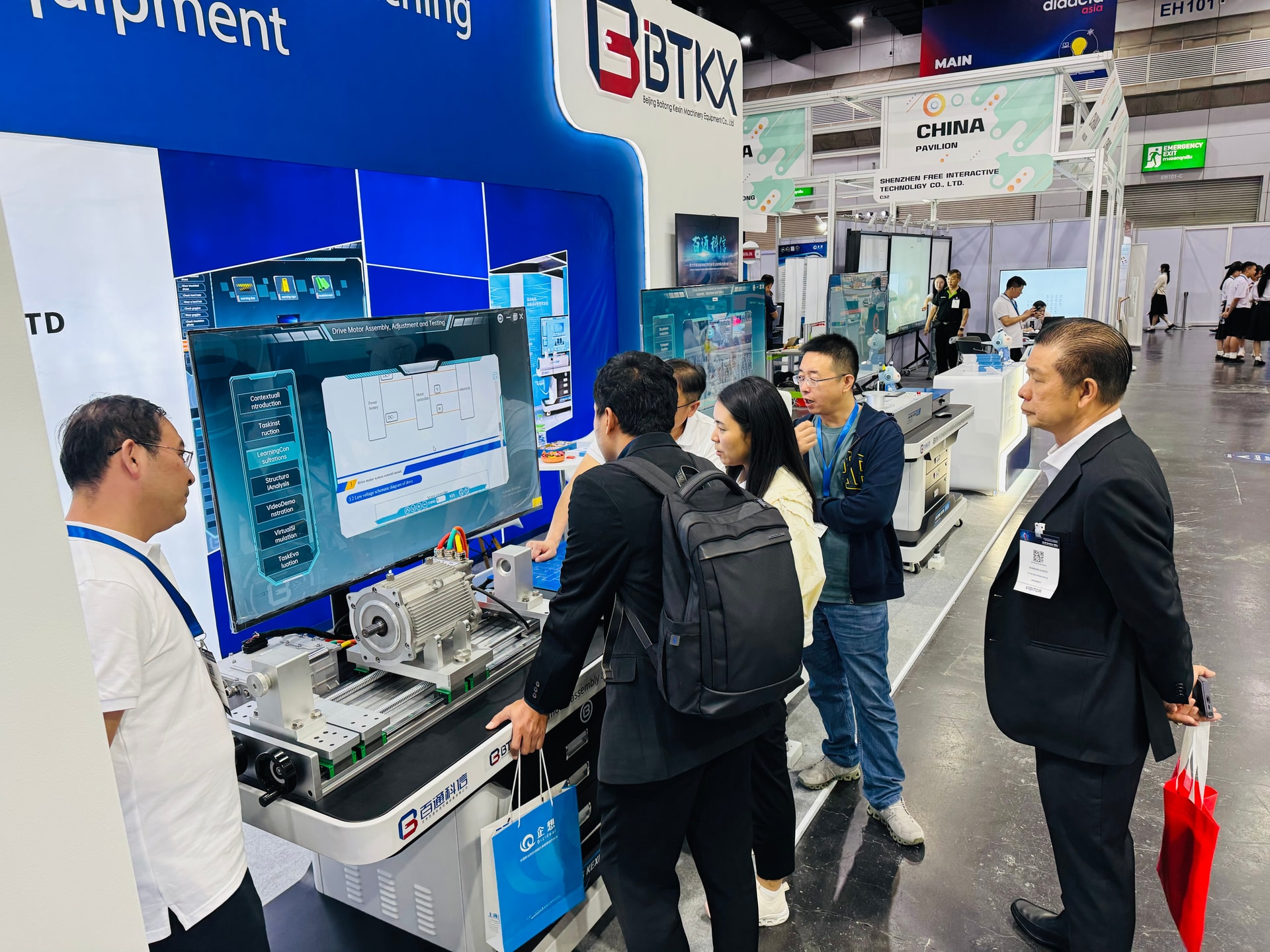
Test Systems in Technical Discussion.
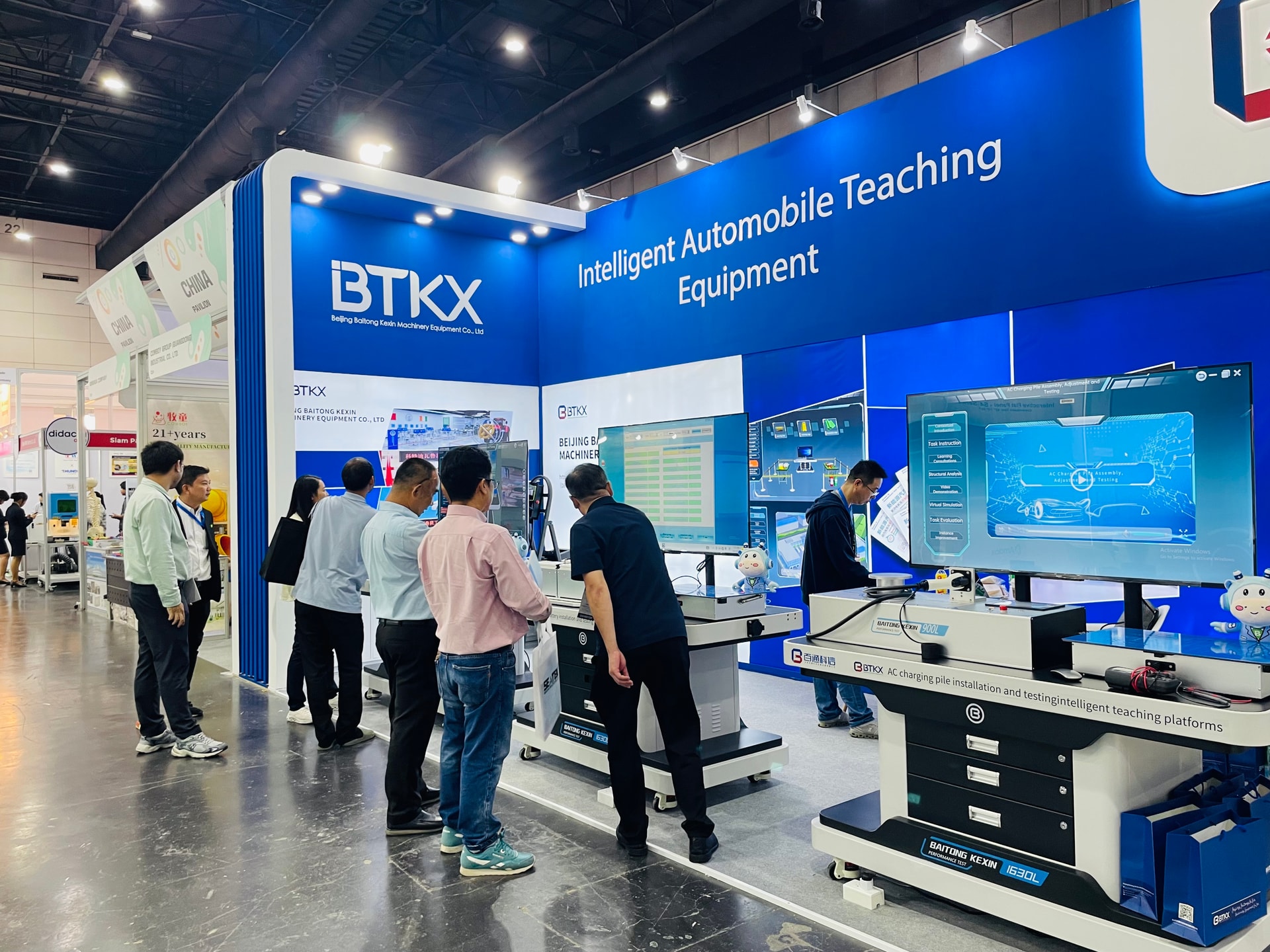
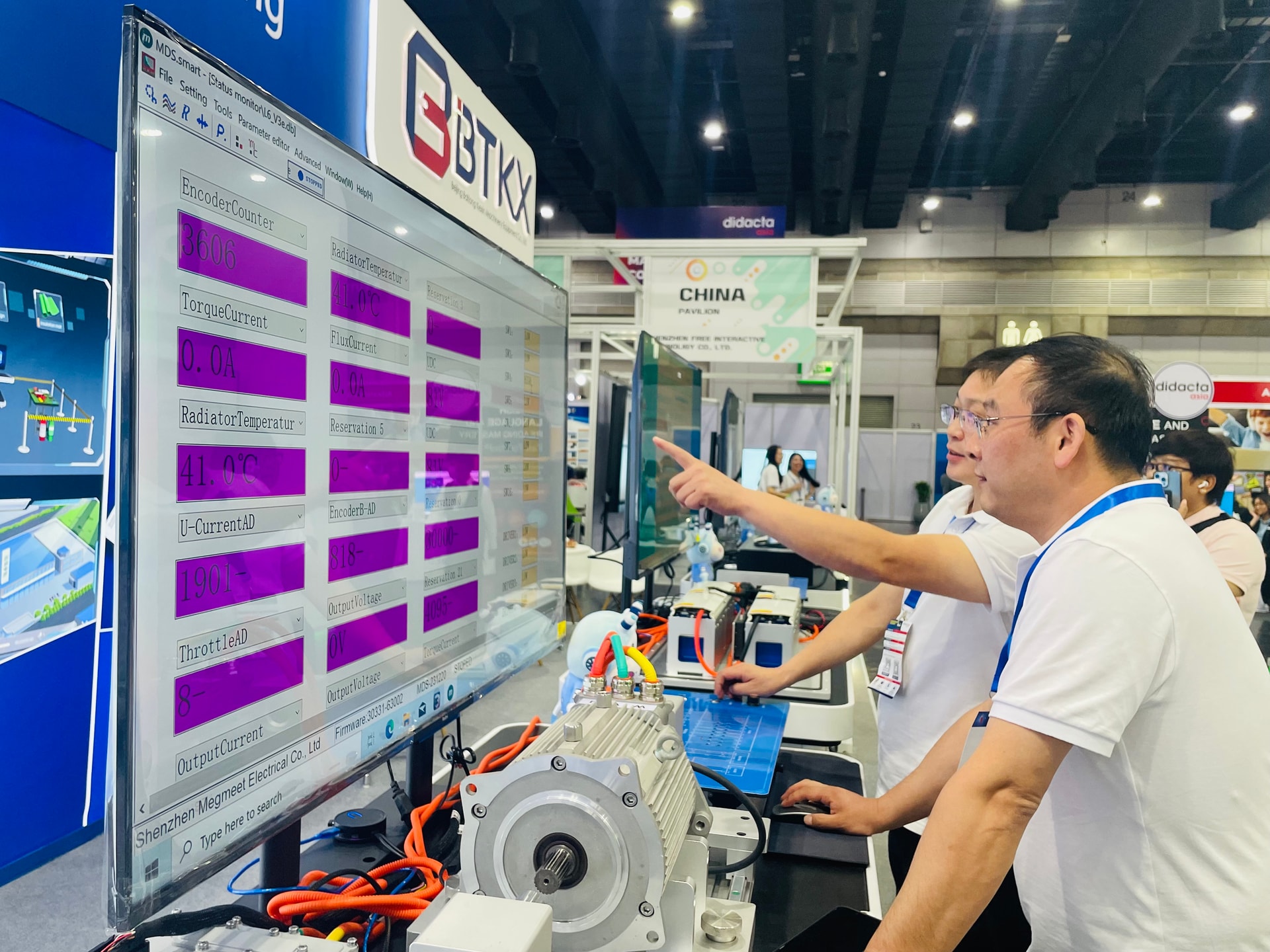
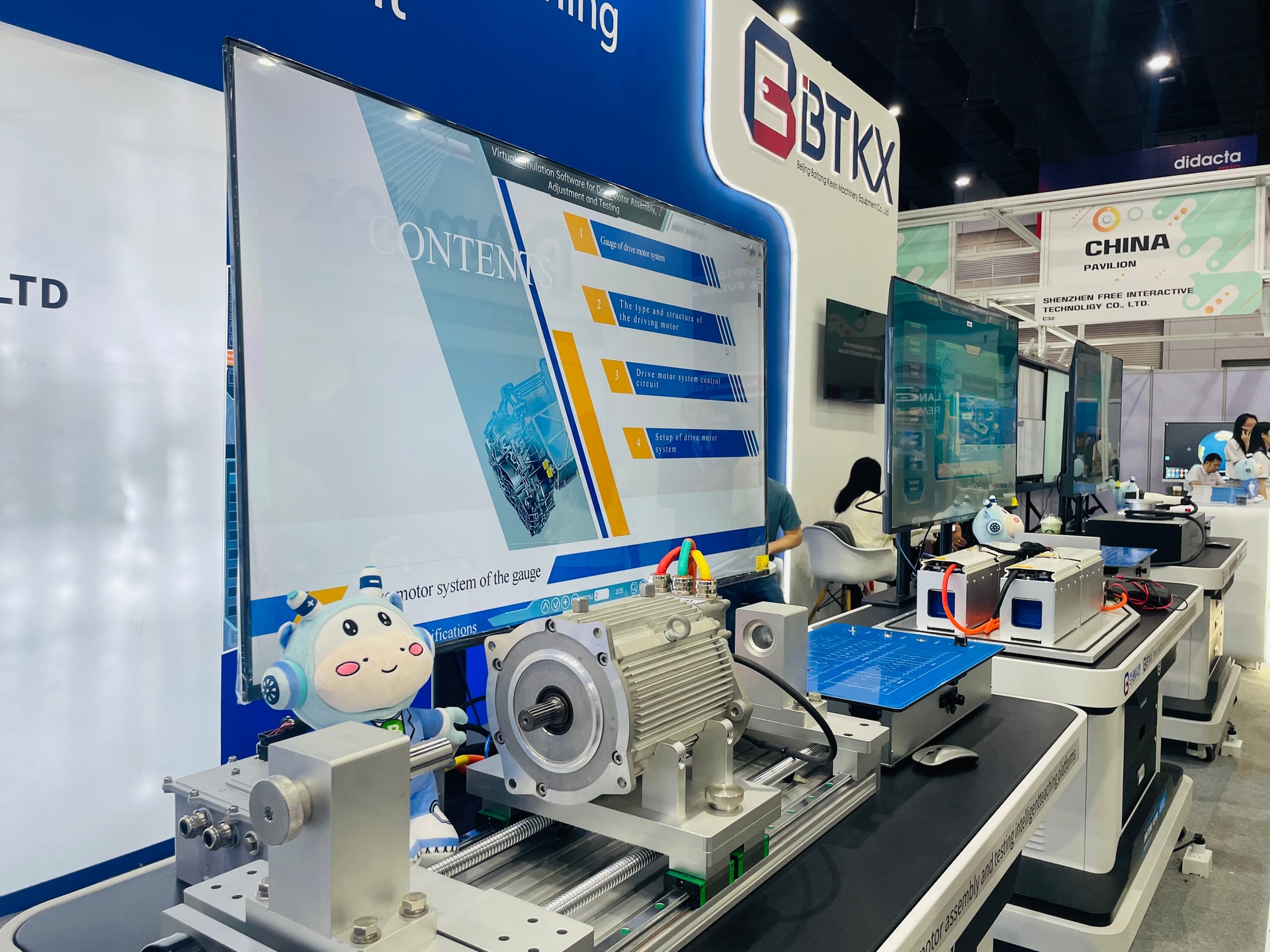
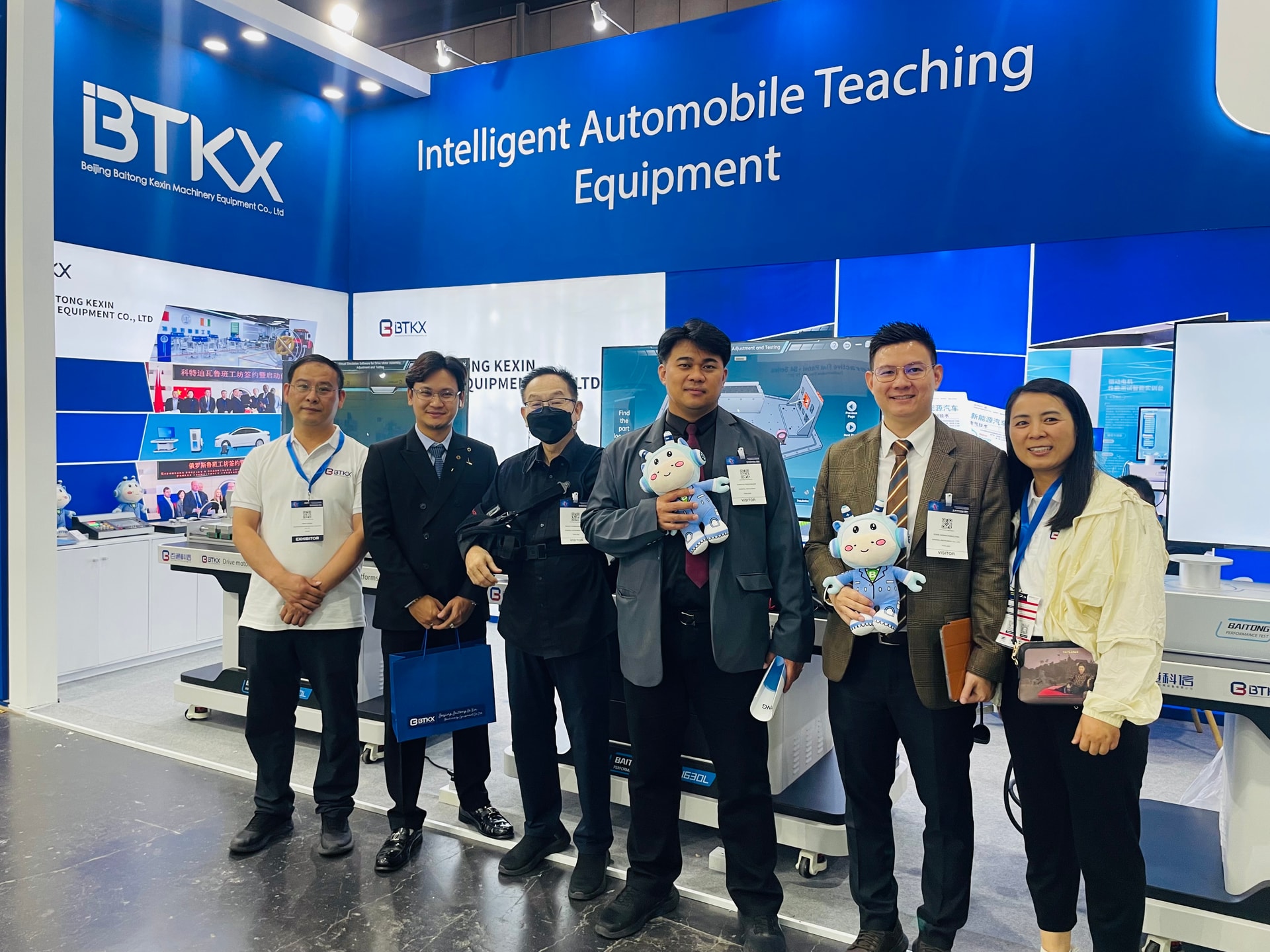
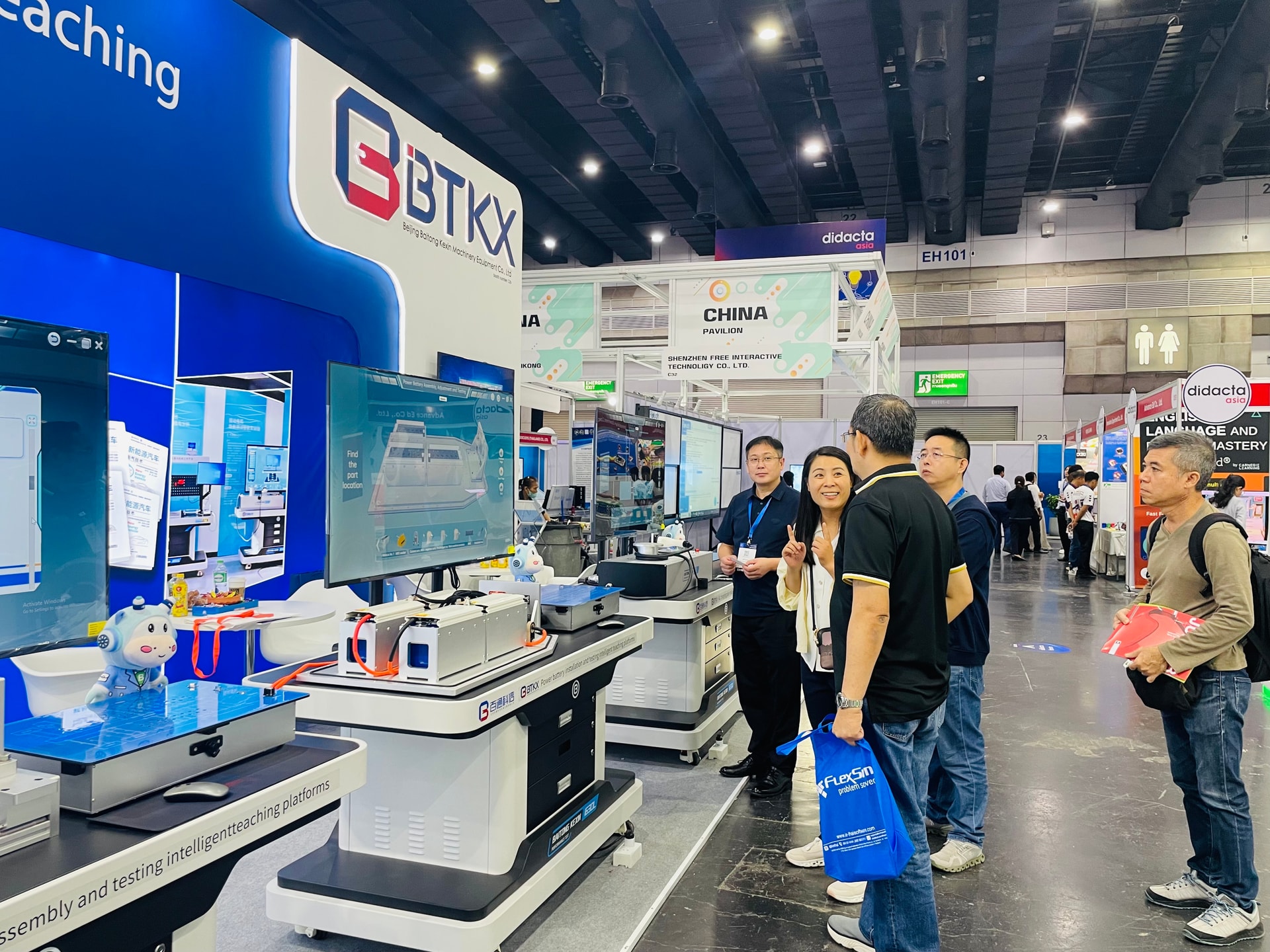
A visual record of equipment demonstration, test-system review and technical exchange with vocational education partners.
Project Delivery
Four Gates Before Handover.
The product moves through confirmation, production acceptance, site commissioning and instructor preparation.
- 01
Technical Confirmation
Confirm pack ratings, required test items, room layout, power conditions, cooling and teaching objectives.
- 02
Production and Acceptance
Configure the test system, software, interfaces and teaching terminal, then complete functional acceptance.
- 03
Installation and Commissioning
Verify site readiness, connect the system and complete controlled commissioning with the intended teaching pack.
- 04
Instructor Training
Prepare instructors to configure tests, review results, supervise student work and complete routine checks.
Buyer FAQ
Questions Before Technical Confirmation.
01What does 0.05%FS+0.05%RD mean for student data?+
Measurement and control error stays within 0.05% of full scale plus 0.05% of the reading across the 0–100 V / 0–±100 A range—accurate enough that student capacity and internal-resistance results are quantitatively meaningful, not just demonstrative. Sampling at ≤10 ms captures transient behavior during mode switching.
02How does energy recovery work?+
During discharge, ≥90% of the energy is fed back to the grid side of the system instead of being dissipated as heat. A 12 kW lab can therefore run repeated charge-discharge cycles without proportionally high power and cooling budgets.
03Which battery packs can be tested?+
Packs within 0–100 V and 0–±100 A—including the platform’s 60 V LFP teaching pack and similar vocational-teaching packs. Support for third-party packs and the fixture list are confirmed per order.
04What are the installation requirements?+
A 380 V three-phase supply with 12 kW capacity. Footprint, load-bearing and cooling requirements are provided with the quotation, and BTKX confirms site readiness against the room drawing before shipment.
Plan Your Project
Start With Your Courses, Available Space and Training Goals.
BTKX can prepare a project-specific equipment and laboratory proposal after reviewing the teaching requirement.