
Sep 2, 2026
From Course Goals to an NEV Training Lab Equipment List
A practical framework for turning curriculum goals, student numbers and available space into a workable NEV training laboratory plan.

On This Page
An effective NEV training laboratory begins with the work students must be able to perform. Equipment selection comes later. Starting with a catalog often produces an impressive room, but it does not guarantee a coherent teaching sequence or enough practical access for the class.
The planning process should connect four things: curriculum outcomes, practical tasks, class organization and the physical constraints of the facility.
Define the Training Outcomes First
List the competencies that the program is expected to develop. A foundational course may focus on high-voltage safety, component recognition and protected measurement. An advanced program may add battery assembly, motor testing, charging-system commissioning, fault diagnosis and performance analysis.
Convert each competency into an observable student task. “Understand the battery system” is too broad. “Identify pack components, complete an isolation check and interpret BMS measurements” gives the equipment planner something specific to work with.
Plan Around Student Access
The number of benches should reflect how students rotate through practical work. One demonstration platform can support instructor explanation, but it cannot replace student practice. Define the expected group size, the duration of each session and whether different groups will work simultaneously on physical equipment, simulation and documentation tasks.
A rotation plan often provides a better result than duplicating every item. Physical equipment can be combined with component stations, digital practice and assessment tasks when those resources are aligned to the same learning objective.
Match Equipment to a Teaching Sequence
A well-structured laboratory normally moves from recognition to operation, measurement, diagnosis and assessment. The equipment list should make that progression visible. It should also distinguish between essential systems, shared advanced platforms and optional expansion items.
For each proposed item, record:
- the course and task it supports;
- the number of students who can use it at one time;
- required utilities, safety zoning and instructor supervision;
- the measurement tools and supporting resources required;
- its relationship to other equipment in the room.
Confirm the Facility Before Finalizing the List
Room dimensions alone are not enough. Access routes, power, ventilation, floor loading, storage, sightlines and safe working clearances can all change the final configuration. A preliminary layout helps identify these constraints before procurement.
BTKX can use the course list, student headcount, available space and training goals to prepare a matched equipment schedule and laboratory proposal. The result should be a teachable system—not simply a collection of products.

About the Author
BTKX Technical Team
The BTKX Technical Team combines automotive and NEV engineering knowledge with practical experience in vocational laboratory planning, equipment delivery and instructor support.
Continue Reading
Related Articles
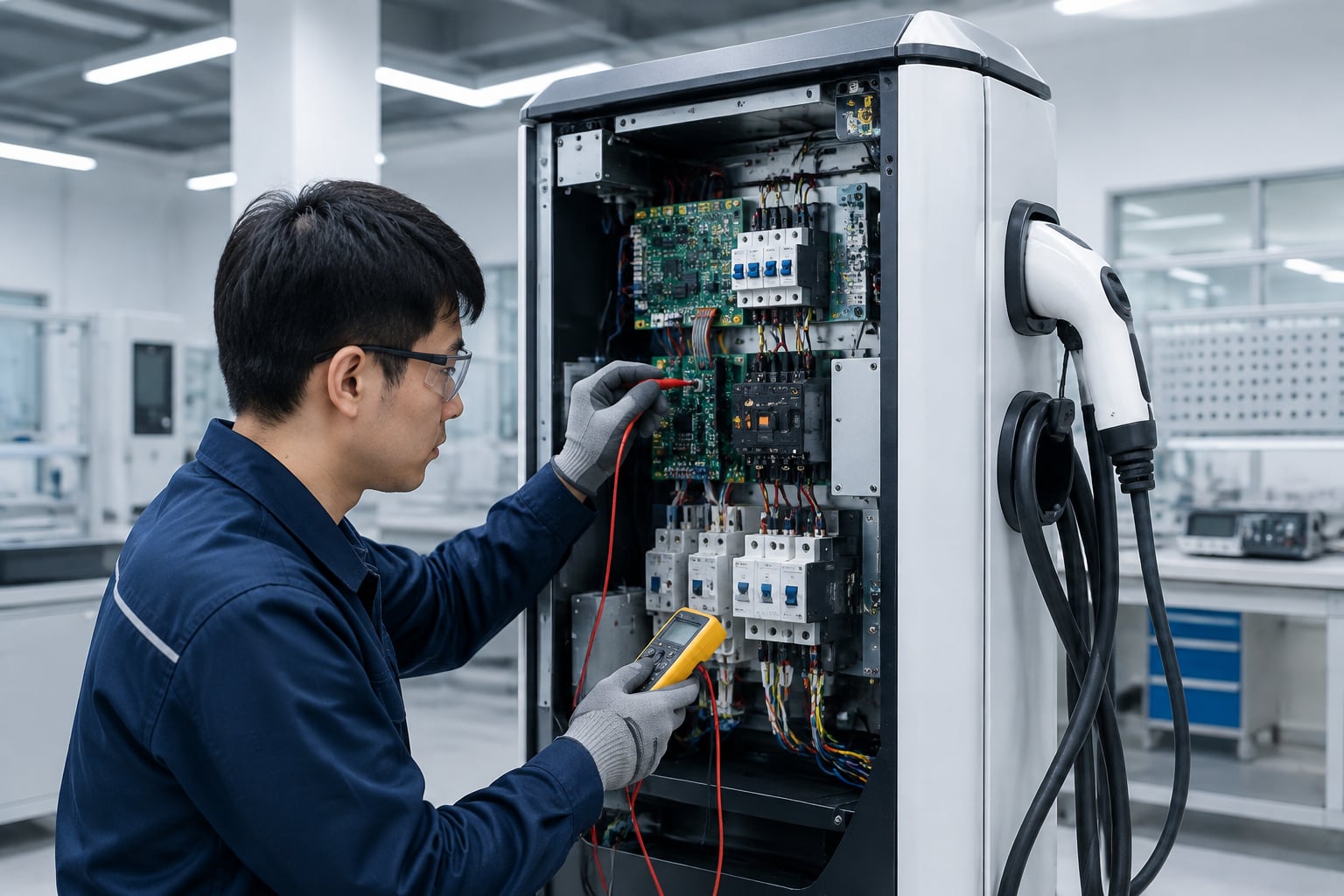 Aug 26, 2026
How to Plan an EV Charging Training Laboratory
Define the teaching tasks, equipment levels and safety requirements for an EV charging laboratory that supports assembly, commissioning and diagnosis.
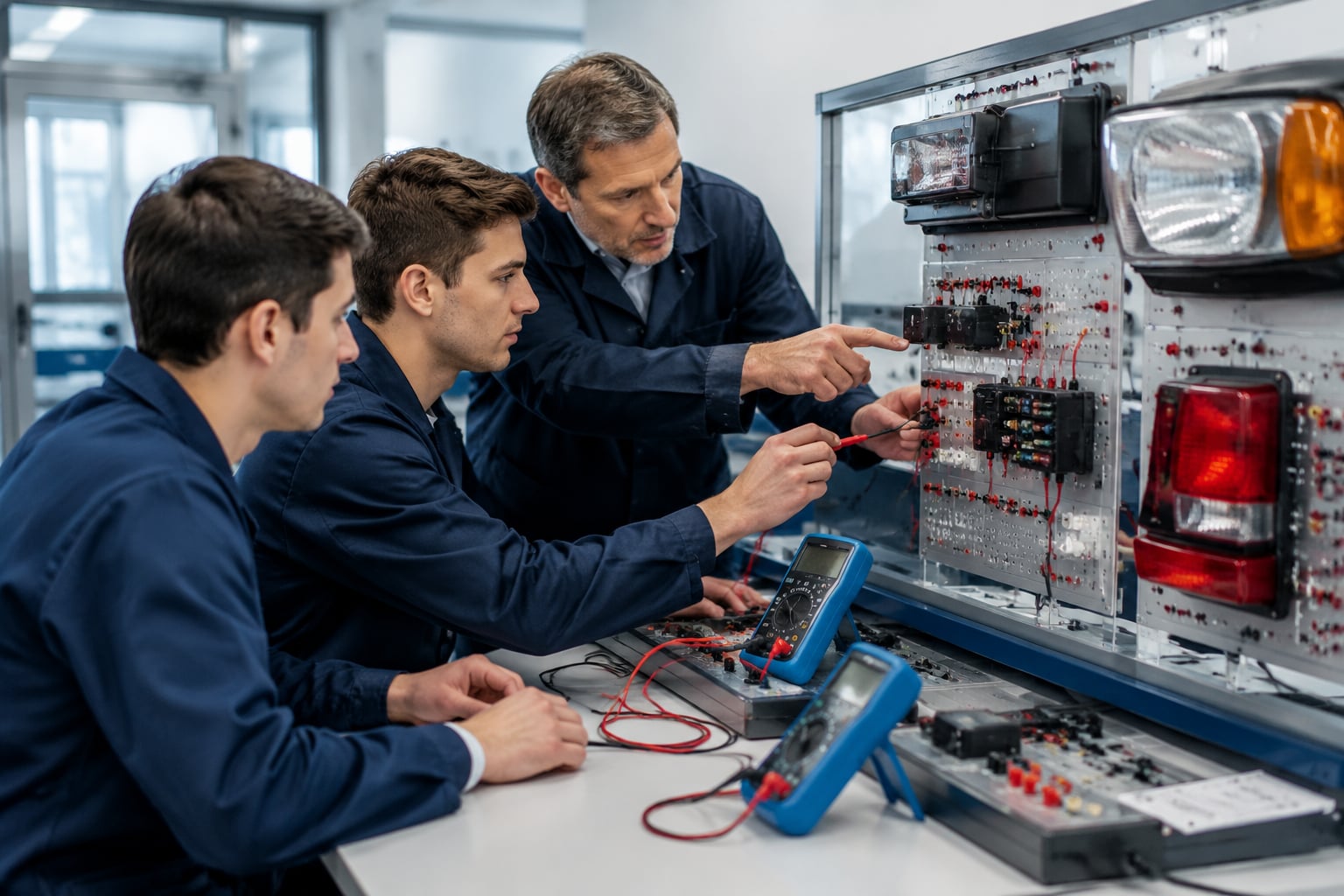 Aug 19, 2026
Automotive Electrical Training: From Circuit Recognition to Diagnosis
Structure automotive electrical practical teaching so students progress from protected circuit building to measurement, fault tracing and verification.
 Aug 12, 2026
Physical and Virtual Training: Building Repeatable NEV Practice
Use physical equipment and virtual simulation as one training sequence instead of treating digital resources as a separate classroom activity.
 Aug 5, 2026
What to Check Before Procuring Automotive Training Equipment
A procurement checklist for evaluating teaching relevance, technical scope, safety, documentation and delivery support—not price alone.