Aug 5, 2026
What to Check Before Procuring Automotive Training Equipment
A procurement checklist for evaluating teaching relevance, technical scope, safety, documentation and delivery support—not price alone.

On This Page
Automotive training equipment should be evaluated as part of a teaching system. A specification can look complete while leaving important questions unanswered: What will students actually do? How will instructors access measurement points? What documentation supports the exercises? What happens after the equipment arrives?
Use the following checks before finalizing a procurement list or tender specification.
Confirm the Teaching Requirement
For every item, identify the course, practical task, student level and expected assessment outcome. Product names alone are not enough. Two platforms with similar titles may support very different levels of access, measurement and diagnosis.
Ask the supplier to explain how the equipment supports the intended teaching sequence and what prerequisite knowledge is required.
Review the Technical Configuration
Confirm the main components, training interfaces, measurement points, fault functions, instruments and included accessories. Where real automotive components are used, understand how they are integrated and protected for repeated classroom operation.
The review should also cover:
- electrical supply and facility requirements;
- dimensions, access clearances and installation conditions;
- safety protection and emergency isolation;
- software, licenses and computer requirements where applicable;
- consumables, wear parts and recommended spare parts.
Evaluate Documentation and Instructor Use
Equipment becomes difficult to use when the documentation is limited to a packing list or operating manual. Determine whether the delivery includes technical descriptions, operating procedures, practical tasks, safety guidance and maintenance information.
If instructor training is required, define its duration, audience, language and expected outcome before contract award.
Define Inspection and Acceptance
Acceptance criteria should be connected to function. Confirm what will be inspected before shipment, what tests will be repeated after installation and what documents must be handed over.
For international projects, also clarify packing, labeling, shipping responsibility, installation scope, local coordination and the process for reporting shortages or damage.
Compare the Complete Delivery Scope
The lowest equipment price may not represent the lowest project cost. Compare configuration, documentation, installation, training, warranty support and the effort required from the institution to make the laboratory operational.
A clear procurement brief gives suppliers a fair basis for comparison and gives the institution a stronger foundation for acceptance and long-term use.

About the Author
BTKX Technical Team
The BTKX Technical Team combines automotive and NEV engineering knowledge with practical experience in vocational laboratory planning, equipment delivery and instructor support.
Continue Reading
Related Articles
 Sep 2, 2026
From Course Goals to an NEV Training Lab Equipment List
A practical framework for turning curriculum goals, student numbers and available space into a workable NEV training laboratory plan.
 Aug 26, 2026
How to Plan an EV Charging Training Laboratory
Define the teaching tasks, equipment levels and safety requirements for an EV charging laboratory that supports assembly, commissioning and diagnosis.
 Aug 19, 2026
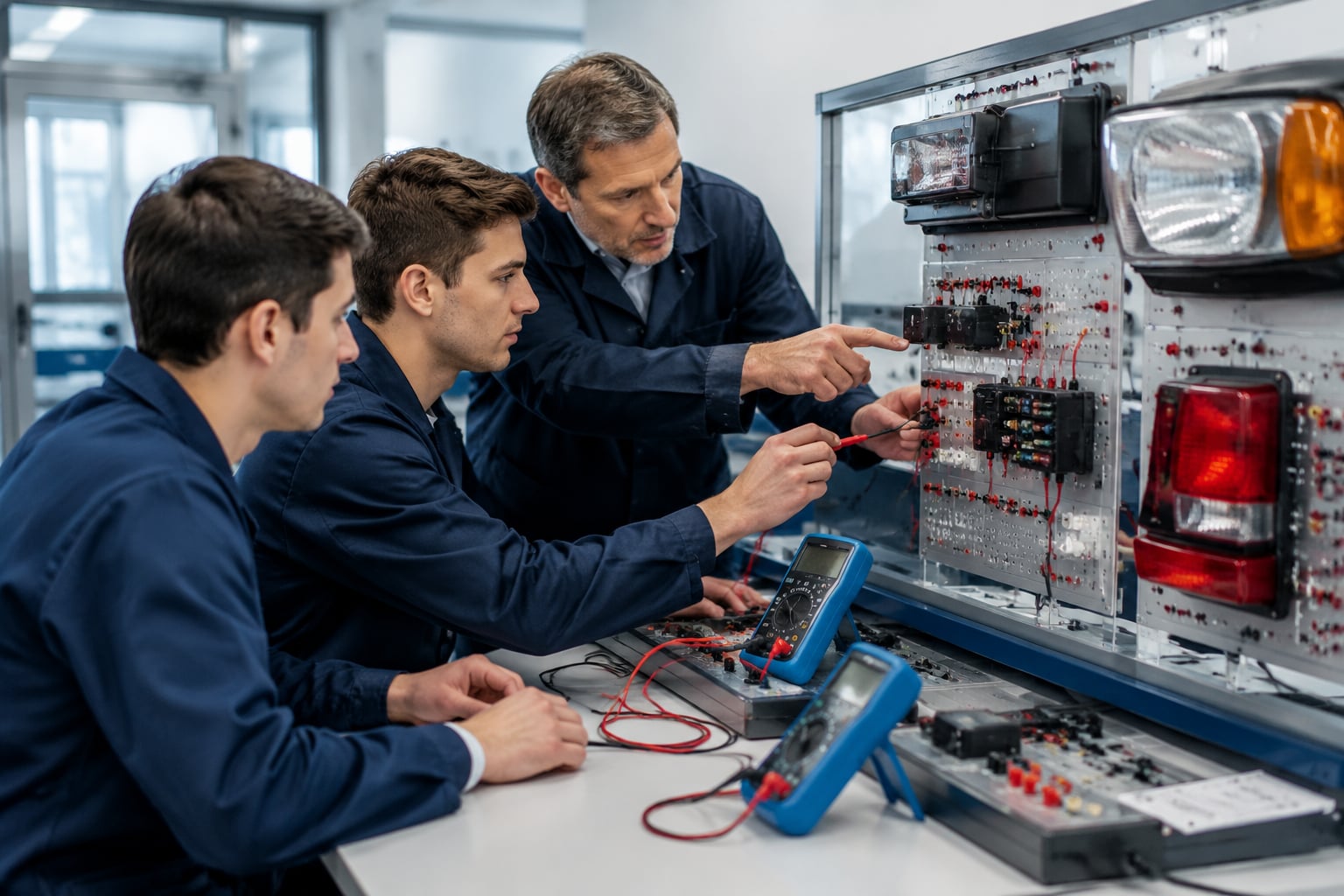
Automotive Electrical Training: From Circuit Recognition to Diagnosis
Structure automotive electrical practical teaching so students progress from protected circuit building to measurement, fault tracing and verification.
 Aug 12, 2026
Physical and Virtual Training: Building Repeatable NEV Practice
Use physical equipment and virtual simulation as one training sequence instead of treating digital resources as a separate classroom activity.