
Jul 29, 2026
Battery Training Systems: Designing Safe Practical Learning
Plan battery teaching equipment and practical tasks around system understanding, protected measurement, BMS logic and safe working procedures.

On This Page
Battery technology courses must balance access with control. Students need to understand pack structure, cell grouping, BMS functions and measurement logic, but the training environment must prevent unsafe improvisation and make the correct procedure repeatable.
Separate the Learning Levels
Not every battery task belongs on the same platform. Component recognition, module assembly, BMS signal study, high-voltage safety and performance testing each require different levels of access and supervision.
A staged program can begin with cell and module structure, progress to protected pack assembly and measurement, and then introduce charge-discharge analysis or fault-based service tasks.
Make Safety Part of Every Exercise
Students should follow a defined process before touching a test point or connector. The task should state the equipment condition, required personal protection, isolation method, instrument check and verification step.
The training system should support that process through clear connection points, controlled exposure, emergency isolation and instructor oversight. Safety should be assessed as part of competence, not treated as a separate theory question.
Connect Measurements to BMS Behavior
Voltage and temperature values become meaningful when students can relate them to monitoring, balancing, protection and communication. Practical tasks should ask learners to predict a result, take the measurement, interpret the data and explain the system response.
Useful learning tasks may include:
- identifying cell, module and pack relationships;
- checking voltage consistency and temperature sensing;
- tracing BMS inputs and outputs;
- observing protection conditions and controlled faults;
- recording results and comparing them with expected limits.
Include Documentation and Assessment
Each exercise needs a clear starting condition, procedure, expected result and assessment standard. This makes the task repeatable across student groups and gives instructors a consistent basis for feedback.
When planning equipment, institutions should also consider class size, station rotation, available utilities, instructor experience and the relationship between physical practice and virtual preparation.
The objective is not simply to expose battery hardware. It is to build a controlled learning path from system recognition to measurement, reasoning and safe technical practice.

About the Author
BTKX Technical Team
The BTKX Technical Team combines automotive and NEV engineering knowledge with practical experience in vocational laboratory planning, equipment delivery and instructor support.
Continue Reading
Related Articles
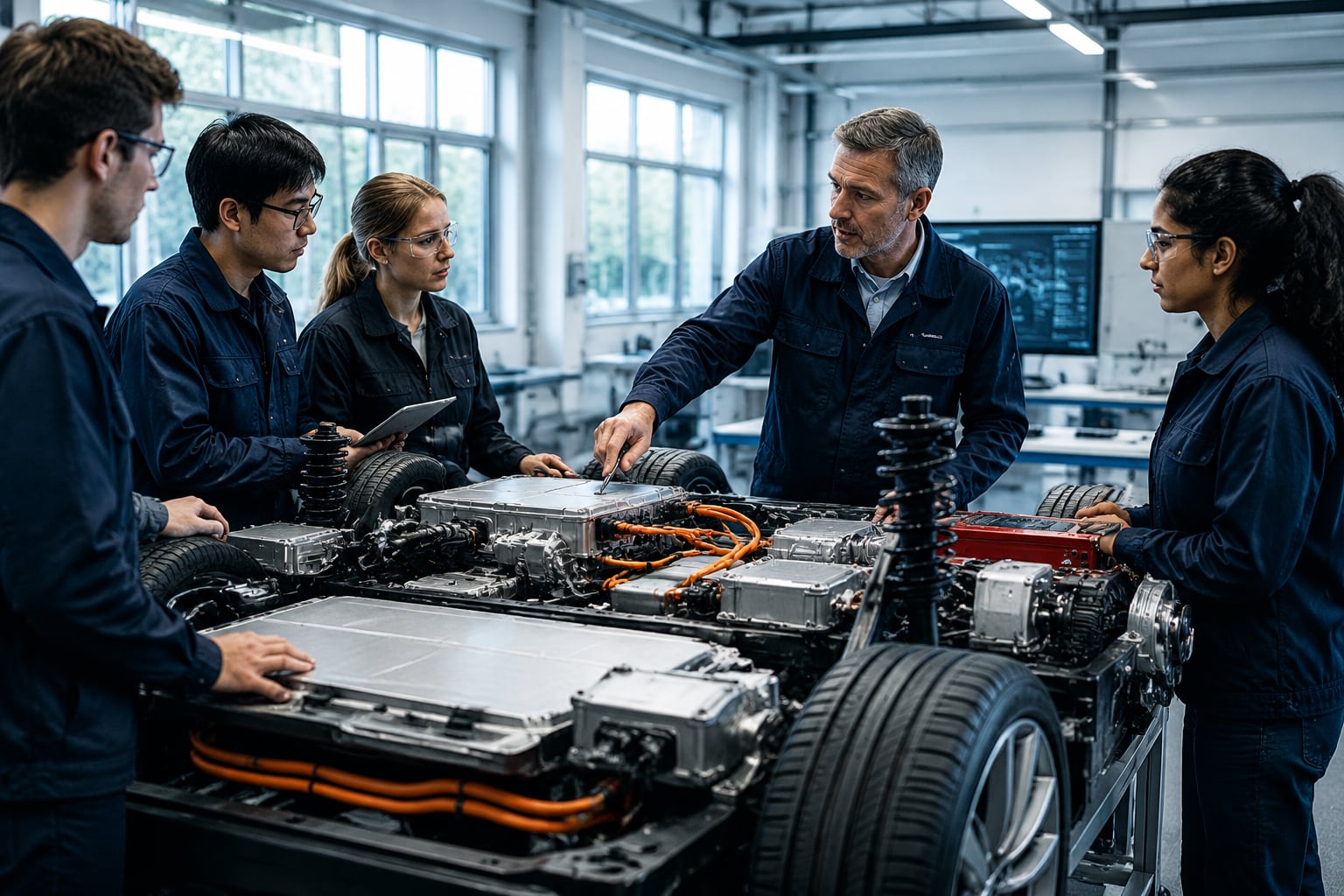 Sep 2, 2026
From Course Goals to an NEV Training Lab Equipment List
A practical framework for turning curriculum goals, student numbers and available space into a workable NEV training laboratory plan.
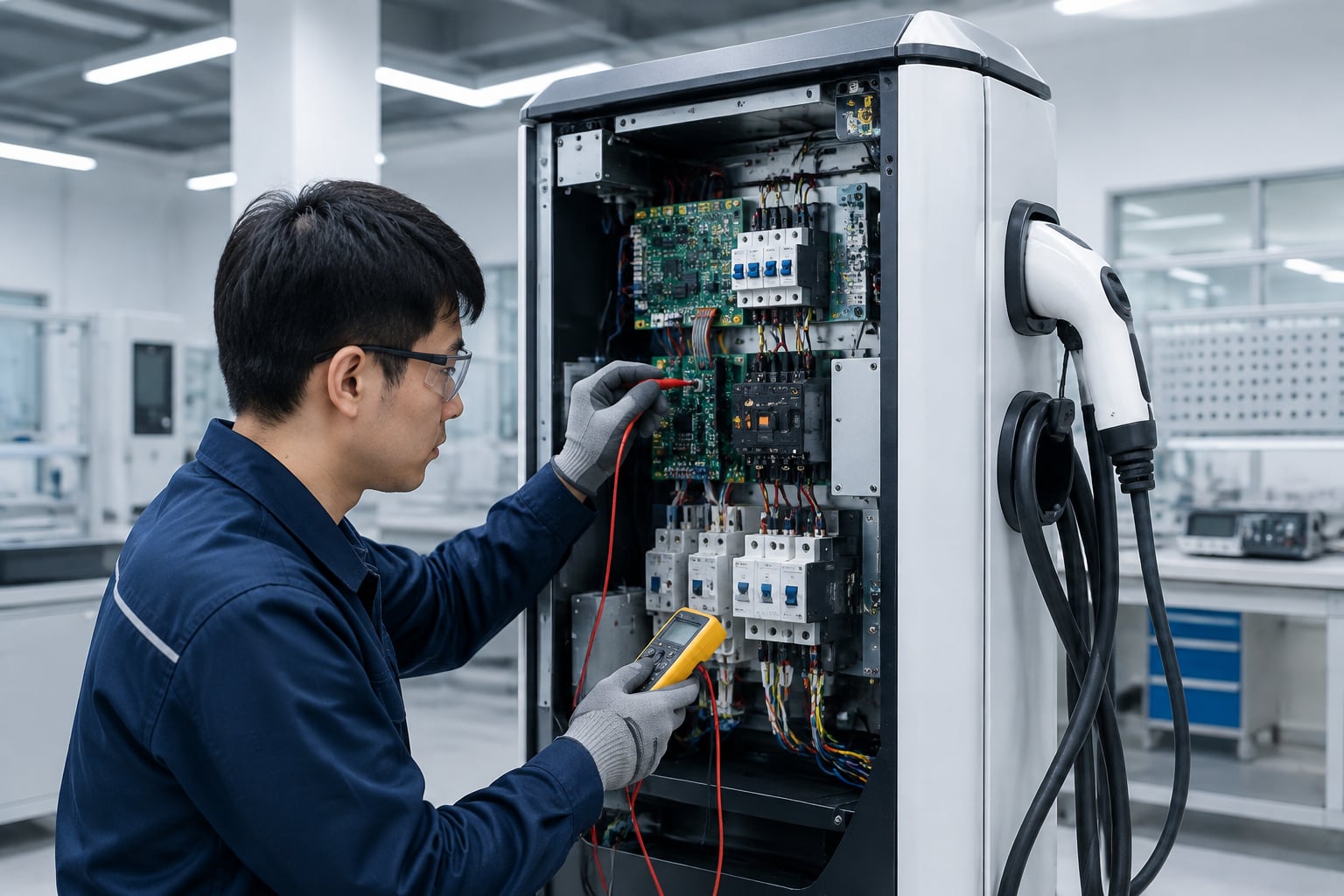 Aug 26, 2026
How to Plan an EV Charging Training Laboratory
Define the teaching tasks, equipment levels and safety requirements for an EV charging laboratory that supports assembly, commissioning and diagnosis.
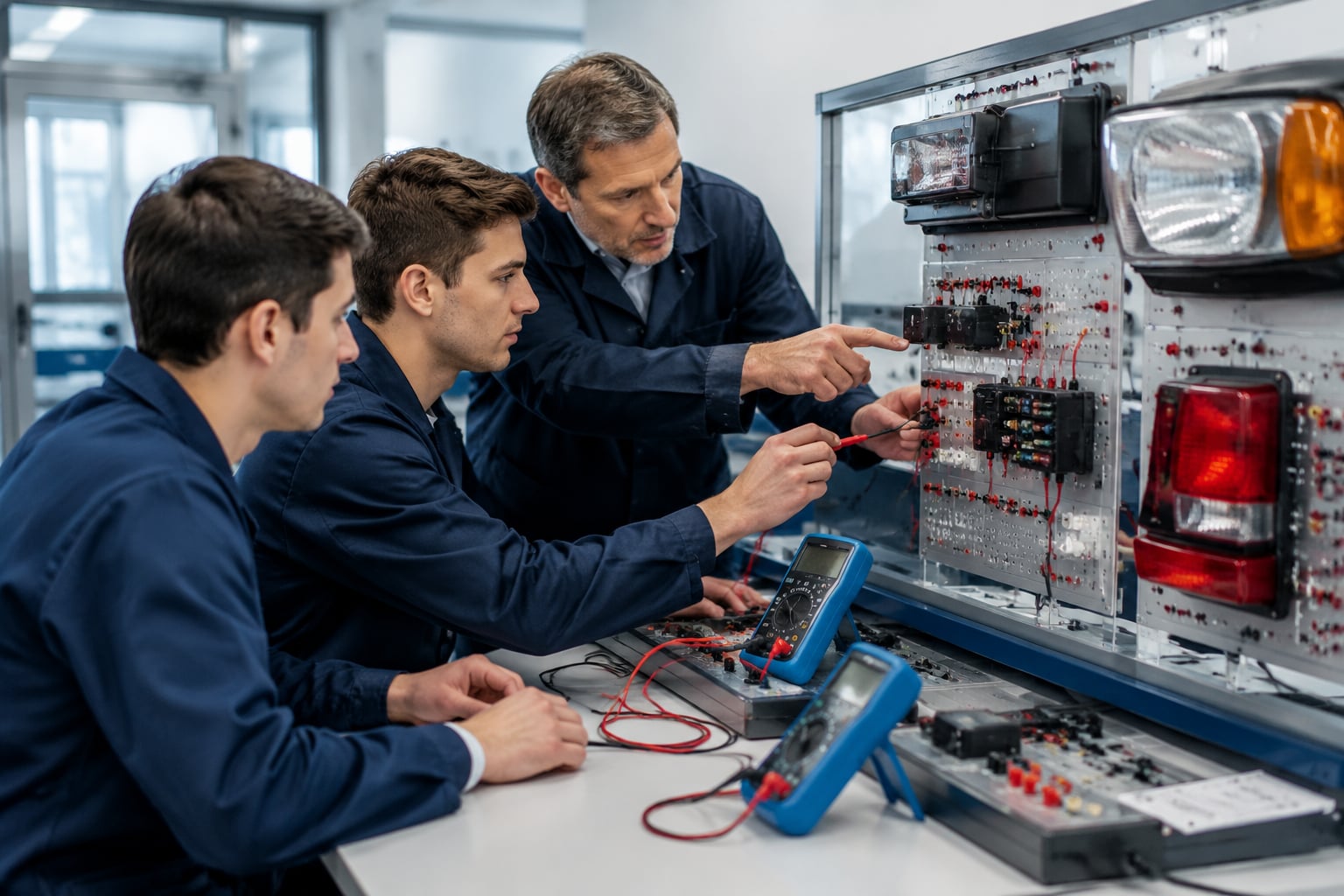 Aug 19, 2026
Automotive Electrical Training: From Circuit Recognition to Diagnosis
Structure automotive electrical practical teaching so students progress from protected circuit building to measurement, fault tracing and verification.
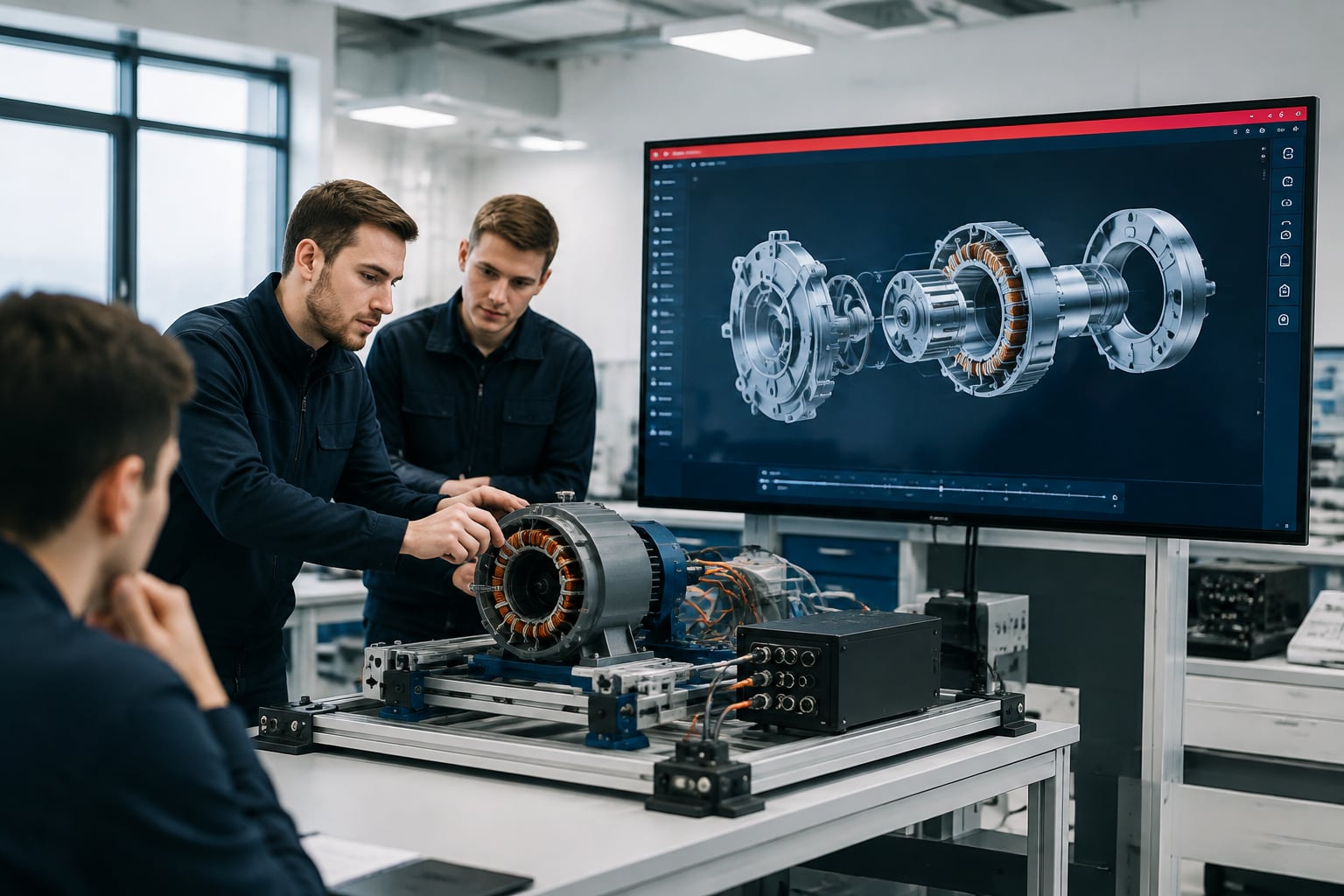 Aug 12, 2026
Physical and Virtual Training: Building Repeatable NEV Practice
Use physical equipment and virtual simulation as one training sequence instead of treating digital resources as a separate classroom activity.