
BTKX — Jilin, China · Joint Research and Development
Joint Charging Software Copyrights
Jilin Communications Polytechnic and Baitong Kexin jointly developed AC and DC charging teaching software, completed in September 2023 and registered as 2023SR1515097 and 2023SR1582884.
Project Overview
Teaching Software Developed with the Faculty.
Jilin Communications Polytechnic is a public higher vocational college in Changchun, Jilin Province, with automotive and NEV technology programs. Its NEV faculty group participated in the work under a horizontal research topic, a school–enterprise development arrangement.
- Client
- Jilin Communications Polytechnic
- Location
- Jilin, China
- Scope
- Joint Research and Development
- Joint Software Copyrights
- 2
- AC and DC charging teaching systems, both V1.0.
- Faculty Review Loops
- 3
- Requirements, milestone demonstrations and joint acceptance.
- Software Completion Year
- 2023
- Both outputs were completed in September.
Project Brief
One Brief for Teaching and Joint Research.
The laboratory equipment, faculty review process and joint ownership requirements shaped the software development brief.
Requirement
The college needed charging teaching software that corresponded to the AC and DC equipment used in its laboratories. The project also needed to produce jointly owned research output rather than only a license to an existing vendor product.
Teaching behavior, review responsibilities and the intended copyright holders therefore formed part of the development scope.
Constraints
Documentation and authorship records had to support a computer software copyright filing with both organizations named. Faculty review and acceptance testing also had to fit scheduled windows during the semester.
The software’s charging behavior and protection logic had to match the college’s specified equipment. Those project-specific settings do not define the protection limits of every current charging trainer.
Challenge
Joint ownership requires agreement about the development contribution and deliverables. A standard software purchase provides usage rights according to its license; this project required the faculty to participate in requirements, functional reviews and acceptance.
The team needed to keep the teaching tasks, software implementation and registration documentation consistent throughout that work.
Joint Development
Three Reviews Connect the Software with Teaching.
The software team and the college faculty worked through three review loops.
Define the Requirements
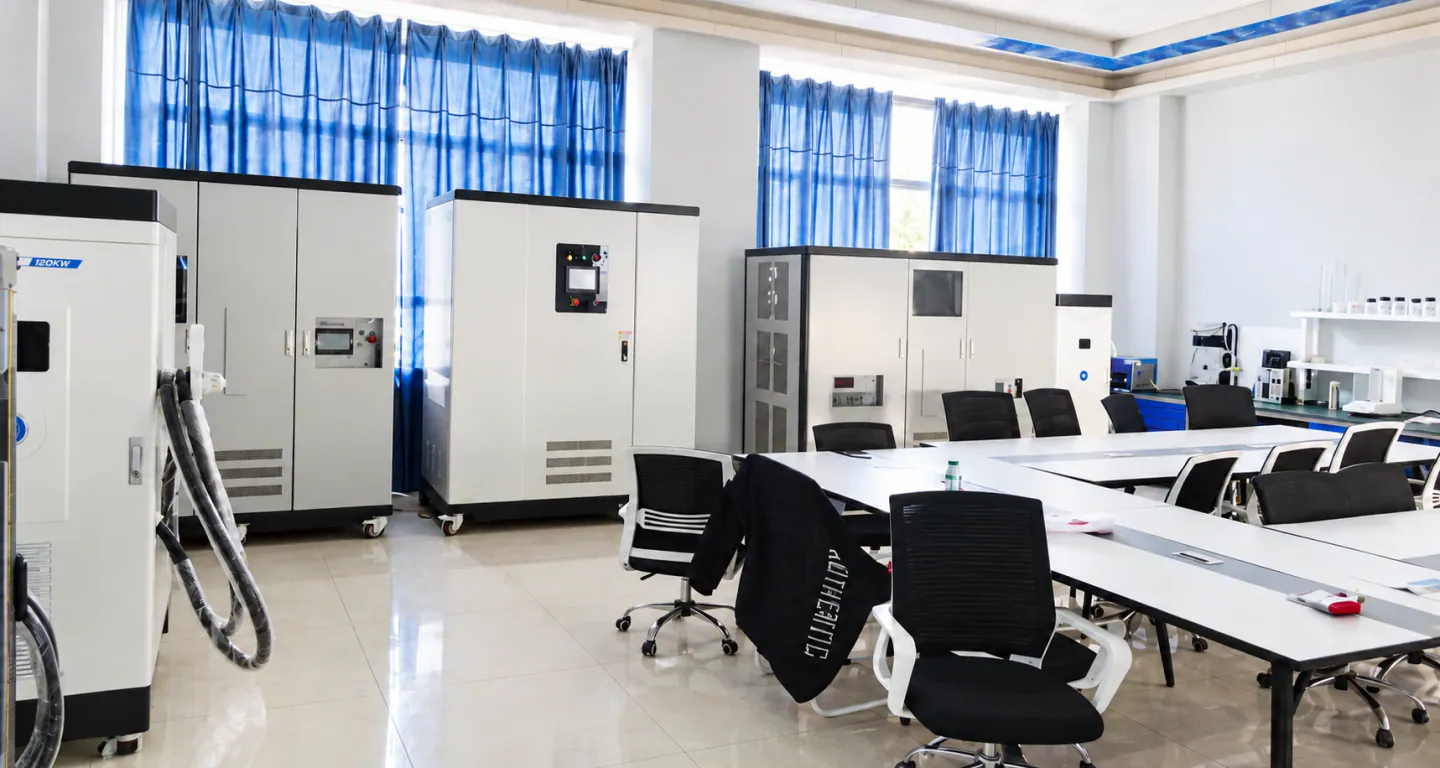
Define requirements with the teaching team and the physical charging equipment as the reference.
Review Development Milestones
Demonstrate development milestones for faculty review and task correction.
Accept the Software Together
Conduct joint acceptance testing in the college laboratory and prepare registration documents naming both copyright holders.
Registered Outcome
Two Teaching Systems. Jointly Held Research Outputs.
The project produced two jointly held registrations: AC Charging Pile System V1.0, 2023SR1515097, and DC Charging Pile System V1.0, 2023SR1582884. Both systems entered the college’s charging infrastructure teaching.
The named outputs link the practical teaching requirement with a verifiable institutional research deliverable.
Explore Simulation DevelopmentRegistered Outputs
Two Named Software Records
Joint holders: Jilin Communications Polytechnic and Beijing Baitong Kexin Machinery Equipment Co., Ltd.
| Software | Version | Registration Number | Completed |
|---|---|---|---|
| AC Charging Pile System | V1.0 | 2023SR1515097 | 2023-09 |
| DC Charging Pile System | V1.0 | 2023SR1582884 | 2023-09 |
Timeline
Requirements, milestone demonstrations and joint acceptance testing ran alongside the academic semester. Both software outputs were completed in September 2023 and subsequently registered. The completion month should not be read as the registration date.
Verification
Request the copyright certificates for registrations 2023SR1515097 and 2023SR1582884 and review the named co-holders and software titles. The registrations can be checked through the relevant Chinese computer software copyright registry.
The company’s cooperation-case record provides the project context. Public sharing of certificate scans is subject to the holders’ arrangements.