Baitong Kexin
Contact

Agricultural Systems

Agricultural Machinery Training Labs

Bring planter, sprayer, grain-harvester header and tractor mechanisms into a year-round teaching environment. Combine practical platforms, simulation and course resources around the school’s syllabus and site conditions.

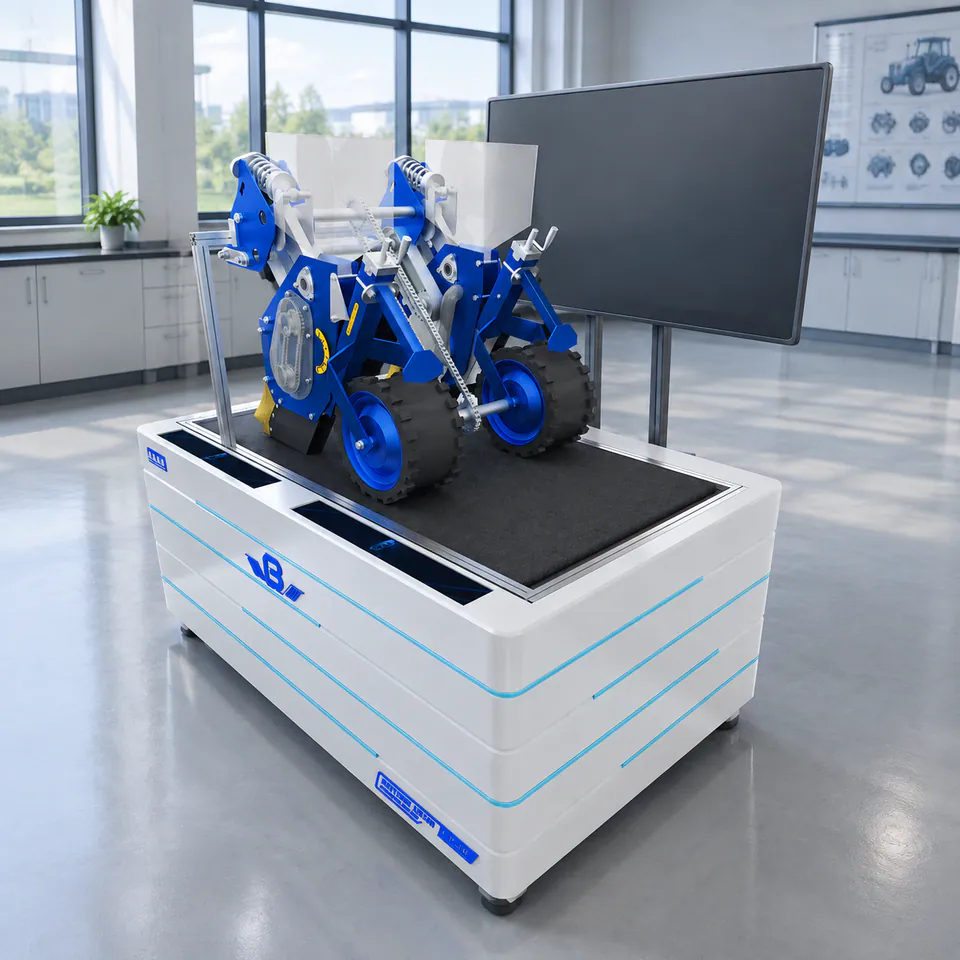
Seeder teaching mechanism with visible seed hoppers, chains and ground wheels
Precision-seeding teaching platform shown as one example; spraying, header and tractor topics use their corresponding platforms.

The Training Route

Practise Seeding, Spraying and Header Mechanisms.

Connect machine structures and operating principles with adjustment, inspection and measured tasks on the selected agricultural teaching platforms.

  1. Set and Check Seeding

    Learner Practice

    Study the selected seeding mechanism and complete its approved set–measure–verify exercise with the supported seed types.

    Evidence of Learning

    Record the setting, test conditions and measured result for the seeding task.

  2. Adjust and Inspect Spraying

    Learner Practice

    Relate the selected sprayer’s structure and operating principles to its approved adjustment and measurement exercise.

    Evidence of Learning

    Document the setting and measured result using the permitted demonstration medium.

  3. Trace Header Operation

    Learner Practice

    Study harvesting and feeding mechanisms on the selected header teaching platform and carry out the specified inspection tasks.

    Evidence of Learning

    Explain the represented mechanism and record the checks completed on that platform.

The Equipment Combination

Connect the Tasks with the Right Equipment.

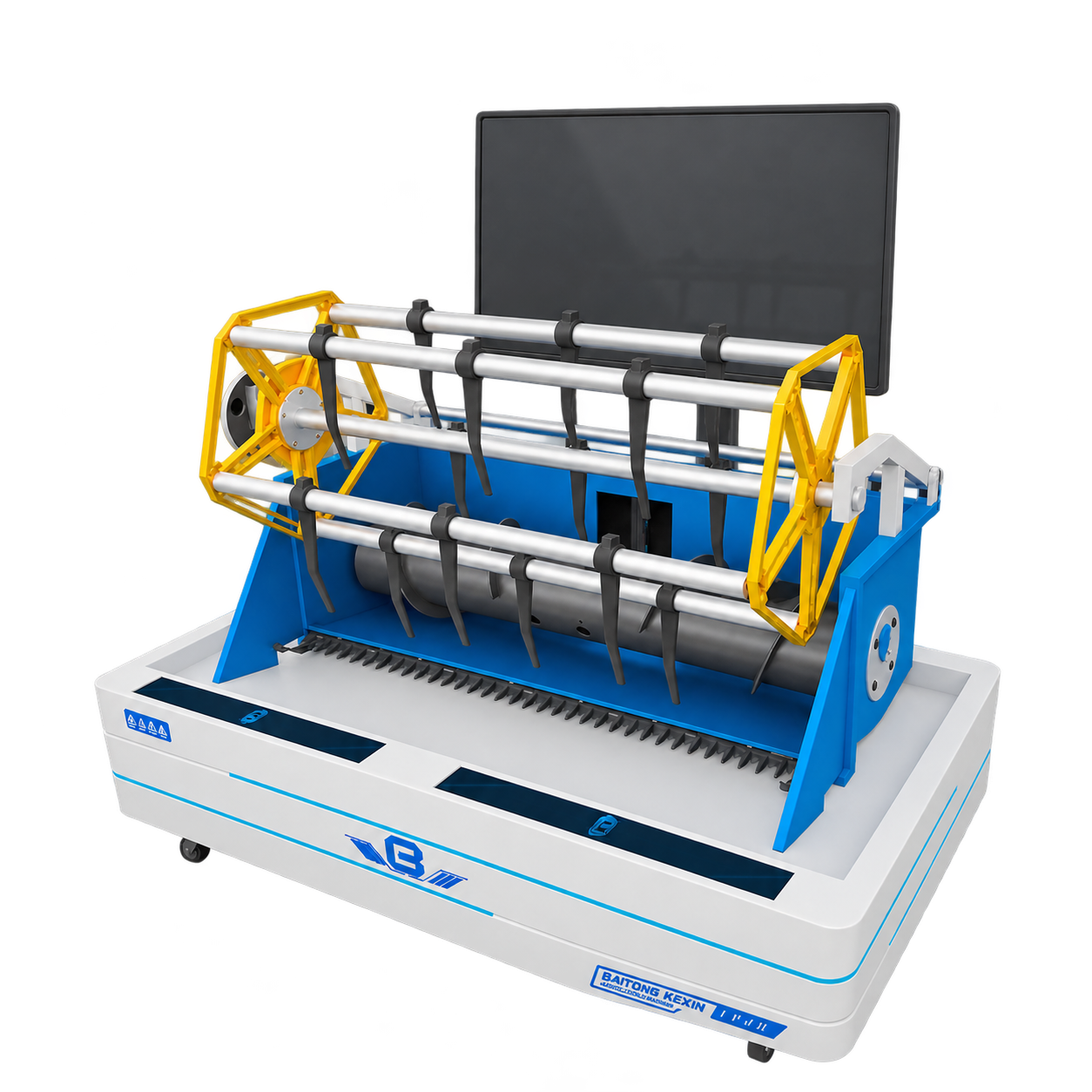
Select separate seeding, spraying or grain-harvester header platforms against the required mechanisms. The documented header represents crop gathering, cutting and transfer; tractor teaching and simulation resources are scoped for the selected project.

Technical Configuration and Operating Limits
ItemTeaching Configuration
Machine coverageSeparate teaching platforms for precision seeding, pesticide spraying and grain-harvester header mechanisms; select the actual mechanisms required by the syllabus.
Header scopeThe documented grain-harvester platform covers the reel, reciprocating cutter, auger and visible transmission. Threshing, separation and cleaning are outside this configuration; any additional teaching systems must be specified separately.
Package structureTeaching equipment, confirmed simulation titles and digital course resources; list included hardware, licenses, languages and instructor training.
Whole-vehicle referenceTractor teaching and training platform in the Côte d’Ivoire Luban Workshop contract.
Simulation referenceBT-NJVR-01 agricultural machinery simulation; confirm modeled machines, tasks, PC or immersive delivery, license quantity and computer requirements.
Practical tasksStructure and operating principles, approved adjustment, maintenance inspection, measurements and fault diagnosis.
Site requirementsConfirm machine envelope, floor loading, access route, power, guards and any fluid-handling arrangements before selecting a teaching room.
Delivery scopeDomestic training labs and overseas TVET projects, with transport, commissioning, manuals and teacher preparation defined by agreement.

From Equipment to Teaching

Build a Repeatable Teaching Routine.

Organize learners around mechanism study, supervised adjustment and recorded results, with room access, demonstration materials and teaching resources matched to each chosen platform.

Year-Round Mechanism Practice

Select machine-specific teaching mechanisms against the syllabus and site survey. Plan station provision, operating space and practical rotations across the academic timetable so learners can repeat the required tasks within the available teaching environment.

Supervised Practical Access

Introduce mechanisms through simulation and isolated component study before supervised work on guarded equipment. Use the approved procedure and permitted demonstration fluid; any field activity needs its own supervision and risk assessment.

Measured Adjustment Results

Use the selected planter or sprayer’s approved set–measure–verify exercise to connect adjustment with a measured result. Record conditions and acceptance criteria, and confirm the supported seed types, spray media and instruments before the lesson.

Usable Teaching Resources

Plan task sheets, licensed simulation, manuals, commissioning and instructor training alongside the chosen equipment. Agree language, localization and ongoing support before shipment so the delivered mechanisms are supported by resources teachers can use.

Full Instructor Notes and Scope to Confirm

Connect the Mechanism with a Measurable Task

Select the seeding, spraying or header mechanism required by the syllabus. Connect structure recognition with the platform’s approved adjustment, inspection and measurement tasks.

Add matching simulation and course resources for preparation and repetition. Confirm the installation envelope, guards, demonstration materials and instructor training for each selected platform.

Confirm These Requirements Separately

  • Field-machine operator licensing
  • Agronomy, crop science or soil laboratory equipment
  • Production farm machinery procurement

Field Equipment Does Not Fit the Teaching Schedule

What to Watch For
Large machines occupy limited space while practical access depends on seasonal work.
Possible Cause
Equipment was selected for production capacity rather than repeated classroom tasks.
Teaching Response
Select machine-specific teaching mechanisms against the syllabus and site survey. Plan station quantities, operating space and practical rotations for the full academic timetable.

Operating Hazards Restrict Learning

What to Watch For
Rotating drives, moving mechanisms or spray fluids make first exposure difficult to supervise.
Possible Cause
Students encounter the full operating system before learning its parts and approved procedures.
Teaching Response
Start with simulation and isolated component study, then use guarded teaching equipment under the approved procedure. Confirm the permitted demonstration fluid and handling requirements; field work requires its own supervision and risk assessment.

Adjustment Is Explained but Never Verified

What to Watch For
Learners describe seeding or spraying theory but cannot document a setting and its measured result.
Possible Cause
The lesson lacks an accessible adjustment mechanism and a defined measurement task.
Teaching Response
Use the selected planter or sprayer’s approved set–measure–verify exercise, with a record of conditions and acceptance criteria. Confirm supported seed types, spray media and instruments before the lesson.

Overseas Equipment Arrives Without a Course

What to Watch For
A partner institution has hardware but lacks suitable resources or prepared instructors.
Possible Cause
Procurement covered the machine while omitting language, software and teacher development.
Teaching Response
Specify the teaching package alongside equipment: task sheets, licensed simulation, manuals, commissioning and instructor training. Agree localization and ongoing support before shipment.

Project Experience & References

Industry Cooperation and Delivery References

Industry roles and partner references provide context; the named Côte d’Ivoire contract records tractor teaching and agricultural simulation delivery.

A Named Overseas Agricultural TVET Contract

In January 2024, Baitong Kexin won the Côte d’Ivoire Luban Workshop equipment contract for RMB 3,729,200, covering ten line items including the tractor whole-vehicle training platform and BT-NJVR-01 simulation, working with Heilongjiang Agricultural Engineering Vocational College.

The preceding November 2023 vice-ministerial visit included a demonstration of the company’s simulation systems. The present catalog also includes distinct planter, sprayer and grain-harvester header teaching products.

Documents to Review for Your Project

Check the Contract Scope and the Platform Demonstration

Request the January 2024 contract award record and the relevant item schedule. For a new project, review a demonstration of the selected machine platform, its adjustment tasks, teaching resources and compatible simulation.

Acceptance should identify the exact mechanisms, instruments, approved materials, software licenses, language and instructor-training deliverables. A previous contract value is evidence of that project, not a price for a new laboratory.

Reference Documents and Project Basis

  • Industry role: the company is a vice-chairman unit of the industry-education integration community for high-end intelligent agricultural machinery equipment. This is an industry affiliation, not a machine standard or certification.
  • Cooperation references: company materials name Côte d’Ivoire Agricultural Machinery Assembly S.A. and the First Tractor Factory. Confirm the scope relevant to the proposed project.
  • Project acceptance: define the equipment, course, simulation and instructor-training requirements together. Check each platform’s documented mechanisms and operating procedures, and specify any additional systems separately.

Application FAQs

Plan Your Training Project.

Does this grain-harvester header trainer teach the whole combine?

No. The documented trainer covers crop gathering, cutting and transfer through its reel, reciprocating cutter and auger. Threshing, separation and cleaning are outside its scope; any additional teaching systems must be specified separately.

Were all three machine platforms supplied in the Côte d’Ivoire contract?

The named evidence identifies a tractor training platform and BT-NJVR-01 simulation within ten line items. It does not establish that every planter, sprayer or grain-harvester header product in today’s catalog was included.

What information is needed for a laboratory proposal?

Provide the machine topics, learner level, class size, room and access dimensions, utilities, destination, resource languages and desired assessment tasks. Identify whether field demonstration equipment is a separate part of the program.