

BTKX — Buyer Knowledge Base
Buyer Questions. Practical Answers.
Find answers about equipment, ordering and teaching support for your vocational training project.
Equipment & Curriculum
Match the equipment to your courses, learners and teaching space.
Can Your Equipment Match Our Curriculum?A1
We can review your syllabus against the equipment’s published teaching tasks and prepare a course-to-equipment mapping with your faculty.
Share your course outline, practical tasks and assessment requirements. The proposal will identify suitable systems and supporting resources; additional course development, translation or vehicle-specific content is scoped separately.
How Many Stations Does a Class of 30–40 Need?A2
Station numbers depend on the practical task, lesson length and the hands-on time each learner needs. One platform provides one practical workstation at a time.
Groups of four to six can be a planning reference, with learners rotating practical roles under supervision. A class may use five or six stations or combine equipment with licensed simulation seats. We calculate the rotation and software concurrency for your timetable; these figures are not a universal capacity rating.
How Well Does the Teaching Battery Handle Repeated Assembly?A3
The T028 station is intended for repeated supervised teaching, but a verified disassembly-cycle limit is not published. Handling, connector condition, fastening and maintenance affect service life.
Request the inspection schedule, replaceable-parts list and repeated-use evidence with your quotation. Battery assembly still requires the approved electrical precautions and instructor supervision; repeated use does not remove those requirements.
Will the Simulation Run on Our Existing PCs?A4
We need to check your computers against the selected software title and delivery format. PC, client/server and optional XR configurations have different requirements.
Send the CPU, GPU, RAM, operating system and classroom network details. Request a supported configuration list and a demonstration on the proposed environment before budgeting hardware upgrades, learner accounts and concurrent licenses.
Can the Equipment Use Our Local Power Supply?A5
Power compatibility is reviewed for each model. A low-voltage teaching circuit or BMS supply does not describe the equipment’s installation input.
Send your site voltage, phase, frequency, earthing arrangement and available capacity. For example, the current T068 tester requires a 380 V AC three-phase five-wire supply. Any adaptation must be confirmed in the quotation and electrical schedule before installation.
Ordering & Delivery
Understand the proposal, purchasing documents and delivery responsibilities.
What Happens From the First Inquiry to Handover?B1
We start with your program, learner numbers and project scope, then prepare a configuration proposal for technical review. The quotation, proforma invoice and contract define the agreed order before production.
Pre-shipment inspection, freight, export documents and handover follow the agreed terms. Confirm installation, training, language, payment, warranty and acceptance responsibilities before signing. Public tenders follow the purchaser’s procurement timetable and response format.
Can You Help Prepare Technical Requirements for a Tender?B3
We can review your draft equipment list and map the requested teaching tasks to published product functions, parameters and supporting records.
The review should make gaps, optional scope and required acceptance evidence clear. Board capacity, for example, must be distinguished from validated vehicle-specific fault exercises. Your procurement team remains responsible for the tender rules and final specification.
Which Payment Methods and Milestones Are Available?B4
International orders are normally discussed on the basis of T/T bank transfer against a proforma invoice. Letter-of-credit arrangements may be discussed for government or NGO procurement.
Deposit and balance milestones are confirmed for the actual order; there is no universal deposit percentage. Review the payment schedule alongside inspection, shipment and acceptance terms. The final agreement identifies the parties, currency, bank instructions and required documents.
Training & Support
Confirm documentation, instructor preparation and support after delivery.
Are Manuals, Software and Teaching Resources Available in English?A6
English project-review documents are available, and export equipment manuals are described as Chinese-English. Software interfaces, narration and teaching-resource languages depend on the selected title and order.
Ask for sample manuals and an interface recording for each shortlisted product. Confirm training and support languages in the contract, together with any additional localization such as French.
Do You Provide Installation and Instructor Training?B2
Installation, commissioning and instructor training can be included when defined in the project agreement. Overseas delivery may use dispatched engineers or guided remote support with your technicians.
Agree site-readiness requirements, responsibilities, training days, participant numbers, language and acceptance tasks before signing. Operation videos, task sheets and other teaching resources are included only when listed in the equipment schedule.
What Warranty and Ongoing Support Are Included?B5
The warranty period, coverage and exclusions are confirmed in writing for your order. Whether a later repair is covered depends on the contract and the diagnosed cause.
Request the warranty clause, response arrangements and replaceable-parts list before signing. Remote engineering support, spare-parts shipping, maintenance, software updates and refresher training should each be defined in the project scope.
Teaching & Troubleshooting
Plan supervised exercises and know when to pause a practical task.
Why Use a Fault-Connection Platform Alongside a Real Vehicle?C1
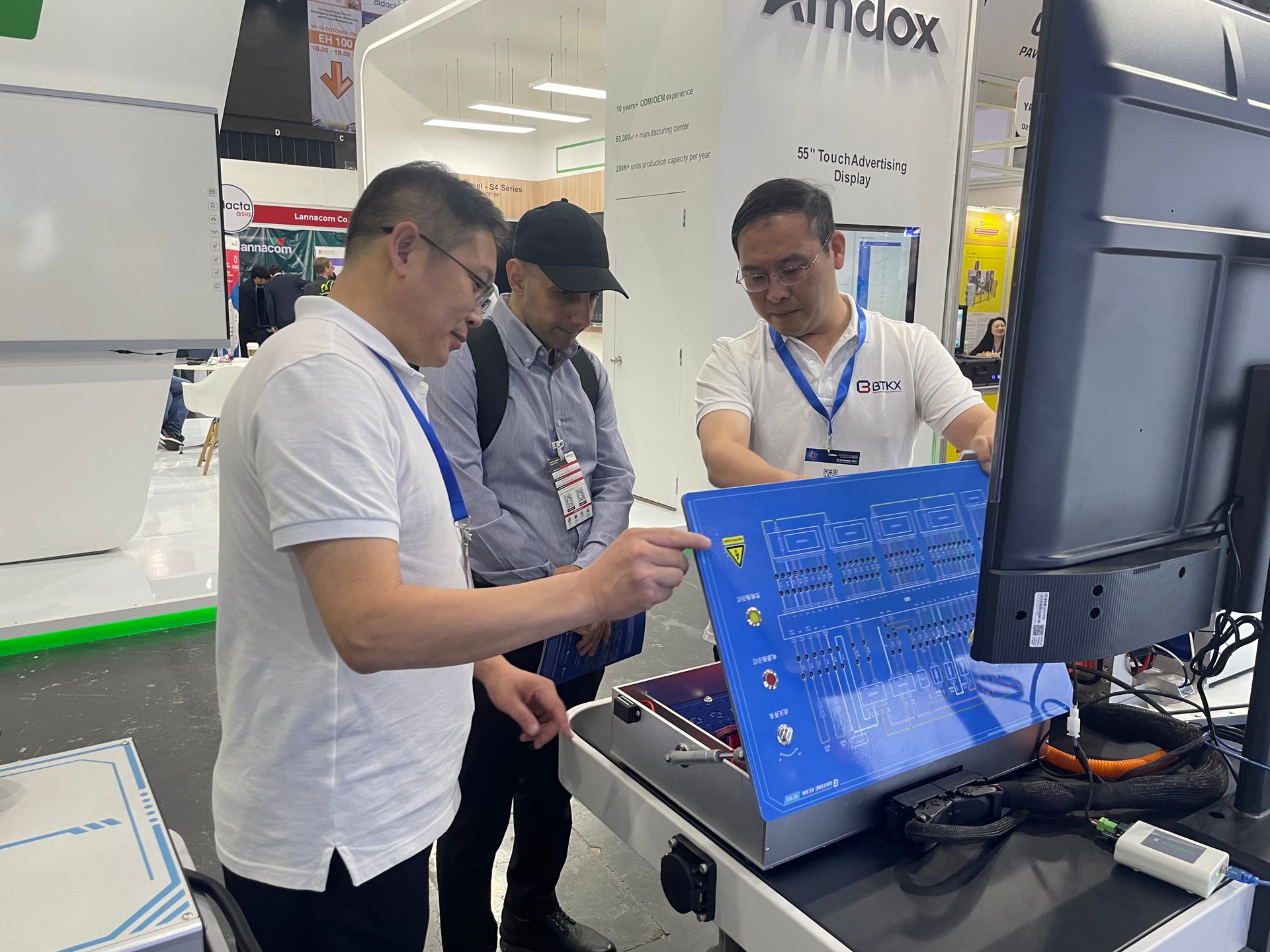
A matched workstation provides designated circuit access and approved instructor fault controls without cutting the original vehicle harness. It supports repeatable teaching while retaining the real vehicle’s system context.
It does not remove electrical hazards or the need for isolation and supervision. T136’s ≥256-path board capacity is different from the delivered controller coverage and validated exercises, which must be agreed for the actual vehicle and model year.
What Should an Instructor Do When a BMS Insulation Fault Appears?C2
Pause the practical exercise. The instructor should establish the equipment state using the approved manual and institutional procedure, including whether this is a selected teaching fault or a real defect.
Qualified personnel must define the permitted measurements, instruments and acceptance limits. Students should record authorized observations and the restoration check. They must not improvise live disconnections or apply test voltage to connected electronics outside the manufacturer’s procedure.
Why Might Simulation and Physical Measurements Differ?C3
Check that the software title, hardware version, selected fault and approved test conditions match. Under the supervised procedure, also review instrument range, contact quality, calibration and equipment state.
Record the model, software version, fault identifier, test point, instrument and observed values. If the difference remains unexplained, pause grading that comparison and send the evidence through the agreed support route. Simulated and physical readings are not guaranteed to match across every revision or condition.
What Should Instructors Check After Resolver Alignment Fails?C4
Pause powered operation and use the actual motor and controller manuals to review assembly, connections and the authorized alignment procedure.
Possible causes include resolver seating or orientation, disturbed wiring, later mechanical assembly changes and mismatched controller settings. Use the current model documentation and inspection record; specifications from an older T036 version must not define the operating limits. Learners should explain the evidence instead of repeatedly running an unsuccessful routine.
How Can We Teach Charging Control-Pilot Fault Diagnosis?C5
Use the state diagram, supported protocol and designated measurement interface for the ordered configuration. The lesson should relate approved CP/CC readings to connector state, simulated resistance and protection status.
Only use instructor-authorized settings and compatible instruments, with protective earth intact. The current T083 reference charger is limited to ≤7 A and ≤1.5 kW; its 40 A load subsystem does not permit exceeding those charger limits. Not every available resistance setting is an approved exercise for every charger.