Baitong Kexin
Contact

Battery Assembly & BMS

EV Battery Service Training Labs

Build repeatable battery assembly, BMS diagnosis and performance-testing practice with equipment designed for supervised teaching. Keep electrical limits and safety procedures clear from the start.

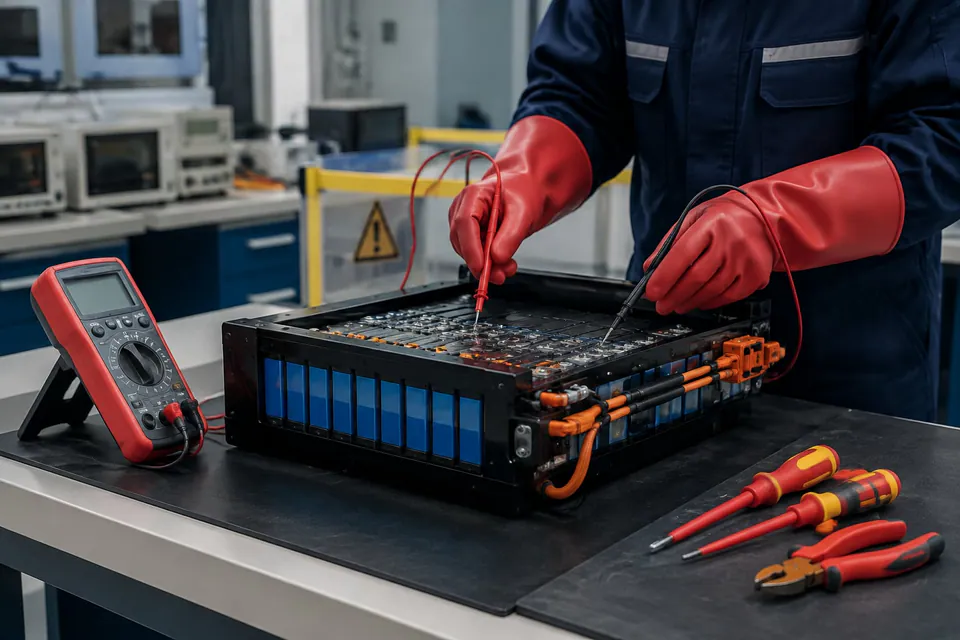
Gloved hands practising measurements on a battery pack
Battery measurement illustrates one part of a course that also covers assembly, BMS interpretation and performance testing.

The Training Route

Assemble, Diagnose and Test the Battery System.

Connect cell and pack assembly with BMS interpretation, then use a compatible performance station to explain the battery’s measured response.

  1. Assemble and Inspect

    Learner Practice

    Measure and sort cells, assemble the teaching module and pack, and complete the specified connection and component checks.

    Evidence of Learning

    Record cell measurements and assembly inspections before progressing to the next exercise.

  2. Interpret BMS Data

    Learner Practice

    Compare physical readings with BMS and CAN information during instructor-selected fault exercises.

    Evidence of Learning

    Explain the relationship between the measured circuit condition and the reported battery data.

  3. Measure Battery Performance

    Learner Practice

    Run approved charge-discharge and DC internal-resistance exercises on the matched performance station, recording battery state and test settings.

    Evidence of Learning

    Use recorded conditions to interpret capacity, resistance and charge-discharge results.

The Equipment Combination

Connect the Tasks with the Right Equipment.

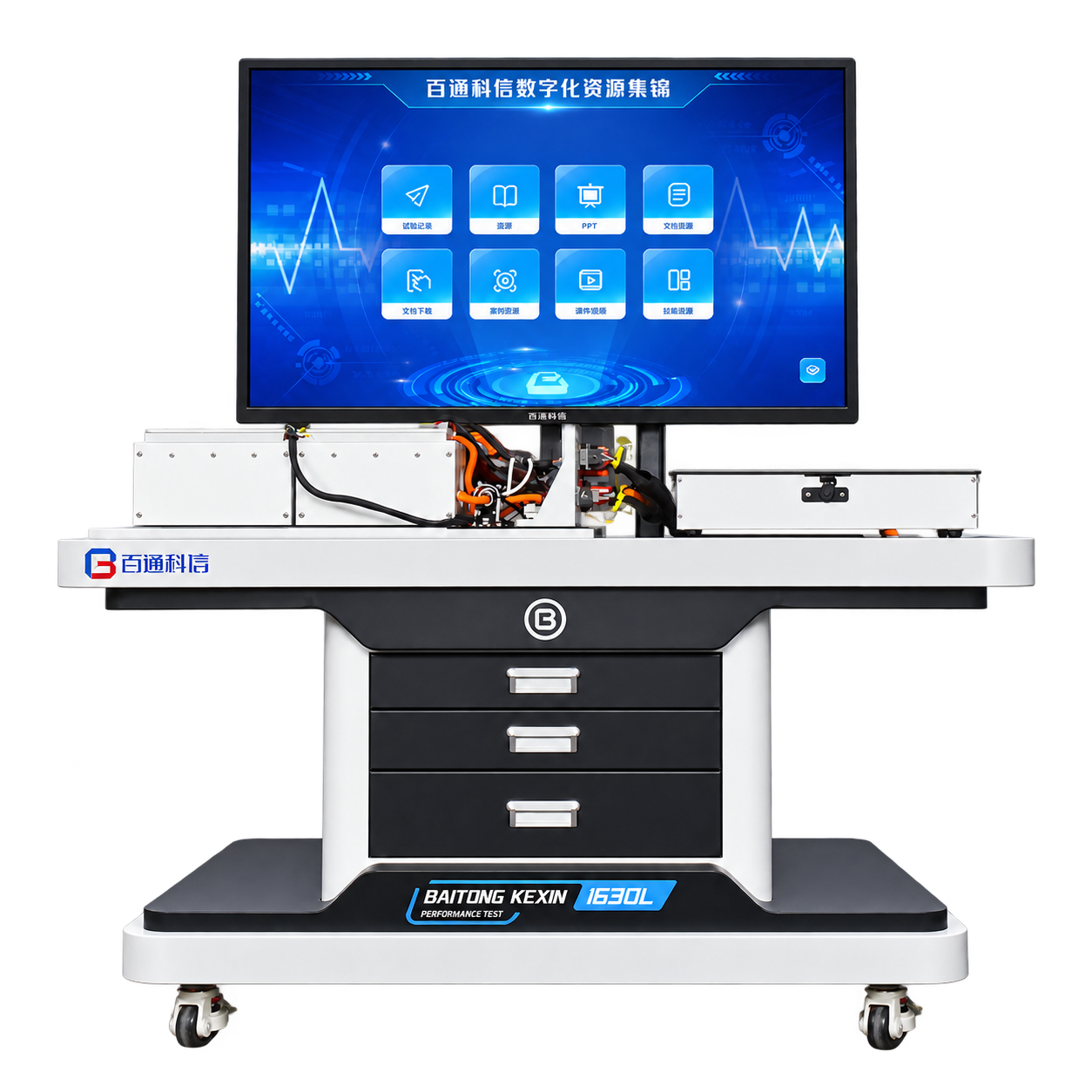
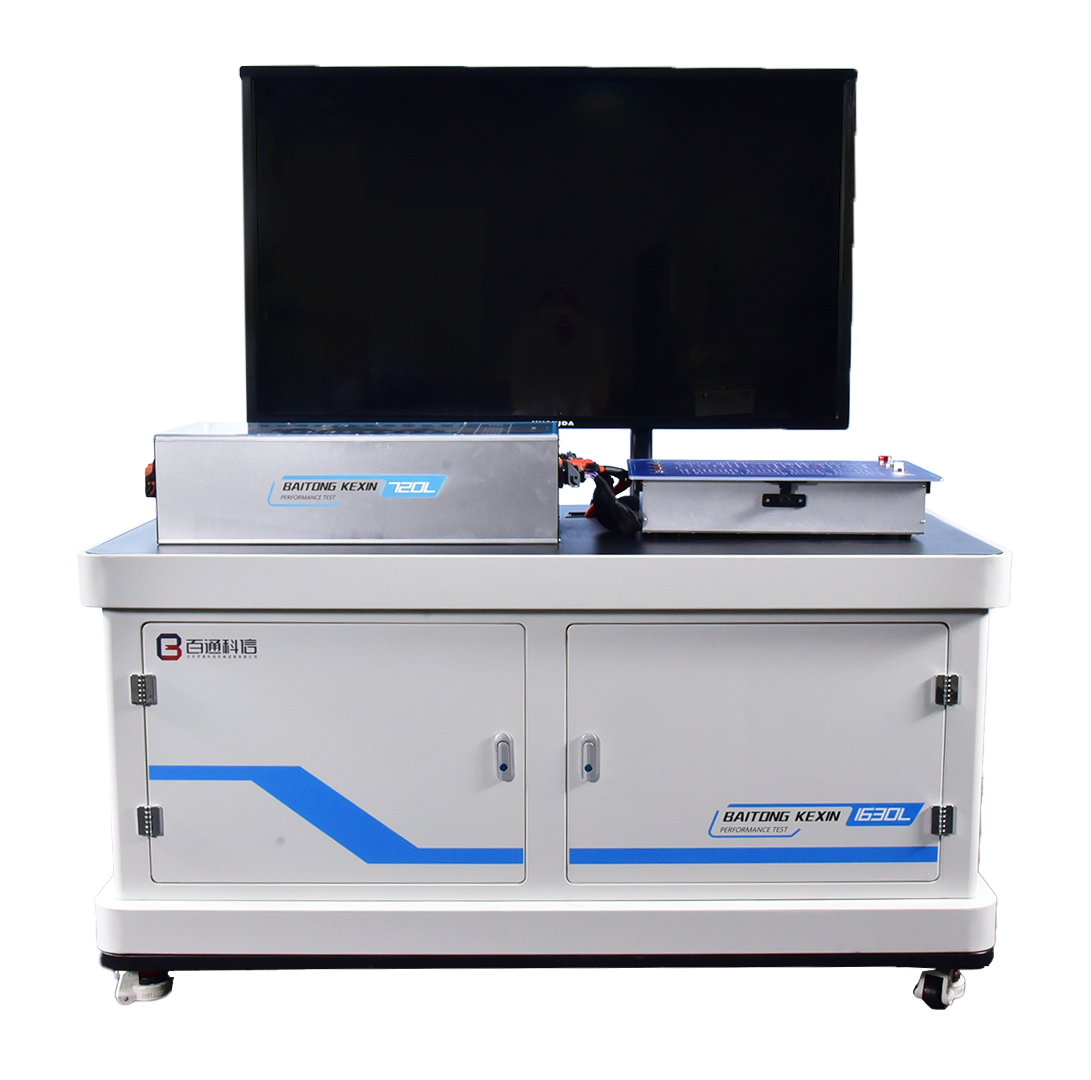
Use T028 for cell measurement, pack assembly and BMS diagnosis. Add a compatible T068 performance station when the course includes charge-discharge, capacity and DC internal-resistance analysis.

Technical Configuration and Operating Limits
ItemTeaching Configuration
Teaching packT028: LFP, nominal voltage ≥60 V; pack 884 × 530 × 230 mm; individual cell 3.2 V / 30 Ah.
BMSSupply DC 9–36 V; cell-voltage sampling accuracy ≤5 mV; temperature detection accuracy ±1 °C.
On-board chargerOutput ≥75 V DC, ≤10 A, ≥800 W; efficiency ≥0.93; IP65; CAN 2.0. Confirm compatibility and approved pack limits.
Tools and instruments1 kV withstand-rated insulated tool set; internal-resistance tester with 0.1 mΩ resolution; insulation resistance range 2,000 MΩ; ground resistance meter and digital multimeter.
Performance testerT068: rated power ≤4 kW; 380 V three-phase supply; charge 0–100 V DC, discharge 10–100 V DC; channel current −30 to +30 A.
Performance measurementVoltage and current accuracy: 0.05% full scale + 0.05% of reading; energy recovery efficiency ≥80%. Battery limits govern each test.
Training tasksCell measurement and sorting, module and pack assembly, BMS interpretation, contactor and pre-charge inspection, controlled fault diagnosis and charge-discharge data analysis.
Teaching cycleRepeated student-group use with pre-operation inspection, component-condition checks and instructor-controlled fault selection.

From Equipment to Teaching

Build a Repeatable Teaching Routine.

Organize group practice around handling, assembly inspection, BMS interpretation and recorded test results, with a supervised inspection and reset sequence between exercises.

Supervised Handling

Teach battery handling at the designated station with qualified supervision, specified protective equipment and approved isolation and verification procedures. Use the approved teaching controls for fault exercises so each group follows the same supervised work sequence.

Repeatable Assembly

Use accessible, serviceable teaching components and an inspected assembly sequence for repeated group practice. Keep full vehicle-pack demonstrations within their approved scope, and use course media to connect the teaching pack with full-size battery architecture.

Connect Readings with Vehicle Systems

Ask learners to connect physical readings with BMS sensing, CAN communication and documented on-board charger behavior. Assess how they explain the relationship between the circuit condition and reported data, alongside the accuracy of the measurement.

Comparable Test Results

Set approved voltage, current and stop conditions, then record battery state and test settings for each exercise. Use the T068 measurement specification and calibration evidence when comparing results, with the energy-recovery connection planned during site commissioning.


Full Instructor Notes and Scope to Confirm

Connect Assembly with Battery Diagnosis

Use the LFP teaching station for cell measurement, pack assembly and BMS interpretation. Combine instructor-selected fault exercises with performance records from a compatible test station.

Organize group practice around inspection, measurement and a recorded explanation of the result. Keep the teaching pack, full-size vehicle references and performance tester within their separately documented scopes.

Confirm These Requirements Separately

  • Battery-cell manufacturing or recycling production lines
  • Accredited certification testing of commercial battery packs
  • A course limited to conventional 12 V electrical systems

Electrical Exposure During Handling

What to Watch For
An exposed pack or incorrect connection can create shock, arcing or a high-current short circuit.
Possible Cause
A live vehicle pack is treated as an ordinary classroom assembly object, or the teaching pack’s stored energy is underestimated.
Teaching Response
Use the designated teaching station, qualified supervision, approved isolation and verification procedures, and the specified protective equipment. Introduce faults only through the approved teaching controls.

Repeated Handling Damages the Pack

What to Watch For
Dropped components, damaged connectors or incorrectly assembled links increase downtime and replacement cost.
Possible Cause
The equipment and lesson plan do not account for repeated learner disassembly, inspection and reset.
Teaching Response
Use accessible, serviceable teaching components and an inspected work sequence. Reserve vehicle-pack demonstrations for their approved scope and use course media to explain full-size architecture.

Classroom Electronics Diverge from Vehicle Practice

What to Watch For
Learners recognize a circuit but cannot relate BMS faults or CAN information to vehicle service work.
Possible Cause
The course omits the actual sensing, communication and charger behavior used in the teaching system.
Teaching Response
Connect physical readings with the vehicle-grade BMS, CAN interface and documented OBC behavior. Grade the explanation as well as the measurement.

Inconsistent Test Results Undermine Assessment

What to Watch For
Capacity or DC resistance results vary without a documented change in test conditions.
Possible Cause
Battery condition, test settings, measurement range or recording procedures are uncontrolled.
Teaching Response
Define approved voltage, current and stop conditions; record battery state and test settings; use the T068 measurement specification and confirm calibration evidence. Plan the energy-recovery connection during site commissioning.

Project Experience & References

Standards and Battery Assessment Tasks

Connect the course to the cited occupational standard, applicable 1+X tasks and the technical files for the named competition configuration.

Course Media and Competition Equipment Provide Context

The “Replacing Power Battery Modules” unit for Beijing Changping Vocational School combines PPT, animation and video around a GEELY/CATL 53 kWh / 353 V pack. The national competition reference vehicle, Geometry G6, uses a separate 52.8 kWh / 352 V liquid-cooled pack.

These are distinct reference systems. They do not change the ratings of T028 or T068. The company’s wider delivery record spans 1,000+ customer institutions across 30 provinces.

Documents to Review for Your Project

Check the Measurement Claim Against the Actual Model

T028 specifies BMS sampling accuracy ≤5 mV and internal-resistance resolution of 0.1 mΩ. T068 specifies voltage and current accuracy of 0.05% full scale plus 0.05% of reading.

Request the current model specification, instrument and calibration documents, teaching task sheets and applicable competition technical files. The quotation must identify the battery, instruments, software and permitted test limits.

Reference Documents and Project Basis

  • National occupational standard for Battery and Battery System Maintenance Technician; Baitong Kexin is a participating drafting unit.
  • Ministry of Education 1+X New Energy Vehicle Assembly and Testing certificate tasks; the company’s documented role is responsible unit.
  • Technical files for the national vocational competition item NEV maintenance and power battery testing, including the named Geometry G6 reference configuration.

Application FAQs

Plan Your Training Project.

Is a 60 V teaching battery safe to handle without supervision?

No. The T028 specification states nominal voltage ≥60 V, and its stored energy can still cause serious harm. Use trained supervision, approved isolation and verification procedures, the equipment manual and the institution’s protective measures.

Why use separate assembly and performance stations?

T028 provides cell, pack and BMS practical work. T068 adds programmable charge-discharge, capacity and DC resistance analysis. Their combination connects correct assembly with measured performance; each station retains its own operating limits.

Can a real vehicle pack replace the teaching pack?

Only after a project-specific compatibility and safety review. A vehicle pack’s chemistry, voltage, current, connectors and BMS may exceed the teaching equipment’s limits. Real-pack course media can add context without making daily learner disassembly the default.