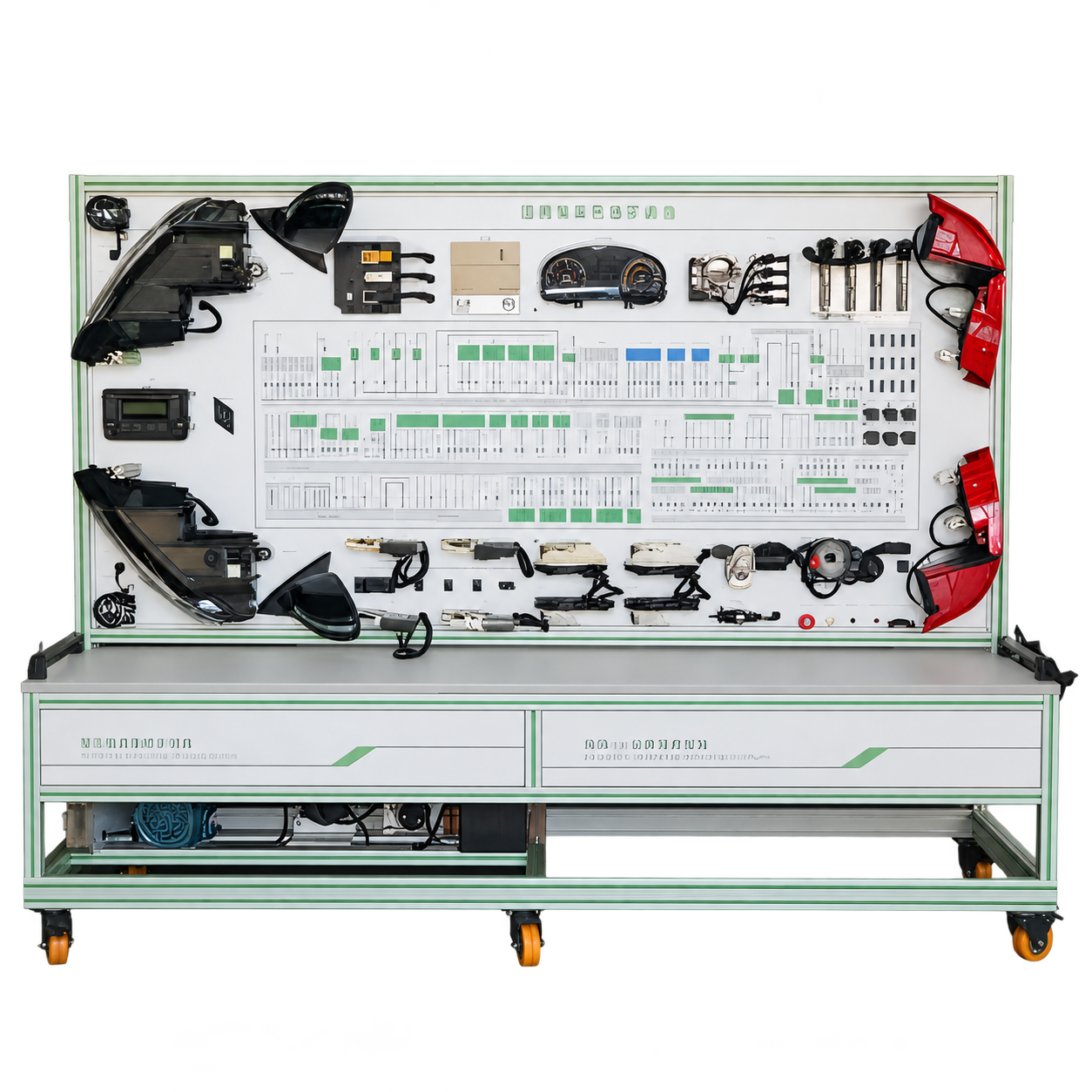

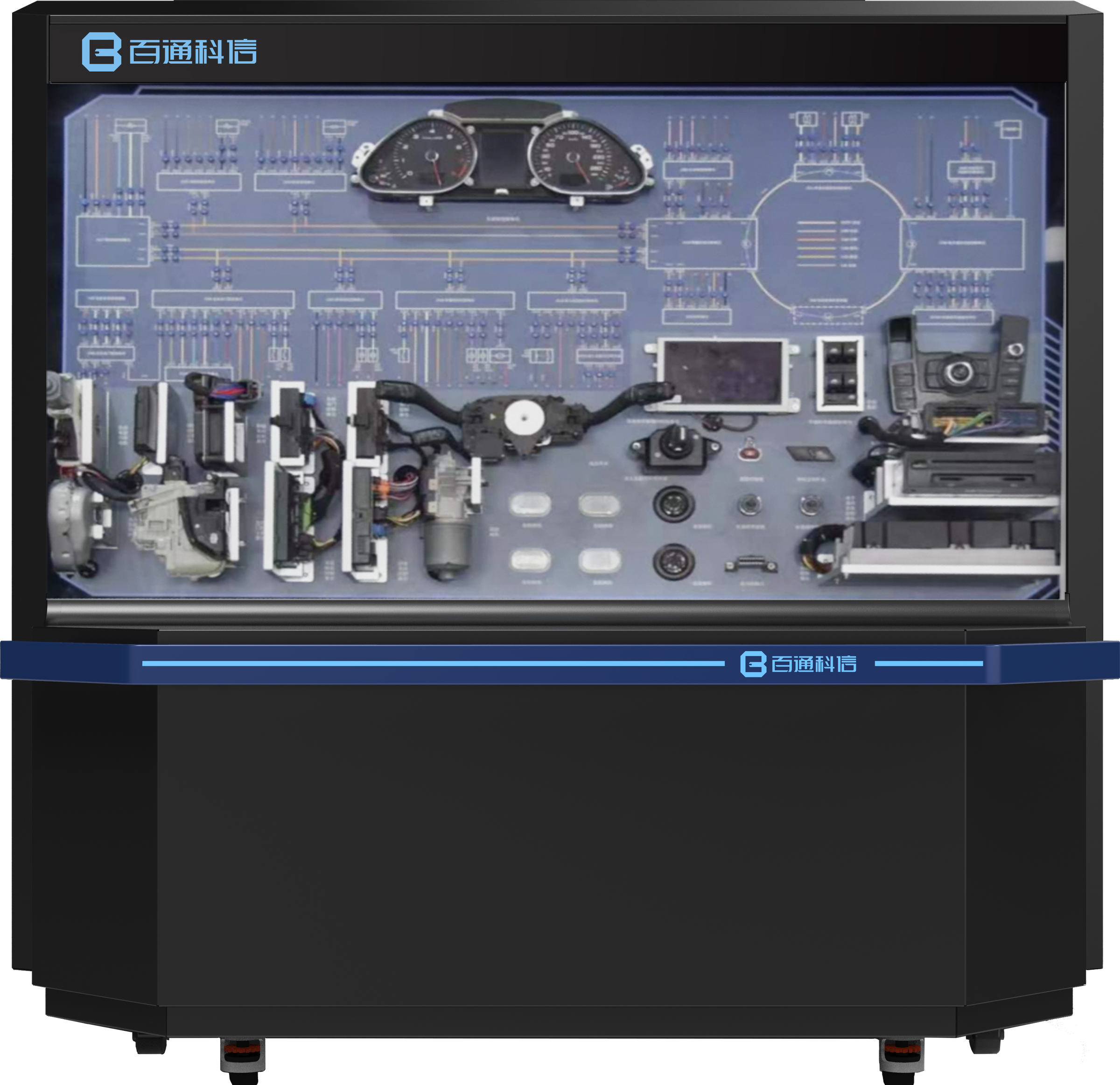
Automotive CAN Bus Training Bench
A vehicle-network teaching bench focused on Controller Area Network (CAN) communication principles.
- Teaching Focus 1
- Network Relationships
- Teaching Focus 2
- Trace a Shared Vehicle Function
On This Page Overview
Product Overview
The Baitongkexin Automotive CAN Bus Training Bench is intended for courses that introduce communication between vehicle electronic systems. Instructors can frame lessons around why modules exchange information and how network structure influences a diagnostic approach. The selected network and its documentation determine the practical exercises, allowing the course to stay aligned with the vehicle technology being taught.
Course Focus
Network Relationships
Use the selected vehicle network to explain why control units exchange information. A course can map participating modules and the functions that depend on their messages before introducing network diagnostic reasoning; the number of nodes and supported protocol must come from the actual configuration.
Trace a Shared Vehicle Function
Choose a function documented for the selected network and identify the participating control units. Follow the communication relationship on the actual network diagram before discussing a failure. This prevents students from treating every unresponsive component as a local component fault.
Evidence Before Message Decoding
A node map, normal communication route and symptom-based isolation plan provide assessable work at an introductory level. If message logging is included, students can add an annotated capture; no capture should be presented as an inherent feature of the bench.
Practical Training Tasks
Network map
Learner Practice
Draw the documented network and identify the role of each module.
Evidence for Review
Labeled node map from the supplied topology
Shared function
Learner Practice
Trace one shared vehicle function across the available diagrams.
Evidence for Review
Diagram tracing the participating modules
Communication complaint
Learner Practice
Prepare a fault-isolation plan based on a stated communication symptom.
Evidence for Review
Fault-isolation plan grounded in the actual network
Configuration and Ordering
Configuration and Procurement
Request the network topology, modules, protocol version, available test access and documentation. Do not assume CAN FD, a bus analyzer or physical fault switches are supplied.
Details for Your Inquiry
Tell us which vehicle network and learner level you teach. Include any required measurement instruments, protocol exercises or diagnostic tools in your configuration enquiry.
Product Questions
What is the main teaching purpose of a CAN bus bench?
It helps a course explain communication among vehicle electronic modules. Students should learn to read the supplied network layout and distinguish a module-level symptom from a possible communication-path issue.
How can learning be evaluated without an analyzer?
Students can identify nodes in a verified diagram, trace a shared function and justify a diagnostic sequence. Waveform capture or message decoding should only be assigned when the quoted configuration includes the required access and instruments.
Is this the same as an engine sensors and actuators bench?
No. A network bench focuses on communication relationships between modules; a sensor-and-actuator bench focuses on inputs and commanded outputs in a selected engine-control context. Confirm the exact components on both.
What should a laboratory specification request?
List the desired protocol, module count, network layout, connector access, diagrams and any fault or measurement exercises. These details determine whether the bench fits an introductory network course or more advanced diagnosis.
Can learners measure bus signals on this bench?
Measurement access and instruments have not been specified. Ask for the terminal layout and supported exercises before assigning waveform or resistance measurements.
Continue Exploring
Related Products
Compare the stated teaching roles below. Product connections, included accessories and software licenses are confirmed in the selected configuration.