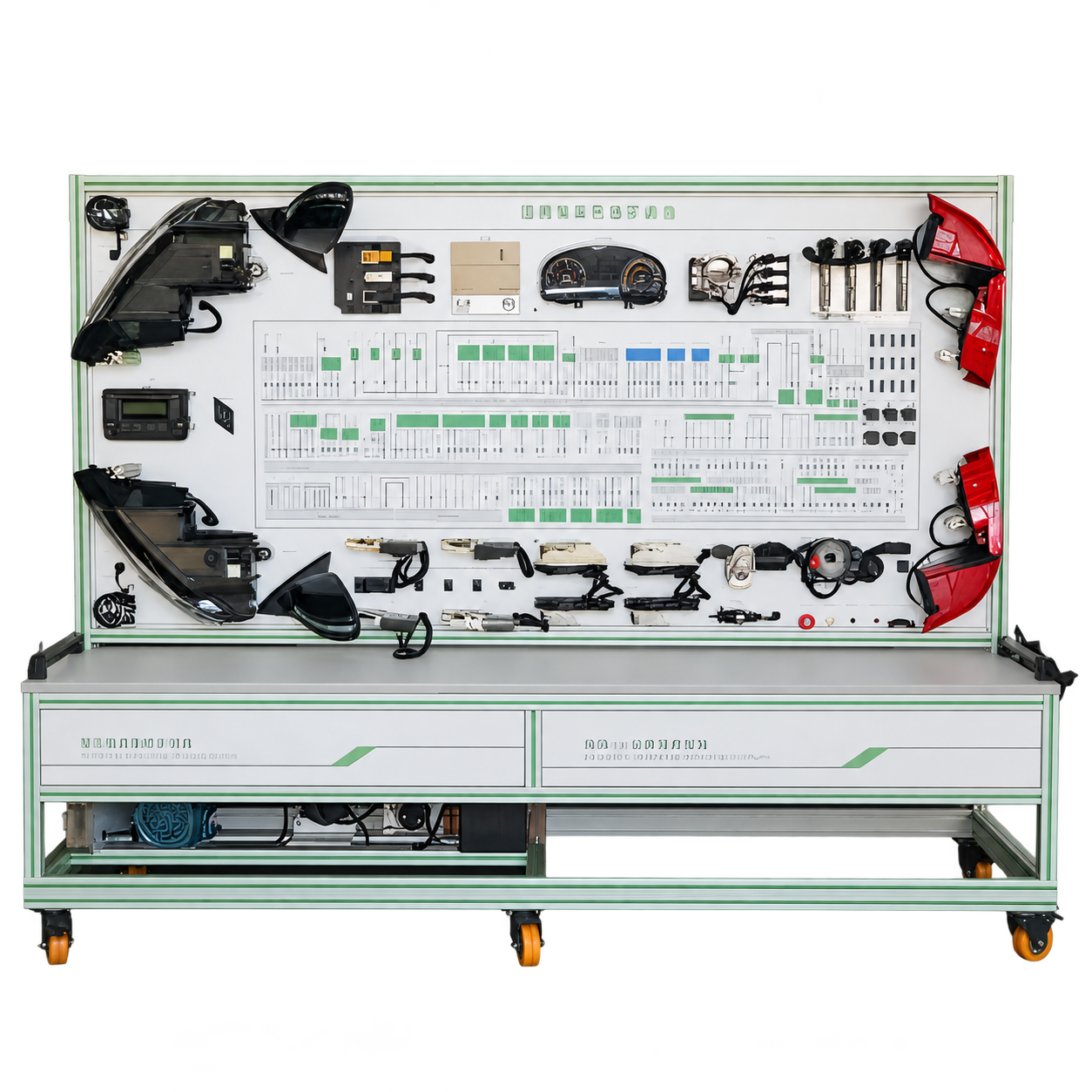

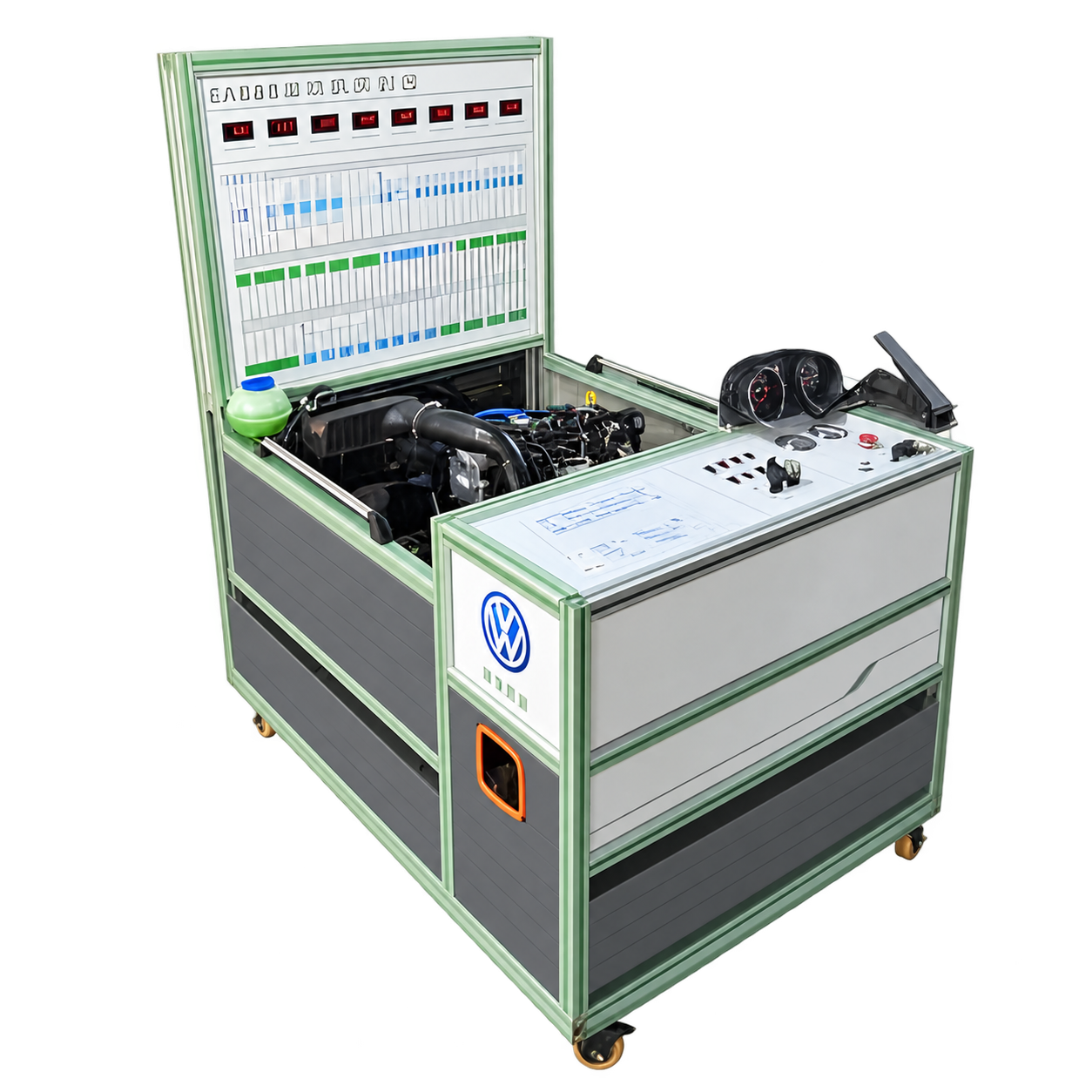
Automotive Starting and Charging Training Bench
A conventional vehicle electrical trainer for engine-starting and battery-charging system principles.
- Teaching Focus 1
- Starting and Charging as Separate Systems
- Teaching Focus 2
- Two Symptoms, Two Paths
On This Page Overview
Product Overview
The Baitongkexin Automotive Starting and Charging Training Bench is intended for foundational vehicle electrical courses. It brings the starting and charging topics into one teaching scope so learners can distinguish the role of each system and consider their relationship during vehicle operation. Course content can then develop toward circuit interpretation and service reasoning for the selected configuration.
Course Focus
Starting and Charging as Separate Systems
A starting complaint and a charging complaint may both involve the vehicle battery, but require different explanations. Teach the requested start sequence and the replenishment of electrical energy as related subjects, using the particular engine and electrical arrangement selected for the bench.
Two Symptoms, Two Paths
Present a no-crank complaint and a battery-not-charging complaint as separate cases. Students identify the starting and charging paths in the selected system and explain which observations distinguish the cases before proposing a test.
Record the Diagnostic Decision
An assessment can require a circuit trace, a short list of possible causes and a reason for the first check. When the bench is specified for live measurement, students can compare permitted readings with its approved procedure instead of relying on symptoms alone.
Practical Training Tasks
Start request
Learner Practice
Explain the starting sequence from driver request to engine cranking.
Evidence for Review
Starting-sequence diagram
Battery charging
Learner Practice
Describe the charging path in the supplied diagram.
Evidence for Review
Charging-path explanation based on the supplied circuit
Symptom comparison
Learner Practice
Compare two sample complaints and justify which system to inspect first.
Evidence for Review
Reasons for choosing the first inspection
Configuration and Ordering
Configuration and Procurement
Specify the starter, charging assembly, battery arrangement, operating mode, protective devices and supported measurements. Confirm supply and ventilation needs if a running demonstration is intended.
Details for Your Inquiry
Share your starting and charging course tasks and preferred vehicle system. Request confirmation of the included components, operating arrangement and measurement options.
Product Questions
Why teach starting and charging together?
Both affect the vehicle's electrical readiness, yet have different operating purposes. A combined course lets students explain why a no-start symptom and a discharged battery may require different checks.
What can students record during a lesson?
They can map the documented starting and charging paths and describe the evidence needed to tell a supply concern from a starter or charging concern. Actual voltage or current readings require a specified instrument and safe test access.
Does “charging” mean EV charging?
No. Here it refers to the conventional vehicle battery-charging system associated with engine operation. EV supply equipment belongs to a different product scope.
Which workshop conditions should be reviewed?
Confirm whether the assemblies run, what electrical supply and battery arrangement they use, and how moving parts and exhaust are managed. Obtain the approved operating and measurement instructions.
Does the bench perform battery or alternator load testing?
Load-testing exercises require the corresponding instruments, operating range and measurement procedures to be included in the quoted configuration.
Continue Exploring
Related Products
Compare the stated teaching roles below. Product connections, included accessories and software licenses are confirmed in the selected configuration.