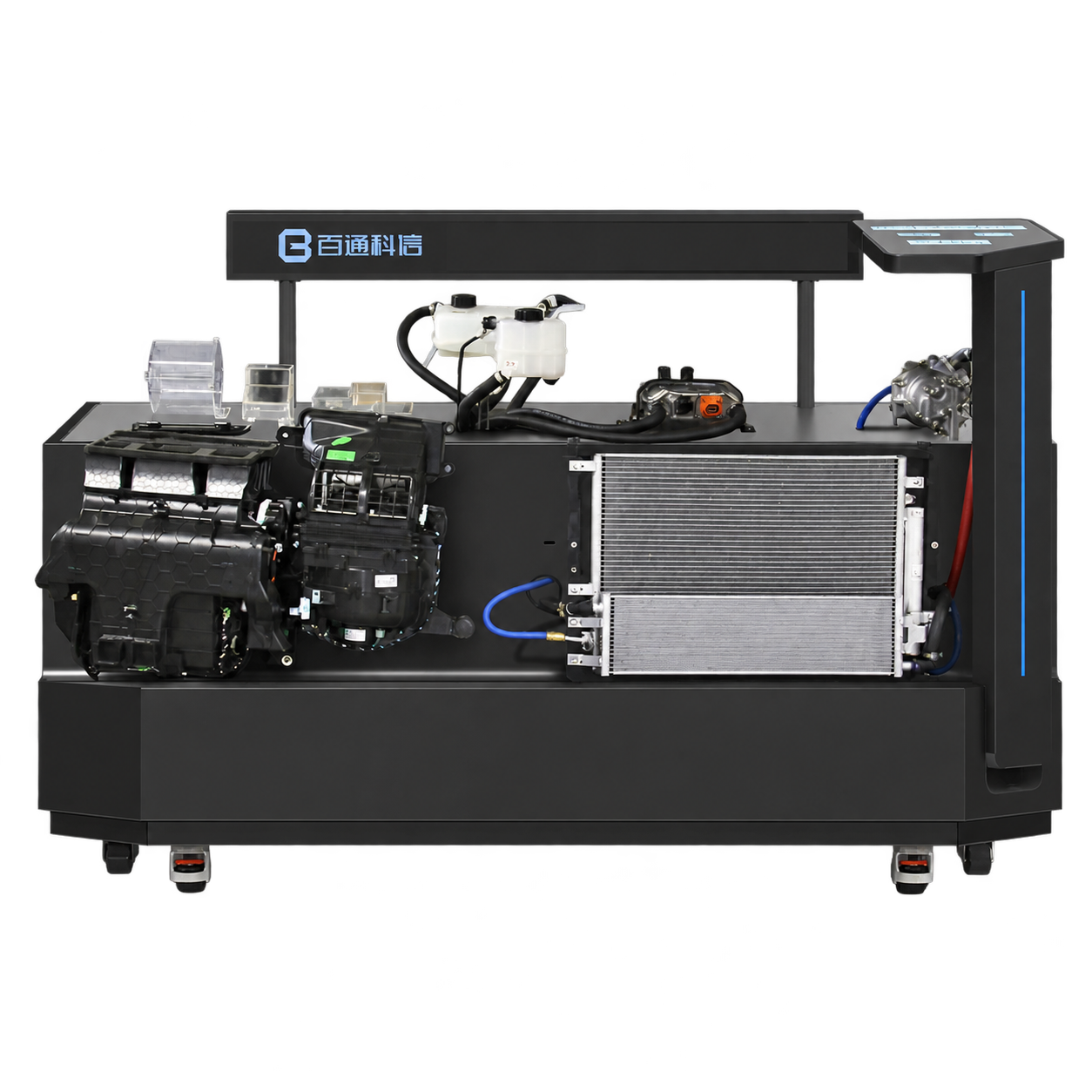

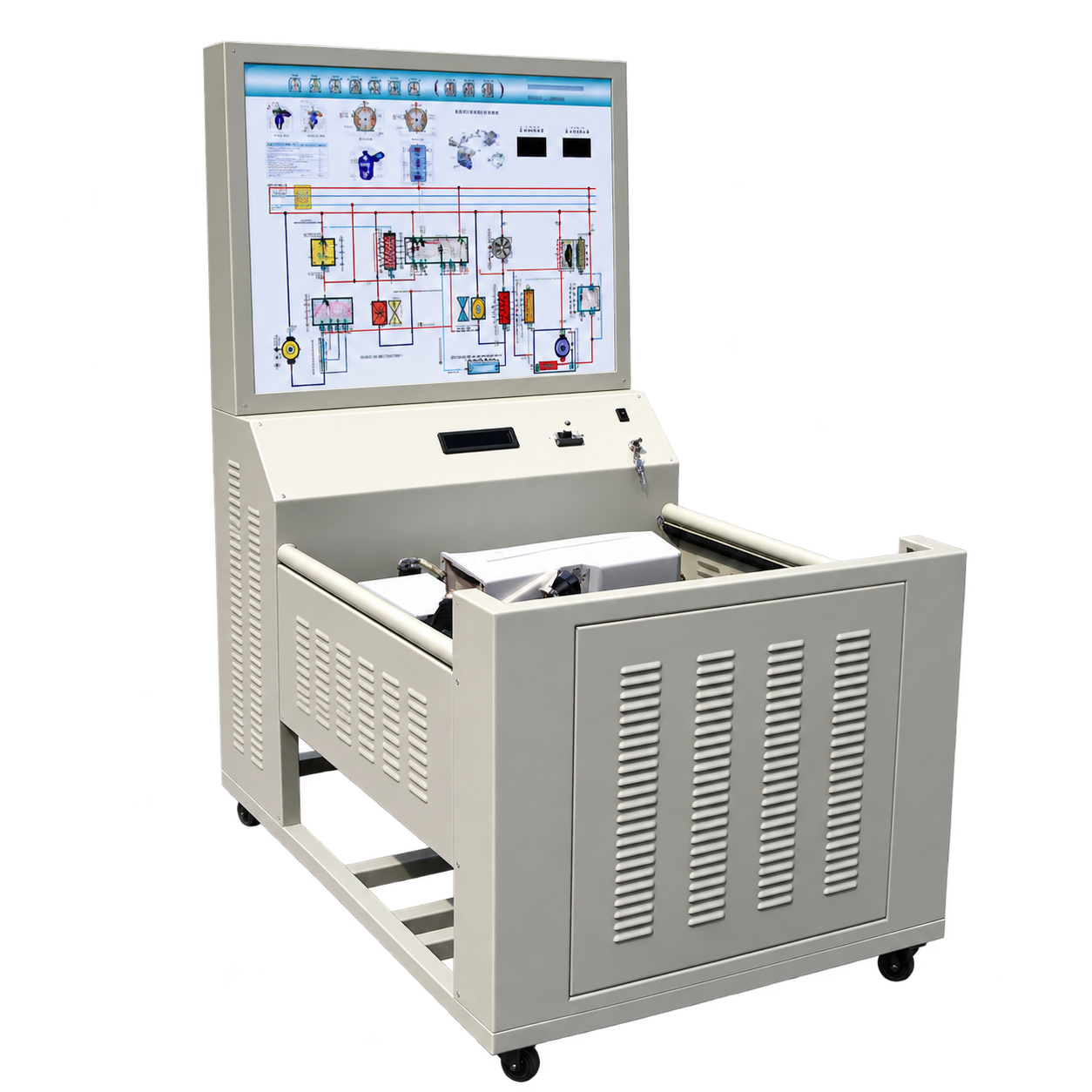
Automatic Climate Control Training Bench
A teaching bench for automotive automatic climate control principles and system-level understanding.
- Teaching Focus 1
- Automatic Regulation
- Teaching Focus 2
- From Set Point to Response
On This Page Overview
Product Overview
The Baitongkexin Automatic Climate Control Training Bench is intended for vehicle electrical and climate-control courses. Teaching can connect a requested cabin condition with the control decisions needed to regulate it. This gives learners a framework for understanding automatic operation before studying the circuit arrangement, service information and practical tasks associated with the selected vehicle system.
Course Focus
Automatic Regulation
Compare a requested cabin temperature with the system's response. Students should distinguish the driver's set point from the inputs and control actions that may be involved; the actual sensors and control strategy depend on the selected climate-control system.
From Set Point to Response
Begin with a normal cabin-temperature request and list the information a controller would need to act on it. Compare that conceptual sequence with the controls and diagrams supplied for this bench, then move to an observed response using the sensors and actuators named in the selected configuration.
Evidence for a Climate-Control Diagnosis
A useful student record separates the request, the observed change and the documented control path. If the quoted unit exposes measurement points, readings can support that explanation. Without them, an annotated diagram and reasoned inspection plan remain suitable outputs for a principles lesson.
Practical Training Tasks
Regulation path
Learner Practice
Explain the control path from a changed temperature request to an observable response.
Evidence for Review
Annotated request-to-response diagram
System documentation
Learner Practice
Annotate the corresponding service diagram.
Evidence for Review
Labeled control path on the supplied diagram
Diagnostic enquiry
Learner Practice
Record a symptom and the evidence needed to investigate it.
Evidence for Review
Symptom record and justified first check
Configuration and Ordering
Configuration and Procurement
Confirm the donor system, available controls, circuit documentation and whether refrigeration components or service instruments are included. Electrical-control study and refrigerant service are different teaching scopes.
Details for Your Inquiry
Share your course level and preferred vehicle system. Identify whether you need electrical-control teaching, refrigeration practice or both when requesting the bench configuration.
Product Questions
How does this differ from a manual air-conditioning trainer?
Automatic climate control is taught through the relationship between a temperature request, system inputs and regulated response. A manual trainer emphasizes direct driver controls. Confirm the actual control architecture on either quoted unit before planning comparative exercises.
What can an instructor assess?
Ask learners to explain a change in requested temperature using the supplied diagram and observed response. Their record should distinguish what they saw from what the service information says the system should do.
Which parts should be identified in the quotation?
The quotation should list the climate-control assembly, controller, sensors, controls, wiring information and any refrigeration equipment separately so the standard supply scope is clear.
What conditions matter before installation?
Determine the bench supply, space, operating method and whether refrigerant work is intended. Refrigeration practice requires the approved equipment and local handling procedures, which are separate from an electrical-control lesson.
Does this bench include refrigerant-handling practice?
Refrigerant-handling practice requires an explicitly configured refrigerant circuit, approved service equipment and permitted procedures. Specify these requirements separately in the equipment schedule.
Continue Exploring
Related Products
Compare the stated teaching roles below. Product connections, included accessories and software licenses are confirmed in the selected configuration.