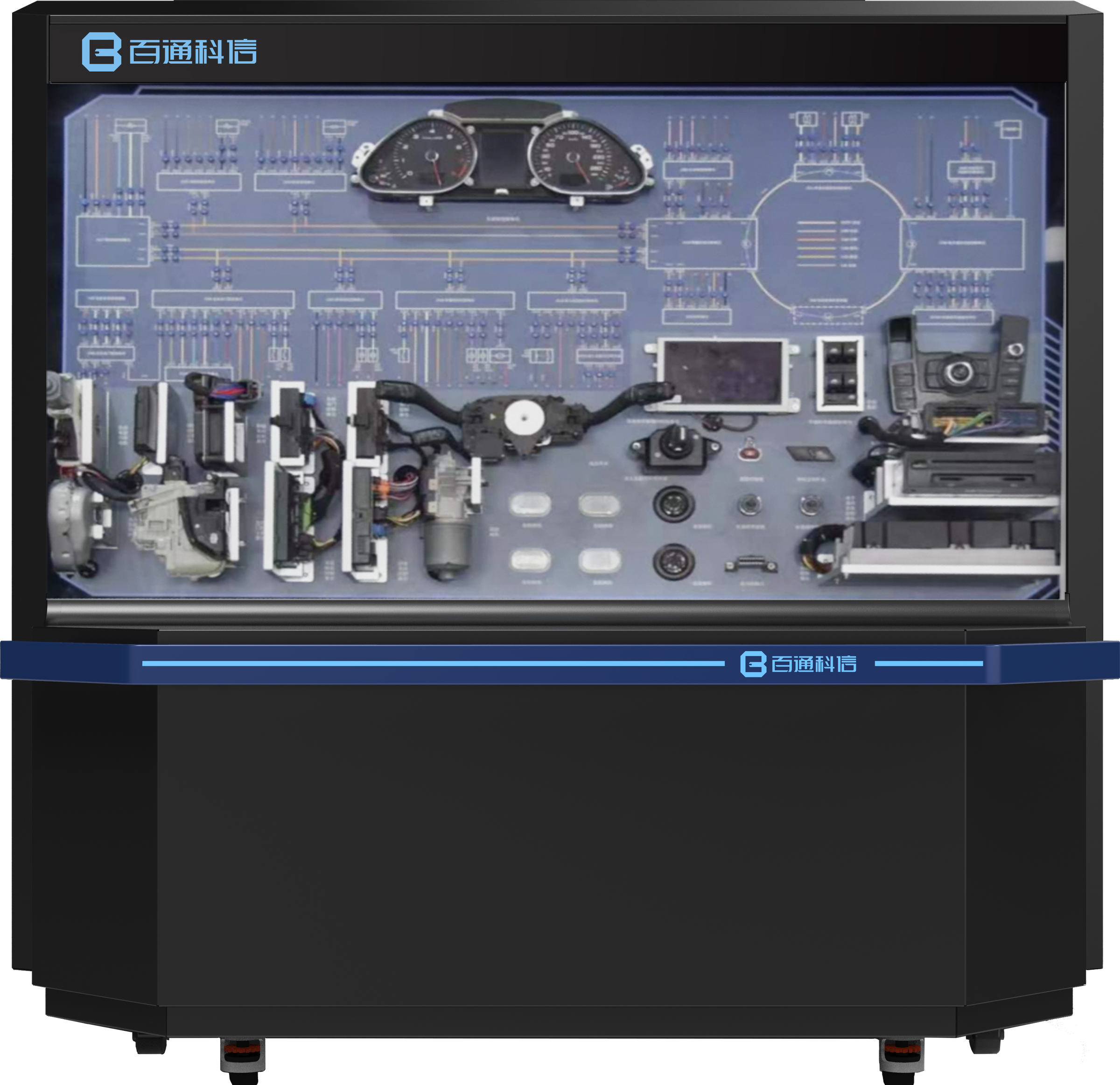

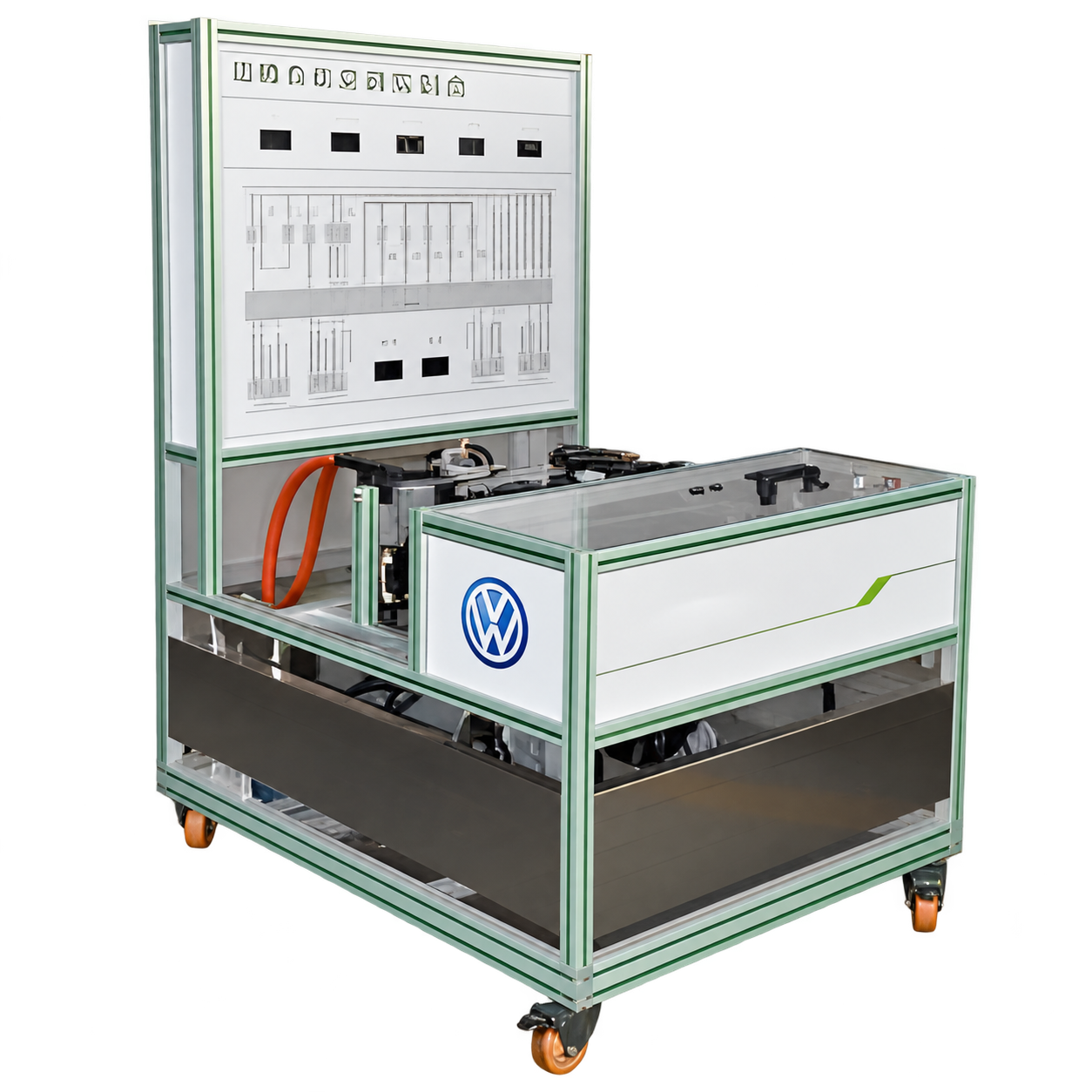
EV Air Conditioning Training Bench
Model: BT-KTCJ
Explore electric-compressor operation, circuit measurements and supervised refrigerant service with the BT-KTCJ EV air conditioning training bench.
- System type
- Working electric-vehicle air-conditioning system
- Measurement access
- 4 mm panel terminals
- Teaching indicators
- Outlet-temperature indicator and diagnostic interface
On This Page Overview
Product Overview
The Baitongkexin BT-KTCJ uses a working electric-vehicle air-conditioning system for structure and maintenance teaching. Its electric compressor, evaporator, condenser and control components are arranged with a circuit-diagram measurement panel. Learners can relate a physical component to its electrical signal and to the system’s cooling behavior. The bench supports vocational instruction in circuit inspection, sensor testing and supervised air-conditioning service, with results recorded against the approved equipment and service procedures.
Core Functions
A Working Refrigerant Circuit
The compressor, evaporator, condenser, pipework and receiver-drier allow instructors to explain the refrigerant path and component relationships while observing system operation.
Circuit Access at the Teaching Panel
A color circuit diagram and 4 mm terminals provide access for the listed voltage, resistance, current and frequency measurements. Learners can connect a circuit reading with the component being investigated.
Cooling and Heating Service Topics
The task scope includes compressor insulation checks, temperature-sensor investigation, leak testing, refrigerant charging and positive temperature coefficient (PTC) heater work. These tasks require the appropriate service tools and qualified supervision.
Practical Training Tasks
System identification
Learner Practice
Trace the compressor, condenser and evaporator connections
Evidence for Review
A labeled refrigeration and control diagram
Sensor investigation
Learner Practice
Compare permitted circuit measurements with operating conditions
Evidence for Review
A record explaining the selected sensor or circuit
Service planning
Learner Practice
Identify the equipment and procedure for a leak or insulation check
Evidence for Review
A supervised inspection record and service conclusion
Equipment and Scope
The core equipment includes an electric compressor, evaporator assembly, condenser, pipework, receiver-drier, air-conditioning controller, outlet-temperature indicator, diagnostic interface and mobile bench with measurement panel. Refrigerant service equipment, diagnostic instruments and the electrical supply arrangement need separate itemization.
Technical Specifications
| System type | Working electric-vehicle air-conditioning system |
|---|---|
| Measurement access | 4 mm panel terminals |
| Teaching indicators | Outlet-temperature indicator and diagnostic interface |
Configuration and Ordering
Reference Laboratory Quantity
1 unit
This quantity belongs to the reference laboratory equipment schedule. Confirm the quantity for your project in the quotation.
Configuration and Procurement
Confirm the exact bench version, footprint, refrigerant type and charge, compressor supply and required test instruments. Refrigerant handling and high-voltage work must follow the selected model’s procedure and applicable local requirements.
Discuss an EV Climate-Control Teaching Station
Share the climate-control tasks, refrigerant requirements and instruments already available so the bench configuration can be reviewed.
Product Questions
Does this bench support heating as well as cooling topics?
PTC inspection and removal are listed teaching tasks. Confirm the actual heater assembly and operating demonstration required in the quotation.
Can the same service procedure be used for any EV?
No. Refrigerant, compressor drive and control architecture vary. Use the equipment-specific procedure and agree the vehicle system the course is intended to represent.
Continue Exploring
Related Products
Compare the stated teaching roles below. Product connections, included accessories and software licenses are confirmed in the selected configuration.