

Baitong Kexin
Contact

Hybrid Drive Unit Cutaway Trainer

Plan hybrid-drive structure lessons around a cutaway unit whose architecture, sectioned components and presentation format are confirmed for the course.

Hybrid Drive Unit Cutaway Trainer

Hybrid Drive Unit Cutaway Trainer
Course Area
Hybrid drive structures
Equipment Form
Cutaway teaching unit
Request This Configuration
On This Page Overview

Product Overview

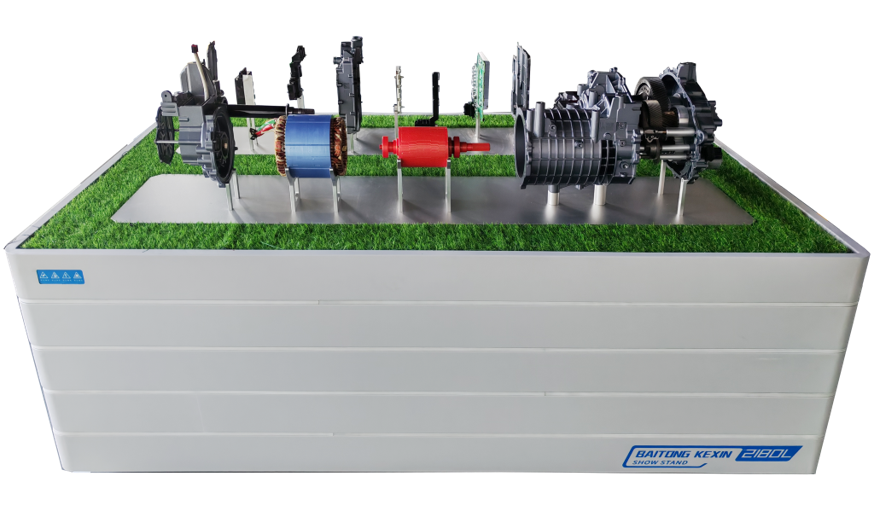
The Hybrid Drive Unit Cutaway Trainer is a visual teaching unit for hybrid-drive structure courses. The quoted version must identify the donor assembly, hybrid topology, sectioned components, presentation method and support frame so the visible teaching points match the programme.

Course areas: Hybrid-drive component-recognition lessons, Architecture-specific mechanical relationship study, Guided comparison with diagrams and service information, Preparation for separate service or diagnostic training.

Suitable for: Hybrid-system foundation courses, Vocational colleges, Technical training centres.

Course Planning Scope

Internal Component Recognition

Use the confirmed cutaway to identify the components made visible by its sectioned housing. The lesson should follow the actual supplied assembly rather than a generic hybrid-system diagram.

Mechanical Relationships

Relate shafts, gears, motors, clutches or other visible elements only when they are present in the selected unit. Labels and supporting diagrams should match the quoted assembly.

Architecture-Specific Power-Flow Discussion

The cutaway can support an instructor explanation of the selected hybrid architecture. Series, parallel, power-split, regenerative-braking and powered-operation functions are included only when the quoted assembly and signed technical schedule explicitly provide them.

Equipment and Scope

Before procurement, request the donor-system identity, cutaway map, visible component list, stand and guarding details, labels, manual rotation or operating provisions, dimensions and teaching documentation.

Teaching Resources and Use

Display-Only Assumption

Treat the product as a cutaway teaching unit unless the signed technical schedule explicitly documents another operating mode. Do not energize or rotate the assembly outside the supplied procedure.

Physical Protection

Confirm that cut edges, movable elements and the support structure are finished, guarded and secured for the intended classroom access.
Configuration and Ordering

Reference Laboratory Quantity

1 unit

This quantity belongs to the reference laboratory equipment schedule. Confirm the quantity for your project in the quotation.

Hybrid Architecture

Confirm the donor assembly, vehicle or system family and whether the unit represents a series, parallel, power-split or another hybrid arrangement.

Cutaway Coverage

Confirm every housing section and visible component, the finish applied to cut surfaces, retained moving parts, labels and any transparent or guarded areas.

Display and Handling

Confirm the support frame, stability, permitted manual movement, guarding, dimensions, mass, transport points and classroom positioning requirements.

Teaching Documentation

Confirm the component legend, architecture diagram, instructor notes, language and any separately supplied digital content.

Define the Hybrid Cutaway Configuration

Share the hybrid architecture, component list, learner level and viewing requirements so the cutaway coverage, support frame, labels and teaching documentation can be confirmed.

Product Questions

Which hybrid architecture does it represent?

Specify the system required by the course and request a quotation that names the architecture and supplies a matching cutaway map.

Does the unit operate or demonstrate regenerative braking?

Treat the product as a visual cutaway unless powered operation or energy-flow functions are explicitly listed in the signed technical schedule.

Can the cutaway replace an operating hybrid-system trainer?

No. Its primary role is visual structure study. Powered operation, control-system diagnosis and energy-flow testing require separately documented equipment and procedures.