
Teaching Complement
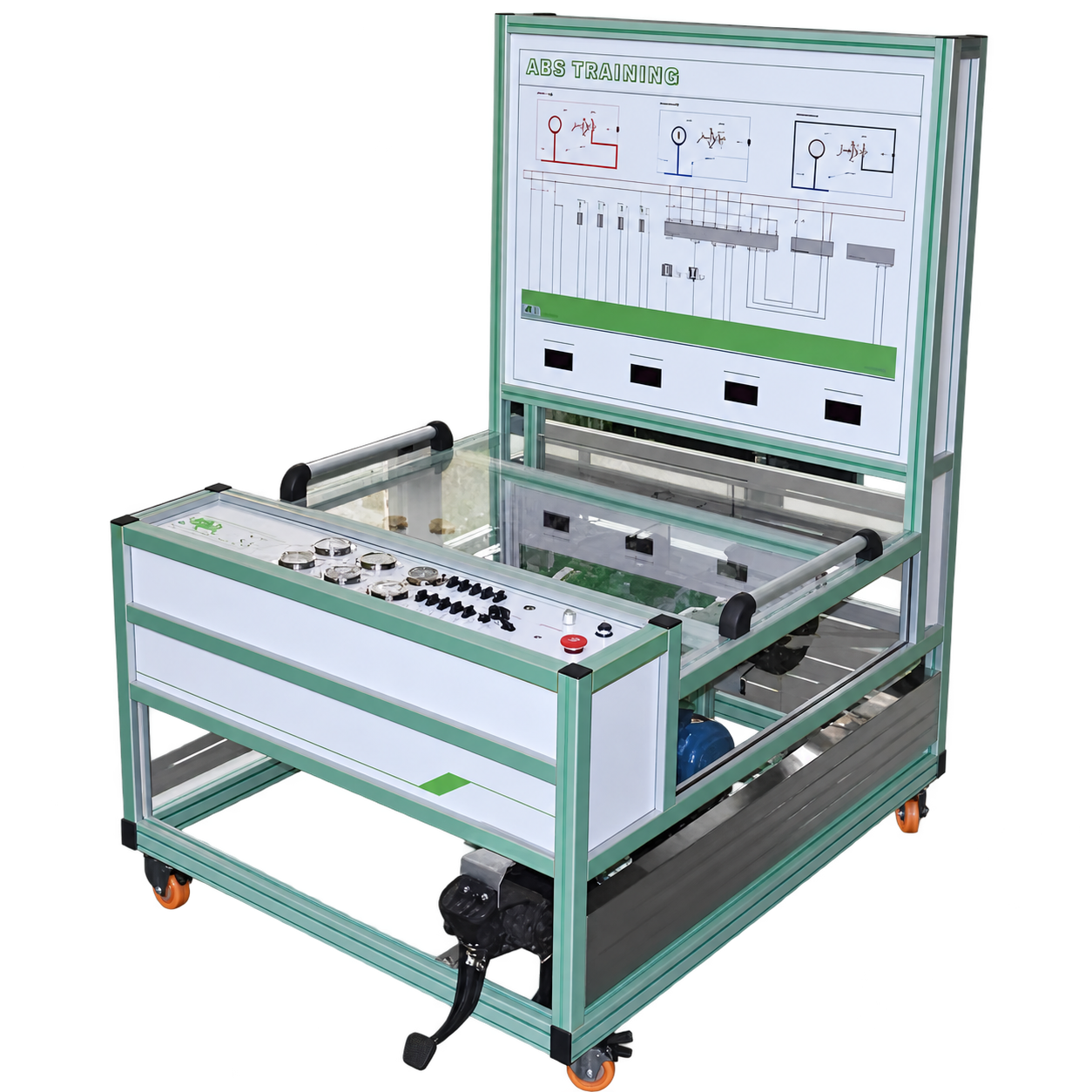
ABS Training Bench
Build from braking components and circuits to anti-lock braking control and diagnosis.
Explore Product ↗A teaching bench for vehicle braking fundamentals and the relationship between brake-system components.
The Baitongkexin Vehicle Braking System Training Bench is intended for foundational chassis and service courses. Lessons can follow how a braking request is transmitted through the selected system and relate component roles to common service concerns. This provides a teaching scope for conventional braking before learners progress to separate electronic brake-control topics such as anti-lock braking.
Introduce the selected braking layout through the way a driver's request reaches the wheel-brake assemblies. Distinguish mechanical and hydraulic relationships where present, then use approved service information to plan inspection rather than asserting an undocumented operating or fault-simulation function.
Trace a driver's braking request through the mechanical or hydraulic path documented for this trainer. Students should connect component location to its role and distinguish ordinary service questions from separate electronic brake-control topics.
A labeled system diagram and inspection plan are suitable outputs before hands-on work. If hydraulic practice is part of the quotation, add the approved tools, operating method and acceptance criteria to the instructor's assessment.
Learner Practice
Identify the documented brake components.
Evidence for Review
Labeled component map
Learner Practice
Trace the force or pressure path in the supplied system.
Evidence for Review
Diagram of the documented force or pressure route
Learner Practice
Prepare an inspection checklist for one stated braking complaint.
Evidence for Review
Checklist tied to an identified complaint
Confirm the brake architecture, hydraulic or mechanical operating arrangement, protective provisions and instructor-approved service activities. Anti-lock control is a separate product in this catalog.
Share the vehicle brake type and practical tasks your course covers. Request the component list and operating scope for the proposed training bench.
Use the dedicated ABS bench or a braking configuration with a clearly specified control system when anti-lock instruction is required.
They can identify the supplied brake path and explain component roles using the approved system diagram. A hands-on inspection record depends on accessible hardware and the institution's service procedure.
Only after confirming the hydraulic layout, test points, pressure instruments and safe operating method. Do not treat a braking-system label as a pressure-test specification.
List physical brake assemblies, any actuation or hydraulic components, operating mode, tools and service documents separately. This separates demonstration equipment from practical-service resources.
Use the dedicated ABS product when anti-lock braking requires its own confirmed teaching scope.
Continue Exploring
Compare the stated teaching roles below. Product connections, included accessories and software licenses are confirmed in the selected configuration.