On This Page
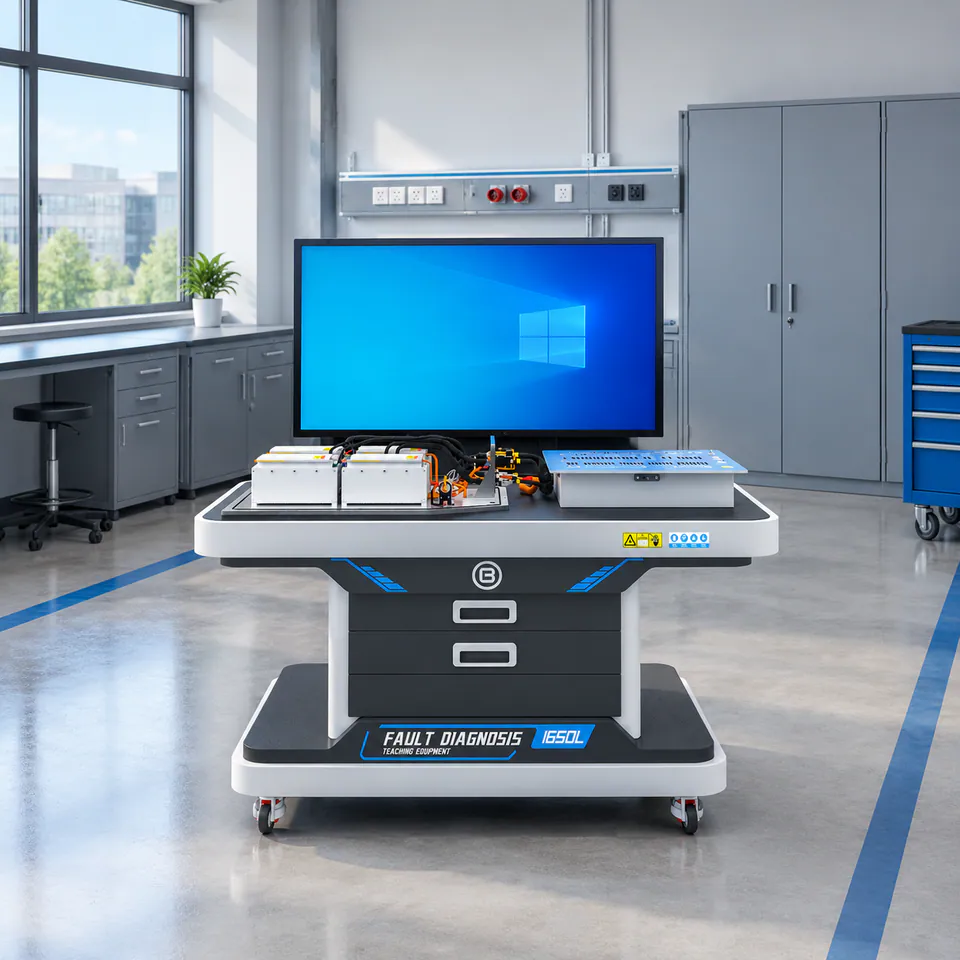
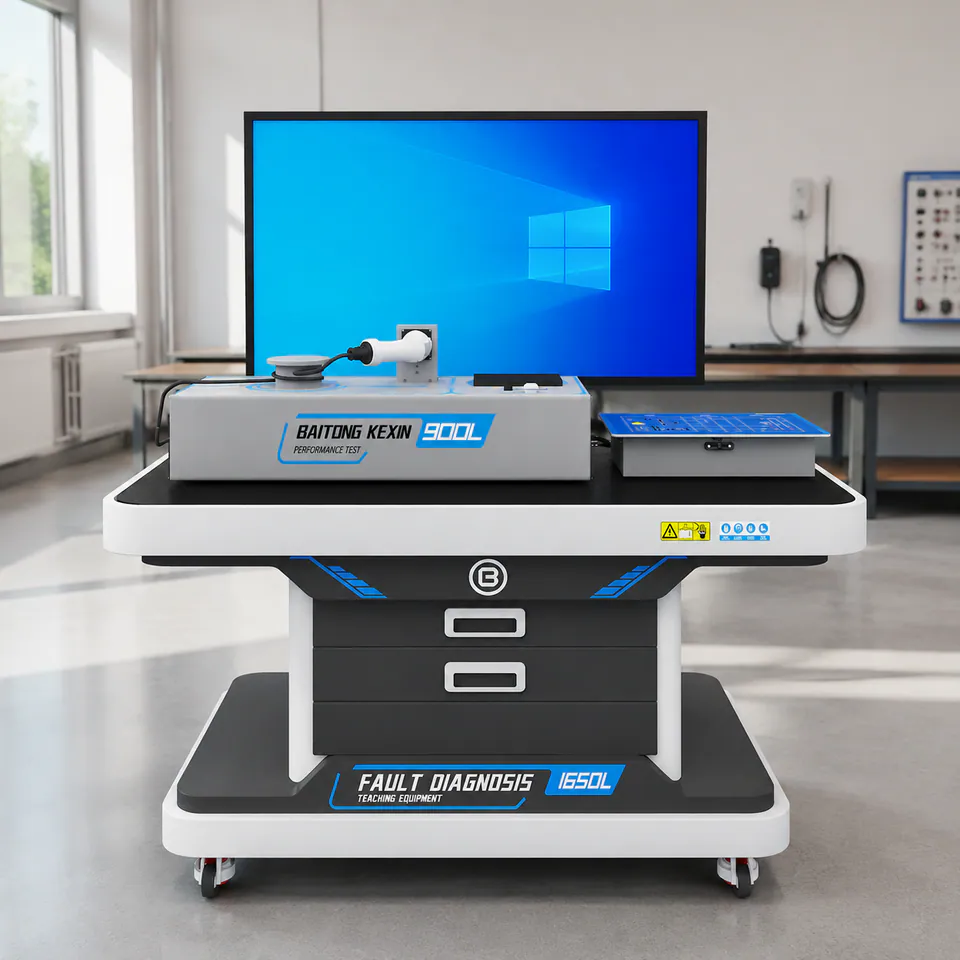
Battery technology courses must balance access with control. Students need to understand pack structure, cell grouping, BMS functions and measurement logic, while the teaching plan controls electrical exposure and repeated handling. Separate the assembly station from performance testing, use the current model limits, and assess the approved inspection and measurement procedure under qualified supervision.
Separate the Learning Levels
Not every battery task belongs on the same platform. Component recognition, module assembly, BMS signal study, high-voltage safety and performance testing each require different levels of access and supervision.
A staged program can begin with cell and module structure, progress to protected pack assembly and measurement, and then introduce charge-discharge analysis or fault-based service tasks.
Make Safety Part of Every Exercise
Students should follow a defined process before touching a test point or connector. The task should state the equipment condition, required personal protection, isolation method, instrument check and verification step.
The training system should support that process through clear connection points, controlled exposure, emergency isolation and instructor oversight. Safety should be assessed as part of competence, not treated as a separate theory question.
Connect Measurements to BMS Behavior
Voltage and temperature values become meaningful when students can relate them to monitoring, balancing, protection and communication. Practical tasks should ask learners to predict a result, take the measurement, interpret the data and explain the system response.
Useful learning tasks may include:
- identifying cell, module and pack relationships;
- checking voltage consistency and temperature sensing;
- tracing BMS inputs and outputs;
- observing protection conditions and controlled faults;
- recording results and comparing them with expected limits.
Include Documentation and Assessment
Each exercise needs a clear starting condition, procedure, expected result and assessment standard. This makes the task repeatable across student groups and gives instructors a consistent basis for feedback.
When planning equipment, institutions should also consider class size, station rotation, available utilities, instructor experience and the relationship between physical practice and virtual preparation.
The objective is not simply to expose battery hardware. It is to build a controlled learning path from system recognition to measurement, reasoning and safe technical practice.
Keep Assembly and Test Ratings Separate
| Teaching Layer | Current Reference | What to Confirm |
|---|---|---|
| Assembly and BMS, T028 | LFP pack nominal voltage ≥60 V; cell 3.2 V / 30 Ah; BMS voltage sampling accuracy ≤5 mV | Approved assembly, isolation and inspection procedures |
| Performance testing, T068 | Rated power ≤4 kW; channel current −30 to +30 A; charge output 0–100 V DC | Battery compatibility and permitted voltage, current and stop conditions |
| Measurement accuracy | T068 voltage/current: 0.05% full scale + 0.05% of reading | Selected range, calibration and recorded test conditions |
| Protective tools | T028 tool set stated withstand rating 1 kV | Actual supplied tools, inspection status and required protective measures |
A ≥60 V teaching pack still carries stored-energy and electrical hazards. A tester’s full output range is not permission to apply every setting to the pack. The battery training scenario explains how the two stations fit together.
Treat an Insulation Warning as a Controlled Investigation
Stop the exercise and let the instructor distinguish a selected fault-box case from a real equipment defect. Use the model-specific procedure to define the authorized inspections and measurements. Record the equipment state, permitted readings, circuit explanation and restoration check; do not teach by improvised live disconnection. The instrument’s maximum resistance range is not a pass/fail threshold.
Request the current T028 assembly specification and T068 performance specification when preparing the lesson and acceptance plan.

Editorial Responsibility
Baitong Kexin
Published by Beijing Baitong Kexin Machinery Equipment Co., Ltd. Product limits follow the current model documentation; project scope and acceptance requirements are confirmed in the quotation.