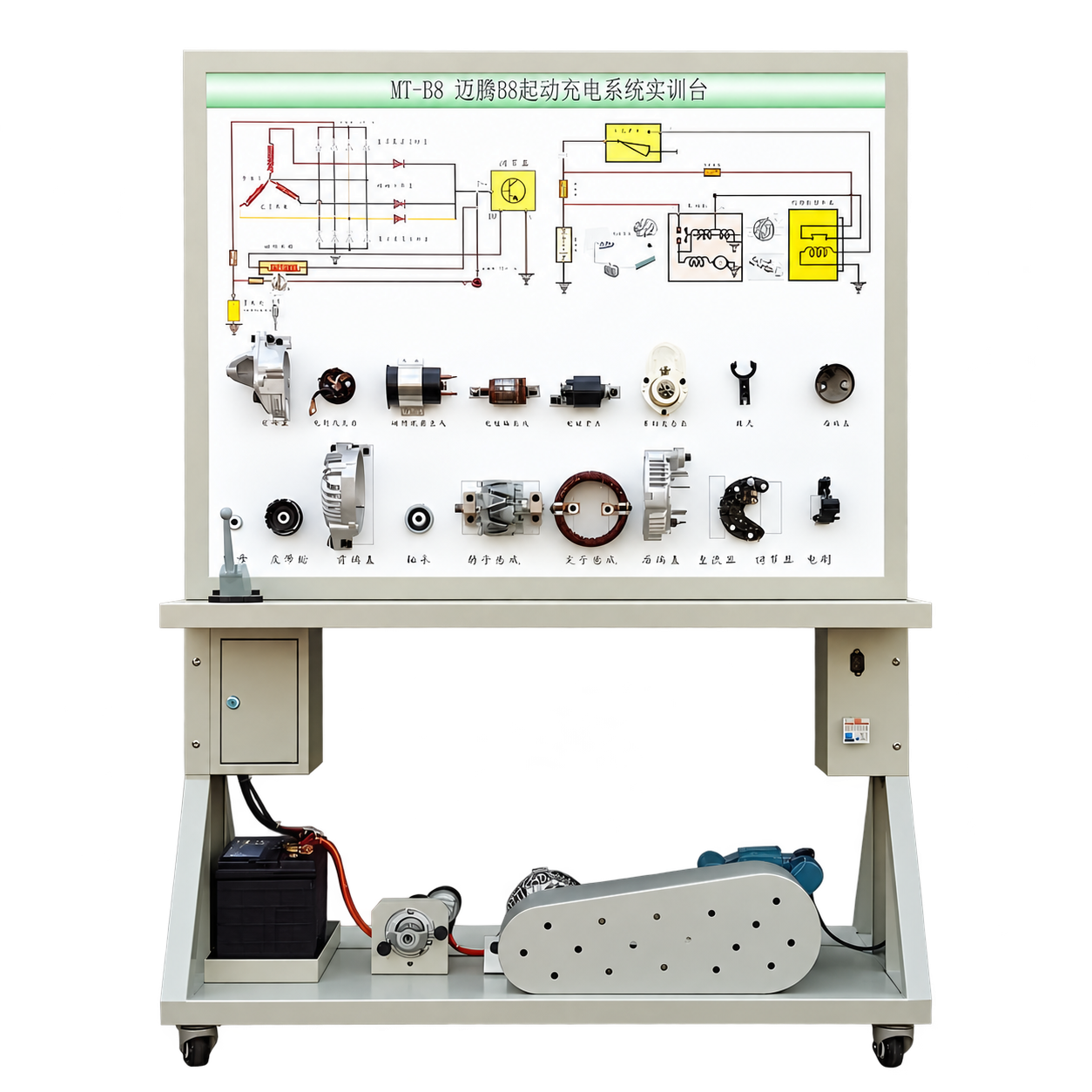

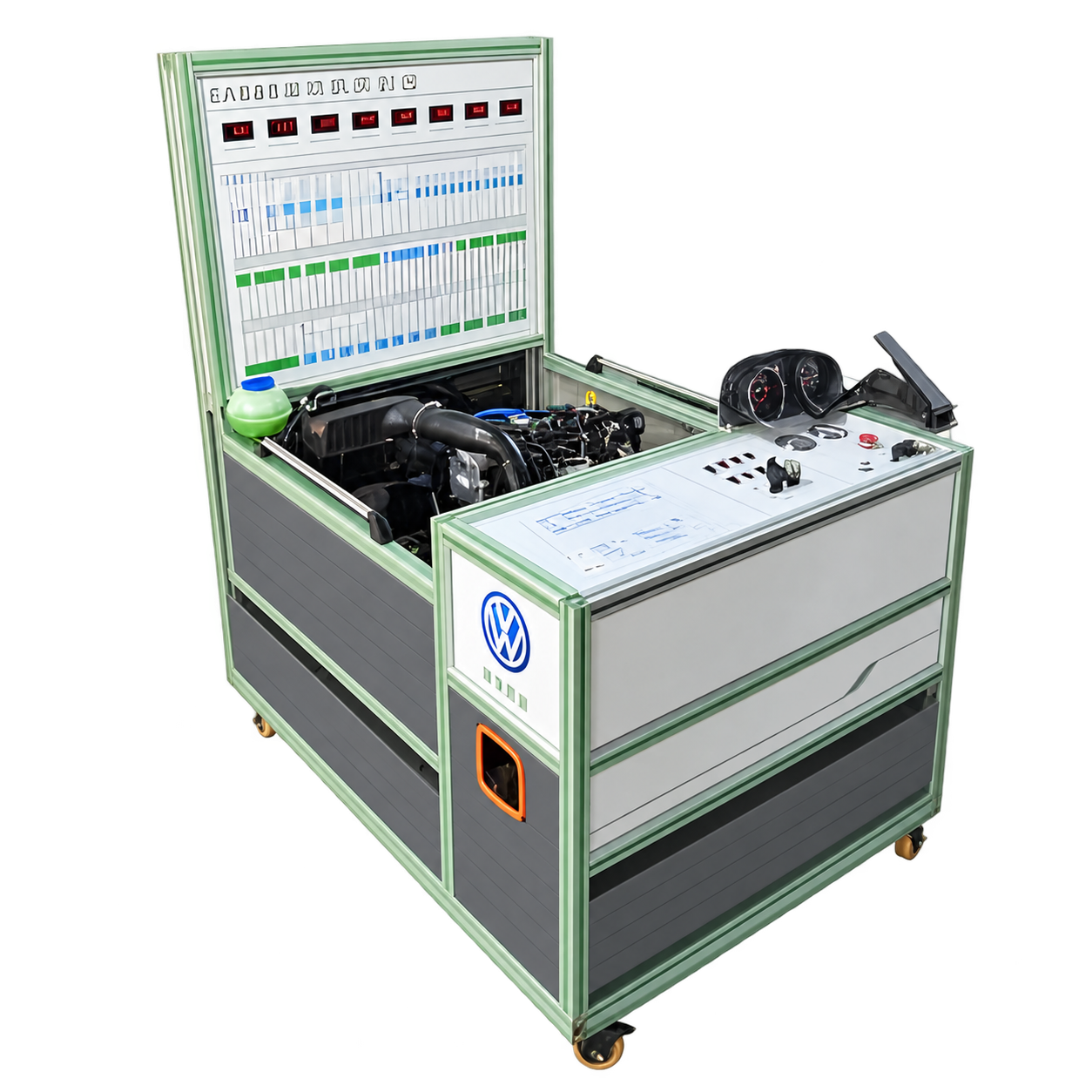
Engine Sensors and Actuators Training Bench
An engine-management teaching bench focused on sensing inputs and controlled outputs.
- Teaching Focus 1
- Inputs and Commanded Outputs
- Teaching Focus 2
- Build an Input-Output Map
On This Page Overview
Product Overview
The Baitongkexin Engine Sensors and Actuators Training Bench is intended for vehicle electrical and engine-control courses. It gives instructors a defined subject for separating what an engine system measures from what it commands. Lessons can connect component purpose with control logic and service terminology before progressing to the specific measurement tasks supported by the selected configuration.
Course Focus
Inputs and Commanded Outputs
Distinguish information a controller receives from actions it commands. The trainer's actual sensor and actuator list should drive the lesson, so students can connect a measured or represented input to an appropriate output without assuming every engine-management device is present.
Build an Input-Output Map
Choose a sensor and actuator actually supplied on the unit. Students can identify what condition the input represents, which response is commanded and what evidence would be needed to connect the two in the selected engine-control architecture.
Distinguish Signal from Simulation
An instructor can assess a component map and a predicted response before assigning measurements. Any displayed or simulated value must be distinguished from a physical signal, and the exercise should use only the access specified for this bench.
Practical Training Tasks
Input and output
Learner Practice
Classify the supplied components as sensors or actuators.
Evidence for Review
Classification of supplied devices
Control relationship
Learner Practice
Trace one documented input-to-output relationship.
Evidence for Review
Diagram for one documented sensor-to-actuator case
Verification plan
Learner Practice
Prepare a measurement plan using the confirmed access points.
Evidence for Review
Expected response and proposed evidence
Configuration and Ordering
Configuration and Procurement
Request the component schedule, controller arrangement, signal or measurement interfaces, power requirements and the status of any simulation or fault-setting functions.
Details for Your Inquiry
List the sensors, actuators and measurement tasks your curriculum requires. Ask the overseas team to confirm the component set and teaching interfaces.
Product Questions
How are sensors different from actuators in this course?
Sensors provide information about a condition; actuators perform a commanded action. Use the components actually supplied to show how the chosen engine-control system links the two.
Can students measure real sensor signals?
Only if the selected unit provides genuine components, safe test access and appropriate instruments. A simulated display or diagram is a different teaching method and should be identified as such.
What assessment avoids guesswork?
Give students one documented input-output relationship and ask for a component map, expected response and evidence they would need to verify a suspected fault.
How does this complement a running engine trainer?
The focused bench can teach component relationships; a running engine trainer can put those relationships in an operating context. Compare their listed devices and connectors before linking exercises.
Can it simulate every engine sensor failure?
No supported fault list has been provided. Specify the required devices and fault conditions before assigning simulation-based exercises.
Continue Exploring
Related Products
Compare the stated teaching roles below. Product connections, included accessories and software licenses are confirmed in the selected configuration.