
Workplace Task Connections
Identify the supplied assembly, plan its handling, document inspection observations and explain the task against the correct service reference.
New Energy Vehicle Education
Make the mechanical relationships teachable. Connect drivetrain handling, electric steering and front-suspension inspection with a structured practical course.
Baitongkexin’s chassis course framework links three practical products with component recognition, controlled disassembly, electrical investigation and inspection records.
Why This Course Matters
Chassis work asks learners to connect component condition with mechanical relationships and, for electric steering, electrical evidence. A course should distinguish visible structure and workshop practice from vehicle-level alignment, dynamic road testing or other separately equipped tasks.
Identify the supplied assembly, plan its handling, document inspection observations and explain the task against the correct service reference.
Appropriate support stands, task-specific fixtures and tools, equipment-matched service information and individual practical records.
Build the lesson around the actual assembly. Give learners a controlled task, clear inspection criteria and a record that shows what they observed and how they reached their conclusion.
The Learning Experience
Develop the handling and inspection method first, then apply it to drivetrain, steering and suspension tasks on their documented configurations.
Mechanical foundations
Use the three products to distinguish drivetrain, steering and front-suspension components and their teaching roles.
An assembly map and instructor-reviewed task plan.
Drivetrain practical
Use the manual turnover stand with its course-matched transmission and approved procedure.
A parts-identification, inspection and assembly record.
Steering practical
Relate electric steering operation to its documented circuit and permitted measurements.
An EPS circuit map and diagnostic record.
Suspension practical
Use the front-suspension bench for structure, component inspection and approved supervised dismantling.
A component-condition sheet and practical inspection record.
Course assessment
Select an appropriate station task and assess preparation, component handling, observations and the conclusion.
A chassis practical portfolio with task-specific criteria.
Adapt the modules, practical hours and assessment to your program. Practical work follows your institution’s approved procedures and the equipment manual.
Download Sample Course OutlineTraining Equipment
Explore the stations, instruments and digital resources used in this course, with links to the modules they support.
Three distinct practical products covering the documented mechanical and electrical tasks.
Physical Teaching Equipment
Practice drivetrain dismantling, inspection and reassembly with a manual turnover stand and course-matched transmission.
Course RoleTransmission-matched dismantling, inspection and assembly support.
Model: BT-NEV2-T022
Product Details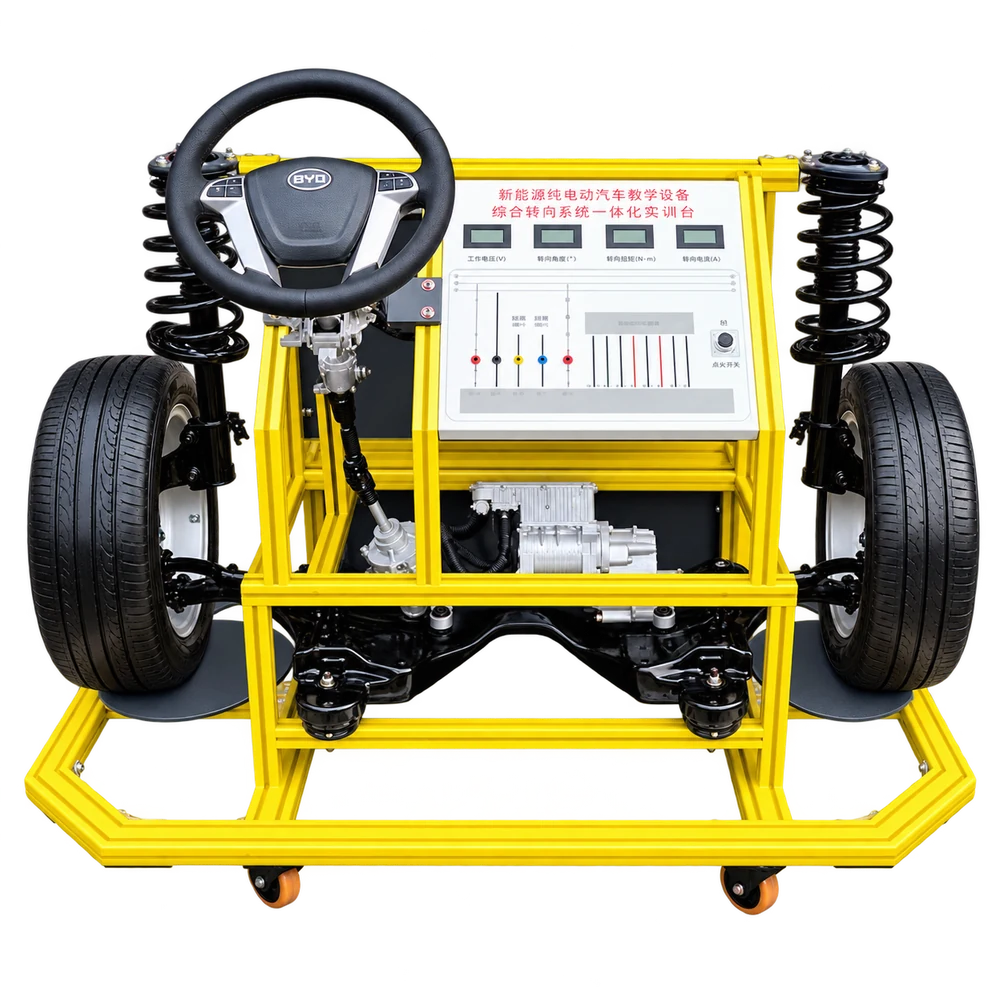
Physical Teaching Equipment
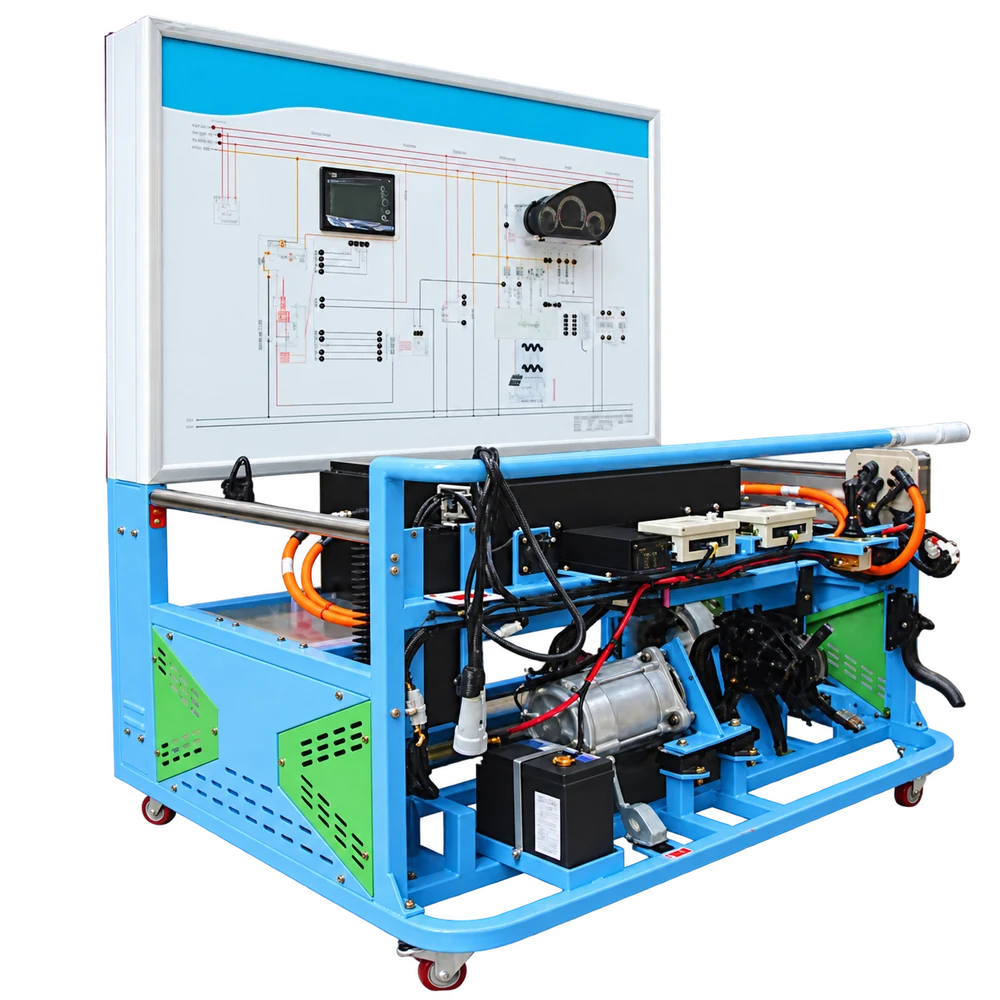
Relate electric steering operation to circuit measurements and diagnostic reasoning during supervised lessons.
Course RoleElectric steering operation, circuit measurements and diagnostic reasoning.
Model: BT-NEV2-T032
Product Details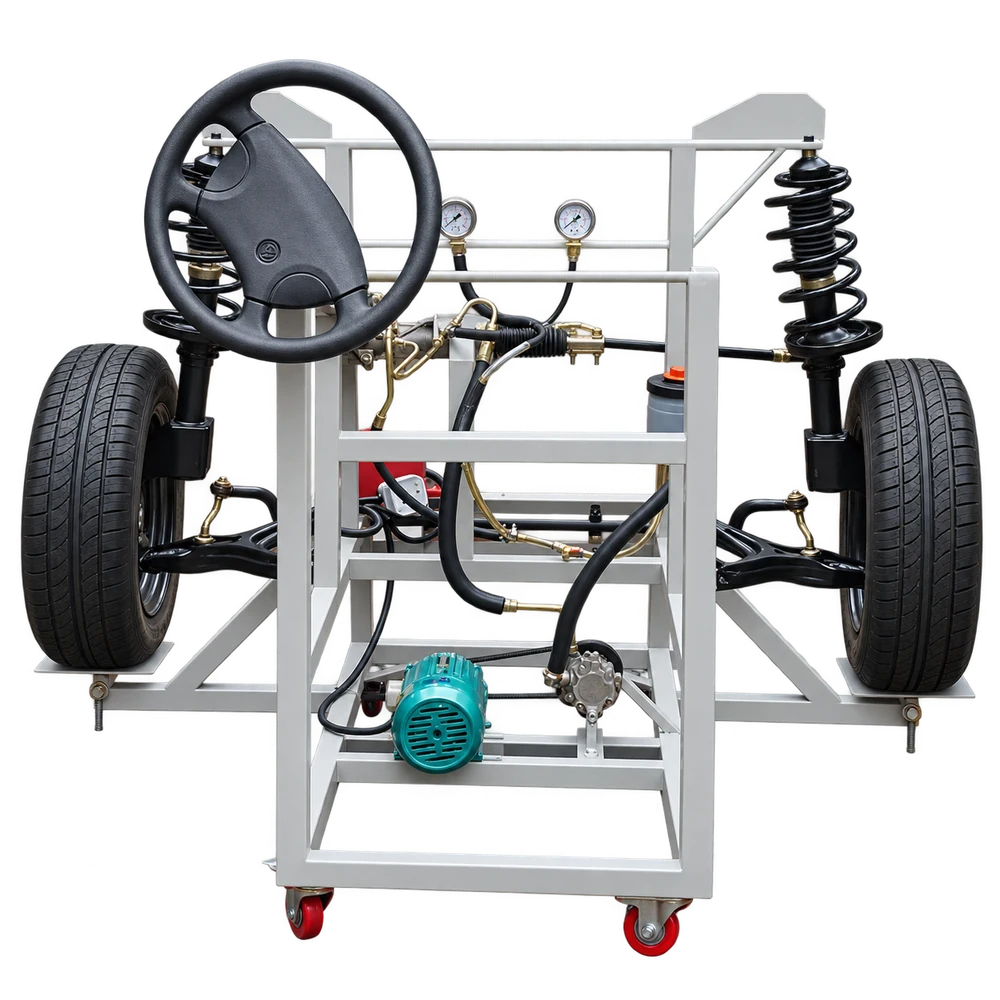
Physical Teaching Equipment
Study front-suspension structure and inspection before supervised disassembly using task-specific tools and procedures.
Course RoleFront-suspension structure, inspection and supervised mechanical practice.
Model: BT-NEV2-T033
Product DetailsChoose the equipment, digital resources and quantities around your syllabus, class size and practical timetable.
For connected practical tasks, review the station interfaces, accessories, software and measurement setup with your instructors before ordering.
Explore NEV Chassis Systems EquipmentBeyond the Hardware
Baitongkexin’s course-development service helps your faculty connect the syllabus, lesson plans, practical task sheets and assessment materials with the selected equipment.
Baitongkexin Curriculum DevelopmentFor the Course Leader
Connect the 5 modules with learner prerequisites, practical hours, equipment and local occupational requirements.
For the Instructor
Define the presentations, supporting media, equipment references and demonstration guidance needed for the agreed tasks.
For the Learner
Structure preparation, observations, measurement records and individual explanations around the actual station or software task.
For the Assessor
Specify observable criteria and distinguish preparation, virtual records, physical workmanship and diagnostic interpretation.
From Course Idea to Teaching Delivery
Use the course map to discuss the learning, equipment, resources and faculty preparation together.
01Define
Review prerequisites, local workplace tasks and the required outcomes for ev chassis systems.
Output: Agreed course brief
02Design
Map the selected modules to stations, digital resources, room conditions and learner rotation.
Output: Course and equipment map
03Prepare
Specify the resource package, equipment-based instructor preparation and commissioning responsibilities.
Output: Defined delivery schedule
04Review
Check the agreed equipment, resource versions and demonstration tasks with the faculty.
Output: Readiness and acceptance record
Laboratory & Delivery Planning
Review station access, utilities, computers, shared instruments and group organization before finalizing the equipment schedule.
Baitongkexin EV Laboratory PlanningFaculty Preparation
Define equipment demonstrations, resource use and task assessment in the instructor-support scope for the selected configuration.
Explore Instructor PreparationWhere the Skills Can Lead
Use these directions to discuss course relevance with local employers and define the next stage of role-specific development.
Parts records and assembly practice support further supervised transmission and drivetrain work.
Course connection: Handling + assembly
EPS diagrams and circuit evidence connect with role-specific steering diagnosis.
Course connection: Electric steering + measurement
Documented suspension observations provide a base for further inspection and service training.
Course connection: Suspension + inspection
Assembly identification and fixture preparation support further workshop-support development.
Course connection: Fixtures + task records
Use these skills as a starting point for discussions with local employers about qualifications and further training for each role.
Course Planning Questions
The bench supports structure study, inspection and supervised mechanical practice. Dynamic road-load and damper testing require dedicated equipment.
Plan four-wheel alignment as a separate package, with suitable vehicle access, measurement instruments and task-specific procedures.
No. The donor assembly, support arrangement, tools and procedure must match the actual supplied version.
Map each learner’s required task to the three station types, instructor demonstration time and individual evidence. Determine quantities from the resulting rotation plan.
Build Your Course
Tell Baitongkexin who you teach, which ev chassis systems tasks matter and what your institution already has. Use the brief to begin a focused planning conversation.
Create a course brief below, then copy or download it to send with your inquiry.
Contact the Baitongkexin TeamConnected Learning
Connect this course with the next practical task in your program.
Drive Motor & Control
Connect the drive assembly with the evidence. Teach structure, assembly, inspection, diagnostic reasoning and controlled performance testing.
Explore the CourseEV Electrical Systems
Follow the circuit from function to finding. Teach lighting, comfort systems, electric air conditioning and CAN-network reasoning on visible practical stations.
Explore the CourseTesting & Diagnostics
Teach the test arrangement, not just the result. Connect architecture, charging, loading and signal evidence in a defined EV testing course.
Explore the Course