
Americas · Brazil Market Guide
Automotive Electrification Training in Brazil: A Practical Mixed-Powertrain Lab
Build mixed-powertrain teaching around Brazil’s parallel technology pathways, with clear distinctions between low-voltage hybrid batteries, traction systems and practical diagnosis.
On This Page
The planning answer
What should an automotive electrification lab in Brazil teach?
A Brazilian automotive training lab should teach students to distinguish conventional, hybrid, plug-in hybrid and battery-electric systems, then build practical competence in measurement, battery/BMS diagnosis, motor inspection and charging behaviour. Keep combustion and chassis fundamentals where local employers need them. A 12 V or 48 V hybrid component, an LFP teaching pack and a high-voltage traction system are different teaching objects; the equipment schedule must preserve those distinctions.
BTKX can help connect component trainers, digital preparation, Portuguese resources and teacher development to this mixed-technology curriculum. The strongest starting point is a local employer task map, with clearly defined learner evidence.
1. Plan for several powertrain pathways at once
Brazilian electrification planning should begin with a technology map rather than a single prediction about which powertrain will win. A technician may need to recognise an engine-related symptom, understand a hybrid system boundary and interpret battery information within the same career pathway. An institution should make those relationships explicit instead of treating EV education as a replacement for every existing automotive subject.
The federal MOVER programme, established by the June 2024 law and described on the MDIC page updated in July 2026, addresses technological development and decarbonisation across vehicles and their production ecosystem. It is an industrial-policy context, not a guarantee that a training-equipment purchase qualifies for support. [1]
For automotive training equipment in Brazil, our recommendation is a shared diagnostic foundation with separate technology pathways. Ask employers which tasks new hires can perform, where they must refer to a specialist and which records they need to produce. Use that answer to decide the balance of conventional systems, hybrid awareness and EV component practice.
2. Distinguish 12/48 V hybrid batteries from traction packs
A useful local signal is SENAI’s published project for a Brazilian low-voltage lithium battery prototype for hybrid vehicles. Its page describes 12 V/48 V battery development, BMS work, automation and skills development, with a project schedule beginning in August 2024 and extending to August 2027. These are project objectives and dates, not evidence that every stated deliverable has been commercially achieved. [2]
The teaching implication is that “battery training” is too broad a procurement description. Students should identify the system’s voltage range, function, chemistry, permitted tests and relationship to the vehicle architecture. A low-voltage hybrid support battery and a propulsion battery can share principles while demanding different procedures and equipment.
BTKX’s T028 battery assembly and BMS system uses a documented LFP teaching configuration with nominal pack voltage at least 60 V. It should not be presented as a 12/48 V hybrid battery trainer simply because both involve lithium cells and a BMS. Define a dedicated adaptation or complementary system if that is the course objective.
For a proposed Brazilian technician course, give learners three architecture cards: a conventional vehicle, a non-plug-in hybrid and a battery-electric vehicle. Each card should identify the documented energy paths and the information available to the technician. Ask which system the customer can charge externally, what the battery’s role is and which question the available measurements can answer. The exercise should expose assumptions before anyone reaches a physical workstation.
Next, ask learners to write a short explanation in Portuguese for a service adviser. They should describe the relevant technology without promising a repair or implying that all electrified vehicles use the same battery. A colleague then checks whether the explanation distinguishes an observed symptom from an inferred cause. This connects technical understanding to the communication that mixed-powertrain workshops need.
The assessment also helps select equipment. If learners cannot yet distinguish architectures, the immediate gap may be clear diagrams and foundational tasks. If they understand the systems but cannot reconcile physical measurements with reported data, accessible battery/BMS practice becomes more valuable. An advanced operating bench should follow a demonstrated need, rather than compensate for an unresolved conceptual gap.
3. Turn Brazil’s regional diversity into distinct lab briefs
A centre designing courses for São Paulo service workshops may require a different mix from an institution supporting industrial trainees or agricultural service learners. The proposed catchments below organise needs assessment; they are not a measured ranking of EV demand. Each institution should validate its pathway with placement partners before fixing equipment quantities.
| Catchment to investigate | Local planning question | Possible practical emphasis |
|---|---|---|
| São Paulo and Campinas | Which mixed-powertrain service tasks are available to trainees? | Electrical diagnosis, battery data and customer-facing handovers. |
| Minas Gerais and Paraná centres | Does the programme serve production, component work or aftersales? | Motor assembly inspection and diagnostic evidence pathways. |
| Bahia and Pernambuco centres | What new technology tasks can employers review or demonstrate? | Teacher preparation, battery fundamentals and adaptable modules. |
| Interior agricultural catchments | Which machinery skills remain important alongside electrification? | Power transmission, machinery electrical systems and maintenance. |
One institution may need two versions of the curriculum: initial training for new entrants and shorter courses for experienced technicians. They can share equipment, but assumptions about prior knowledge and the pace of practical work must be different.
4. Keep the bridge from combustion vehicles visible
CNI’s July 2024 account of SENAI automotive decarbonisation projects discusses several routes, including electric systems, hybrids and alternative fuels. That is useful evidence for a broad technology conversation; it does not establish a fixed national mix or future market share. [3]
In the classroom, ask learners to draw the energy path for a conventional vehicle, a hybrid and a battery-electric vehicle. Then ask which measurements are meaningful in each case. A charging lesson should identify whether the vehicle is externally chargeable before discussing connectors. An engine symptom on a hybrid should not automatically be interpreted as a battery problem.
BTKX’s conventional vehicle training family can support engine, transmission, chassis and electrical fundamentals. Keep those stations where they produce valuable practice, then add EV-specific tasks. The purchasing decision should follow gaps in the syllabus, rather than the assumption that a new label makes earlier equipment irrelevant.
5. Teach a common diagnostic method across technologies
A common method reduces confusion when learners encounter unfamiliar vehicles. Begin with the complaint, define the expected condition, identify plausible causes and choose an approved observation or measurement. Students then compare the evidence, justify a next step and verify the result. The method is transferable; the permitted procedures remain system-specific.
Create a pair of cases with similar symptoms but different causes. For example, one case might concern a conventional electrical circuit and another a displayed battery-data discrepancy. Students should explain why the same instinctive component replacement would be unjustified in both. This teaches them to question an early assumption while maintaining a structured workflow.
The BTKX EV fault diagnosis application can frame the advanced pathway. Request a sample exercise showing the symptom, fault access, student measurement points and reset process. For initial courses, favour cases that students can explain clearly over a large fault library that instructors cannot reliably prepare or assess.
6. Make battery teaching a conversation between assembly and data
The T028 combines accessible LFP battery assembly with measurement instruments, BMS monitoring and documented fault-setting tasks. Its educational value is the connection between the physical arrangement and the reported information. Students should be able to identify what they measured, what the software displayed and why the comparison supports or weakens a hypothesis.
A Brazilian course can use a worksheet in Portuguese with a clear separation between observation and interpretation. First record the permitted measurement and the operating condition. Next compare it with the displayed value. Finally explain what can be concluded and which further test would be needed. Keep the actual instrument and BMS identifiers in the task record.
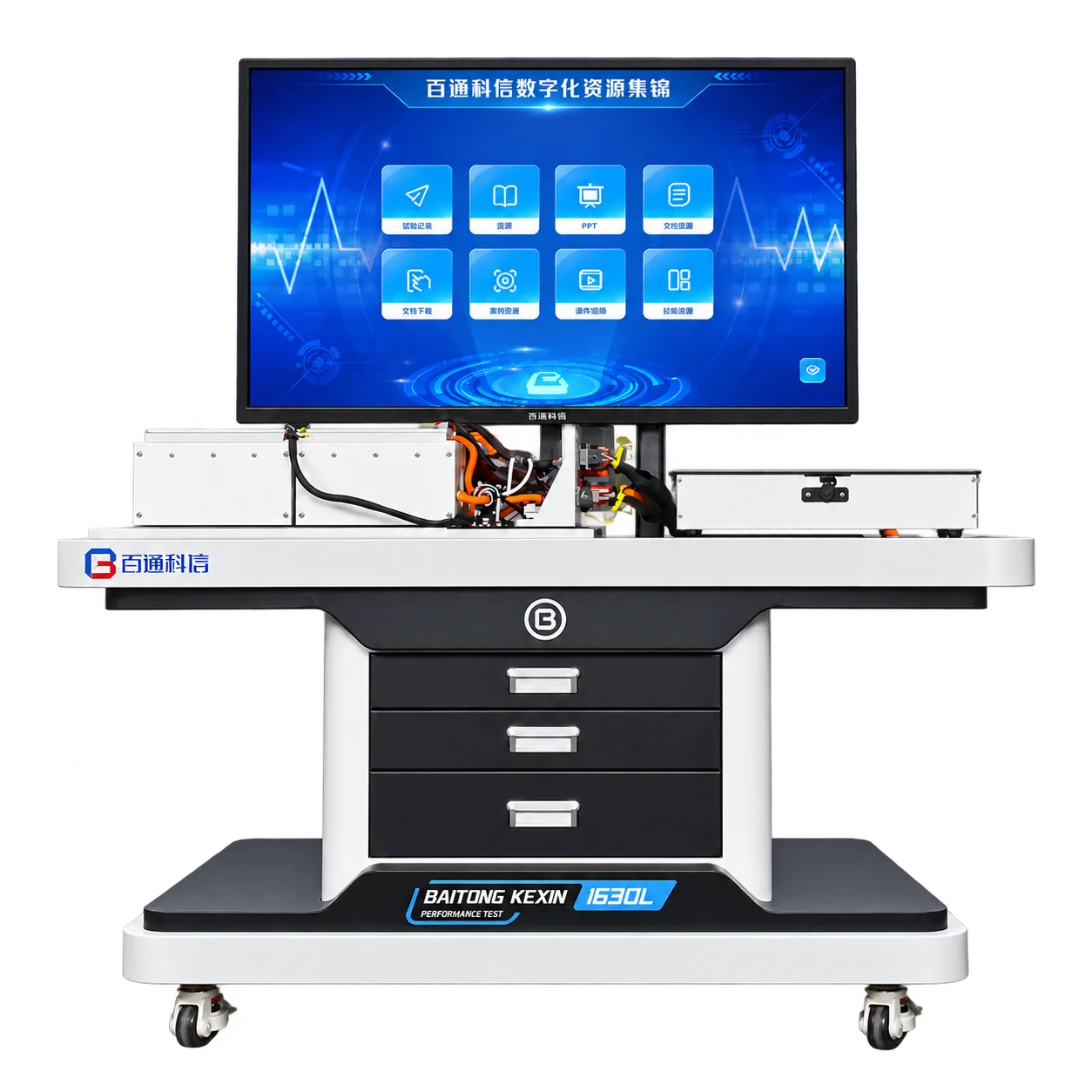
Do not infer full capacity assessment or long-duration cycling capability from the presence of charge-discharge exercises. If the programme needs battery performance research, define a separate technical scope with the required data, cycle conditions and supervision. The battery service training application is a useful starting point for defining the teaching task.
7. Connect motor assembly quality to operating behaviour
Students often see a torque-speed curve before they understand how a motor assembly is inspected. Reverse that sequence. Begin with component identification, documented assembly checks and an explanation of readiness for testing. Only then introduce operating data and ask what it can establish about the selected system.
BTKX separates the T036 assembly platform from the T076 performance platform. This distinction matters when comparing quotations: visible assembly access is not equivalent to an instrumented load system. Specify the compatible motor, controller, coupling, measurement equipment and software for the actual lesson.
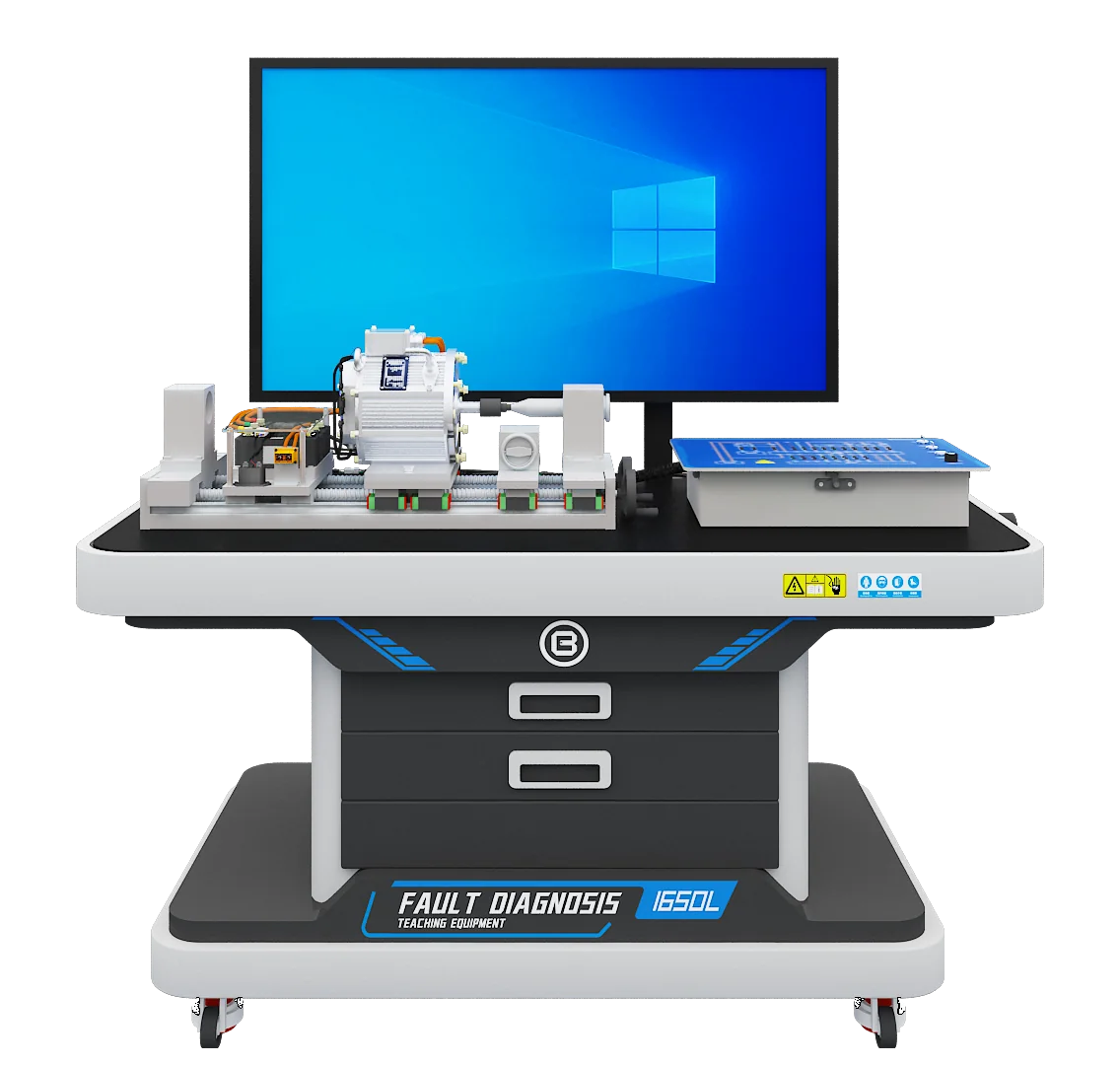
The documented T076 requires a 380 V AC three-phase five-wire supply. A Brazilian site engineer should check the ordered equipment schedule against the building’s actual provision before purchase. Make the electrical interface part of design review, alongside access, supervision and the instructor’s ability to restore the test condition.
8. Teach charging as a sequence before infrastructure design
A useful first charging lesson asks why a sequence begins, remains inhibited or stops. Learners identify the components, interpret the documented state and relate the result to the circuit. This provides a stronger foundation than memorising connector names without understanding the control and protection behaviour.
The T040 AC charging assembly platform supports specified educational component and circuit work. The reference charging training application describes ≤1.5 kW and ≤7 A teaching hardware. It should not be described as a commercial fast charger or as a complete course in public charging-network design.
For Brazil, identify the target vehicle, connector, signalling interface and local teaching objective before ordering. If the course progresses to commercial infrastructure, involve qualified local electrical expertise and define a separate scope. The component trainer can support the reasoning that precedes commissioning, while actual site design and acceptance require their own equipment and evidence.
9. Build a course matrix that preserves technology boundaries
A course matrix makes overlaps and omissions visible. It should show which learners use each station, what prior knowledge they need and what evidence counts as success. The matrix below is a proposed planning tool, not a fixed package or an assertion that every listed item is included in one quotation.
| Course block | Teaching route | Evidence |
|---|---|---|
| Vehicle fundamentals | Existing conventional vehicle systems | Energy-path diagram and justified circuit checks. |
| Battery/BMS principles | T028 LFP teaching configuration | Physical measurement compared with displayed information. |
| 12/48 V hybrid focus | Separately validated configuration or local practice | Architecture identification and permitted task record. |
| Motor quality | T036; T076 if performance tasks are required | Inspection report and separate operating-data interpretation. |
| Charging | T040 with confirmed interface | State explanation and documented checks. |
Ask employers to review one assessment from each pathway. Their feedback should identify missing tasks or unrealistic assumptions, not merely endorse the equipment list. BTKX’s curriculum development service can help translate the agreed changes into teaching resources.
10. Localise Portuguese resources beyond the brochure
The laboratory’s language requirements should cover technical instruction, not just procurement communication. Agree which manuals, diagrams, software screens, worksheets and assessment materials need Brazilian Portuguese. Preserve product identifiers and units so support requests remain unambiguous. A bilingual glossary is especially useful where teachers use English technical documentation alongside Portuguese classroom explanations.
Before commissioning a full resource set, review two sample lessons: one battery measurement and one charging-state exercise. Ask students to explain the action in their own words. This reveals ambiguous translations and assumptions about prior knowledge. Correct those issues before they are reproduced across dozens of tasks.
The international TVET cooperation service can define the language and delivery scope. Request editable teaching files where agreed, an approval process and named responsibility for updates. Localisation should make the lesson easier to teach, while retaining the manufacturer’s intended operating limits and the institution’s assessment standards.
11. Use digital preparation to improve workshop reasoning
Digital learning works best when it removes avoidable confusion before physical access. Students can compare architectures, identify components and propose a test sequence in advance. At the workstation, they must still demonstrate the permitted practical action, collect evidence and explain the result. A completed online exercise should not automatically count as physical competence.
BTKX’s virtual simulation lab approach can connect preparation to workshop tasks. Confirm the actual modules and whether they cover the intended hybrid or EV architecture. For a mixed curriculum, a simulation of one battery-electric vehicle is not a substitute for every hybrid arrangement.
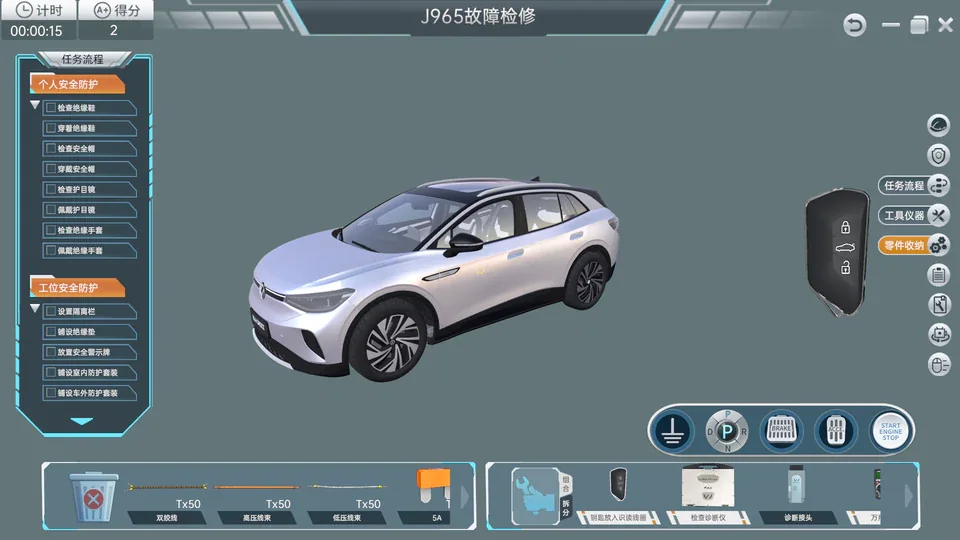
Measure the quality of preparation through student questions and records. If learners arrive ready to explain why a test is useful, digital work is improving practical time. If they only memorise the location of a button, revise the activity. The simulation development service can be discussed where a specific task requires adaptation.
12. Develop teachers across the technology boundaries
A teacher experienced in combustion engines may be excellent at practical instruction while needing preparation for battery data or charging control. Begin with an honest skills map. Identify which staff can teach common electrical foundations, which need supported practice and which specialist lessons should wait until the team has completed the agreed preparation.
Specify teacher training around complete lessons: setup, explanation, supervised task, assessment and reset. Ask teachers to explain a deliberate misconception, such as assuming that every hybrid can be plugged in or that a BMS display alone establishes battery health. Their ability to correct the reasoning matters more than a presentation attendance record.
Include technicians and a backup teacher so the course does not depend on one specialist. After the first cohort, review recurring learner errors and equipment support questions. This creates a practical development cycle and provides evidence for whether the next budget should purchase more equipment, better task materials or additional instructor practice.
14. Use procurement gates to prevent mismatched packages
A sound quotation should identify configuration, interfaces, teaching resources, training and acceptance evidence separately. This is particularly important when a supplier uses a broad term such as “new energy vehicle training” that may cover several different architectures. Ask for a demonstration of the actual task on the quoted model.
| Gate | Review | Evidence to retain |
|---|---|---|
| Curriculum | Technology pathway and student task | Approved course-to-equipment matrix. |
| Technical fit | Supply, connectors, computers and instrumentation | Signed configuration and utility schedule. |
| Teaching readiness | Portuguese samples and teacher practice | Repeated sample lesson and assessment record. |
| Site handover | Installed operation, reset and support route | Task demonstration, spares list and issue log. |
Discuss room planning through the EV laboratory planning service. Budget for instruments, replacement teaching components and resource maintenance alongside the platforms. An equipment purchase becomes valuable through the number of reliable lessons it supports across its working life.
15. Evaluate the first cohort through decisions and explanations
After the first course, ask learners to compare two systems and explain why a familiar test cannot automatically be transferred between them. Their answers reveal whether the curriculum has developed adaptable reasoning or only familiarity with one teaching station. Include a task where the evidence is incomplete and the appropriate response is a justified next test.
Invite local employers to review anonymised records from initial and experienced learners separately. They may identify different gaps: a new entrant might need clearer handover writing, while an experienced technician might need more discipline in testing an early assumption. Use that feedback to revise the course rather than add another general introductory module.
The BTKX vocational school solution provides a framework for a coordinated project. The Brazilian institution should retain ownership of its employment assumptions, course recognition and local assessment decisions. The result should be a laboratory that can evolve as technologies change, while preserving the measurement and diagnostic habits that remain useful.
16. Questions from Brazilian training institutions
Should a Brazilian lab focus only on battery-electric vehicles?
Choose the focus through local employer tasks and the institution’s programmes. A common electrical foundation can support conventional, hybrid and battery-electric pathways, with distinct practical procedures for each. Preserve useful existing equipment and buy the modules that close genuine gaps in student practice.
Is the T028 equivalent to a 12/48 V hybrid battery system?
No. Its documented configuration is an LFP teaching pack with nominal voltage at least 60 V. It can teach assembly, measurement and BMS principles, but a 12/48 V hybrid course requires a separately verified configuration or complementary equipment. Match system function and permitted tests as well as chemistry.
Does MOVER automatically fund imported teaching equipment?
The programme provides industrial-policy context for technological development and decarbonisation. Have your Brazilian project team assess the proposed purchase, institution and funding route against the applicable programme requirements.
What is the difference between a motor assembly and performance station?
An assembly station makes components and inspection tasks accessible. A performance station adds a defined operating system, load and measurements for performance analysis. BTKX distinguishes T036 and T076 for those purposes. Ask for the exact configuration and evidence required by the syllabus before comparing prices.
Can the AC trainer teach commercial fast charging?
The documented teaching reference is ≤1.5 kW and ≤7 A and supports specified component and circuit tasks. Commercial DC charging, network operation and site commissioning need additional scopes. Confirm the target interface, approved student tasks and local installation expertise before extending the course.
What should be included in a Brazil enquiry?
Send the state and city, student level, intended employment roles, existing workshop inventory, technology pathways, class size, room utilities and Portuguese resource needs. Include a sample assessment. This makes it easier to propose a teachable configuration and compare the practical value of alternative packages.
Build a Brazilian lab that explains the whole transition
Share the conventional, hybrid and EV tasks your learners need. BTKX can discuss component training equipment, Portuguese teaching resources and instructor development around a clear course-to-equipment plan.
Discuss your Brazil training projectSources
Research checked 20 October 2026.
- MDIC: Programa MOVER, programme established 27 June 2024; page updated 6 July 2026.
- SENAI: low-voltage lithium battery development project, project period 1 August 2024–1 August 2027.
- CNI: four SENAI projects for automotive decarbonisation, 4 July 2024.