
Americas · Mexico Market Guide
Automotive and EV Training in Mexico: From Production Quality to Service Diagnosis
Connect Mexico’s manufacturing and aftersales pathways through traceable inspection, evidence-based diagnosis and teaching equipment matched to real student tasks.
On This Page
The planning answer
How should Mexico equip an automotive and EV training lab?
A Mexican automotive training lab should connect electrical measurement, assembly inspection and evidence-based diagnosis, with different assessments for manufacturing and aftersales learners. Battery/BMS, electric motor and charging stations are useful when they address a specific task and are supported by Spanish resources, instructor preparation and relevant vehicle access. Start with the employment pathway rather than the label “EV laboratory.”
For a centre serving Monterrey, Guanajuato, Puebla or a metropolitan vehicle-service catchment, the equipment mix should follow nearby employers’ requirements. BTKX supplies teaching platforms and can discuss curriculum, digital preparation and teacher development as a coordinated scope.
1. Define the Mexican employment pathway before the purchase
Automotive education can lead to production, supplier quality, equipment maintenance or vehicle service. Those jobs overlap in electrical and mechanical reasoning, but they do not require identical practical tasks. An institution that tries to satisfy every pathway through one general demonstration risks leaving graduates unable to explain the decisions expected in their first role.
Data México’s motor-vehicle manufacturing profile reports regional information using dated statistical sources. Its 2019 Economic Census section highlights production activity in Coahuila and Puebla; that historical evidence should not be treated as a current EV hiring forecast. Use the profile to identify questions for local employers, then verify the actual roles available to learners. [1]
For automotive training equipment in Mexico, our recommendation is to build a common foundation and then split the assessment. Manufacturing learners should demonstrate traceable inspection against a defined instruction. Aftersales learners should investigate a symptom, justify their test and verify the result. The distinction improves both the equipment specification and the employer discussion.
2. Turn employer consultation into a technical task list
CONALEP’s August 2024 account of its first automotive industry consultation, organised with its Guanajuato state college, describes discussion of technology trends and training needs. It is a useful example of the education–industry conversation required when skills change. It does not establish that one national equipment package fits every institution. [2]
Ask employers for examples of work a new entrant can undertake under supervision. Request the expected evidence: a measurement sheet, assembly inspection record, diagnostic report or clear handover. Where commercial confidentiality prevents a real case from being shared, create an anonymised teaching case and ask the employer to review its logic.
The BTKX curriculum development service can translate that task list into equipment and resources. Avoid starting with dozens of product names. A short set of well-defined tasks makes it easier to identify missing instruments, unsuitable fixtures and software that looks impressive but does not support the intended assessment.
3. Use regional catchments to shape different configurations
Nuevo León’s November 2023 electromobility employment announcement identifies company collaboration, education, workforce training and labour-market connections as linked priorities. That publication supports an employer-led approach; the proposed city groupings below are our planning suggestions, not official demand estimates. [3]
| Catchment | Question for employers | Possible lab priority |
|---|---|---|
| Monterrey and Nuevo León | Which electrical and inspection tasks are needed in entry-level roles? | Measurement discipline, battery/BMS and production handovers. |
| Guanajuato and nearby Bajío centres | How should initial education connect to changing automotive technologies? | Assembly quality, diagnostic reasoning and teacher upskilling. |
| Puebla and Coahuila programmes | What evidence should trainees produce before a production placement? | Motor assembly checks and traceable inspection records. |
| Mexico City and Estado de México | Which mixed-fleet service problems can learners investigate? | Vehicle diagnosis, charging-state reasoning and customer handovers. |
Document the role, learner level and local vehicle or component family beside each answer. Geography becomes useful when it changes the teaching brief; repeating city names without changing the course adds little value.
4. Make the quality record part of the practical task
A good assembly is not simply an object that looks complete. Students should be able to identify the component, follow the approved sequence, record relevant measurements and explain whether the result satisfies the stated criterion. The quality record is part of the work, not paperwork added after the interesting activity.
Introduce a case where two assemblies look similar but their inspection evidence differs. Ask learners to decide which can proceed to the next stage and what additional check is required for the other. This encourages attention to documented conditions instead of confidence based on appearance. Teachers should assess the reasoning as well as the final physical result.
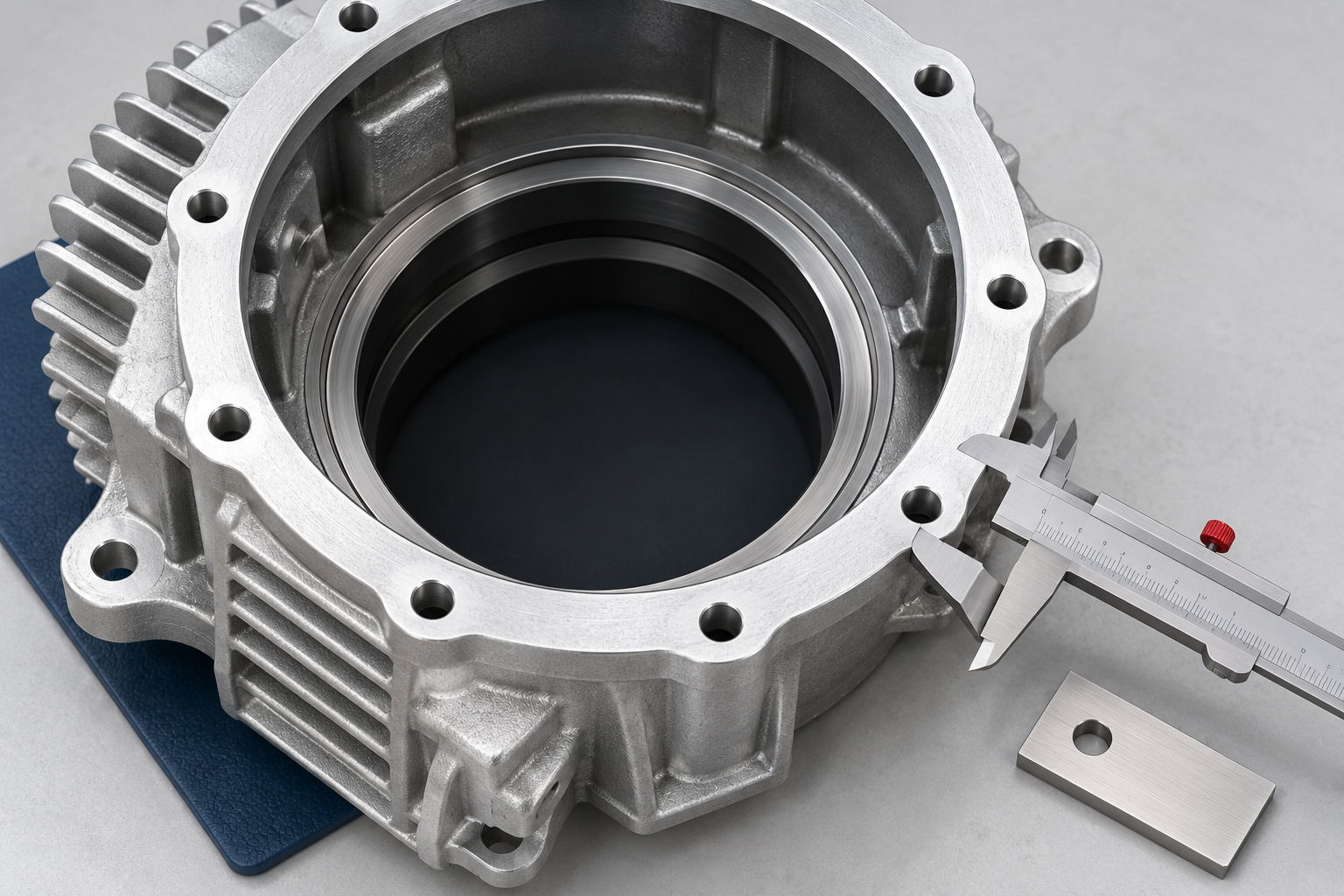
The drive motor training application offers a useful component context. Request a teaching demonstration that includes inspection, recording and release decisions. For a production pathway, ask local supervisors whether the worksheet resembles a useful handover. For a service pathway, adapt it to support diagnosis and verification rather than simply copying a production form.
For example, a proposed supplier-inspection exercise for a Guanajuato or Puebla programme could give students a motor assembly identifier, a revision-controlled work instruction and an intentionally incomplete inspection sheet. The learner must identify the missing evidence, select the instrument specified by the task and record the relevant condition before deciding whether the assembly is ready for the next stage. The teacher supplies the acceptance criterion; students should not invent a tolerance from a generic internet diagram.
Build the record around five useful fields: component identification, instruction revision, instrument identification, observed result and disposition. Add the student’s explanation where a result needs further review. This produces a compact record that an employer can critique without sharing a proprietary production form. A second learner reviews whether the record is sufficient to repeat the inspection. Missing units, an unclear measurement point or an unsupported release decision become concrete learning issues.
For a Monterrey technician-upskilling group, adapt the same exercise by adding a reported symptom and asking whether the inspection actually addresses it. An assembly may satisfy the selected dimensional check while the symptom remains unexplained. That difference helps experienced learners avoid treating a completed checklist as proof that the whole system is healthy. Adapt the classroom scenario with local employers.
5. Teach battery and BMS diagnosis through competing evidence
The BT-NEV2-T028 EV Battery Assembly & BMS Training System combines LFP assembly, cell measurement, BMS monitoring and documented instructor-selected electrical faults. Its value for a Mexican course is the ability to compare physical measurements with displayed information and require a supported explanation.
A useful task gives learners an apparent discrepancy. They identify the permitted measurement, record the condition and compare the result with the BMS data. They then explain which hypothesis remains plausible and what would be needed to confirm it. Reading a fault label on a screen should not be enough to pass the assessment.
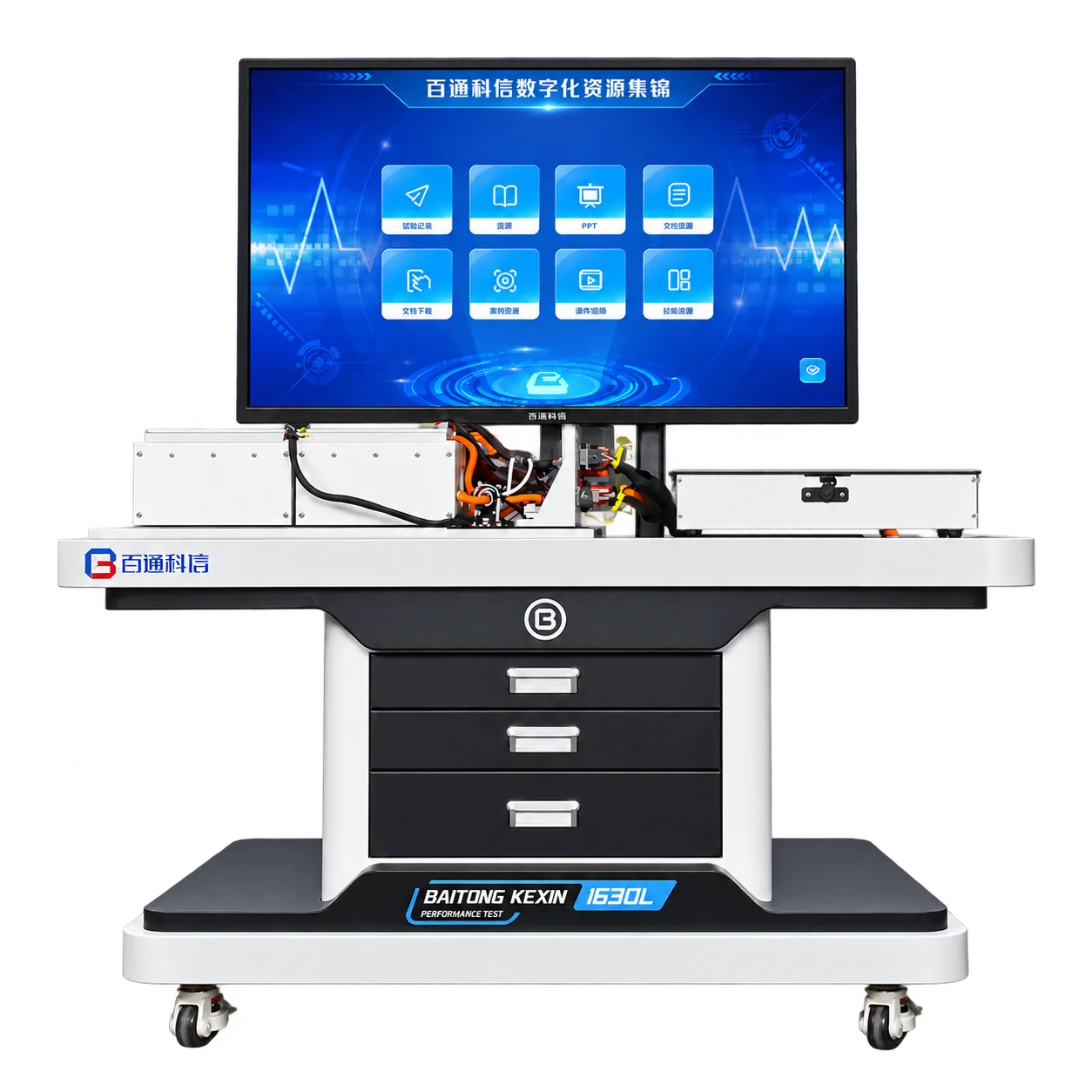
The documented pack is LFP with nominal voltage at least 60 V. It is not automatically equivalent to every vehicle battery sold in Mexico. If the syllabus requires extended cycling, research-grade performance analysis or a specific vehicle interface, define that separately. Use the battery service training application to frame the intended student task.
6. Choose motor equipment for assembly or performance deliberately
The T036 motor assembly platform and T076 motor performance platform address different teaching needs. Assembly access, dimensional checks and documented inspection do not automatically provide the load system and instrumentation required for operating-performance analysis.
For a manufacturing-oriented programme, begin with the inspection sequence and ask what learners must establish before testing. For an advanced service course, identify which operating data learners must interpret and how it connects to a symptom. A single product heading should not be credited with both outcomes unless the quoted configuration demonstrates them.
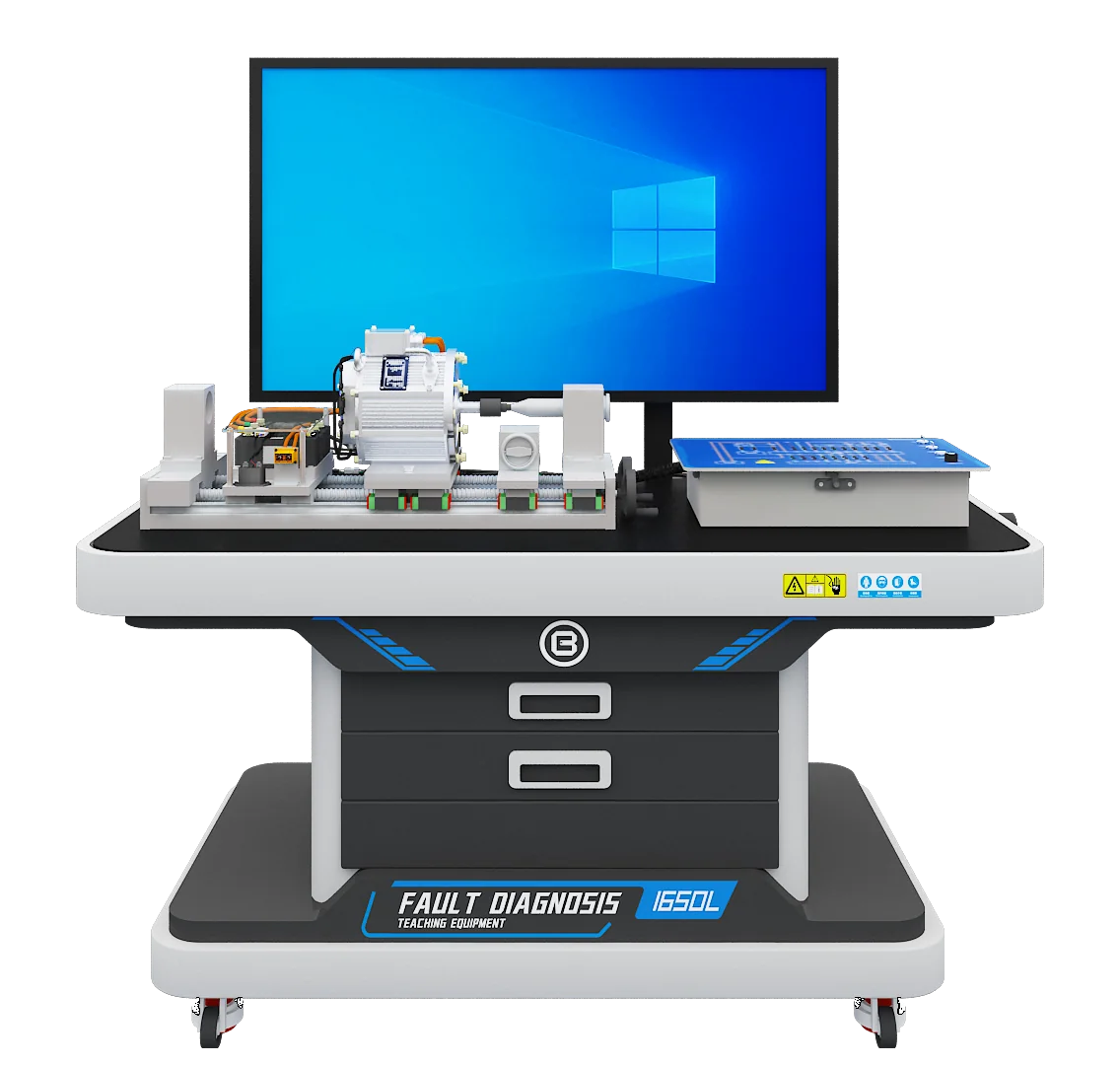
Check the selected motor, controller, coupling and instruments as a compatible set. The documented T076 supply is 380 V AC three-phase five-wire. Have the site engineer compare the actual order with the building utilities before purchase, and include the relevant installation evidence in acceptance planning.
7. Teach charging-state reasoning before charger size
A workshop trainee needs to explain why a vehicle does or does not enter a charging sequence. A first lesson can focus on component recognition, a documented circuit and the evidence associated with a permitted state. This supports diagnosis without requiring the institution to purchase a commercial high-power installation at the outset.
The T040 AC charging assembly trainer supports specified component and circuit work. BTKX’s reference charging infrastructure application describes ≤1.5 kW and ≤7 A teaching hardware. Present those limits clearly when comparing an educational system with commercial infrastructure.
For Mexico, confirm the intended vehicle, connector and signalling interface. If the course also covers public charging-network installation, define a separate local technical scope and suitable equipment. A teaching charger can make control behaviour visible, but it should not be described as automatic evidence of commercial interoperability, local installation approval or DC fast-charging capability.
8. Preserve useful conventional vehicle and chassis teaching
Electrical measurement, sensor interpretation and mechanical inspection remain valuable when propulsion technology changes. A Mexican institution should audit its existing workshop before deciding which systems to replace. Serviceable equipment can provide substantial individual practice while the budget adds genuinely missing battery, motor or charging tasks.
BTKX’s conventional vehicle training equipment covers engine, transmission, chassis and electrical subjects. Connect these to EV teaching through common diagnostic habits, while explaining the specific differences in energy flow, operating conditions and permitted procedures. A shared principle is not permission to apply every old test to a new system.
A useful bridge assessment asks learners to explain a similar symptom on two different architectures. They should identify which observations transfer and which require a different procedure. This prepares students for mixed service environments and reveals whether the curriculum teaches adaptable reasoning or only familiarity with the equipment they have repeatedly seen.
9. Compare quotations through a task-and-evidence matrix
A matrix should show what learners do and what the institution receives to make that possible. Include instruments, fixtures, software modules, teacher resources and reset procedures. It becomes much easier to compare suppliers when each row has an acceptance demonstration rather than a broad promise to “understand electric vehicles.”
| Teaching block | BTKX route | Acceptance evidence |
|---|---|---|
| Battery/BMS | T028 teaching configuration | Permitted measurements, data comparison and supported conclusion. |
| Motor assembly | T036 assembly station | Inspection record with a reasoned readiness decision. |
| Motor performance | Compatible T076 configuration, if required | Defined operating conditions and interpreted measurements. |
| AC charging | T040 with confirmed interface | State explanation, circuit checks and documented reset. |
| Vehicle fault diagnosis | EV diagnostic application | Symptom, test selection, evidence and verification. |
Have a teacher and procurement representative review the same sample lesson. The teacher checks educational value; procurement checks whether the accessories and support required to deliver it are included in the quotation.
10. Make Spanish resources useful in the workshop
Localisation should cover the words students use while acting and reasoning. Specify Spanish student worksheets, diagrams, teacher instructions, assessment criteria and maintenance records, and separately identify the software interface language. Keep technical product identifiers available so a support request can be understood across languages.
Nuevo León’s 2023 employment-model announcement also mentioned basic and technical English among its training activities. That is a useful reminder that students may encounter English technical information even when practical instruction is in Spanish. It does not mean an English-only equipment package will suit every learner. [3]
Approve a short Spanish–English glossary and two sample lessons before translating the full package. Ask a local instructor to check whether the learner can explain the physical meaning of each instruction. The international TVET service can define the agreed language scope, file formats and revision responsibilities.
11. Prepare instructors to assess reasoning consistently
Two teachers can observe the same practical session and reach different conclusions if the assessment criteria are vague. Write criteria around visible actions and supported explanations. A learner should identify the component, choose an appropriate permitted check, record evidence and justify the decision. Completing a sequence quickly should not outweigh an unsupported conclusion.
Specify BTKX teacher training as a complete teaching cycle. Teachers prepare the station, explain the task, supervise a learner, assess the record and restore the starting condition. Include a peer-review exercise in which another teacher questions the evidence. This makes expectations clearer before students arrive.
Develop backup staff and include the technicians who maintain the laboratory. Record configuration identifiers, software recovery steps and the boundaries of instructor-selected faults. Follow up after the first cohort to review timing, repeated misunderstandings and support issues. Teacher readiness is a continuing capability, not simply the completion of an equipment handover presentation.
12. Use simulation for preparation and comparison
Simulation can help students identify components and plan a diagnostic sequence before they reach a physical system. It can also make architectural comparisons easier: students can explain why an electrical path differs between two vehicle types and what that means for their next observation. Physical competence still requires individually observed practical work.
The virtual simulation lab approach should be specified with the intended modules, computers, licences and learner records. Confirm whether software can work under the institution’s network conditions and how it can be restored after a computer replacement. An attractive animation does not automatically provide an assessable diagnostic exercise.
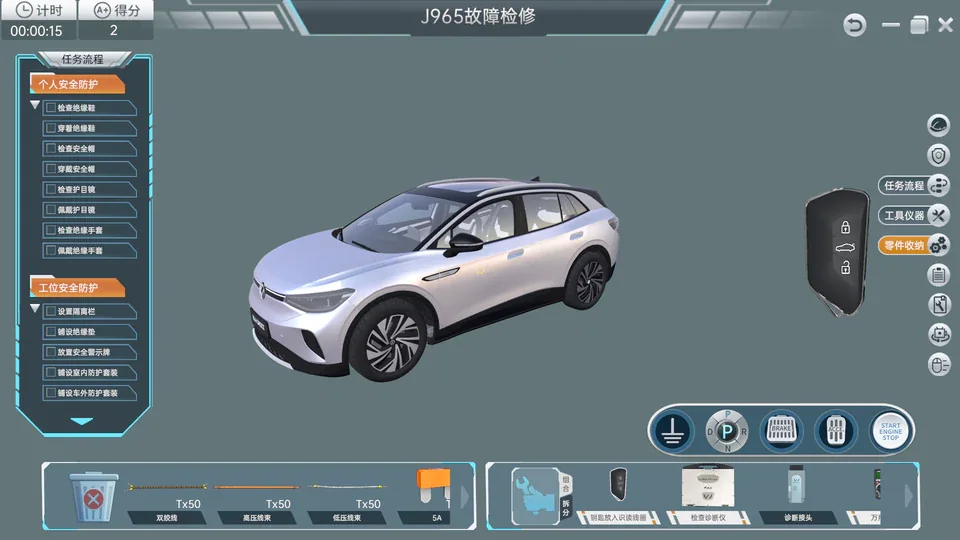
Use simulation development support where a task needs adaptation. Review whether students arrive with better questions and a more defensible test plan. Those outcomes are more meaningful than counting logins or treating every completed screen as practical competence.
13. Protect individual practical time as enrolment grows
A laboratory can look full while most students are passive observers. Calculate capacity around active actions, not room occupancy. Identify how long a meaningful measurement, inspection or explanation takes, how many learners can safely participate and how much time the instructor needs to reset and assess the station.
| Role | Learner responsibility | Assessment opportunity |
|---|---|---|
| Preparation | Read the diagram and propose a check. | Explain why the check is useful. |
| Operation | Perform the permitted practical action. | Individually observed measurement or inspection. |
| Recording | Preserve condition, units and evidence. | Produce a traceable task record. |
| Review | Challenge whether the conclusion follows. | Identify uncertainty and a justified next step. |
Rotate roles and include an individual check so the most confident student does not do all the practical work. Where the timetable remains overcrowded, another foundational station may create more educational value than a new specialist platform used only occasionally.
14. Accept the installed lesson, not just the delivered hardware
Before dispatch, request a representative lesson using the ordered configuration and accessories. Preserve evidence of the starting state, student access, expected record and reset procedure. A demonstration on a different model should not substitute for the quoted equipment merely because its product family has a similar name.
At the Mexican site, repeat the selected exercise using the local utilities and computers. Review Spanish resources, software activation, instrument availability and the support route. The responsible site engineer should confirm the building interface, while teachers confirm that the lesson can run as planned. Both reviews belong in the handover.
| Record | What it establishes | Owner to name |
|---|---|---|
| Configuration schedule | Model, components, instruments and software. | Supplier and institution technical leads. |
| Site utility review | Compatibility with the installed room. | Responsible local engineer. |
| Sample lesson | Student access, evidence and reset. | Teaching lead. |
| Support handover | Spare parts, issue reporting and escalation. | Institution technician and supplier contact. |
15. Review the first year through employer-useful evidence
After the first cohort, collect a small set of anonymised student records from each pathway. Ask production supervisors whether the inspection evidence is traceable and service supervisors whether the diagnosis is justified. Their feedback can identify specific corrections to the course without requiring them to disclose proprietary systems or commercial information.
Compare that feedback with laboratory availability. If students lack confidence because practical sessions are cancelled, improve resets, spares or staffing. If the equipment runs reliably but records remain weak, revise worksheets and assessment. If advanced learners need a test the existing equipment cannot perform, the case for a specialist purchase becomes concrete.
BTKX’s laboratory planning service and vocational school solution can support the next phase. The institution should retain ownership of local course recognition and employment assumptions. A defensible project grows from evidence of teaching need, not from the desire to expand the equipment list every year.
16. Questions from Mexican automotive training planners
Can one laboratory serve automotive manufacturing and repair courses?
Yes, if the common electrical and mechanical foundation leads to distinct assessments. Manufacturing learners need traceable inspection against a defined instruction. Repair learners need symptom investigation and verification. Share equipment where appropriate, but identify the instruments, practical access and teaching resources required for each pathway.
What should a first EV equipment purchase include?
Begin with the missing student tasks. A centre may need measurement instruments and battery/BMS practice before advanced performance testing. Another may already have a strong foundation and need motor assembly or charging-state exercises. Define the course, learner level and existing inventory before selecting the package.
Will the battery station match every EV sold in Mexico?
No single teaching configuration establishes that compatibility. The T028 offers documented LFP assembly, measurement and BMS tasks. Confirm the target vehicle’s voltage, chemistry, communication and service procedures separately, and arrange relevant model-specific practice where employment requires it.
Are Spanish materials and software included?
Agree each element in the quotation. Manuals, student worksheets, teacher resources, diagrams and software interfaces can have different language scopes. Review sample lessons with local instructors before accepting the complete resource package, and preserve technical identifiers for support communication.
Should the college purchase a commercial fast charger?
Only when the syllabus requires the relevant infrastructure tasks and the site and teachers are ready. A teaching AC platform can support control and circuit reasoning at a smaller scale. The documented T040 reference should not be mistaken for a commercial DC installation or proof of local interoperability.
How can employers contribute without providing proprietary information?
Ask them to review anonymised teaching cases and sample student records. They can judge whether the test selection, inspection evidence and handover would be useful in a real workplace. This gives the institution practical feedback while keeping confidential vehicle and production information outside the classroom material.
Build a Mexico equipment brief around work graduates can explain
Share your city, programme, intended employers, existing workshop and Spanish resource requirements. BTKX can discuss automotive and EV training platforms, teaching tasks and instructor preparation as a coordinated project.
Discuss your Mexico training projectSources
Research checked 20 October 2026.
- Secretariat of Economy, Data México: motor-vehicle manufacturing, mixed-dated datasets; 2019 Economic Census.
- CONALEP: first automotive industry consultation, 16 August 2024.
- Nuevo León government: electromobility employment model, 29 November 2023.