

Americas · Chile Market Guide
EV Training in Chile: From Battery Evidence to Fleet Availability
Build a Chilean EV laboratory around vehicle availability, with practical distinctions between battery evidence, charging behaviour, infrastructure boundaries and operational decisions.
On This Page
The planning answer
What EV training equipment supports Chilean fleet reliability?
A Chilean EV training lab should connect vehicle diagnosis, battery/BMS evidence, motor inspection and charging-system reasoning through the operational question: why is this vehicle unavailable, and what evidence identifies the next action? A fleet-oriented course should teach learners to distinguish vehicle, charger and site issues, communicate findings and verify restoration. Component trainers build the foundation; real fleet practice and local infrastructure expertise complete the pathway.
BTKX can support component teaching, digital preparation, curriculum and teacher development. Specify Spanish resources, relevant vehicle interfaces and an acceptance demonstration before choosing equipment. Confirm any SEC approvals required for the proposed equipment and installation.
1. Make availability the organising question
An electric vehicle that cannot complete its next duty presents several possible problems. The vehicle may have a fault, the charging sequence may not have completed, the charger may be unavailable or the operational plan may have been based on an unsuitable assumption. Training should teach technicians to identify the evidence that distinguishes those explanations before recommending an intervention.
Chile’s National Electromobility Strategy 2030, published in 2026, retains the 2035 objective for all new light- and medium-duty vehicle sales to be zero-emission and introduces a 20% objective for 2030. These are policy targets, not achieved market shares. The strategy also addresses charging, heavy transport and battery circularity. [1]
Our interpretation for EV training equipment in Chile is to prioritise diagnostic reasoning and operational handovers alongside component understanding. A lab should help students explain the next useful test and its limits. It should not encourage them to jump from a warning message to an expensive component replacement without supporting evidence.
2. Build regional pathways beyond a single Santiago model
The government’s 2023–2026 electromobility roadmap announcement included education and training, public transport and decentralisation among its pillars. It identified proposed regional activity, including Antofagasta, Copiapó, La Serena–Coquimbo and Concepción. Treat that announcement as a dated programme direction, not proof that every described project has reached the same stage today. [2]
| Catchment | Question to validate | Potential teaching emphasis |
|---|---|---|
| Santiago metropolitan area | Which fleet and workshop tasks can trainees observe and document? | Vehicle/charger triage and maintenance handovers. |
| Antofagasta–Copiapó | Does the programme serve public transport, light vehicles or industrial fleets? | Separate vehicle classes and their diagnostic boundaries. |
| La Serena–Coquimbo | What charging and service tasks need shared regional teaching access? | Charging-state reasoning and practical measurement. |
| Concepción and southern centres | Can several institutions share specialist stations and teacher development? | Common foundations with locally validated vehicle practice. |
Use local interviews to identify climate, storage, route and workshop conditions relevant to the programme. Do not assume a laboratory setting reproduces every operating environment or that the same passenger-car trainer covers buses, trucks and industrial machinery.
3. Teach the vehicle–charger–site distinction explicitly
When a vehicle has not charged as expected, the first useful question is where to collect evidence. A training case should provide a small set of observations and ask learners to identify what each observation establishes. A connector being inserted does not establish that charging occurred; a displayed state does not by itself explain the underlying cause.
| Possible issue boundary | Evidence learners should seek | Unsupported conclusion to avoid |
|---|---|---|
| Vehicle | Documented vehicle state and permitted diagnostic information. | Assuming the battery is defective from one warning. |
| Charging interface | Confirmed connector, signalling and observed sequence. | Assuming physical fit establishes interoperability. |
| Charging equipment | Equipment state and agreed diagnostic evidence. | Replacing vehicle components without checking the boundary. |
| Site or operating plan | Relevant authorised site data and duty assumptions. | Treating every missed duty as a vehicle hardware fault. |
The framework is a reasoning exercise, not a live troubleshooting procedure for unqualified students. Define which observations are available through teaching equipment and which require supervised access or a competent local specialist. This boundary makes the exercise more realistic and easier to assess.
4. Build battery lessons around evidence quality
The BT-NEV2-T028 EV Battery Assembly & BMS Training System supports accessible LFP assembly, cell measurement, BMS monitoring and documented instructor-selected electrical fault tasks. It is useful for teaching the relationship between physical components and reported data, an essential foundation before learners interpret more complex fleet information.
Ask students to compare a permitted measurement with the corresponding displayed information and explain the conditions under which the comparison is meaningful. They should record what they know, what remains uncertain and the next useful check. A confident diagnosis with weak evidence should score lower than a careful explanation of uncertainty and a justified test plan.
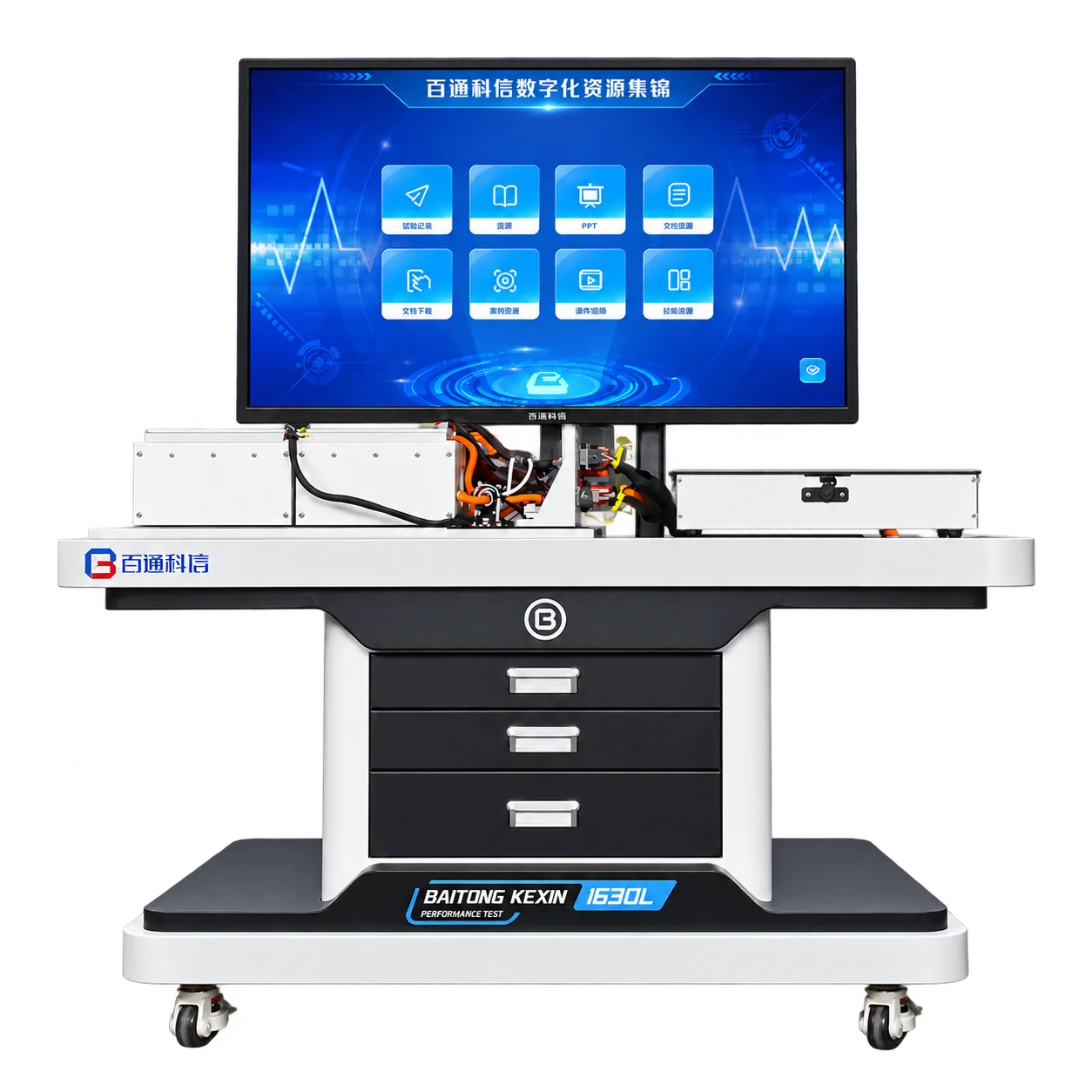
The documented teaching pack is LFP with nominal voltage at least 60 V. It is not a replica of every Chilean bus or car battery. Define the separate model-specific information and supervised vehicle access required for the employment pathway. The battery service training application can help establish that sequence.
5. Separate a BMS observation from a battery-health claim
A BMS value is an input to reasoning, not automatically a complete condition assessment. Students should identify what the value represents, how the operating condition affects interpretation and what other evidence would be required for the question being asked. This is particularly important when a fleet decision has consequences for availability and replacement planning.
Create a classroom comparison between an assembly-quality question, a suspected sensing discrepancy and a longer-term performance question. The first may be addressed through accessible inspection and permitted measurements. The second requires comparison of physical and displayed evidence. The third may require controlled performance data that the selected teaching station does not provide.
Do not describe the T028 as a dedicated sustained cycling or research-grade battery performance platform. If the Chilean syllabus requires capacity assessment, degradation study or second-life evaluation, specify the actual test conditions, data and equipment separately. The point is to teach students to ask a well-defined question, then choose evidence capable of answering it.
6. Connect motor inspection to a maintenance decision
A fleet technician may encounter a motor-related symptom without having authority to dismantle every assembly. Training should distinguish recognition, inspection, data interpretation and specialist intervention. Students should know what the teaching exercise establishes and which decision must be referred to a qualified supervisor or a vehicle-specific procedure.
BTKX distinguishes the T036 motor assembly platform from the T076 motor performance platform. Use assembly access to teach components, dimensional checks and inspection records. Use a separately specified operating configuration where the course requires interpreted torque, speed or other performance data.
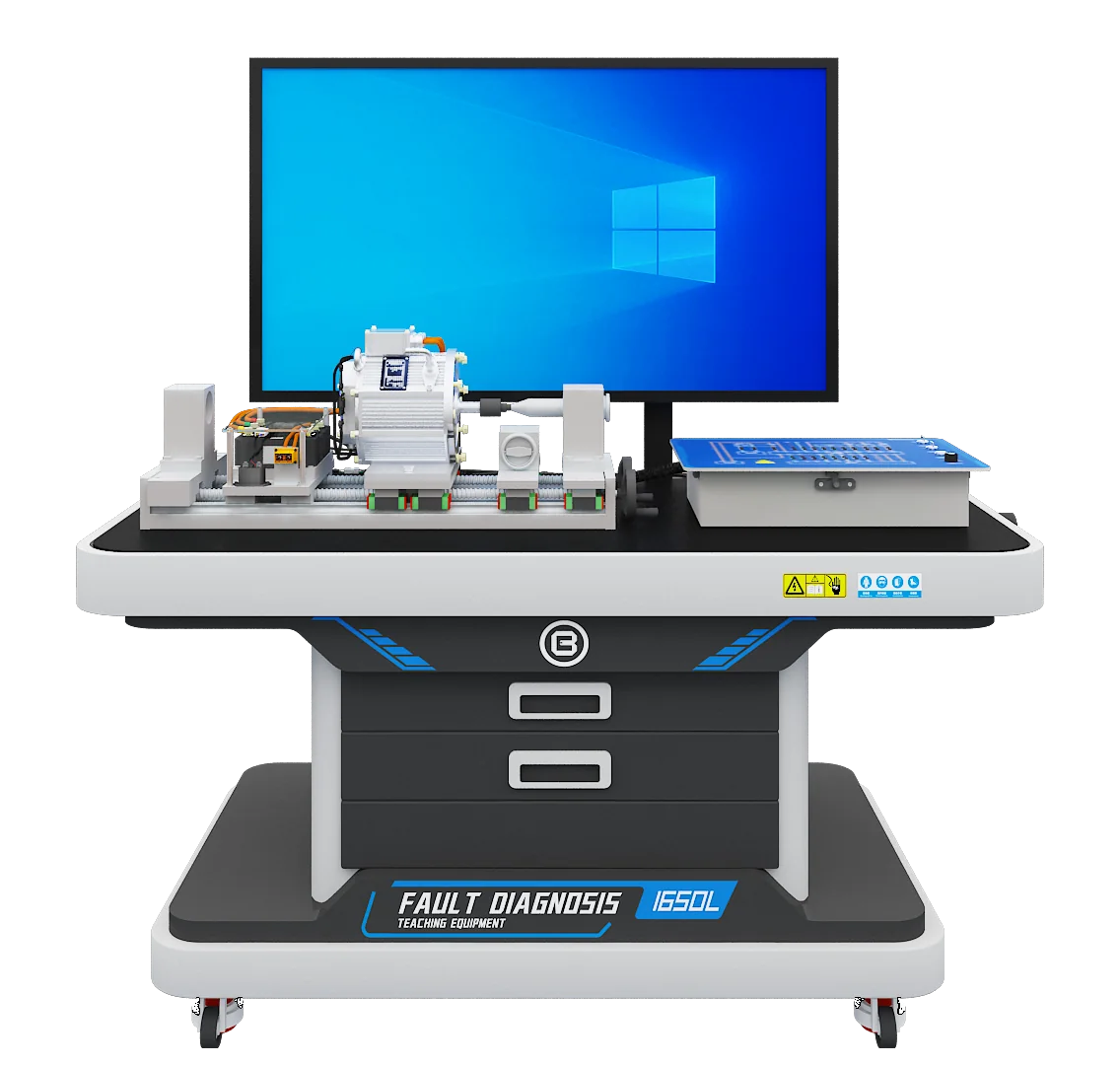
The documented T076 supply is 380 V AC three-phase five-wire. Confirm the ordered motor, controller, coupling, instruments and building interface before purchase. The drive motor application is a route for defining the lesson; it does not remove the need for a configuration-specific utility and installation review.
7. Use a teaching charger to explain states and components
BTKX’s T040 AC charging assembly platform supports specified educational assembly and circuit checks. Its role should be written in terms of student actions: identify the component, interpret the circuit, observe an agreed state and explain the response. This makes the practical objective clear before anyone compares power ratings.
The reference charging infrastructure training application describes ≤1.5 kW and ≤7 A teaching hardware. That is not commercial DC fast-charging capacity, nor does it establish compatibility with a Chilean bus charging installation. Confirm the connector, control interface and target lesson rather than relying on a similar-looking plug.
A useful class compares the teaching sequence with a documented fleet scenario. Students identify the principles that transfer and the additional information required at commercial scale. If the course needs high-power charging, charge-point management software or depot commissioning, define those as additional scopes with appropriate equipment, data and local expertise.
8. Keep educational equipment separate from infrastructure approval
SEC’s electromobility portal links the 2024 RIC No. 15 charging-infrastructure technical requirements, product-authorisation arrangements and the TE6 installation-declaration process. It also provides distinct installation checklists, including an electroterminal/public-transport charging category. This is useful evidence that vehicle charging infrastructure has its own technical and administrative pathway. [3]
A college can teach students to recognise those work boundaries without implying that a component trainer carries approval for public deployment. Ask a competent local instructor or installation specialist to identify the current requirements relevant to the course. Preserve the date and version of the documents used in classroom exercises.
For procurement, request configuration details and evidence for the intended educational installation. Where students also study commercial infrastructure, specify access to suitable local examples and qualified instruction. The training package, the laboratory electrical installation and a public charging project should each have a clear acceptance responsibility, even when they are discussed within the same institutional programme.
9. Match each platform to a fleet-relevant deliverable
A fleet-oriented curriculum should connect component work to the report a supervisor can use. The report needs to identify the symptom, equipment or vehicle, relevant condition, evidence and next action. A learner who can name components but cannot communicate a justified decision is not yet demonstrating the full practical outcome.
| Course block | BTKX teaching route | Student output |
|---|---|---|
| Battery/BMS evidence | T028 assembly and measurement | Observation, data comparison and uncertainty record. |
| Motor inspection | T036; T076 where performance is required | Inspection report and separately interpreted test data. |
| Charging components | T040 with confirmed interface | State explanation and boundary identification. |
| Integrated diagnosis | Vehicle fault diagnosis application | Symptom-to-verification report for the selected vehicle. |
| Preparation | Physical and virtual resources | Test plan followed by observed physical practice. |
Add the exact vehicle interface, class size and instruments to the working matrix. This turns a broad equipment proposal into a configuration that teachers can timetable and assess.
10. Write Spanish task sheets like useful maintenance handovers
Spanish resources should help students communicate evidence clearly. A task sheet can ask for the reported problem, relevant condition, permitted check, observation, interpretation and verification. Keep observation separate from inference so another person can understand which part of the conclusion is directly supported and which still needs confirmation.
Agree terminology with local teachers before translating a full resource library. Include diagrams, student instructions, teacher notes, assessment criteria and maintenance documentation. Specify software language separately. Technical identifiers should remain available for support, especially where the supplier’s product names and vehicle documentation use English terms.
The curriculum development service and international TVET cooperation service can define this delivery. Approve a sample battery case and charging-state case with local instructors. If the student record would not help a maintenance supervisor decide what happens next, improve the task before producing more pages of translated material.
11. Train teachers and laboratory technicians together
Instructors need to assess reasoning, while laboratory technicians need to maintain a repeatable starting condition. Those roles should train together on the selected configuration. A station that works during a supplier demonstration but cannot be restored between classes will quickly lose teaching availability.
Specify teacher training around a complete lesson. Staff set up the task, explain the permitted actions, supervise a learner, assess the evidence and reset the fault. A second instructor reviews the marking decision. The team also practices reporting a support issue with the model, configuration, observed condition and steps already checked.
Include a backup person for each specialist module and a follow-up after the first cohort. Review repeated student misconceptions, unclear task wording and equipment interruptions. This is particularly valuable when the curriculum links several boundaries, such as battery evidence, charging behaviour and operational decisions, because students need consistent explanations from every instructor.
12. Use simulation for triage practice before physical access
Digital preparation can let students examine a scenario and propose an evidence-gathering plan before reaching scarce equipment. Present a missed charging event or an ambiguous vehicle symptom, then ask what information is missing. The learning objective is to choose useful evidence, not to click through a predetermined sequence until the screen announces success.
Confirm the modules, licences, computer requirements and instructor controls in the actual software proposal. BTKX’s simulation development service can be discussed where an institution needs a particular scenario. Do not assume a passenger-car simulation includes bus-depot scheduling, charge-point software or an operator’s real data environment.
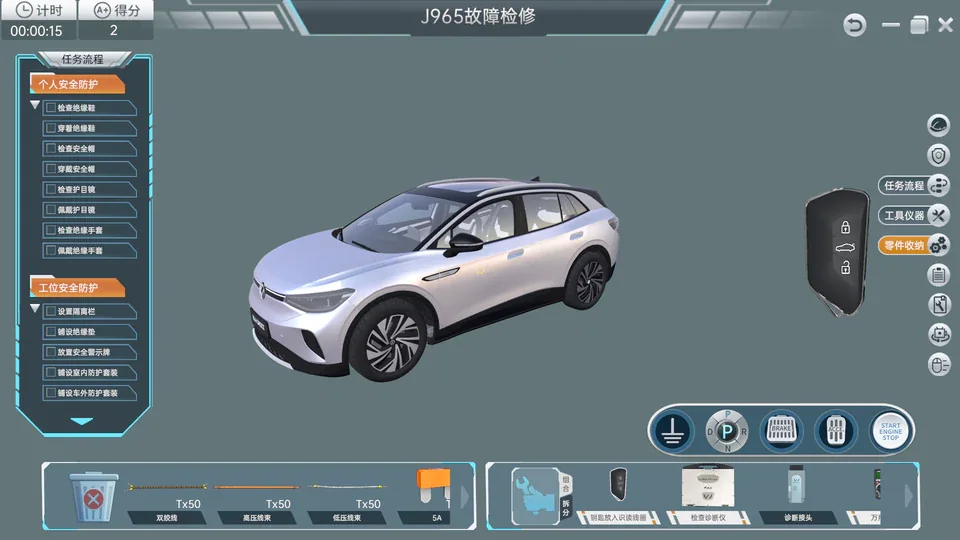
After the physical session, return to the original plan and compare it with the evidence collected. Students explain which assumption changed and why. This reflection creates a useful bridge between simulation and workshop practice and allows teachers to assess reasoning rather than screen completion.
13. Preserve the boundaries between cars, buses and heavy equipment
The 2026 strategy’s broader transport scope is a reason to define vehicle classes carefully, not to claim universal coverage from one trainer. A passenger-car component can explain transferable principles, yet a bus or heavy-vehicle course may require different architecture, communications, cooling arrangements, service access and operational context.
Begin with a common electrical and diagnostic foundation, then identify the vehicle-specific practice required by employers. Ask which tasks students can perform within a placement and which should remain demonstrations or specialist lessons. This keeps the employment promise realistic while allowing the foundational laboratory to serve several programmes.
Where conventional vehicle and chassis teaching remains useful, retain it. BTKX’s conventional vehicle range supports mechanical and electrical subjects that can connect to an EV pathway. The curriculum should explain both the transferable method and the system-specific limits, so learners recognise when a familiar observation requires a different procedure.
Consider a proposed regional bus-course scenario: a vehicle is reported unavailable for its morning duty after an overnight charging window. Give students a simplified duty plan, selected vehicle information and a charging-event record prepared for teaching. Their first task is to write the questions that separate an incomplete charging event from a vehicle fault or an unrealistic operating assumption. Do not let the exercise collapse into a guess about which expensive component to replace.
Next, provide a second piece of evidence that challenges the initial explanation. Learners revise the hypothesis and identify who should perform the next action: a vehicle technician, a charging-equipment specialist or the person responsible for the operating plan. They must explain the boundary and preserve a clear handover. The lesson can be run with fictional data based on agreed principles, avoiding any implication that the school has access to an operator’s proprietary systems.
For a light-vehicle service group, shorten the scenario and focus on the documented vehicle interface and a customer complaint. For an industrial-fleet group, retain the same reasoning method but require the locally relevant architecture and service procedures before physical practice. Comparing these versions helps a Chilean institution share foundational teaching while remaining honest about the additional capability needed for each vehicle class.
14. Accept a repeatable lesson and an operational support route
Before dispatch, witness a full exercise on the quoted configuration. The demonstration should include normal starting condition, student access, expected evidence, instructor-selected fault and reset. Keep configuration identifiers and sample records so the institution can compare the delivered system with what was approved.
| Area | What to verify | Evidence to retain |
|---|---|---|
| Teaching configuration | Platform, instruments, software and approved tasks. | Signed schedule and representative lesson record. |
| Building interface | Ordered utilities and installation conditions. | Review by the responsible local engineer. |
| Spanish resources | Usable instructions and assessment criteria. | Locally reviewed sample lessons. |
| Availability | Reset, spares and software recovery. | Maintenance instructions and support escalation route. |
Use the EV laboratory planning service to connect the equipment schedule with the room. At site, repeat the exercise using local computers and installed utilities. Teachers should confirm educational usability while technical staff verify the installation interface.
15. Measure whether students make better maintenance decisions
Successful training should improve more than vocabulary. Ask learners to identify a problem boundary, justify a test, interpret evidence and communicate a next action. Include cases with incomplete information, where a careful request for further evidence is more appropriate than a confident repair recommendation.
Invite a local fleet or workshop supervisor to review anonymised student reports. Ask whether the report would help assign the next task and whether it clearly separates observation from inference. Compare that feedback with practical availability, reset time and individual participation to decide where the next improvement belongs.
The BTKX vocational school solution can support a coordinated equipment and teaching project. A centre should expand into specialist performance or infrastructure topics when its learners, staff and local partners can use them. Reliable foundational lessons and defensible diagnostic records provide the strongest evidence for that next investment.
16. Questions from Chilean EV training planners
Should a Chilean EV lab focus on buses or passenger cars?
Choose the employment pathway through local partners. Common battery, motor and diagnostic principles can support several programmes, but bus-specific architecture, interfaces and operational practice need separate validation. A passenger-car trainer should not be advertised as complete heavy-vehicle coverage without supporting equipment and teaching evidence.
Can the teaching charger reproduce an electric-bus depot?
The T040 reference supports defined AC component and circuit lessons at educational power. It does not by itself reproduce a commercial DC depot, charge-point software or fleet scheduling. Use it to develop control-state reasoning, then add separately scoped infrastructure and operator-specific practice where required.
Does a BMS reading establish battery health?
It provides information that must be interpreted in context. Students should identify what the value represents and which additional evidence is needed for the question. Assembly checks, sensing diagnosis and long-term performance assessment are different tasks and may require different equipment.
Does the equipment automatically meet SEC installation requirements?
Do not infer that from a catalogue description. Define the educational configuration and have competent local staff review the installed laboratory interface. Commercial charging infrastructure has its own product and installation processes. Request specific evidence for any claimed approval relevant to the actual project.
What Spanish resources should be specified?
Include student task sheets, diagrams, teacher notes, assessment criteria, maintenance instructions and the agreed software language. Review sample battery and charging exercises locally. The resources should help students produce a usable maintenance handover rather than only translate the supplier’s product introduction.
What is a useful first phase for a regional centre?
Start with measurement, battery/BMS reasoning, motor inspection and a defined charging-state task, supported by prepared teachers. Add relevant supervised vehicle practice through local arrangements. Expand specialist testing when practical demand, technical utilities and staff competence are established.
Build a Chilean lab around evidence and fleet availability
Share your city, vehicle classes, learner level, local partners, room utilities and Spanish resource needs. BTKX can discuss EV teaching equipment, practical resources and teacher development around a clear diagnostic pathway.
Discuss your Chile training projectSources
Research checked 20 October 2026.
- Ministry of Energy: National Electromobility Strategy 2030, 2026 official edition hosted by SEC.
- Ministry of Energy: electromobility roadmap announcement, 2023 announcement covering actions to 2026.
- SEC: Electromobility portal, 2024 RIC No. 15 framework; portal checked 20 October 2026.