

Europe · Germany Market Guide
EV Training Equipment in Germany: Add the Lesson Your Programme Is Missing
Add targeted battery, motor and diagnostic capability to an established programme through curriculum mapping, reproducible lessons and clearly defined responsibilities.
On This Page
The planning answer
Where can an EV training platform add value in Germany?
For a German vocational school, inter-company training centre or technical academy, an EV trainer should fill a specific teaching gap in an existing programme. Useful additions include visible battery/BMS measurement, repeatable component-level diagnostic cases and motor-assembly inspection. The equipment must fit the intended learning field, instructor responsibilities and practical assessment conditions.
Begin with the task that existing vehicles and workshop resources cannot teach efficiently. Then assess a BTKX platform against its documented interfaces, German-language resources, reproducibility and support arrangements. Purchasing a station does not confer an occupational qualification, establish manufacturer authorisation or replace the institution’s arrangements for work on high-voltage systems.
1. Start with the missing lesson in an established system
German buyers of EV training equipment are often adding to an established automotive programme. Their challenge is not simply to introduce electric mobility as a new topic. It is to create practical access to systems that are difficult to observe, repeat or assess consistently on a complete vehicle.
A useful business case identifies a concrete limitation: students cannot compare a permitted physical measurement with BMS data; an instructor cannot reproduce an equivalent diagnostic task for every group; or an assembly lesson stops before learners explain their inspection evidence. That limitation is a better purchasing trigger than the presence of a newer vehicle in the catalogue.
Document what the institution already teaches well. Keep useful automotive electrical and chassis resources, retain validated vehicle procedures and add a specialist platform where its access and repeatability improve the learning process. The resulting laboratory should extend the programme’s teaching capacity without creating a parallel set of disconnected demonstrations.
2. Map the equipment to the automotive occupation
BIBB’s current occupational profile for Kraftfahrzeugmechatroniker/Kraftfahrzeugmechatronikerin includes diagnosis, measurement, maintenance, assembly, technical communication and evaluation of work results. It also lists System- und Hochvolttechnik among the training specialisms. [1] These are useful anchors for curriculum mapping rather than a ready-made equipment specification.
Translate the relevant occupational activity into a lesson and its evidence. “Diagnose a fault” needs a defined symptom, accessible information, permitted measurements and a reasoned conclusion. “Evaluate work results” needs criteria against which the learner can explain whether the task has been completed satisfactorily.
BTKX’s curriculum-development service can be discussed in relation to those tasks. The institution should retain responsibility for its learning-field alignment and assessment design. A supplier’s worksheet becomes useful when it can be integrated into that existing structure, with terminology and evidence expectations the teaching team recognises.
3. Plan for a mixed technical workload
VDA’s annual registration table, citing KBA and VDA, records 545,142 battery-electric passenger-car registrations in Germany for 2025. The same table separately records plug-in hybrids and other propulsion types. [2] The educational implication is to distinguish systems clearly while maintaining transferable diagnostic foundations.
A BEV station should not erase lessons on conventional vehicle electrical systems, chassis inspection or the relationship between mechanical condition and diagnostic symptoms. A hybrid course should identify what additional architecture and operating information it needs beyond a battery-electric teaching station.
Use conventional vehicle training equipment where it addresses an actual gap, and integrate EV-specific battery, charging or electric-drive lessons where they add a distinct capability. Registration totals describe new vehicle flows in a stated year, not the composition of every local workshop’s workload. Ask employer partners what their trainees actually encounter before choosing the balance.
4. Distinguish school, training-centre and employer requirements
The same product can have different educational value in a Berufsschule, an inter-company practical training centre and a company academy. The first may need to connect concepts across learning fields; the second may need reliable individual practice; the third may focus on a narrowly defined workforce task.
| Institutional use | Main planning question | Evidence to request |
|---|---|---|
| Vocational school | How does the station support the selected learning field? | A sample lesson with explicit links to the existing course. |
| Practical training centre | Can each learner complete an equivalent observed task? | Reset procedure, task duration and assessment record. |
| Employer academy | Which job decision should become more reliable? | An employer-reviewed inspection or diagnostic deliverable. |
| Technical higher education | Is measurement analysis or component assembly the objective? | Documented test envelope and suitable data outputs. |
These are proposed buyer profiles. Their actual requirements depend on the programme, staffing and facilities. A common hardware purchase should not conceal different software licences, assessment time or instructor preparation needed by each group.
5. Use regional employer networks to choose the emphasis
A proposal for Stuttgart, Munich, Wolfsburg, the Rhine-Ruhr area or Berlin should identify the actual employer and institutional network it will serve. City names alone do not establish demand for a particular station. Start with placement arrangements, the existing vehicle inventory and the technical tasks employers permit trainees to practise.
For a programme oriented towards component assembly, investigate whether dimensional checks, resolver alignment and documented acceptance decisions are meaningful additions. For an independent-workshop pathway, investigate fault interpretation, technical information access and the ability to distinguish verified findings from assumptions.
Use a small set of real examples collected from partners, with commercially sensitive information removed. Ask whether the teaching platform can produce an educationally equivalent task without copying a proprietary procedure. This makes the local brief specific while respecting the distinction between general principles and manufacturer-controlled data.
6. Keep equipment scope separate from high-voltage qualification
DGUV Information 209-093 describes organising work on vehicles with high-voltage systems through risk assessment and the relevant qualification needs. The English edition listed by DGUV is dated June 2023. [3] Institutions should consult the applicable current material and their competent responsible staff when defining teaching activities.
For procurement, this means the supplier should explain the operating functions, access points and limits of the ordered system, while the institution establishes the people, supervision and organisational arrangements appropriate to its activities. An equipment description containing the words “high voltage” is not a qualification certificate.
Do not ask a product catalogue to settle what work an individual may perform. Instead, agree which lesson the institution intends to deliver, who is responsible for its risk assessment and which delivered documents support that assessment. This keeps the purchasing discussion concrete without implying that a generic training platform automatically meets every occupational or institutional requirement.
7. Use the battery platform to expose the reasoning
The BT-NEV2-T028 battery assembly and BMS system provides access to LFP battery components, permitted measurements and BMS information. Its educational advantage should be assessed through what students can explain about the relationship between those observations.
A strong task gives learners a consistent starting condition and asks for a measurement record, a comparison with the software display and a conclusion tied to the evidence. The instructor should be able to distinguish a sound diagnostic approach from a correct answer obtained by guessing the selected fault.
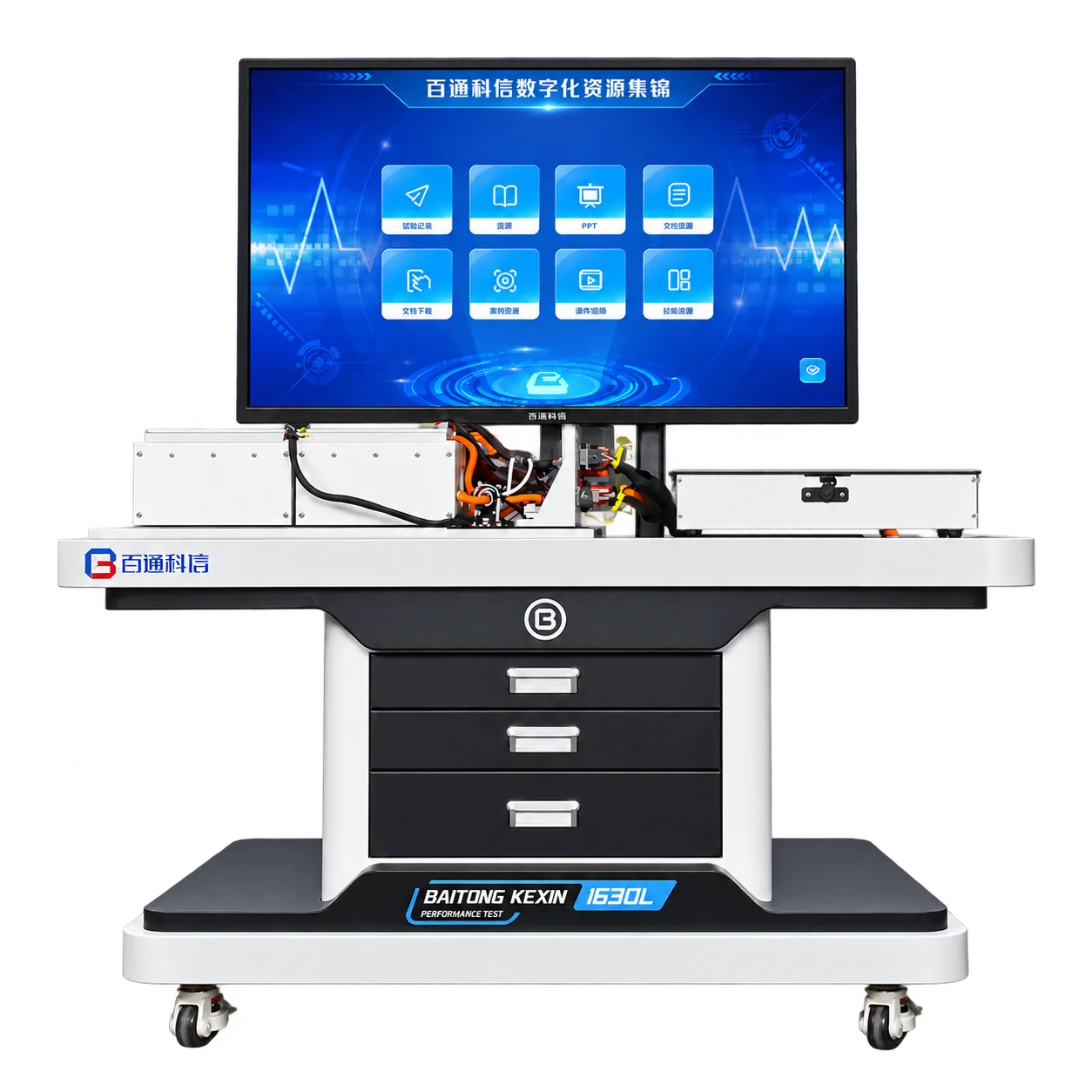
The reference configuration’s ≥60 V nominal battery and LFP cells should be stated accurately. They do not establish compatibility with every German vehicle or make the platform a cell-manufacturing facility. Where the course requires extended cycling, capacity evaluation or performance-data analysis, specify the necessary additional equipment rather than crediting an assembly platform with an unverified function.
8. Separate assembly quality from performance measurement
The T036 assembly platform and T076 performance platform serve related but different teaching tasks. This distinction is particularly useful when a German programme already has motor theory resources and needs a precisely defined practical addition.
For assembly, request the fixtures and records needed for resolver alignment, dimensional checks and inspection decisions. For performance, establish the selected motor, coupling, controller, load and measurement envelope. A motor’s catalogue peak value should not be treated as permission to run every associated test station at that value.
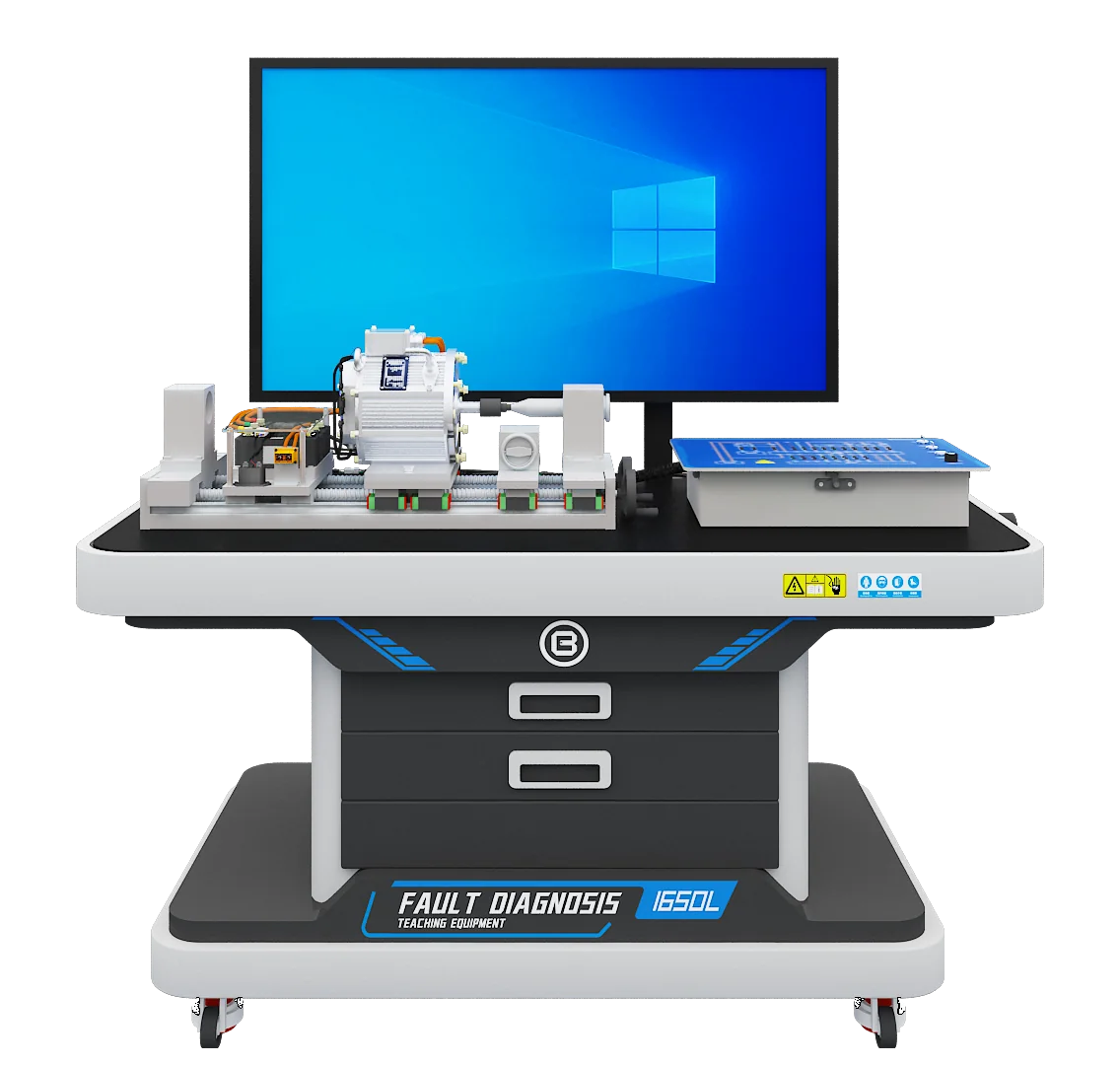
The lesson can connect assembly records with approved operating data, but comparisons need documented conditions and meaningful measurement ranges. Ask the supplier to demonstrate the actual data learners will analyse. A graph on a display has little teaching value if its axes, test conditions and relationship to the practical task are unclear.
9. Make charging-interface compatibility visible in the quotation
Charging equipment should be evaluated at the level of the intended connector, pilot protocol and lesson. A generic claim of “EV charging training” does not establish that the hardware, diagrams and simulation will represent the interface used in the German course.
The T040 AC charging assembly platform supports its documented educational scope. BTKX’s charging application describes a reference teaching charger limited to ≤1.5 kW and ≤7 A. Confirm the exact ordered interface and accessories before treating a proposed exercise as available.
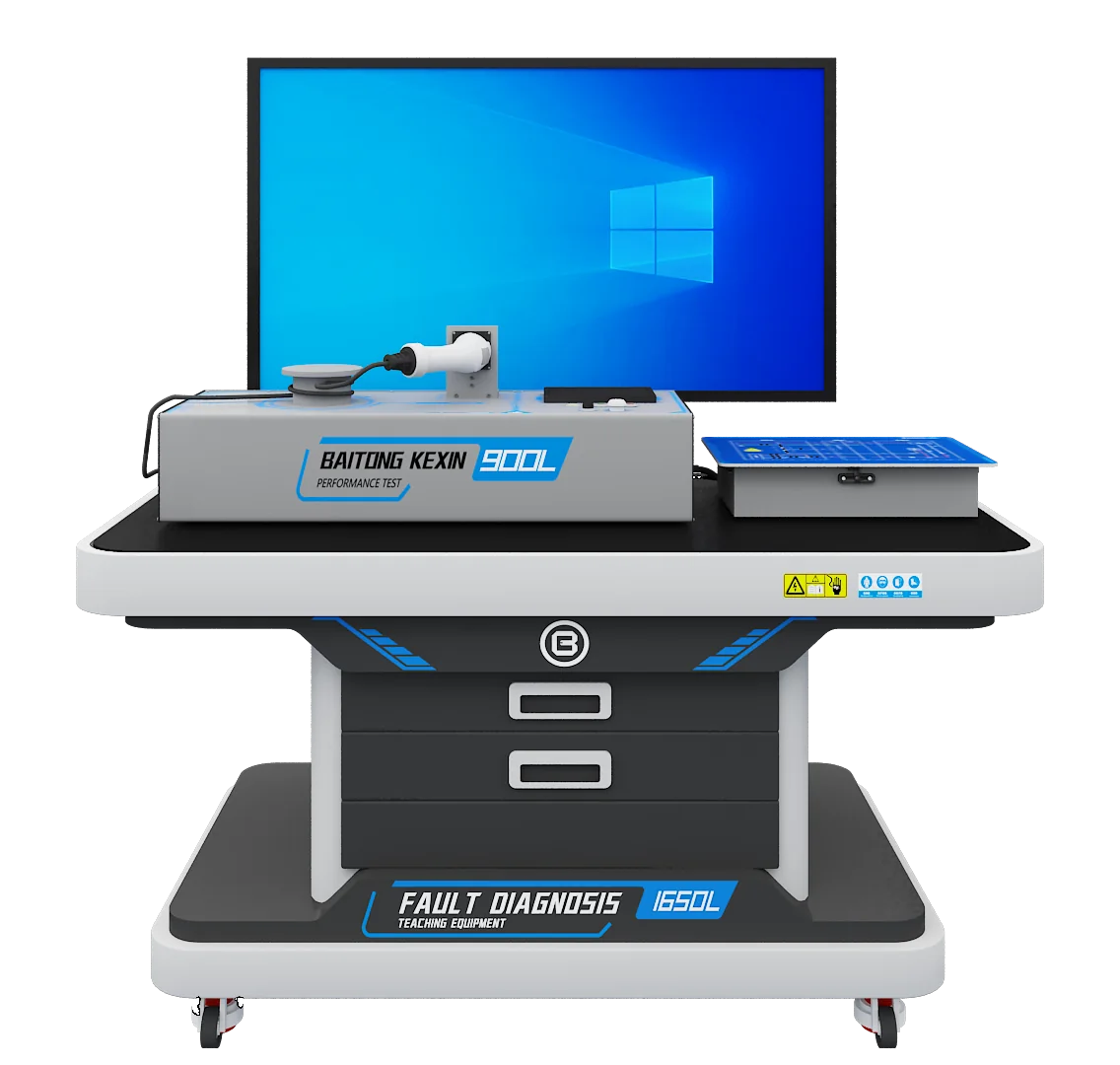
A useful interface acceptance example begins with the course’s required charging-state transition. Ask the supplier to identify the teaching connector, the signal information learners can access and the worksheet used to interpret it. Then compare those items with the ordered diagrams and software version. If the demonstration uses an adapter, record whether it merely changes the physical connection or also supplies the required signalling behaviour. This distinction prevents a visually convincing demonstration from obscuring a mismatch in the lesson itself. The laboratory planning discussion should include that interface evidence alongside physical space and utilities.
Ask for one representative charging-state lesson using the version being quoted. The response should identify what is physically measured, what is simulated and what is outside the station’s scope. Keep vehicle charging diagnosis, commercial charging installation and charge-point management software as separately described learning objectives. This produces a fairer comparison with equipment already in the institution and avoids assuming an overseas interface is interchangeable because the overall training topic sounds familiar.
10. Map tasks to resources and assessment evidence
The following matrix helps an institution decide whether a station fills a real gap. It can be extended with the relevant learning field, lesson length and assessment rubric. A supplier should be able to respond to each chosen row with evidence from the proposed configuration.
| Task focus | Potential equipment | Assessment deliverable |
|---|---|---|
| Battery measurement | T028 with confirmed instruments and BMS resources. | Traceable measurement record and a reasoned comparison with displayed data. |
| Motor inspection | T036 with matched fixtures and criteria. | Assembly inspection record and justified readiness decision. |
| Motor performance | Compatible T076 test arrangement. | Interpretation of data under documented operating conditions. |
| Charging states | T040 with verified interface. | Explanation linking a measured or simulated state to the defined lesson. |
| Vehicle application | Model-specific diagnosis resources. | A supported diagnosis using the intended vehicle information and access. |
Include existing equipment in the same matrix. It may reveal that a proposed purchase duplicates a functioning lesson while translation, measurement tools or individual practice time remain the more urgent investment.
11. Review a complete German lesson before approving translation
German-language resources should be evaluated as a working teaching sequence. Ask for a sample containing the component diagram, terminology, learner task, expected record and instructor guidance. A translated user-interface screenshot alone cannot show whether the lesson is usable.
Review the consistency of units, decimal notation, abbreviations and diagram legends. Confirm that labels on the physical station can be related unambiguously to the instructions. Where the software remains in English, decide explicitly whether that supports the course or creates an unnecessary barrier for the intended learners.
Version control matters. Record the equipment revision, software version and worksheet edition used in the acceptance lesson, and clarify who updates the resources after changes. BTKX’s teacher-training support can be scoped around this concrete lesson. A German software or resource package should be demonstrated and listed in the contract rather than assumed from the availability of an English marketing page.
12. Measure repeatability across student groups
A training station often earns its place by making a lesson repeatable. Test that advantage before purchase. Ask the supplier and teaching team to run the same agreed exercise twice, recording the preparation, starting condition, allowed measurements, reset process and expected evidence.
Equivalent conditions do not mean every learner must receive an identical answer sheet. They mean assessment differences should come from the learner’s work rather than an unexplained change in the platform. Establish how the instructor knows the station is ready for the next group and how unexpected behaviour is investigated.
Use simulation to prepare the sequence where it reflects the actual task. The virtual simulation application is relevant for rehearsal and information review. Preserve a separate record of the physical task each learner must demonstrate. Reproducible preparation can improve station utilisation, but software completion alone should not be counted as observed practical competence.
13. Test the timetable against instructor observation
Consider an illustrative group of 20 learners who each need 14 minutes for an individually assessed activity. The total is 280 learner-minutes. Four stations running for 75 minutes offer 300 station-minutes, leaving only 20 minutes across the whole setup for changeovers and other interruptions.
That calculation still omits instructor observation capacity. If one assessor must personally observe a critical part of each task, station availability is not the only constraint. Record which parts can run independently, which require observation and where assessment slots overlap.
Use the institution’s actual lesson structure to decide whether additional stations, smaller groups or another session offers the best educational result. This example is scheduling arithmetic, not a prescribed class size or safe supervision ratio. Ask the course team to approve the capacity plan before requesting a larger hardware quantity. Equipment that fits the room but cannot be assessed within the timetable does not solve the teaching problem.
14. Evaluate documentation and service life alongside function
For an imported educational platform, documentation and maintainability are part of the teaching proposition. Request the exact configuration, technical documentation and applicable conformity information for institutional review. Do not infer whole-system acceptance from a marked component or a generic certificate in a company presentation.
| Review area | Evidence requested | Practical consequence |
|---|---|---|
| Configuration | Model, interfaces, accessories and software/resource revisions. | Defines the actual teaching scope being purchased. |
| Institutional approval | Relevant technical and conformity documentation for the complete supply. | Allows competent staff to review the equipment for the intended use. |
| Maintenance | Serviceable items, replacement route and diagnostic support process. | Reduces uncertainty when a teaching station becomes unavailable. |
| Digital continuity | Licensing, update scope, backups and offline behaviour. | Shows whether the course remains teachable over its planned service life. |
Discuss the operating costs of computers, licences, maintenance and instructor preparation in the same decision as hardware price. The lowest acquisition price is not automatically the lowest cost per completed practical lesson.
15. Accept the equipment through the institution’s lesson
Before award, agree a sample lesson representative of the reason for buying the platform. Use the institution’s intended resources and staff rather than relying only on a supplier demonstration designed around another curriculum.
| Stage | Demonstrate | Retain |
|---|---|---|
| Inventory and version | The delivered configuration matches the agreed scope. | Model, accessory and version register. |
| Lesson delivery | Task preparation, permitted measurement and student evidence. | Completed sample task and findings. |
| Repeat exercise | Reset and readiness for the next learner. | Instructor checklist and observed reset requirements. |
| Continuity | Resource access, backups, maintenance and support reporting. | Responsibility list and follow-up actions. |
BTKX’s equipment procurement checklist provides a related discussion framework. The final acceptance criteria should belong to this particular institution, programme and ordered configuration.
16. Questions from German training-equipment buyers
Can a BTKX trainer fit an existing German automotive programme?
Potentially, where its documented tasks address a specific learning-field gap. Review a complete sample lesson, technical interfaces, resource language and assessment evidence with the course team before deciding.
Does buying the equipment provide DGUV high-voltage qualification?
No. Equipment functions and qualification requirements are different matters. The institution’s competent responsible staff should determine the applicable training, risk assessment and supervision arrangements using current relevant guidance.
Is German-language software already included?
Confirm the proposed version and resource list through a working example. Specify the required German interface elements, diagrams, worksheets and instructor notes, including how revisions will be maintained.
Can T036 replace a motor dynamometer?
T036 supports its assembly and inspection role. Instrumented operating-performance teaching belongs to a separately matched test configuration, such as T076 where appropriate. Compare the actual syllabus and required measurements.
Will an overseas charging trainer match the intended German interface?
Compatibility must be established for the quoted hardware, connector and pilot protocol. Request a representative lesson using that exact version; do not infer equivalence from the product category.
What makes a small first purchase worthwhile?
A small purchase is useful when it delivers a complete, repeatable lesson unavailable with existing resources. Include instruments, teaching materials, instructor preparation and assessment time so the new station can be used immediately.
17. Submit the teaching gap with the procurement brief
Send BTKX the learner profile, relevant learning field, existing workshop resources and the task the new platform must enable. Include the intended interfaces, German-language requirements, class schedule, observation needs and site provisions.
Request a proposal linking the equipment and teaching support to that brief. The response should identify a complete first lesson, the configuration it needs and the evidence the institution can use to accept it. This is a more defensible route into a mature training environment than purchasing a broad package and searching for its educational purpose afterwards.
Adding a targeted EV training capability in Germany?
Share the missing lesson and existing resources to discuss a precisely scoped equipment proposal.
Discuss your German programmeSources
Research checked 20 October 2026.
- BIBB: Kraftfahrzeugmechatroniker/Kraftfahrzeugmechatronikerin occupational profile, profile checked October 2026.
- VDA: Annual registrations and ownership transfers, 2025 table citing KBA/VDA; checked October 2026.
- DGUV Information 209-093: Training for work on vehicles with high-voltage systems, English edition June 2023.


