
Asia · Indonesia Market Guide
EV Training Equipment for Indonesia: From Battery Quality to Motorcycle Service
Build separate manufacturing and motorcycle-service pathways around a shared electrical core, with practical procurement advice for Indonesian SMK schools, polytechnics and training centres.
On This Page
The planning answer
What should an Indonesian EV training programme prioritise?
An Indonesian EV training programme should distinguish battery and vehicle manufacturing skills from electric-motorcycle service skills, then connect both through measured electrical evidence. For SMK schools, polytechnics and employer training centres, the useful starting package combines component measurement, battery/BMS teaching, motor inspection, documented diagnosis and instructor development. Vehicle-specific motorcycle practice needs its own validated equipment and procedures.
Indonesia's battery investment narrative and its motorcycle transport needs describe different workplaces. A workstation that teaches repeatable assembly inspection can support industrial preparation; a motorcycle workshop also needs model-specific connectors, controller information and service access. Buy a complete teaching sequence for the intended occupation before expanding into specialist testing.
1. Build for two workplaces, not one EV headline
For buyers researching EV training equipment in Indonesia, the central decision is whether graduates will work in manufacturing, vehicle service or both. An industrial assembly technician must follow a controlled process and record conformance. A service technician must move from a customer symptom to an authorised diagnostic decision. Both use electrical measurements, but their evidence and equipment access differ.
BKPM's 3 July 2024 announcement records the inauguration of the HLI Green Power battery and EV investment ecosystem in Karawang, West Java, including a first-phase battery-cell production capacity of 10 GWh. This is a dated industrial-development signal, rather than a count of available technician jobs today. [1]
Separately, ESDM reported in February 2024 that it invited 16 SMK centres of excellence in Greater Jakarta to participate in motorcycle-conversion ecosystem development. [2] Our planning interpretation: Indonesian institutions should write separate occupational pathways, sharing fundamentals while preserving the distinction between production quality, vehicle conversion and after-sales repair. One impressive machine cannot demonstrate all three competences.
2. Turn the Indonesian catchment into a purchasing brief
Start the brief with the institution's placement catchment, not a national equipment package. Interview employers about the tasks they will permit trainees to perform and the records supervisors actually use. In an industrial programme, ask who signs assembly inspection sheets. In a motorcycle course, ask who owns the battery, who can access diagnostic data and when a unit must return to the vehicle supplier.
| Catchment | Employer question | Likely equipment discussion |
|---|---|---|
| Jakarta, Bekasi and Karawang | Is the intake preparing for vehicle service or controlled production work? | Battery/BMS measurements, assembly inspection and traceable records. |
| Bandung and wider West Java | Which polytechnic and SMK courses can share an electrical teaching foundation? | Modular practical stations and instructor-led fault cases. |
| Surabaya and East Java | Which mixed-fleet workshops or industrial employers will validate assessments? | Conventional-to-EV diagnostics and motor inspection. |
| Denpasar and other island centres | Can support, replacement instruments and practical vehicles be maintained locally? | Serviceable modules, offline resources and a precise support plan. |
The regional suggestions are invitations to investigate. A Karawang address does not automatically make a school a battery-manufacturing specialist, and a Bali location does not establish a particular electric fleet. Request a list of actual placement vehicles, equipment and task permissions. Use that evidence to allocate the budget between transferable teaching and workplace-specific practice.
3. Translate the occupation into assessable evidence
A useful outcome is more specific than “know EV technology.” For an assembly learner, it might be an inspection sheet recording component identity, an authorised measurement and the decision to accept or escalate. For a service learner, it might be a work order that distinguishes a symptom from a confirmed fault. These documents make the course understandable to employers and purchasing teams.
Create three evidence levels: recognition, supervised execution and reasoned explanation. Recognition can use a cutaway or simulation. Execution needs individual access to the permitted physical task. Explanation requires the learner to justify why the measurement supports the conclusion. Do not give all three levels the same assessment simply because they appear in one lesson.
Discuss the matrix with BTKX curriculum and course development before choosing station quantities. Ask the supplier to map every proposed trainer to a worksheet and acceptance demonstration. Keep the institution's qualification requirements in the mapping; equipment documentation supports teaching but does not independently award an Indonesian occupational qualification.
4. Teach battery quality through comparison and traceability
The BT-NEV2-T028 battery assembly and BMS training system is relevant where learners need to connect physical battery components to measurement data. Its published scope includes LFP battery assembly, cell-voltage and internal-resistance measurement, BMS monitoring and instructor-selected electrical fault teaching. These are useful foundations for disciplined inspection.
For an Indonesian industrial course, set a proposed exercise around a traceable component record. The learner identifies the cell or connection, records the instrument and permitted measurement, compares the observation with the teaching reference, and explains the next authorised action. A second learner should be able to understand that record without watching the original task. This develops the habit of documenting quality rather than guessing from appearance.
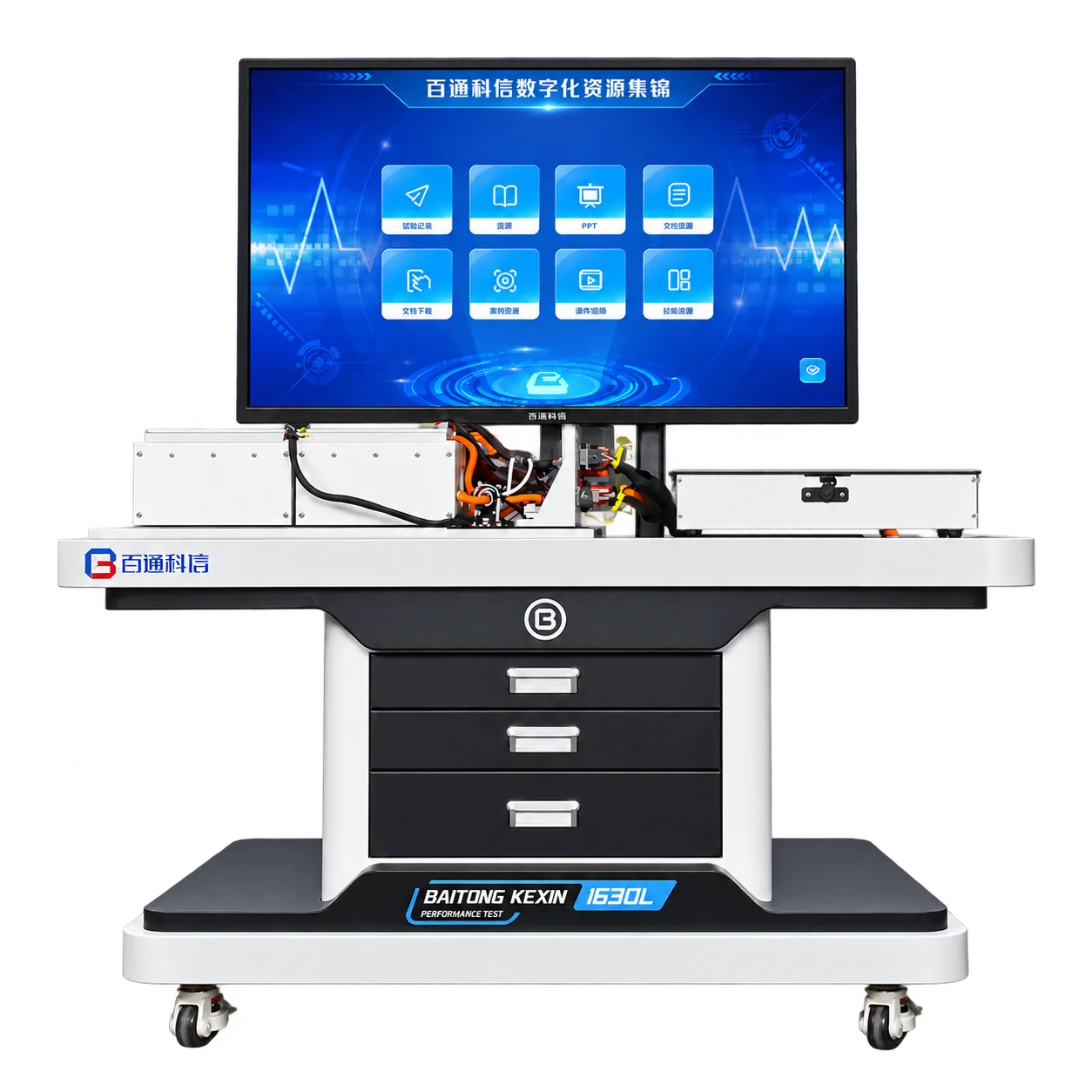
The reference system uses LFP cells; Indonesia's wider battery supply-chain investment does not make every industrial battery chemistry identical. Teach chemistry identification and limits explicitly. A battery assembly trainer is also distinct from a cell-manufacturing production line or a dedicated long-duration battery-cycling laboratory.
5. Give electric motorcycles a validated service pathway
The IEA's Global EV Outlook 2025 records electric two- and three-wheeler sales in Indonesia at less than 2% of their segment in 2024, while its Stated Policies Scenario projects a 30% share in 2030. That is a conditional outlook, not a completed transition. [3] It supports preparing adaptable skills, without assuming a college already serves a fully electric motorcycle fleet.
For a motorcycle employment pathway, obtain sample job cards from actual service businesses. Identify pack access, controller replacement, low-voltage wiring inspection, charging checks and the conditions that require manufacturer escalation. Battery ownership and service permissions matter: a swappable or leased pack may not be an item a graduate is authorised to open.
A car-oriented EV fault-diagnosis teaching system can help explain evidence-led diagnosis, but compatibility with an Indonesian motorcycle must be demonstrated separately. Ask for the exact motorcycle, pack chemistry, voltage, connector and diagnostic interface in writing. Use model-specific physical practice alongside the general lab; do not present T028 as a universally compatible electric-motorcycle repair station.
6. Separate conversion engineering from routine maintenance
ESDM's 2024 SMK engagement makes motorcycle conversion a legitimate topic for local needs assessment. [2] However, conversion teaching has a different endpoint from maintaining a manufacturer's original electric motorcycle. A conversion course must account for mechanical integration, system matching, documentation and the applicable local approval route, in addition to electrical principles.
Build an assignment around evaluating a proposed system configuration on paper before authorising any physical work. Learners can identify missing information about motor ratings, controller settings, battery protection, mounting arrangements and the intended operating conditions. A good answer may be that the proposal cannot yet be accepted because a critical parameter or approval document is absent.
Use the BTKX drive motor training application for assembly and inspection principles, then specify conversion-specific fixtures and vehicles as a separate scope. This avoids a costly procurement error: buying a passenger-car motor bench and treating it as a complete Indonesian motorcycle-conversion course. The workplace or competent local partner should validate the final conversion tasks and assessment boundary.
7. Link motor assembly to an inspection record
The T036 drive motor assembly and testing platform supports an assembly-focused teaching discussion. The separate T076 performance platform addresses measured operating behaviour within a confirmed configuration. The two should not be compared as interchangeable products.
For production-oriented learners, the valuable sequence is preparation, assembly inspection, recorded checks and a justified release decision. Where the syllabus includes resolver alignment or dimensional inspection, define the instrument, datum and expected evidence. A result without its conditions is difficult to interpret and harder for an employer to trust.
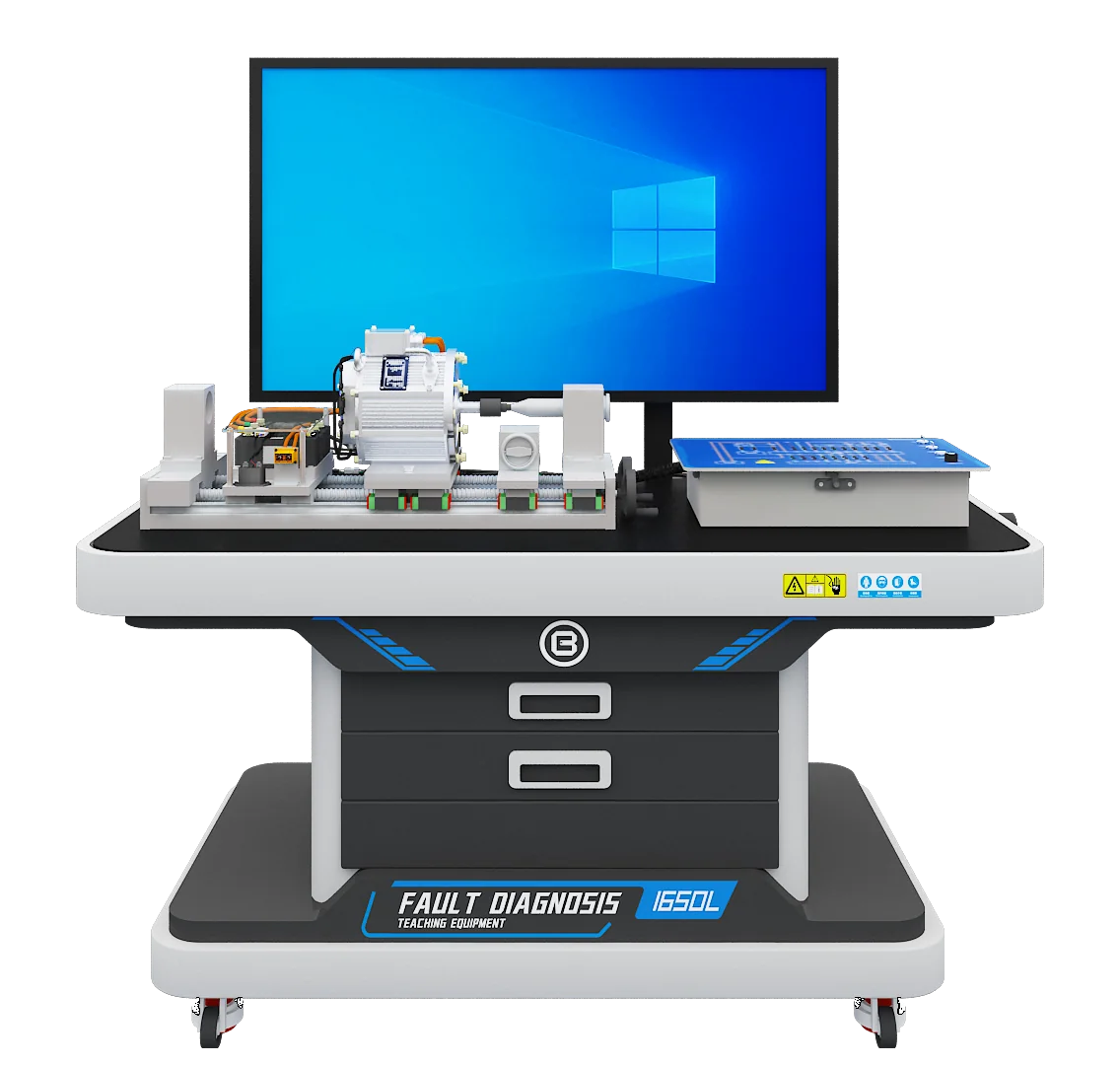
Add a performance station when learners have the foundation to interpret torque, speed and power results and the institution can support the utilities and supervision. Confirm the motor, controller, coupling and load as one approved teaching configuration. Do not infer full peak-condition test capability from the presence of a motor and a display.
8. Choose charging lessons around the actual interface
Charging education should begin with system states: what requests charging, what permits it, which evidence shows normal operation and what causes an interruption. These are more teachable questions than asking students to memorise a national charging-growth headline. They also help connect vehicle and electrical departments without confusing their responsibilities.
The T040 AC charging assembly platform can support guided component assembly and circuit checks. BTKX's charging infrastructure training reference describes teaching hardware rated at ≤1.5 kW and ≤7 A. It is educational equipment, rather than a commercial DC fast charger or a motorcycle battery-swapping cabinet.
For an Indonesian brief, attach the intended connector and communication information to the quotation request. Ask the supplier to demonstrate one successful state sequence and one permitted interrupted sequence with a clear reset procedure. If the programme also covers commercial installation, define the required local electrical expertise, site work and assessment separately. A low-power teaching sequence can explain principles without claiming to duplicate commercial charging infrastructure.
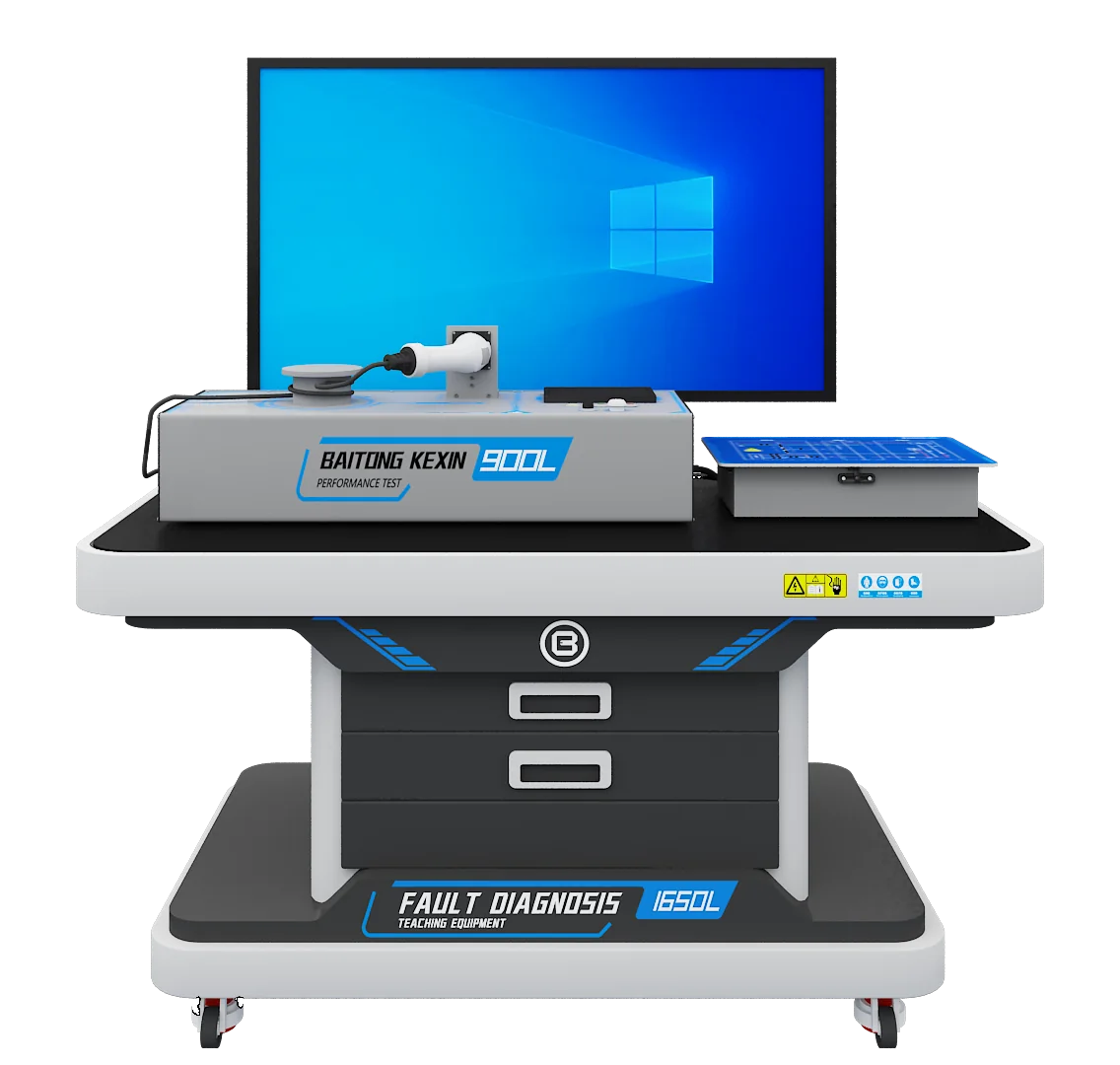
9. Compare packages through student outputs
A quotation becomes more useful when each line has a corresponding student output. This exposes omissions that a model list can hide, such as missing instruments, inaccessible software or a station that cannot be reset within the class period. It also prevents industrial and service pathways being blended into an ambiguous “complete EV lab.”
| Teaching scope | Equipment route | Evidence to include |
|---|---|---|
| Battery inspection | T028 with confirmed instruments and software | Component identity, measurement conditions and BMS comparison. |
| Motor assembly | T036; T076 only for a defined performance module | Inspection record and a justified readiness decision. |
| Charging principles | T040 and the selected teaching interface | State sequence, observed response and fault explanation. |
| Motorcycle service | Validated local vehicle and authorised diagnostic access | Work order, permitted checks and escalation decision. |
| Digital preparation | Physical and virtual TVET resources | Preparation score followed by individual physical assessment. |
Ask bidders to mark inclusions, exclusions and required purchaser provisions beside this matrix. Specify whether the quotation covers a single campus or multiple sites, because licence, commissioning and instructor-training assumptions can change substantially.
10. Make inter-island delivery and service practical
An Indonesian teaching lab is an operating system that must survive delivery, semester changes and ordinary maintenance. The delivery brief should identify the final campus, access restrictions, available handling equipment and who checks crates at each stage. A port destination alone does not describe arrival at the teaching room.
For a remote or island campus, classify spare parts into locally available consumables, replaceable instruments and manufacturer-specific components. Ask for part identifiers and a fault-report template with photographs, serial numbers and software versions. A supplier can respond more efficiently when the school reports an observable symptom rather than “the machine is broken.”
Record power, humidity, dust exposure, storage and internet conditions from the actual room. The BTKX EV lab planning service can connect equipment selection to a preliminary layout, but the campus must validate utilities and local installation arrangements. Discuss which software exercises remain usable offline and how licences recover after computer replacement. These provisions often determine whether an otherwise suitable station is regularly used.
11. Localise Bahasa Indonesia teaching evidence
English technical documentation can be useful in international procurement, while the assessment must be clear to instructors and learners. Agree the required Bahasa Indonesia worksheets, component labels, diagrams and instructor notes. Do not assume that a translated marketing page proves the availability of a translated software interface.
Use a small bilingual terminology set consistently. A component name on a diagram, a BMS screen and a job card should point to the same item. Where an English software term remains unchanged, explain it once and use the same translation in subsequent tasks. Ask an Indonesian instructor to review a sample lesson before the full resource set is produced.
For mixed manufacturing and service cohorts, localise the document type as well as the vocabulary. An inspection sheet and a customer job card ask different questions. BTKX's teacher training service should be discussed alongside this resource review, with a teach-back exercise in which the instructor sets up, runs, assesses and resets an agreed practical lesson.
12. Budget for individual access, not photographed capacity
Suppose an illustrative cohort has 30 students and one assessed battery task takes 10 minutes per student. That requires 300 station-minutes before setup, reset and feedback. Two stations available for a two-hour lesson provide only 240 station-minutes. The timetable therefore needs another session, more stations or a different assessment arrangement. The arithmetic does not define a safe group size; the institution must establish that separately.
A photographed class surrounding a workstation is evidence of a demonstration setting, not proof that every learner has completed the task. Distinguish demonstration capacity, practice capacity and individual assessment capacity in the specification. Ask how many learners can meaningfully access the instruments and how quickly the instructor can restore the reference condition.
Use simulation to prepare decisions, terminology and expected evidence before physical work. It can reduce confusion during the practical slot; it cannot create additional instrument access. Where two occupational pathways share equipment, schedule production inspection and service diagnosis separately so one course does not permanently displace the other.
13. Fund complete modules before specialist expansion
For an SMK upgrading an existing workshop, the sensible first phase may be tools, electrical foundations and instructor preparation. For a polytechnic with those resources already available, battery/BMS and motor inspection can become the first new module. Phase boundaries should follow readiness, rather than an assumption that every institution starts at the same level.
| Gate | Deliverable | Evidence before expansion |
|---|---|---|
| Foundation | Tools, instrument use, component recognition and resources. | Learners can record and explain a permitted measurement. |
| Shared EV core | Battery/BMS and motor assembly inspection lessons. | Instructors run and reset complete assessed tasks. |
| Occupational extension | Manufacturing quality tasks or validated motorcycle service. | Employers confirm the task and evidence are relevant. |
| Specialist testing | Dedicated performance capabilities where the syllabus requires them. | Utilities, workload and teaching hours justify ownership. |
Compare complete usable cost: equipment, computers, translation, instruments, spares, logistics, installation, teacher development and continuing support. Ask the purchasing and logistics teams to resolve import and destination responsibilities for the specific order. Historic policy incentives or an industrial investment announcement are not a basis for assuming a training-equipment import exemption.
14. Accept the delivered system through a real lesson
Write the acceptance lesson before the purchase contract is finalised. A useful battery example includes identification, permitted measurement, a BMS comparison, a learner explanation and an instructor reset. The exact operating conditions and fault selection must follow the delivered documentation. The aim is to verify usability, not to improvise an unreviewed demonstration during handover.
| Item | Check | Record |
|---|---|---|
| Configuration | Model, instruments, fixtures and permitted tasks match the schedule. | Signed item list with serial numbers. |
| Resources | The agreed language versions open on campus computers. | Resource and licence inventory. |
| Instruction | A college teacher delivers and resets the sample lesson. | Teach-back and assessment notes. |
| Support | The institution can identify a part and submit a fault report. | Contacts, part references and maintenance plan. |
Include interface evidence for any local motorcycle adaptation, rather than relying on a connector photograph or a broad claim of vehicle compatibility. The automotive equipment procurement checklist provides a related framework for comparing the agreed scope with delivery.
15. Use BTKX as an equipment-and-teaching partner
BTKX combines Beijing-based manufacturing with digital resources, laboratory planning and teaching support. That business model is relevant to Indonesian institutions that need an equipment schedule connected to a practical curriculum. Review the vocational school and college solution against the intended learner level and occupational pathway.
The Beijing Commercial School NEV practice-centre case illustrates a connected teaching environment across system awareness, vehicle practice and performance topics. It is a Chinese project reference. Indonesian delivery language, support responsibilities, commissioning and local vehicle access must be specified for the new project.
A strong supplier response should explain why each module belongs in the course and which tasks remain outside its scope. Request current model documentation, a sample worksheet, the proposed training format and an itemised quotation. This makes it possible to compare the educational value of the package before committing to a larger facility.
16. Questions Indonesian training-equipment buyers ask
Should an Indonesian SMK begin with motorcycle or passenger-car EV equipment?
Begin with the occupations and vehicles used by placement partners. Shared electrical and battery principles can serve both routes, but motorcycle service needs validated local vehicle access and procedures. A car trainer alone is not a complete motorcycle programme.
Does Indonesia's battery industry mean every course should use nickel-based cells?
No. Teach chemistry identification and select equipment for the intended learning task. T028 is an LFP teaching reference; it does not recreate every cell chemistry or production process represented in Indonesia's battery supply chain.
Can T028 repair swappable motorcycle batteries?
Its documented purpose is battery assembly, BMS measurement and guided fault teaching. Compatibility and permission to work on a particular motorcycle pack require separate evidence. Pack ownership, interfaces and supplier service rules should determine the practical scope.
Is Bahasa Indonesia software automatically included?
Confirm the exact software and resource versions in the quotation. Ask to see an Indonesian sample worksheet and the proposed interface before purchase. Specify which labels, diagrams and teacher materials need translation.
What should an inter-island campus include in the budget?
Include final-campus transport, handling, site preparation, computers, commissioning, spares and instructor development. Identify locally replaceable items and manufacturer-specific parts. A delivery quote ending at a port does not describe a usable classroom handover.
Can the same lab support manufacturing and service learners?
Yes, where the equipment and timetable support distinct tasks. Share fundamentals, then assess production inspection through controlled records and service diagnosis through work orders. Include separate vehicle-specific practice wherever the service pathway requires it.
17. Prepare an Indonesian project brief that can be quoted
Send the institution's location, course level, learner numbers, existing workshop inventory, employer tasks and target vehicles. State whether the priority is production inspection, motorcycle service, conversion education or passenger-car diagnosis. Attach room drawings, utilities, desired teaching language and the individual-assessment timetable.
Ask for a course-to-equipment matrix, resource sample, delivery responsibilities and a practical acceptance lesson. A complete response should let the purchasing team see what arrives and let the instructor see what the first class can accomplish. That is the foundation for a laboratory that can be taught with, maintained and expanded.
Planning EV teaching equipment for Indonesia?
Discuss a modular configuration for your SMK, polytechnic or industrial training centre.
Discuss your Indonesia projectSources
Research checked 20 October 2026.


