

Europe · Russia Market Guide
EV Training Equipment in Russia: Connect Mixed-Fleet Skills with Reliable Diagnosis
Develop mixed-fleet diagnostic capability through measurable battery and motor lessons, Russian teaching resources and a realistic plan for regional delivery.
On This Page
The planning answer
How should a Russian college plan automotive and EV training?
Build the laboratory around transferable mixed-fleet diagnosis, then add clearly defined battery, motor and charging modules. A Russian institution should select equipment against its actual employer network, target vehicles, instructor readiness and resource language. Separate general electrical principles from bus-specific systems, battery production and manufacturer-controlled diagnostic functions.
BTKX teaching platforms can make component measurement and inspection visible and repeatable. Their value increases when the course also teaches students to record conditions, compare physical evidence with software data and explain an uncertainty. Russian-language resources, version control, practical access and a workable support plan should be part of the first usable teaching phase.
1. Start with the workshop decisions graduates will make
A Russian automotive programme does not become an EV programme simply by adding a battery workstation to an existing room. The useful change is a learning sequence in which graduates can investigate electrical symptoms, evaluate evidence and communicate what remains unresolved.
Begin with the intended employment context. A municipal fleet workshop, a passenger-car service business and a component-assembly employer may all need electrical reasoning, but their information access, tools and practical responsibilities differ. Identify which decisions a new entrant can reasonably support under supervision.
Retain the conventional skills that contribute to those decisions. Circuit reading, mechanical inspection, measurement discipline and a clear job record remain valuable when propulsion changes. BTKX’s conventional automotive training equipment should therefore be reviewed alongside EV-specific resources, with purchases directed at the gaps in the current workshop rather than a requirement to replace every existing station.
2. Use Russian industry signals without overextending them
Moscow’s official transport portal reported in March 2025 that more than 2,300 electric buses had arrived in the city since 2018. [1] That dated fleet-development example supports attention to electric-drive and battery skills, but it does not describe every Russian region or establish demand for a specific trainer.
Battery manufacturing creates a different educational question. Rosatom’s corporate publication reported the December 2025 launch of the Neman facility in pilot-industrial operation, with industrial operation then planned for 2026. [2] The distinction matters: a reported launch or capacity ambition is not evidence of current full-rate output.
Our planning interpretation is to separate service diagnosis from manufacturing process learning. A college serving battery-assembly employers may need inspection records and traceability, while a fleet course may need stronger attention to symptoms and system boundaries. Neither pathway can be specified responsibly from an industry headline alone.
3. Ask different questions in each regional catchment
For Moscow-area fleet programmes, ask which practical tasks can be taught on components and which require authorised access to the intended vehicles. Use the municipal electric-bus example as a reason to investigate that distinction, not as proof that a passenger-car trainer covers a bus workshop.
For Kaliningrad-area industrial programmes, the reported Neman battery project provides a reason to discuss assembly inspection, measurement and technical records with actual employer partners. In another catchment, conventional automotive service or machinery maintenance may remain the strongest starting point.
| Catchment / programme | Question to validate | Potential teaching emphasis |
|---|---|---|
| Moscow-area fleet pathway | Which bus-system tasks and technical information will employers make available? | Electrical reasoning and component evidence linked to model-specific practice. |
| Kaliningrad industrial pathway | Which assembly and quality records should entrants understand? | Measurement consistency, inspection criteria and traceability. |
| Regional passenger-car service | Which conventional, hybrid and EV tasks dominate placement opportunities? | A shared electrical foundation with targeted specialist modules. |
| Multi-site college network | Where will practical assessment, maintenance and instructor support occur? | Repeatable lessons and an explicit shared-resource timetable. |
Record the responses before selecting quantities. A regional programme should be shaped by evidence from its partners, not by applying Moscow’s fleet example across the country.
4. Establish a common electrical reasoning baseline
Use an entry exercise that reveals how learners read circuits, select information and explain a measurement. Experienced mechanical technicians may have strong inspection habits but limited familiarity with software-derived battery information. New learners may recognise terminology without understanding the relationship between the circuit and the displayed result.
The teaching response should follow those differences. Provide protected foundational activities and relevant documentation practice before introducing more complex equipment. A student who can explain why a measurement is useful is better prepared for a diagnostic lesson than one who can merely list EV components.
Set an evidence format early: symptom, relevant information, permitted observation, result and conclusion. Use it in conventional automotive lessons as well as battery and charging modules. This common structure helps learners transfer a disciplined method between systems without assuming that the procedures or limits of one vehicle apply to another.
5. Connect battery measurements with BMS interpretation
The BT-NEV2-T028 battery assembly and BMS platform supports its documented LFP assembly, measurement and guided diagnosis tasks. A useful Russian service course can use it to show how physical evidence relates to cell, pack and other information presented by the BMS software.
Ask each learner to explain the comparison rather than copy the screen. Which value was measured? Which was displayed? Were the conditions and reference points appropriate to the exercise? What additional information would be needed to apply the reasoning to the target vehicle?
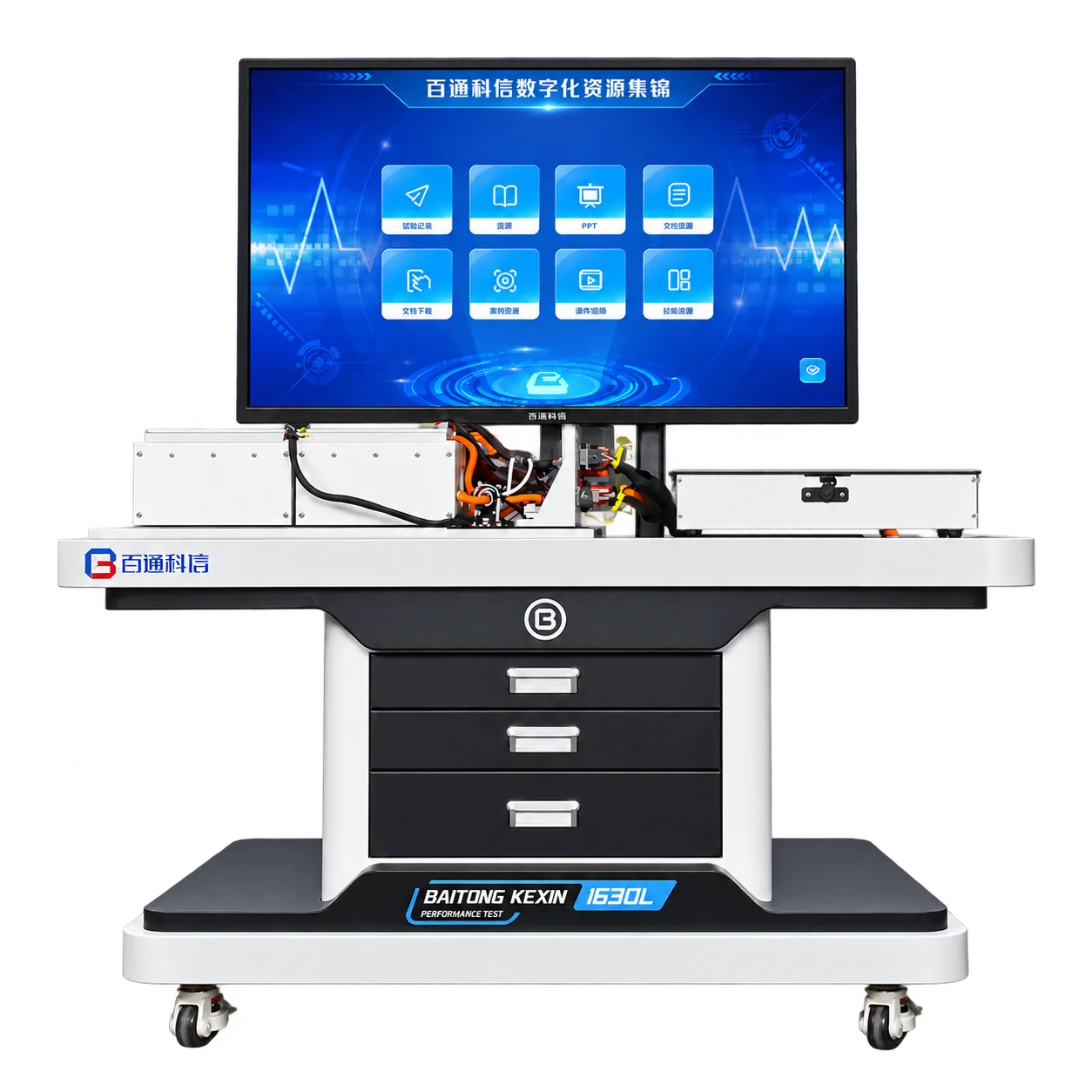
The reference’s ≥60 V nominal battery and 3.2 V / 30 Ah cells are model-specific values. They do not establish equivalence to an electric bus pack or every passenger-car battery. Extended cycling and performance analysis also need to be distinguished from the station’s assembly and BMS teaching scope when comparing equipment proposals.
6. Teach temperature-aware interpretation without inventing a climate chamber
Where learners will investigate cold-weather complaints, the course should teach them to record the conditions behind a result. A temperature observation, a charging limitation and a change in available performance do not automatically establish the same fault. The diagnostic task is to relate observations to the relevant model information and approved test conditions.
For a concrete classroom case, give one group a documented charging complaint recorded after outdoor storage and another a record taken after the vehicle had remained in a conditioned workshop. Ask both groups to list the missing information before comparing the two reports: time since storage, relevant temperature observations, state information, software version and the manufacturer criteria used to interpret the behaviour. The assessment should reward a justified request for missing evidence, rather than the fastest diagnosis. Use fictional or appropriately anonymised records and label them as teaching examples. The task does not require exposing the trainer to unapproved temperatures; it teaches why apparently similar symptoms need a comparable evidence base.
An indoor battery teaching station is not an environmental chamber. The temperature range of a BMS component cannot be applied to the complete workstation, battery, instruments or display. Ask for the ordered system’s conditions of use and compare them with the actual room and storage arrangements.
Use approved recorded examples to discuss how changing conditions affect interpretation, while keeping the station’s physical exercises within their documented limits. If controlled cold testing is a course objective, specify the necessary facilities and expertise separately. This makes the local teaching angle useful without promising that ordinary laboratory equipment can reproduce a winter fleet environment or validate a vehicle’s environmental performance.
7. Keep electric-bus learning distinct from passenger-car hardware
The Moscow fleet example makes a bus pathway worth investigating for institutions with the right partners. It does not make a passenger-car-oriented battery, motor or charging station a complete bus-service solution.
List the skills that can be developed at component level: reading a circuit, interpreting a BMS value, explaining an inspection decision and documenting a supported conclusion. Then list the bus-specific tasks that need the intended vehicle, its procedures and the appropriate information access. Keep the two lists connected but separate.
Use BTKX’s vehicle fault-diagnosis application as a discussion route for scope, not as evidence of compatibility with a named Russian bus. Confirm models, adapters, software versions and the precise exercise. A strong course shows learners where a general principle transfers and where the vehicle-specific requirements begin. That boundary is part of professional judgement rather than a weakness in component-level teaching.
8. Choose motor stations by inspection and data needs
BTKX distinguishes the T036 motor assembly platform from the T076 performance station. A programme focused on assembly quality may need fixtures, resolver alignment and dimensional evidence before it needs instrumented operating tests.
For performance lessons, confirm the selected motor, controller, coupling, load and measurement envelope as a complete configuration. The documented T076 reference includes a 380 V AC three-phase five-wire supply requirement; the actual order and site provisions must be checked together.
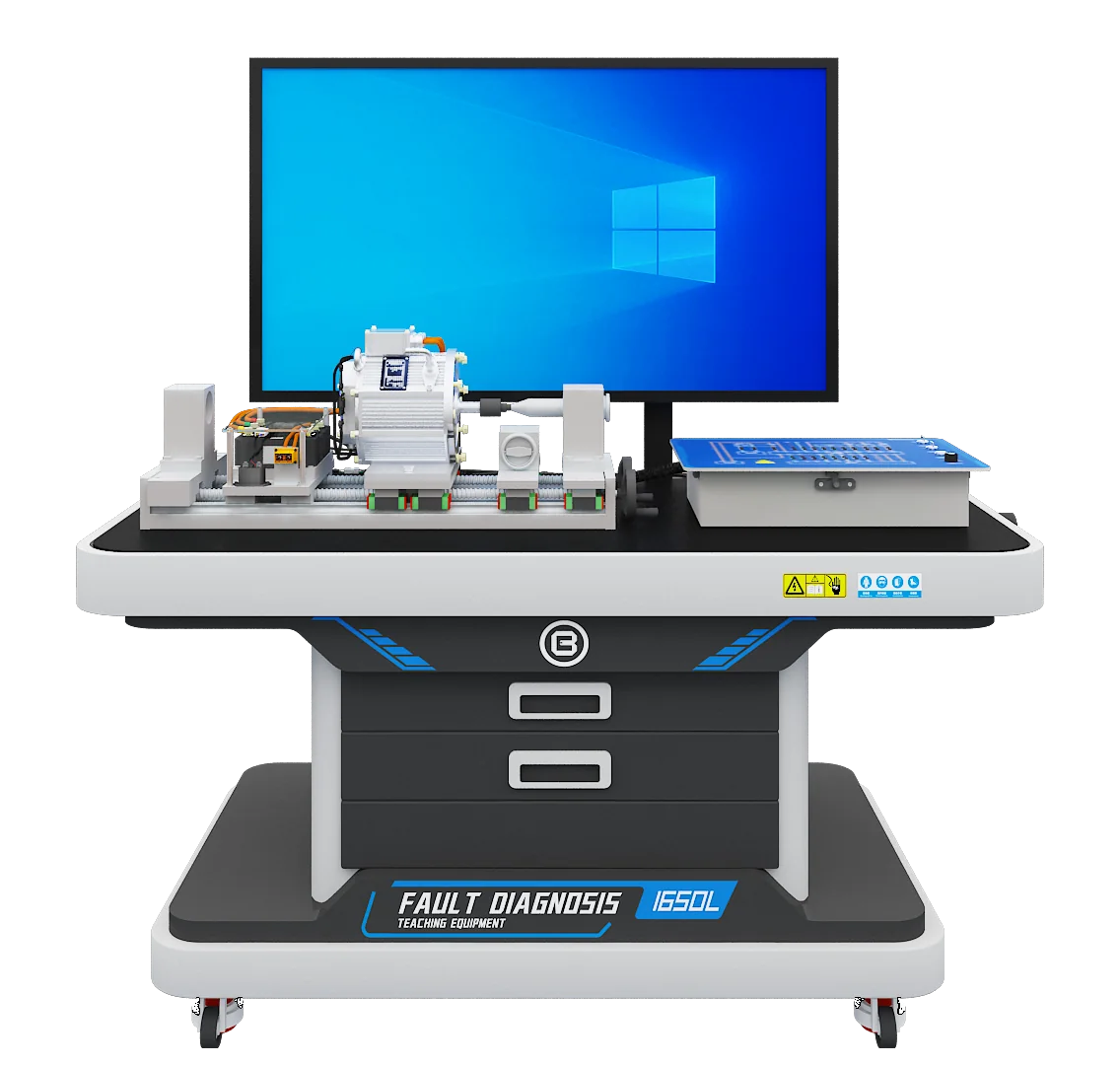
Ask learners to explain why two runs can or cannot be compared. Differences in conditions, measurement range or assembly evidence may matter more than the visual similarity of the resulting curves. The objective is an interpretable record, not simply successful operation of an instrumented bench.
9. Specify the charging interface before the training claim
A charging course must identify which interface and system behaviour it represents. A product category or connector photograph cannot establish that the proposed station matches the local vehicle and lesson.
The T040 AC charging assembly platform supports its documented component-level educational functions. The reference teaching charger described on the charging application page is ≤1.5 kW and ≤7 A. Those limits should remain visible when the equipment is described in a tender or course proposal.
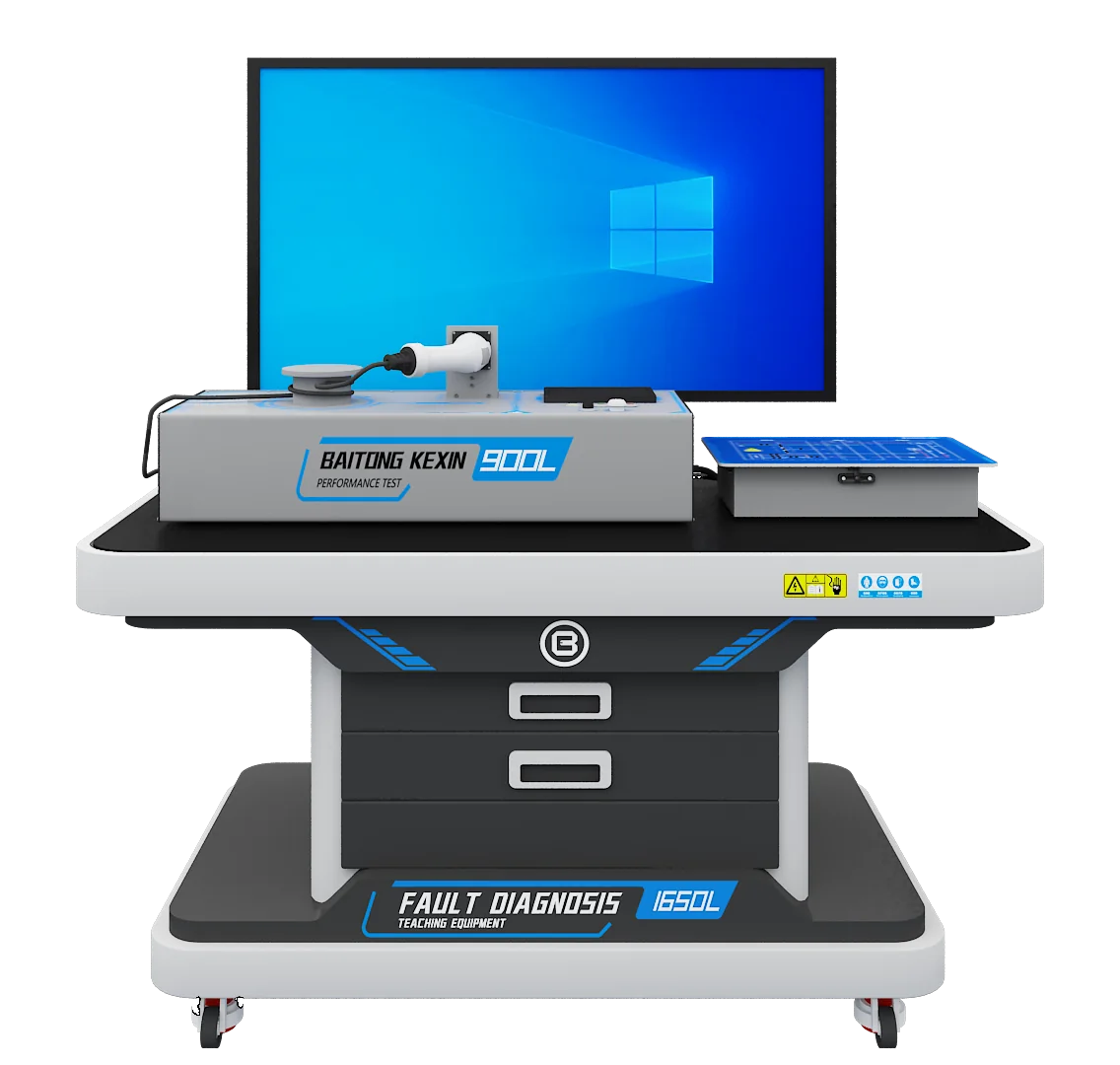
Require a demonstration of the exact quoted interface and one representative lesson. Identify what is physical, what is simulated and what requires access to other equipment. Commercial DC charging, bus charging systems and network operations should have their own clearly defined scope rather than being implied by an AC educational platform.
10. Make software version part of the diagnostic evidence
Atom’s December 2025 product article describes planned over-the-air software updates and future feature development. [3] This manufacturer example provides a useful teaching prompt: a vehicle’s software state can be relevant to understanding its reported behaviour. It is not evidence that a particular feature is currently deployed or that BTKX provides access to Atom systems.
Apply version awareness to the teaching laboratory itself. Record the equipment revision, software version, simulation model and worksheet edition used for a practical exercise. If a result changes after an update, learners and instructors need a traceable reference rather than an argument over which demonstration was remembered correctly.
For vehicle-specific work, identify the authorised source of technical information and the process for updating lessons. For the BTKX station, confirm which software updates are included, who installs them and how a course remains usable during a change. Version control connects technical accuracy with reliable classroom delivery.
11. Separate service, assembly and digital learning outcomes
The proposed matrix below gives each resource a distinct educational purpose. It should be adjusted to the course and target employers rather than treated as a fixed Russian equipment bundle.
| Outcome | Possible BTKX route | Required learning evidence |
|---|---|---|
| Electrical reasoning | Matched automotive electrical foundation resources. | Circuit explanation and a justified information or measurement choice. |
| Battery interpretation | T028 with confirmed instruments and BMS resources. | A physical/software data comparison and bounded conclusion. |
| Motor quality | T036; compatible T076 where operating analysis is required. | Inspection record; separately defined test-data interpretation. |
| Charging-state diagnosis | T040 with the specified interface and accessories. | A documented explanation of the approved charging-state exercise. |
| Digital preparation | Matched simulation resources. | Preparation record linked to a later observed physical task. |
The matrix should also identify resource language, version, group size and assessment duration. A device without its required instruments or task materials should not be counted as a complete student station.
12. Validate Russian resources at lesson level
Russian-language delivery should cover the parts of the teaching system learners actually use. Specify the required software interface, task sheets, circuit diagrams, instructor notes and assessment terminology. Confirm availability with a complete sample rather than a translated catalogue heading.
Review the connection between the physical label, diagram reference and software term. Check units, abbreviations, character display and numeric notation in the proposed classroom environment. If English technical information remains part of the course, identify which tasks deliberately develop that reading skill and which require Russian explanation.
BTKX’s course-development support and instructor training can be scoped around the reviewed lesson. Record who approves the terminology and what happens when a software revision changes a label or task. Good localisation makes the practical reasoning clearer; it does not merely add Cyrillic text to a display while leaving the assessment disconnected.
13. Plan continuity across distance and multiple teaching sites
A regional or multi-site programme needs a clear distinction between where equipment is installed, where instructors are prepared and where learners receive individual practical assessment. Shared simulation resources do not eliminate travel or station-capacity constraints.
Ask how maintenance and support will work for the actual destination. Identify the party responsible for diagnosis, replacement items, software access and any on-site visit. Confirm licence concurrency, backup arrangements and which teaching functions remain available when an internet connection is unavailable.
For an illustrative two-site programme, compare moving learners to a shared specialist station with duplicating a smaller foundation capability at each site. Count preparation, travel, supervision and assessment time as well as equipment price. The best option depends on the actual timetable and geography. Do not describe remote support as a local service presence unless the quotation identifies a real arrangement. A usable continuity plan should remain understandable to the college staff responsible after commissioning.
14. Fund complete lessons in each procurement phase
Phasing is useful when each stage enables a course outcome that can be delivered and assessed. It becomes less useful when the first purchase depends on unconfirmed software, tools or instructor training in a later budget.
| Phase | Usable result | Expansion condition |
|---|---|---|
| Foundation | Electrical reasoning, measurement records and instructor routines. | Learners can explain the basic assessment independently. |
| Core EV components | Battery/BMS, motor inspection and selected charging-state lessons. | Interfaces, resources and practical capacity are proven. |
| Vehicle application | Validated exercises on the target passenger car or bus system. | Required information, access and responsibilities are available. |
| Specialist analysis | Dedicated performance testing where the syllabus needs it. | Site provisions and sufficient course usage justify the additional capability. |
Compare total usable scope, including freight, destination handling, site preparation, instruments, language resources, software licences and support. Confirm project availability and delivery responsibilities with the responsible parties for the real order. A generic equipment price cannot settle those variables.
15. Hand over a repeatable Russian lesson
Acceptance should show that the delivered system supports the agreed lesson in the intended teaching environment. Have the college instructor participate, using the actual resources and language configuration rather than relying on an unrelated demonstration.
| Acceptance area | Demonstrate | Retain |
|---|---|---|
| Configuration | Models, interfaces, tools and software match the order. | Signed equipment and version schedule. |
| Practical lesson | The approved task produces interpretable evidence. | Completed worksheet and assessment criteria. |
| Instructor readiness | Staff prepare, deliver, assess and reset the exercise. | Teach-back findings and training follow-up. |
| Continuity | Resources, backups and support reporting remain usable. | Maintenance instructions and named responsibilities. |
Discuss this sequence through lab-planning support and the vocational-school cooperation route. BTKX’s Beijing practice-centre reference illustrates a connected teaching sequence, while a Russian proposal requires its own current configuration and site brief.
16. Russian automotive and EV training questions
Should a Russian college replace conventional automotive teaching with EV equipment?
Begin with its target jobs and existing resources. Electrical reasoning, mechanical inspection and clear diagnostic records remain useful. Add EV-specific modules where they fill a defined gap rather than replacing the workshop indiscriminately.
Can a passenger-car trainer support an electric-bus course?
It may support transferable component principles, but bus-specific systems, procedures and interfaces need separate validation. Define which lessons use the teaching platform and which require the intended bus and information access.
Does the equipment recreate cold-weather operation?
An ordinary indoor station does not provide controlled environmental testing. Teach learners to record conditions and interpret approved examples, and specify separate facilities if physical cold testing is an actual course objective.
Is T028 a battery manufacturing line?
No. Its documented scope concerns battery assembly, measurement and BMS teaching. Cell manufacture, production-process validation and extended performance cycling require separately established equipment and expertise.
Can Russian software and offline teaching be supplied?
Confirm the actual software version, language package, licence terms and offline functions through a demonstration. Include Russian worksheets, diagrams and instructor guidance explicitly where required.
What should a multi-site programme clarify first?
Identify where practical assessment occurs and who maintains each station. Then compare learner travel, shared-resource schedules, instructor availability and support responsibilities before deciding which equipment to duplicate.
17. Turn the regional need into an equipment-and-teaching proposal
Prepare a brief naming the Russian teaching location, learner profile, target employer tasks and intended vehicles. Add the existing workshop inventory, Russian-language needs, software expectations, practical timetable, site conditions and support arrangements to be confirmed.
Ask BTKX to connect each station with the learning outcome, instruments, digital resources and instructor preparation it needs. The proposal should explain the first usable teaching phase and its acceptance evidence. This keeps investment tied to diagnostic capability and course continuity rather than an equipment count alone.
Planning automotive and EV training in Russia?
Share the mixed-fleet teaching tasks and regional delivery needs to discuss a matched laboratory configuration.
Discuss your Russian programmeSources
Research checked 20 October 2026.
- Moscow Transport: Electric-bus fleet update, 4 March 2025.
- Strana Rosatom: Neman battery gigafactory launch, 18 December 2025.
- Atom: Planned over-the-air software updates, 15 December 2025.


