
Asia · Malaysia Market Guide
EV Training Equipment for Malaysia: A Shared Lab with Clear Skills Pathways
Design a shared Malaysian EV laboratory around battery evidence, charging-system behaviour and distinct automotive, electrical and electronics assessments, with practical guidance for campus procurement.
On This Page
The planning answer
How should a Malaysian institution plan EV training equipment?
Plan a Malaysian EV lab as a shared technical foundation with distinct automotive, electrical and electronics learning routes. Battery/BMS measurement, motor inspection and charging-state diagnosis can connect departments, while each course retains its own practical assessment and workplace responsibilities. Equipment selection should follow the local employer task, available utilities and individual student access.
The strongest first investment is often a complete teachable module rather than a large collection of unrelated machines. Specify resources, interfaces, instruments and teacher development alongside the hardware. For charging subjects, keep educational system behaviour separate from the local requirements that govern real installation work.
2. Choose local employer questions for each Malaysian catchment
Malaysia-wide policy does not replace a campus needs assessment. Start with the actual firms that offer placements or recruit graduates. Ask for anonymised examples of inspection records, service work orders and charging-site documentation. The examples can reveal whether the course needs component measurement, vehicle-specific access or installation-related learning that the current workshop cannot provide.
| Catchment | Question to validate | Potential teaching route |
|---|---|---|
| Shah Alam, Klang and greater Kuala Lumpur | Are placements mainly vehicle service, fleet support or electrical contracting? | Work-order diagnosis and charging-system interfaces. |
| Tanjong Malim and Ipoh | Which assembly, quality or after-sales tasks should learners demonstrate? | Battery measurements, motor inspection and documented decisions. |
| Penang and Kulim | Can electronics measurement teaching connect to automotive system evidence? | Data interpretation and a shared electrical foundation. |
| Johor Bahru and southern catchments | Which mixed vehicle and infrastructure employers can review the course? | Charging-state diagnosis and maintainable modular stations. |
| Kuching or Kota Kinabalu campuses | What local support and spare-part access will keep a lab operational? | Offline resources, replaceable instruments and precise delivery scope. |
These are proposed consultation groups, not claims about local fleet counts or BTKX customer locations. MIDA's December 2024 TVET article provides a dated example of EV-oriented vocational education in Ipoh and describes public attention to skills investment. [2] Use that context to ask better local questions, rather than copying another institution's equipment list.
3. Define three pathways before sharing equipment
The automotive pathway should end in a reasoned vehicle-service decision. The electrical pathway should retain the installation and inspection outcomes required by its own programme. The electronics pathway can focus on measurement quality, signals and interpretation where supported by the chosen equipment. Their common foundation is evidence, rather than a single combined job title.
Write a short assessment for each pathway before designing the shared room. Ask which observation the student must make personally, which information can be supplied as a case record and what the student must explain. This separates a valuable cross-department exercise from an equipment demonstration in which many students watch but few practise.
Discuss the proposed mapping with BTKX curriculum development. Request a sample lesson showing the student task, instructor controls, instruments and evidence rubric. A clear matrix helps the purchasing team compare suppliers and lets departments agree which resources are shared and which remain specialist. Qualification alignment should stay with the institution and the appropriate local bodies.
4. Make battery/BMS measurement the shared technical core
The T028 EV battery assembly and BMS training system is a useful reference for practical battery teaching. Its published scope connects LFP battery assembly, cell-voltage and internal-resistance measurement, monitoring software and instructor-selected electrical fault cases. The educational value lies in linking the component to the evidence.
An automotive learner can explain how the observation informs a diagnostic next step. An electronics learner can examine the quality and consistency of the measurement record. Both should identify the reference condition, instrument and limitations before interpreting a displayed value. This produces a shared language without requiring identical assessments.
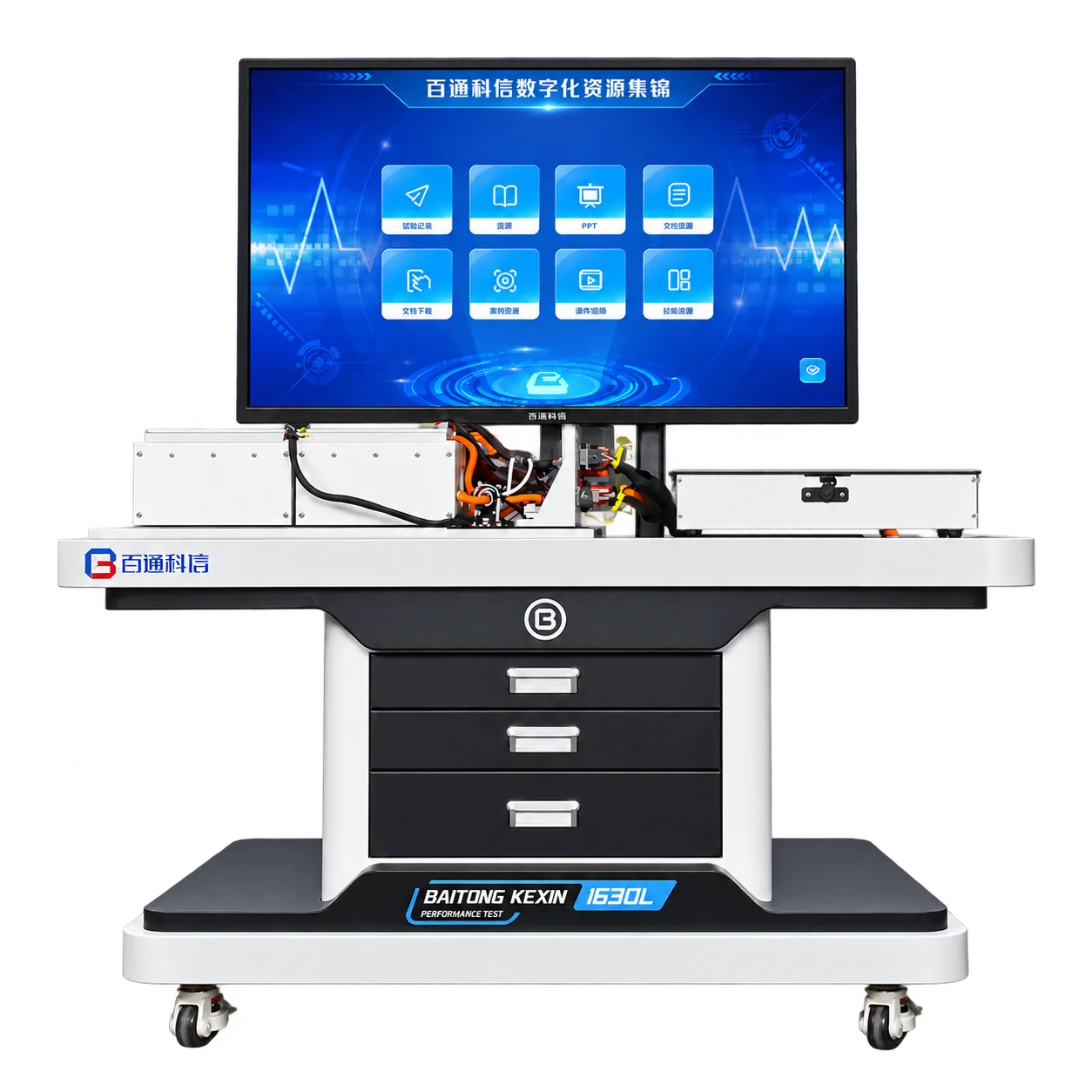
Do not stretch an assembly workstation into an unspecified research laboratory. Dedicated cycling, degradation studies or detailed cell-production analysis need their own documented scope. Likewise, an LFP reference system cannot establish compatibility with every vehicle battery used in Malaysia. Start each vehicle-specific lesson with confirmed chemistry, voltage, interfaces and authorised procedures.
5. Teach uncertainty before interpreting a fault
A common weakness in practical teaching is to reward a number without asking how it was obtained. Build a short measurement-quality task before fault diagnosis. The learner records the component, instrument range, permitted method and reference condition, then checks whether the result can be meaningfully compared with the supplied system data.
Use a deliberately incomplete case record as a classroom discussion. If a previous group wrote “voltage normal” without a value or condition, ask what evidence is missing. If two results were recorded under different conditions, ask whether the difference supports a fault conclusion. This can be taught without introducing an unsafe physical fault or claiming a particular trainer has metrology functions beyond its documentation.
For Malaysian E&E and automotive departments sharing a room, agree the same evidence headings but allow different depth of analysis. The automotive student needs a supported service decision; the electronics student may need a more detailed measurement discussion. This shared discipline makes the hardware more useful while preserving the purpose of each course.
6. Select motor equipment by assembly or performance outcome
The T036 drive motor assembly platform and the T076 performance platform answer different teaching questions. T036 supports assembly and inspection learning; T076 adds operating-performance evidence within an agreed compatible configuration. Neither should be used as a shorthand for every possible motor test.
A first motor module can ask the learner to explain component relationships and document the permitted inspection. A later module can ask whether a performance comparison is valid given the test conditions. The link between them is the inspection record, rather than an assumption that assembly completion guarantees a particular operating result.
Request motor, controller, coupling, load, instrumentation and utility details as a complete schedule. The drive motor training application is a useful starting point for that discussion. Where a campus mainly needs introductory EV service skills, start with the teachable inspection scope and add specialist performance testing only when instructors and the syllabus can use it regularly.
7. Start charging education with observable system states
Charging lessons become clearer when students can explain a sequence. What information requests charging? Which conditions permit it? What evidence shows a normal transition, and what changes during an authorised fault exercise? These questions connect vehicle and electrical departments without relying on the size of the charger.
The T040 AC charging assembly platform supports guided assembly and circuit teaching. BTKX's charging infrastructure application describes a reference teaching system rated at ≤1.5 kW and ≤7 A. This is a teaching specification; it is not a claim of commercial DC fast-charging capacity.
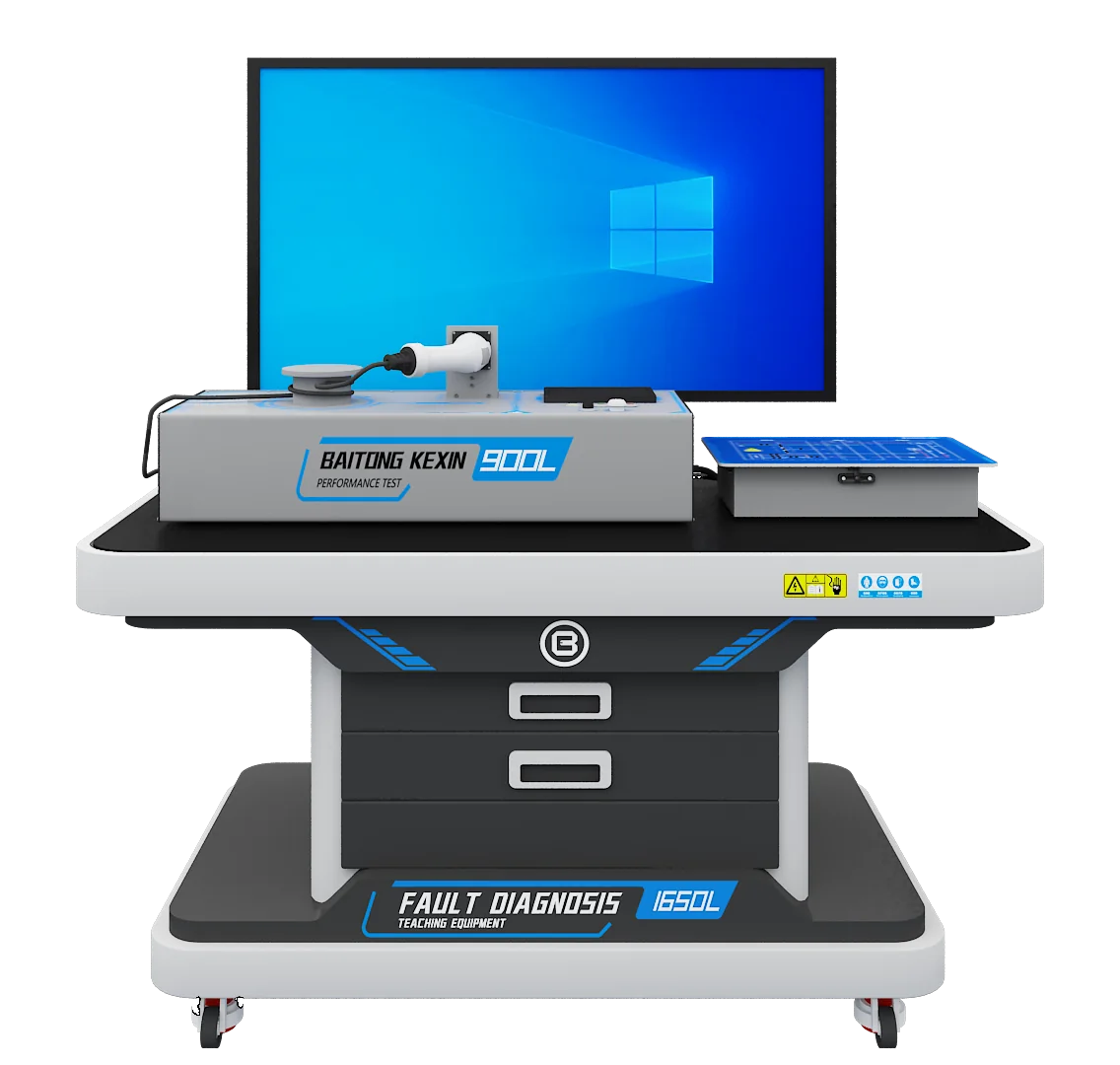
Ask the supplier for a demonstration on the proposed connector and interface, with a worksheet that records the expected and observed states. An apparently familiar connector does not establish software compatibility or a complete course. The acceptance lesson should use the exact delivered configuration.
8. Keep installation learning connected to Malaysian requirements
Malaysia's Energy Commission published its Guidelines on Electric Vehicle Charging System in March 2025. The document addresses installation specifications, charging modes, competent-person requirements and preventive maintenance, among other topics. [3] Its existence is a useful reminder that a teaching station and a real installation project have different purposes.
For a campus programme, separate the learning questions into vehicle-side behaviour, teaching-station circuit work and commercial installation responsibilities. A basic charging trainer can explain a state sequence; it does not independently qualify a learner to design or commission a public charging site. The relevant course team and competent local specialists should map the applicable requirements for the actual location and project.
Make the boundary educational rather than merely contractual. Give students a proposed charging-site brief and ask which information is missing: supply, intended charger, responsibilities, inspection evidence and maintenance plan. They learn when to seek specialist input and why a classroom demonstration cannot replace a complete installation workflow. Confirm the current local requirements at implementation time.
10. Retain conventional and hybrid teaching where the course needs it
Introducing an EV module does not remove the need to understand the vehicles learners already service. Audit the existing fleet and workshop, then retain useful mechanical and electrical tasks. The diagnostic habit of reading a diagram, selecting a test and documenting evidence can carry across propulsion types even when the procedures differ.
The BTKX conventional vehicle training range includes engine, transmission, chassis and electrical subjects. Use it as a category reference when identifying gaps; do not purchase a replacement simply to make the new lab visually uniform. If hybrid teaching is required, list the hybrid-specific vehicle and tasks separately from battery-electric equipment.
For the Malaysian brief, obtain a dated target-vehicle list from placement partners. Define which vehicles can be accessed physically, which information is available and which work remains with authorised service networks. A multi-brand course should teach transferable reasoning while clearly identifying the vehicle-specific data and permissions needed for real service.
11. Make Bahasa Malaysia and English resources work together
A bilingual teaching system should help learners move between classroom explanation and technical documentation. Specify which worksheets, diagrams, component labels and instructor notes require Bahasa Malaysia, and which English terms should remain alongside the translation. Consistency matters more than translating every label differently in each resource.
Ask a local instructor to review a sample battery or charging lesson. Can a student use the diagram, software and worksheet without guessing whether two terms describe the same component? Can the teacher explain the assessment criteria in the intended teaching language? Confirm the actual software interface version rather than assuming translation from the language of a marketing page.
BTKX's teacher training programmes should include a teach-back using that sample lesson. Include setup, permitted operation, assessment, reset and fault reporting. The expected outcome is a teacher able to deliver the agreed course, with the resource files and support route required to continue after commissioning.
12. Use simulation to prepare the limited physical slot
Digital preparation is most valuable when it removes avoidable confusion from practical time. Before the physical lesson, learners can identify components, predict the evidence they need and practise choosing a diagnostic next step. Afterward, they can compare the prediction with their measured result and explain why their conclusion changed.
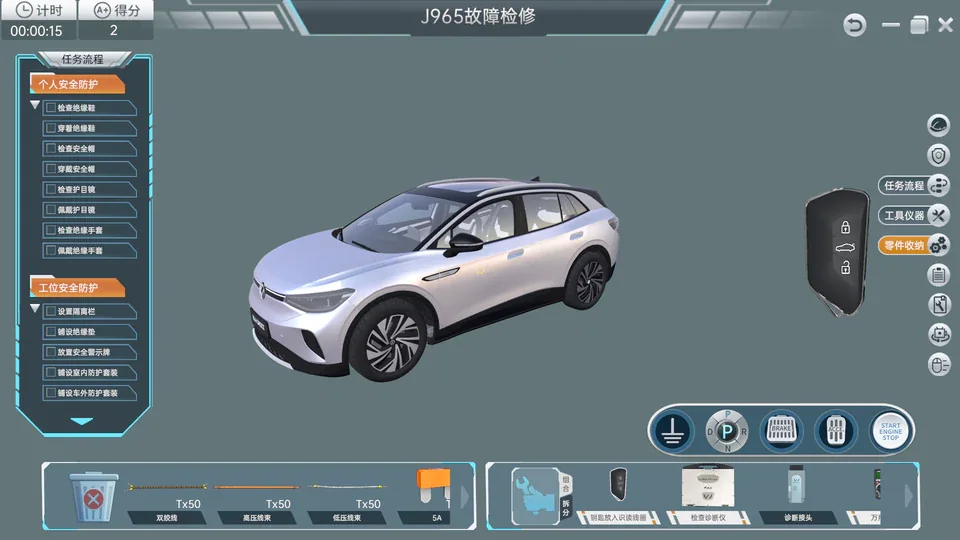
Confirm licence quantities, computers, required connectivity, backups and access after staff changes. For a campus where several departments share software, name the account administrator and define who can reset exercises. If offline use is important, request a demonstration of the functions that remain available without a connection.
Measure digital value through the subsequent practical lesson. If students still spend their first instrument slot finding basic components, revise the preparation. A library of videos or simulations is not automatically an integrated course; each resource needs a place in the sequence and a clear teaching purpose.
13. Calculate the shared lab's full teaching cost
Consider an illustrative intake of 24 automotive and 24 electrical students needing the same 12-minute individual task. That is 576 station-minutes before setup and feedback. Two stations used for two hours provide 240 station-minutes. Sharing may still be sensible, but the institution needs additional sessions or capacity. A photograph of several students watching does not demonstrate individual assessment access.
| Phase | What becomes teachable | Gate before expansion |
|---|---|---|
| Common foundation | Measurement records, diagrams and electrical principles. | Departments agree the assessment and timetable. |
| Core EV systems | Battery/BMS, motor inspection and selected charging states. | Teachers can run complete lessons on the delivered configuration. |
| Applied pathways | Vehicle diagnosis and separately scoped installation learning. | Local employer and course requirements are mapped. |
| Advanced capacity | Performance testing or additional duplicate stations. | Use and waiting-time evidence justify the purchase. |
Compare equipment, instruments, computers, translation, freight, destination handling, site work, commissioning and support as a matched scope. MIDA's 2024 discussion of TVET investment establishes policy attention, not an automatic entitlement to funding or a particular import treatment for the buyer. [2]
14. Accept the lab through a joint departmental lesson
Choose one common task and ask each department to assess the evidence relevant to its course. This tests whether the station genuinely supports sharing. For example, a battery lesson can produce a common measurement sheet, followed by different interpretation questions. The delivered configuration and operating documentation define the permitted task.
| Evidence | Check | Owner to name |
|---|---|---|
| Hardware schedule | Models, instruments and fixtures match the signed scope. | Purchaser and technical lead. |
| Teaching demonstration | The intended instructors run and reset the lesson. | Course owners from participating departments. |
| Digital resources | Language, licences and access work on campus computers. | Teaching resource administrator. |
| Continuing operation | Maintenance, reporting and spare-part identification are usable. | Laboratory custodian and supplier contact. |
Use the automotive training procurement checklist as a related review aid. Add any Malaysian course and site requirements to the institution's version. Resolve responsibilities before delivery so commissioning does not become an improvised negotiation between departments.
15. Request a coherent BTKX equipment-and-resource response
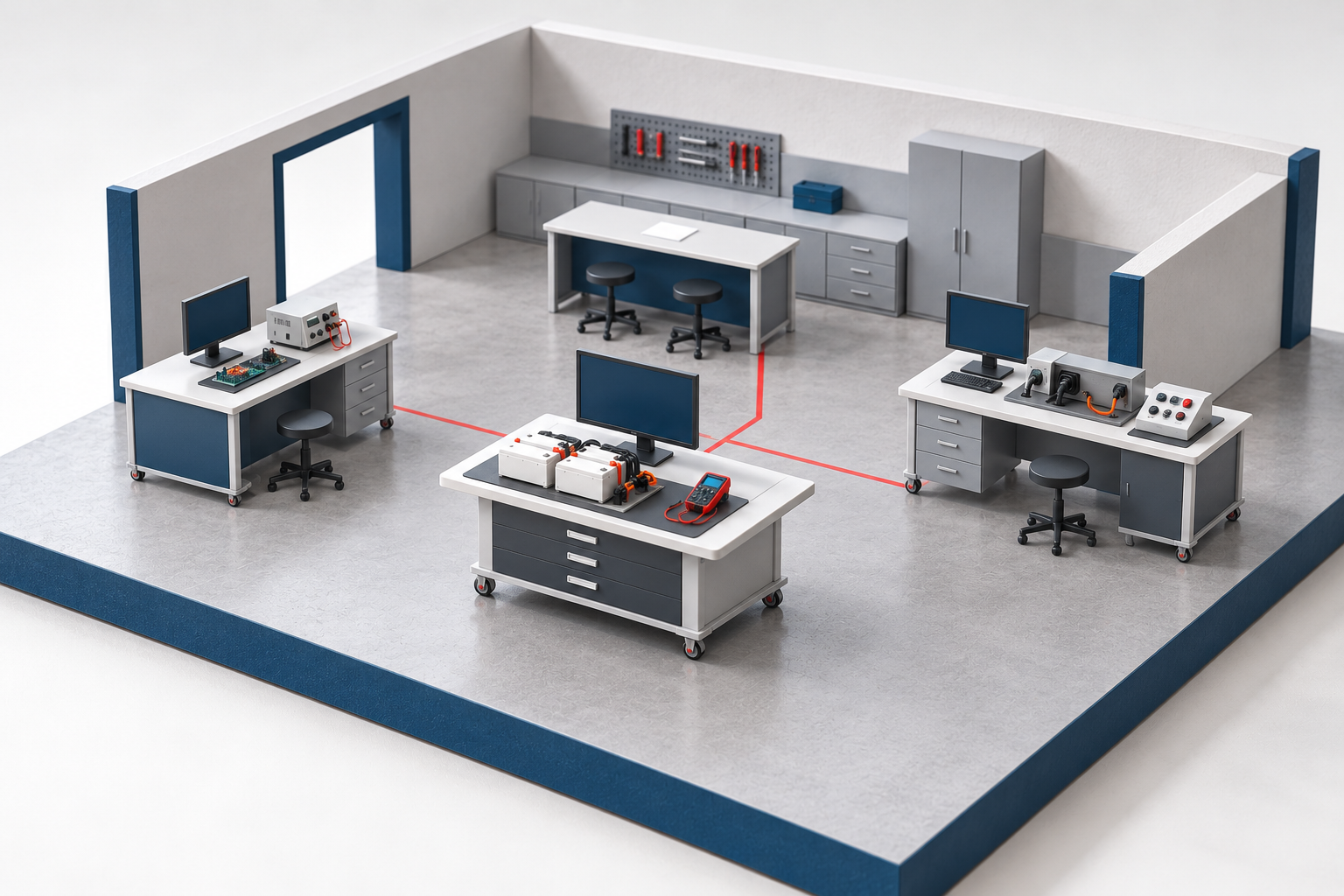
BTKX describes a Beijing-based manufacturing model connected to digital resources, laboratory planning, curriculum work and teacher development. This combination is relevant when a Malaysian institution needs a coherent course-to-equipment plan. Review the vocational schools and colleges solution and discuss a preliminary room arrangement through EV laboratory planning.
The Beijing Commercial School NEV practice-centre case illustrates connected teaching zones, rather than a Malaysian installation. Ask for current product documentation and whichever project records are relevant to the proposed configuration. Local language, commissioning, support and installation responsibilities need their own agreement.
A useful proposal should make the first teaching term easy to picture: which students use which stations, what evidence they produce, who teaches each module and how the equipment is maintained. That level of detail helps buyers judge educational value before expanding the scope.
16. Questions Malaysian EV-lab buyers ask
Can automotive and electrical departments share one EV lab?
They can share selected foundations and equipment when their assessments and timetable are explicit. Vehicle-side diagnosis and real charging-installation responsibilities remain distinct. Calculate individual practical access before assuming that sharing will reduce total cost.
Does T040 provide commercial charger installation training by itself?
No. It supports its documented educational assembly and charging-state tasks. A commercial installation course needs its own locally reviewed requirements, competent instruction, site work and assessment beyond the basic teaching station.
What should a Malaysian E&E course gain from battery equipment?
A suitable task can develop measurement quality, interpretation and the relationship between physical components and BMS information. Specify that evidence clearly, while avoiding claims that an assembly trainer is a complete battery research or semiconductor laboratory.
Should the first purchase include a motor performance platform?
Only when the course requires operating-data interpretation and the campus can support the configuration, utilities and instruction. Motor assembly inspection and battery/BMS foundations may be more immediately useful for an introductory course.
Are Bahasa Malaysia resources available automatically?
Confirm the exact resource and software versions in the quotation. Review a sample lesson with a local instructor and agree the bilingual terminology, worksheets, diagrams and teacher notes needed for the course.
How should an East Malaysia campus plan support?
Specify final-campus delivery, handling, commissioning, offline resources and spare-part identification. Separate locally replaceable instruments from manufacturer-specific parts, and request a practical reporting route for faults and software issues.
17. Build a Malaysian brief that departments can share
List the campus, participating courses, student numbers, existing equipment, employer tasks and target vehicles. Identify the common lessons and the specialist pathways. Include room drawings, utilities, digital access, preferred teaching language and a timetable showing individual assessment demand.
Ask BTKX for an equipment matrix, resource sample, instructor-development plan and joint acceptance lesson. Compare a complete delivered teaching scope rather than a collection of model prices. The resulting laboratory should make shared foundations efficient while giving every student a clear practical route into the intended occupation.
Planning an EV training lab in Malaysia?
Discuss a shared automotive, electrical and electronics teaching scope matched to your campus and local employers.
Discuss your Malaysia projectSources
Research checked 20 October 2026.
- MIDA: Launch of the New Industrial Master Plan 2030. 2023 policy launch; 2024 budget context.
- MIDA: Advancing innovation through TVET excellence. 2 December 2024.
- Energy Commission: Guidelines on Electric Vehicle Charging System. Published 17 March 2025; guideline dated 24 February 2025.


