

Asia · Thailand Market Guide
EV Training Equipment for Thailand's Automotive Workforce Transition
Connect existing automotive expertise to battery, motor and diagnostic evidence through a practical laboratory upgrade for Thai vocational colleges and industrial training centres.
On This Page
The planning answer
How should Thailand upgrade automotive training for EVs?
Thailand's strongest EV training investment connects existing automotive knowledge to new electrical, battery and motor evidence, with separate routes for production workers and service technicians. A vocational college should preserve useful chassis, wiring and mechanical teaching, add assessable battery/BMS and drive-motor tasks, and agree workplace evidence with employers before specifying equipment.
For dual vocational training and industrial upskilling, the learning bridge matters as much as the hardware. Students need repeatable physical tasks that prepare them for workplace learning; experienced workers need targeted modules that recognise prior competence. BTKX equipment, curriculum resources and instructor preparation can be configured around those distinct needs.
1. Treat Thailand's transition as a workforce redesign
An EV training lab in Thailand should help people move between tasks as automotive technology changes. A programme that simply adds an electric vehicle beside an existing engine bay can leave that transition unexplained. The more useful question is which previous skills still apply and which new evidence a learner must produce.
Thailand's Board of Investment describes the EV 3.5 package for 2024–2027 and the 30@30 aspiration that zero-emission vehicles account for at least 30% of motor-vehicle production by 2030. These are policy periods and targets, not a claim that the production target has already been achieved. [1]
The ILO's June 2024 Thailand automotive study identifies changing needs in digital skills and green technologies, including battery production and vehicle automation software. [2] Our planning interpretation: build an upgrade path that values an experienced worker's mechanical discipline while adding explicit competence in electrical evidence, system relationships and documented decisions. For new entrants, teach those foundations before specialist analysis.
2. Group Thai employers by the work learners will perform
A location label is useful only when it changes the programme. Ask each employer group to contribute a sample task, expected evidence and a supervisor review. A production-oriented class may need inspection consistency; an after-sales class needs the ability to explain an intermittent symptom and select an authorised next test. The same motor trainer can contribute to both, but the assessments should differ.
| Location group | Interview priority | Proposed teaching focus |
|---|---|---|
| Chonburi, Rayong and Chachoengsao | Which production and supplier tasks can students observe and practise? | Assembly inspection, measurement consistency and traceable quality records. |
| Bangkok and Samut Prakan | Which dealership, independent-service and mixed-fleet tasks dominate placements? | Electrical diagnosis, BMS interpretation and customer work orders. |
| Chiang Mai and northern centres | Will a shared facility serve several colleges or short professional courses? | Modular teaching, instructor preparation and repeatable assessments. |
| Nakhon Ratchasima and northeastern catchments | Does the brief include conventional vehicles or agricultural maintenance? | A retained mechanical core, with separate EV and machinery extensions. |
The Eastern Economic Corridor Office publishes workforce-development and human-capital resources that can help institutions frame regional discussions. [4] Use the table to guide local employer discussions and confirm the requirements for your own catchment.
3. Recognise existing competence before buying replacements
Audit what the current workshop already teaches well. Wiring interpretation, measurement discipline, connector inspection, bearings, steering, suspension and mechanical fastening do not disappear with an EV powertrain. Retaining a useful station can free budget for a missing battery or motor learning outcome.
For experienced workers, begin with a practical entry assessment. Ask them to explain a measurement, identify the limits of an instrument and document a mechanical inspection. Use the result to shorten familiar material and allocate more time to new system behaviour. For first-year students, preserve a longer foundation sequence. A single short course for both groups often frustrates one and overwhelms the other.
BTKX's conventional vehicle training range provides a reference for the retained engine, transmission, chassis and electrical teaching scope. Compare it with existing assets before procuring duplicates. An upgrade plan should say which outcomes remain in the old workshop, which move to new EV stations and which require actual vehicle access.
4. Make motor assembly a quality lesson
For Thailand's production-oriented learners, motor teaching should produce more than a completed assembly. A useful lesson asks how the learner knows that the assembly is ready for its next stage. That question leads to component identification, inspection conditions, measurement records and a clear escalation decision.
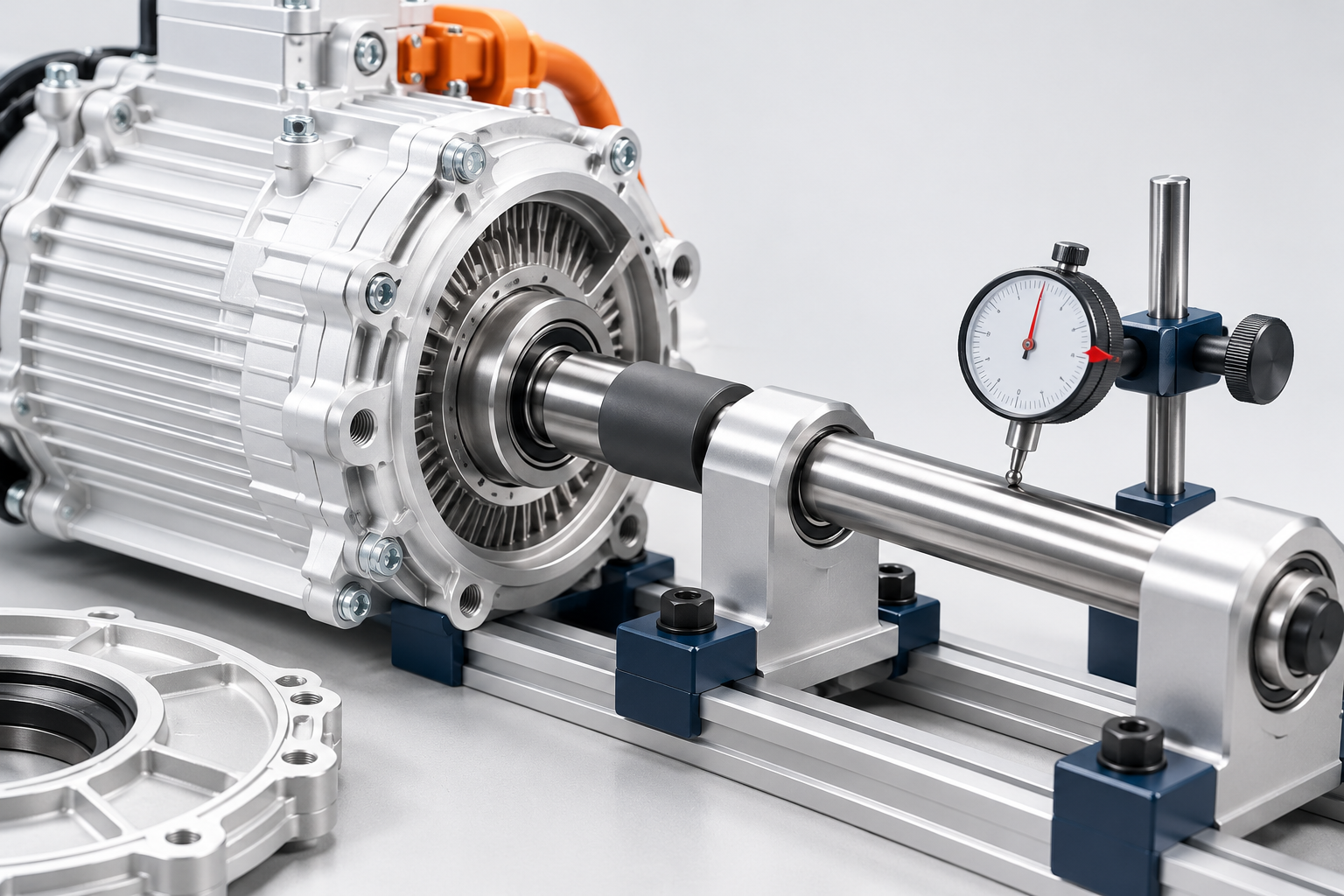
The BTKX T036 drive motor assembly and testing platform supports discussion of assembly, alignment and inspection tasks. Use the drive motor training application to select the relevant teaching sequence and request the exact instruments and fixtures in the quotation. A reference feature is useful only if the selected configuration and lesson actually include it.
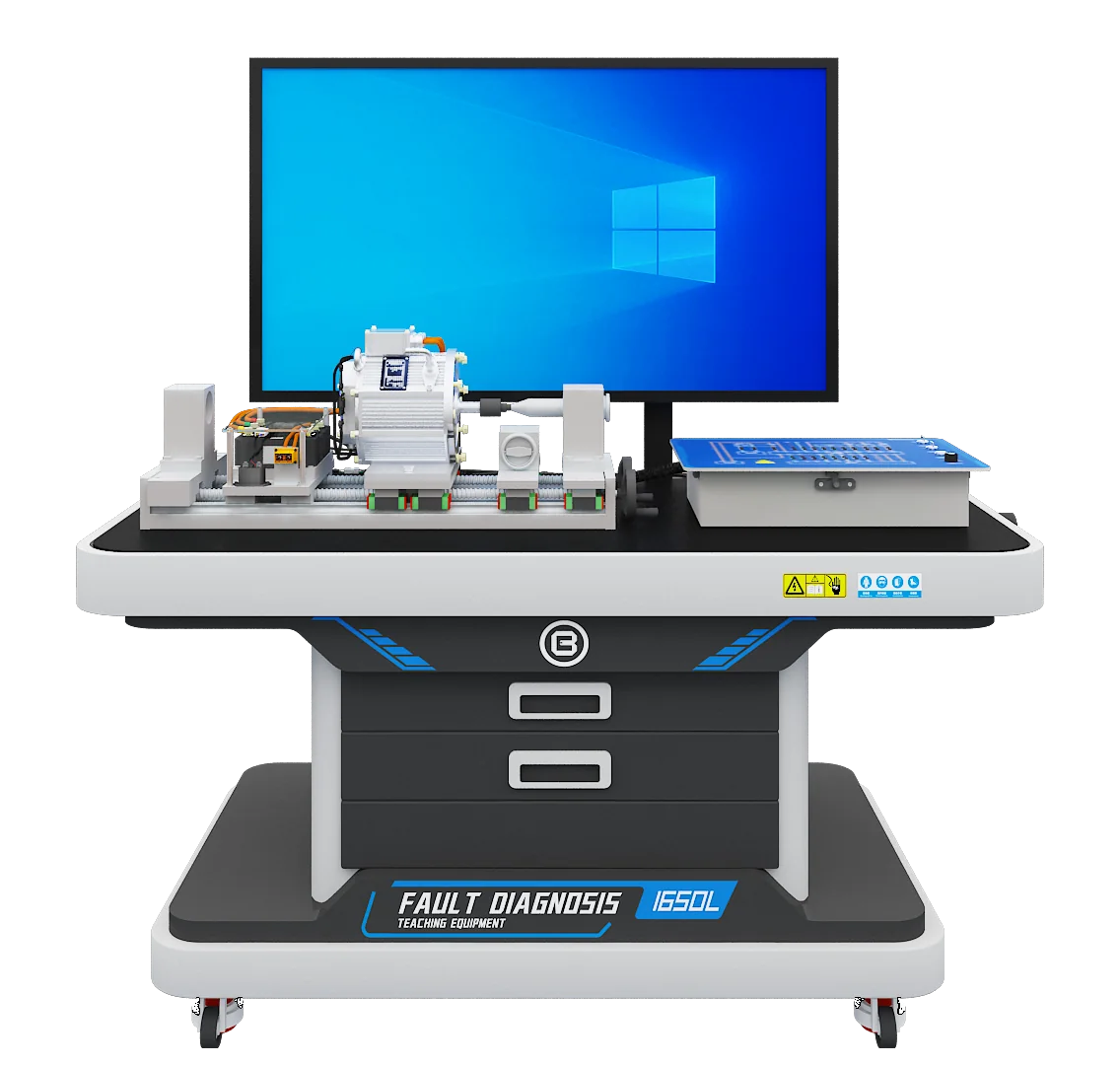
Require learners to record the datum, instrument, observation and decision, rather than a bare pass mark. An employer reviewing the worksheet can then see whether the student followed a controlled method. This is a transferable habit even where the workplace uses a different motor design.
5. Add motor performance testing for a defined analytical task
The T076 drive motor performance platform belongs in a separate procurement line from assembly teaching. Its value is measured operating behaviour within an approved motor, controller, coupling and load configuration. Buying it makes sense when the course explicitly teaches students to interpret results under documented conditions.
A proposed assignment can compare two authorised test records, asking learners which conditions differ and whether the comparison is valid. They should identify speed, torque and power relationships and distinguish an observation from a diagnosis. A change in a plotted value does not alone establish a faulty motor.
Do not assume an assembly motor can be tested at every peak condition on any performance station. Confirm the common operating envelope, required utilities and approved procedures. The published T076 reference calls for a 380 V AC three-phase five-wire supply; the actual ordered configuration must be checked by the site engineer. For colleges primarily teaching basic service diagnosis, these costs may be better deferred until the foundational stations are fully used.
6. Teach battery and BMS interpretation as paired evidence
The T028 EV battery assembly and BMS training system combines LFP assembly teaching, measurement instruments, BMS information and instructor-selected electrical fault exercises. Its role is to make the relationship between a physical system and displayed information teachable.
For a Thai class, prepare a worksheet with two evidence columns. One records the authorised physical measurement and its conditions; the other records the corresponding BMS information. The learner then explains agreement, disagreement and the next permitted step. This is more useful than asking students to copy a screen value without considering how it was obtained.
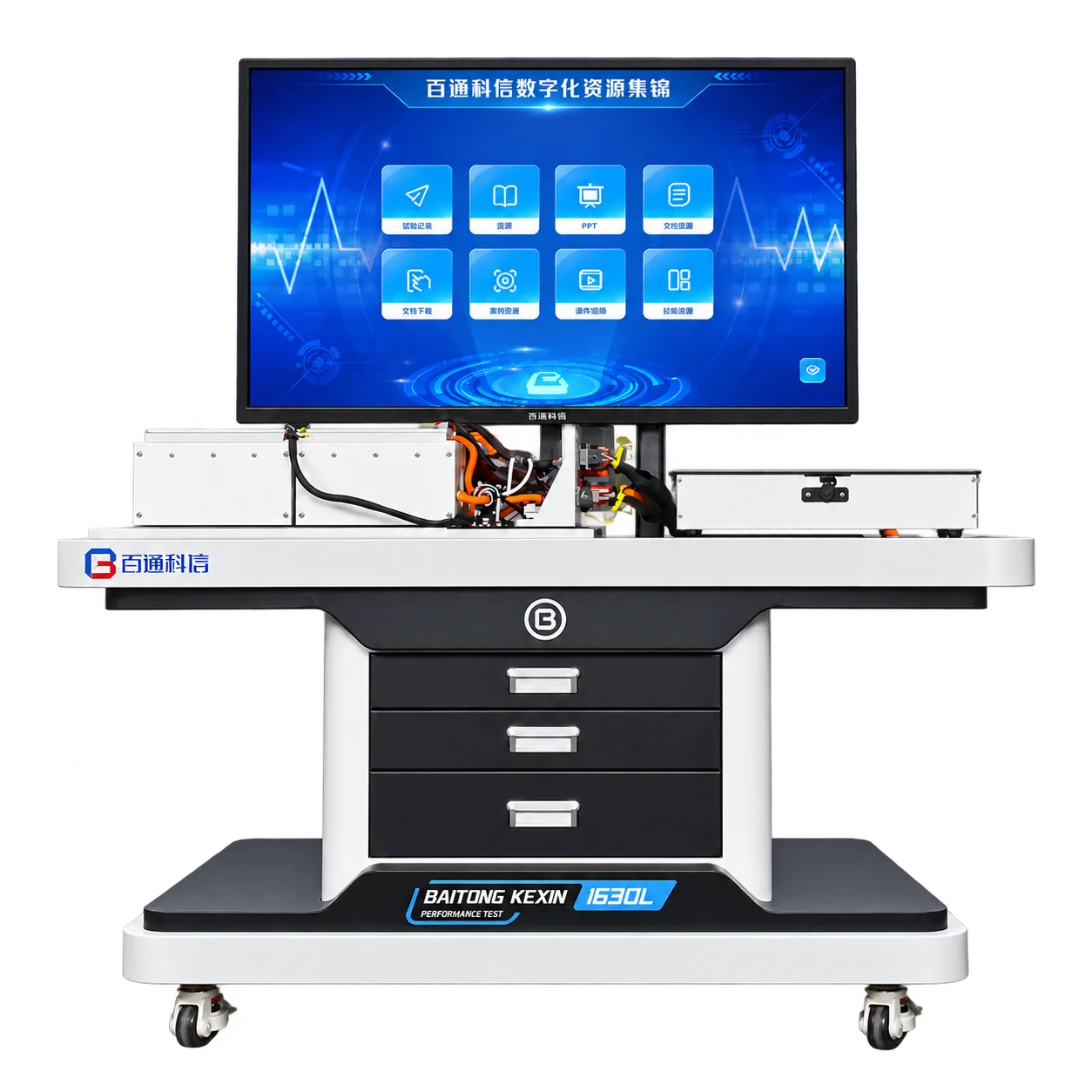
Teach chemistry and configuration identification before discussing local vehicle relevance. T028 does not automatically reproduce every battery used by Thai manufacturers. Extended cycling, degradation research and production-line process validation require their own documented equipment scopes; they should not be inferred from an assembly workstation's title.
7. Connect bench learning to vehicle work orders
A service student should be able to explain how a bench principle informs an authorised vehicle check. Build a bridge exercise around a reported symptom, relevant system diagram, available evidence and the decision to test, repair or escalate. This keeps diagnosis separate from replacing components until the symptom disappears.
The EV fault-diagnosis training application provides a route for defining whole-system teaching. The vehicle, interface, fault cases and diagnostic access must be listed in the proposed configuration. If the institution wants hybrid, battery-electric and conventional vehicles, map each separately because their energy paths and procedures differ.
Retain a common work-order structure across the old and new workshops: customer or instructor symptom, initial evidence, selected test, result, interpretation and verification. Students then transfer their diagnostic discipline while learning new systems. Ask workplace supervisors to review anonymised sample records during the course. Their feedback can reveal whether students are documenting an actual reasoning process or merely repeating the trainer's expected answer.
8. Share charging principles across automotive and electrical courses
Charging is a useful meeting point between departments. Automotive students need to understand the vehicle's charging state and the evidence of an interruption. Electrical students may study supply, protection and installation topics through their own approved curriculum. Shared terminology helps, while separate responsibility boundaries keep the course clear.
The T040 AC charging assembly trainer supports guided component assembly and circuit teaching. The charging infrastructure application describes a reference teaching system rated at ≤1.5 kW and ≤7 A. It should be specified as educational hardware with a confirmed interface, rather than commercial fast-charging equipment.
Ask the Thai course team to identify the target connector and intended vehicle before ordering. An acceptance exercise should show a documented charging-state sequence and an instructor-approved fault case on the exact delivered interface. If commercial charger installation or operator software is required, add a separate scope with appropriate local expertise, hardware and assessment. The basic teaching platform should not be credited with qualifications or capabilities it does not provide.
9. Make the college-to-workplace handover explicit
The ILO's May 2025 account describes support for Thailand's dual vocational training approach and improvements to in-company trainer preparation. It emphasises the connection between classroom learning and quality workplace training. [3] For an equipment buyer, this creates a practical design question: what evidence will travel with the learner from the laboratory to the placement supervisor?
Use a short handover card. State what the learner has physically completed, the conditions under which it was assessed and the tasks still requiring workplace instruction. The card should not imply independent competence where the college assessed only supervised performance. Workplace supervisors can add observations without changing the meaning of the college record.
| College evidence | Workplace extension | Review question |
|---|---|---|
| Battery/BMS comparison | Observe the employer's authorised battery diagnostic workflow. | Can the learner explain which evidence is transferable? |
| Motor inspection sheet | Use the employer's quality documentation under supervision. | Are conditions and acceptance criteria understood? |
| Bench fault report | Follow a real vehicle job card with a supervisor. | Does the learner distinguish symptom from diagnosis? |
| Charging-state explanation | Observe the actual vehicle and infrastructure interface. | Can differences from the college trainer be identified? |
10. Prepare instructors to teach the transition
The hardest part of a workshop upgrade can be changing the lesson, rather than operating the new station. An instructor comfortable with engine systems may need support in selecting electrical evidence and interpreting software displays. Treat that as a development task with time, resources and a measurable endpoint.
Ask BTKX teacher training to include lesson setup, permitted fault selection, student assessment, reset, maintenance and fault reporting. Require a teach-back: the college instructor delivers an agreed lesson while the supplier observes. An attendance certificate alone cannot demonstrate that the teacher can run the course independently.
The ILO's 2024 study also highlights the need to include different worker groups in skills development. [2] In a college plan, this suggests accessible instructions, paced entry modules and assessment opportunities suited to different prior experience. These are our teaching recommendations, rather than an assertion that a specific BTKX package already fulfils every Thai workforce programme requirement.
11. Build Thai resources around the diagnostic conversation
Translation should help the learner explain a decision. Specify Thai worksheets and instructor guidance alongside any English technical labels that remain on components or software. Establish a glossary for recurring system terms and make it consistent across diagrams, screens and work orders. Ask a Thai instructor to test a complete sample lesson before translating the whole resource library.
With curriculum development support, structure digital resources around preparation and reflection: recognise components before class, predict the evidence a fault might produce, then compare that prediction with a supervised physical task. Keep simulation scores separate from observed practical competence.
Confirm computers, operating-system requirements, licence count, update arrangements and offline functionality. The physical and virtual TVET lab application is relevant to this blended sequence, but a digital lesson should have a defined purpose. Buying a large resource library without timetable ownership can create unused software rather than more effective teaching.
12. Design the room for parallel teaching routes
A Thai automotive department may need to run conventional, EV and short industrial courses in the same facility. Map movement, tool storage, instructor sightlines, operating access and quiet documentation space before drawing equipment blocks. The catalogue footprint does not include the complete working envelope or the space needed to handle equipment during maintenance.
Ask the site team to validate utilities for each ordered station, especially where a performance module has different supply requirements from a basic assembly unit. Record environmental conditions and internet limitations. Put controlled practical activities where supervision is clear and keep case discussion from obstructing access.
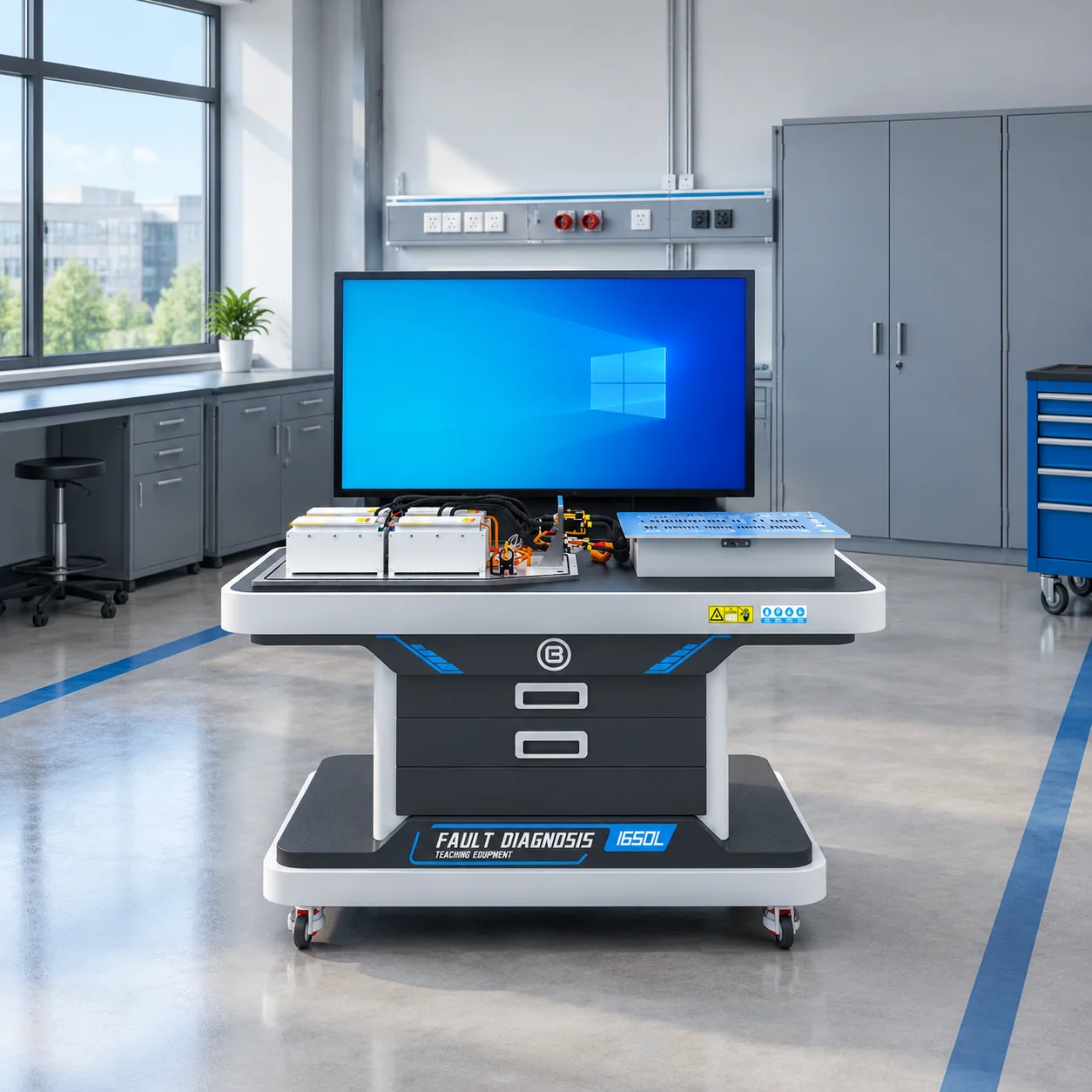
Discuss the preliminary arrangement with BTKX laboratory planning, then test it against the actual timetable. A room that accommodates all equipment but cannot support the intended parallel classes is not yet a complete teaching plan.
13. Compare capacity through assessed learner minutes
Consider an illustrative upskilling group of 18 workers. If each needs 15 minutes for an individually observed inspection, the task requires 270 station-minutes. Two stations in a two-hour session offer 240 minutes before changeovers. The course therefore needs more time or a revised station plan. Counting workers standing around a bench does not resolve the shortfall.
Make this calculation for each assessed task. Experienced workers may move through recognition quickly but still need the full physical assessment. New entrants may require more supported practice before assessment. Use those differences to schedule the two groups, rather than forcing identical lesson lengths.
| Stage | Priority investment | Readiness test |
|---|---|---|
| Audit and bridge | Retained equipment, instruments and entry assessments. | The new course recognises existing competence and identifies gaps. |
| Shared EV core | Battery/BMS, motor assembly and selected charging lessons. | Instructors deliver complete practical tasks. |
| Workplace connection | Validated vehicle access, employer records and dual-training reviews. | Placement supervisors understand college evidence. |
| Advanced analysis | Dedicated performance testing and specialist resources. | Teaching hours and staff expertise justify the operating cost. |
14. Make acceptance a shared teaching demonstration
Write acceptance criteria around the class the institution intends to deliver. Confirm models and accessories, then run the agreed task with the college instructor. Verify that the worksheet matches the physical configuration, the software opens on the intended computer and the station can be returned to its documented starting condition.
| Area | Acceptance check | Useful record |
|---|---|---|
| Hardware | Delivered models, tools and fixtures match the technical schedule. | Item list, serial numbers and inspection documents. |
| Teaching | The teacher runs an agreed task with the intended evidence. | Completed sample worksheet and teach-back record. |
| Digital | Language, licences and computer access are usable. | Licence inventory and resource index. |
| Support | Maintenance, reporting and replacement-part routes are clear. | Named responsibilities and fault-report example. |
The BTKX procurement checklist offers a related starting point. Keep qualification alignment, local installation arrangements and any employer endorsement separate from equipment acceptance. Each needs its own evidence and responsible party.
15. Connect the BTKX package to a Thai course owner
BTKX's business combines Beijing-based equipment manufacturing with digital resources and teaching services. This can suit a Thai institution seeking a coherent laboratory rather than disconnected products. The vocational schools solution and Beijing Commercial School practice-centre case provide useful references for discussing connected teaching zones.
The Chinese case is an example of project structure, not proof of a Thai installation or local certification. Request current documentation and project evidence for the proposed scope. Clarify how teaching language, remote support, commissioning, spare parts and instructor preparation will be delivered for the Thai campus.
Assign a course owner for each equipment family. That person should own lesson readiness, timetable use and feedback from placement supervisors. Without ownership, even technically capable equipment can become a demonstration item used only during visits. Review utilisation and assessment results after the first term before authorising the next investment stage.
16. Questions Thai colleges and industrial trainers ask
Should a Thai college replace its conventional automotive workshop?
Audit it first. Many mechanical, chassis and electrical outcomes remain useful. Add EV equipment where the curriculum has a genuine gap, and show how retained and new stations connect to the same disciplined diagnostic process.
What is the difference between T036 and T076?
T036 addresses drive motor assembly and inspection teaching. T076 is a separate performance-testing route with its own operating limits and utilities. Specify them against different outcomes and confirm a compatible motor, controller, coupling and load configuration.
Can one short course serve new students and experienced workers?
Shared modules are possible, but entry assessment should identify prior competence. Experienced workers may need targeted electrical and digital bridging, while new students need more foundations. Keep the physical assessment requirements clear for both groups.
How does equipment support dual vocational training?
It creates repeatable college tasks and evidence that workplace supervisors can understand. Agree the handover record with employers and state what remains to be taught at work. Equipment alone does not create a dual-training partnership.
Is Thai-language teaching material included?
Confirm the exact worksheets, diagrams, interface language and teacher resources in the quotation. Review a Thai sample lesson before ordering. Technical English terms can remain where needed, with a consistent bilingual glossary.
When should a college buy a performance test platform?
When the syllabus requires interpretation of measured operating data and staff, utilities and teaching hours are ready. Assembly and foundational diagnosis often deserve priority where learners cannot yet explain inspection evidence.
17. Write the Thai project brief around the transition
Include the campus location, retained equipment, learner entry levels, employer task examples, target vehicles and practical assessment hours. State whether the first priority is manufacturing upskilling, after-sales service or a shared foundation. Attach room information, available utilities and the required Thai resources.
Ask BTKX for an outcome-based configuration, sample teaching documents and an acceptance lesson. Compare the proposal with the actual class schedule and workplace handover plan. The goal is an upgrade that teachers can run and employers can understand, with a clear route from existing competence to new EV work.
Planning an automotive-to-EV training upgrade in Thailand?
Share your existing workshop and course objectives to discuss a practical equipment and instructor-development scope.
Discuss your Thailand projectSources
Research checked 20 October 2026.
- Thailand BOI: EV Board gives the green light to EV 3.5. Publication date not stated; 2024–2027 package.
- ILO: Skills-development needs in Thailand's automotive sector. 21 June 2024.
- ILO: Work-based learning in Thailand's automotive industry. 23 May 2025.
- Eastern Economic Corridor Office: Labor and workforce development resources. Undated resource page; checked 20 October 2026.


