

Africa · Morocco Market Guide
Automotive Training in Morocco: From Assembly Quality to EV Diagnosis
Build a Moroccan automotive laboratory around production quality, service diagnosis and the practical evidence employers expect from each graduate.
On This Page
The planning answer
What automotive training equipment fits Morocco’s industrial transition?
Moroccan automotive training centres should build a common foundation in measurement, assembly quality and electrical fault diagnosis, then add battery/BMS, electric motor and charging modules around actual employer tasks. A manufacturing-oriented centre in Tangier or Kenitra needs different assessments from a Casablanca vehicle-service college. Equipment should make those differences visible through inspection records, diagnostic decisions and individually assessed practical work.
BTKX can support that sequence through component teaching platforms, digital preparation, curriculum development and teacher training. The most useful project brief specifies what learners must prove, the language of instruction, available workshop utilities and the connection to local vehicles.
1. Start with Morocco’s industrial skills question
Morocco’s automotive opportunity is broader than electric-car repair. Its Ministry of Industry describes an ecosystem spanning wiring, vehicle interiors, metal pressing, batteries, heavy vehicles, engines and transmissions. That sector overview relates to the Industrial Acceleration Plan 2014–2020 and should be read as industrial context, rather than a current vacancy forecast. [1]
The implication for automotive training equipment in Morocco is practical: electrical understanding and repeatable inspection can serve both manufacturing and maintenance learners, but the final assessments should differ. A production trainee may need to explain a nonconforming connection and preserve traceability. A service trainee needs to distinguish a component defect from a wiring or control problem before recommending a repair.
Our recommendation is to use the first laboratory phase to establish this shared discipline. Ask an employer advisory group to select several representative tasks, not simply a list of fashionable technologies. BTKX’s curriculum development service provides a route for turning those tasks into worksheets, equipment requirements and instructor demonstrations.
2. Give Tangier, Kenitra and Casablanca different briefs
The Ministry’s sector page identifies automotive training institutions in Casablanca, Kenitra and Tangier. In March 2023, its announcement with OFPPT, Renault Group Maroc and SNOP connected curriculum development and teaching equipment to evolving industrial needs. These examples show how employer requirements can shape training. [1] [2]
Use those locations to structure interviews rather than assume every centre has identical demand. A college should document the roles its learners can realistically enter, the equipment already available through placements and the diagnostic or assembly tasks employers will allow students to undertake. The matrix below is a proposed interview map, not a ranking of city demand.
| Catchment | Partner question | Possible lab emphasis |
|---|---|---|
| Tangier–Tetouan | Which assembly and inspection defects should trainees recognise before placement? | Wiring evidence, motor assembly records, quality handovers. |
| Kenitra–Rabat | Which electrical and powertrain tasks need repeatable practice? | Battery/BMS measurement and controlled component inspection. |
| Casablanca–Settat | Are learners entering manufacturing, independent service or both? | Separate quality-control and service diagnosis pathways. |
| Fès–Meknès and other regional centres | Can specialist equipment support several programmes? | Shared foundational stations with scheduled specialist sessions. |
3. Separate production quality from workshop diagnosis
A manufacturing exercise begins with a defined work instruction and an acceptance criterion. Students inspect the part, select the instrument, record the result and decide whether the assembly can move to the next operation. A maintenance exercise begins with a symptom and competing explanations. It requires a test plan, evidence and a verification after the intervention.
Both can use a visible motor assembly or electrical system, yet they should not share an undifferentiated marking sheet. Otherwise a learner can pass by memorising a sequence without understanding the reason for a measurement. Ask instructors to create two cases on the same component: one concerning an assembly deviation and another concerning a reported vehicle symptom.
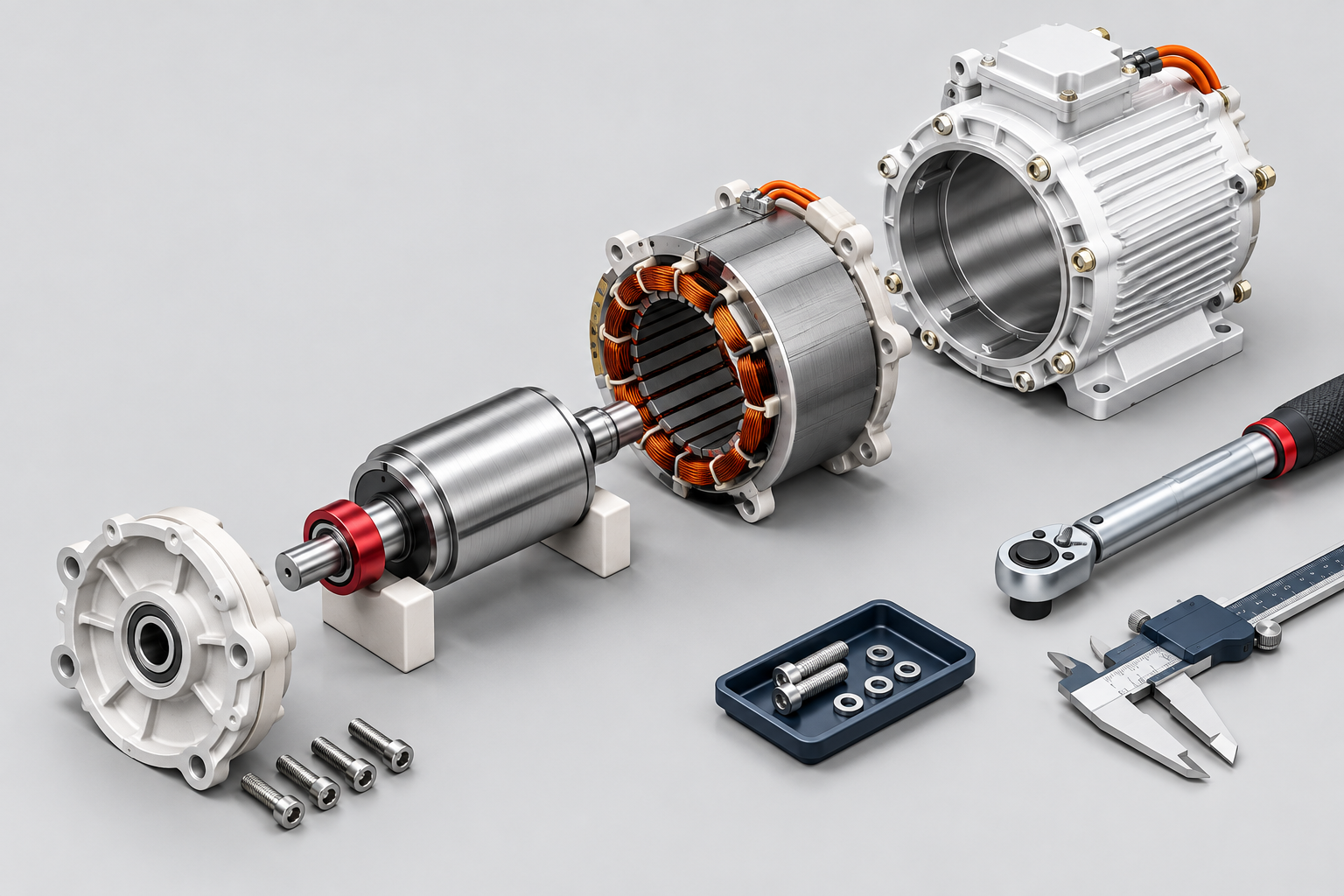
BTKX’s drive motor training application is relevant to this distinction. Start the supplier discussion with the required inspection records and the permitted student operations. Then choose the fixture, measuring instruments and instructor resources. This approach also helps finance teams compare quotations that describe genuinely comparable teaching capacity.
4. Make measurement quality a first-semester habit
Before adding an advanced battery station, check whether learners can identify a measurement point, select an appropriate instrument and explain the difference between a reading and a conclusion. These are teachable behaviours. They need accessible components, durable leads, known reference conditions and time for students to repeat an observation without being hurried by the next group.
A useful foundational assessment gives two students the same documented condition and asks each to produce an independent record. If their conclusions differ, the instructor examines setup, units, contact quality and interpretation. The aim is not to force identical numbers; it is to develop a consistent reasoning process and an awareness of measurement limitations.
Existing conventional vehicle training equipment can remain useful here. Sensors, electrical circuits, steering and chassis systems provide rich diagnostic tasks. An EV investment should extend this foundation. Replacing serviceable equipment solely to make the laboratory look new can reduce the number of learners who receive meaningful hands-on time.
5. Use a battery and BMS trainer to teach traceable evidence
The BT-NEV2-T028 EV Battery Assembly & BMS Training System supports LFP battery assembly, cell measurement, component inspection, BMS monitoring and instructor-selected electrical fault exercises. For a Moroccan industrial course, its strongest role is connecting the physical assembly to the data record: which cell or connection was checked, under what condition, and what evidence supports the decision?
Design a case in which a learner must compare permitted cell measurements with the displayed BMS information and explain a discrepancy. The worksheet should preserve the equipment identifier, task condition, measurement and interpretation. A second learner reviews whether the conclusion follows from the evidence. This develops a useful quality habit without pretending the teaching station is a commercial battery production line.
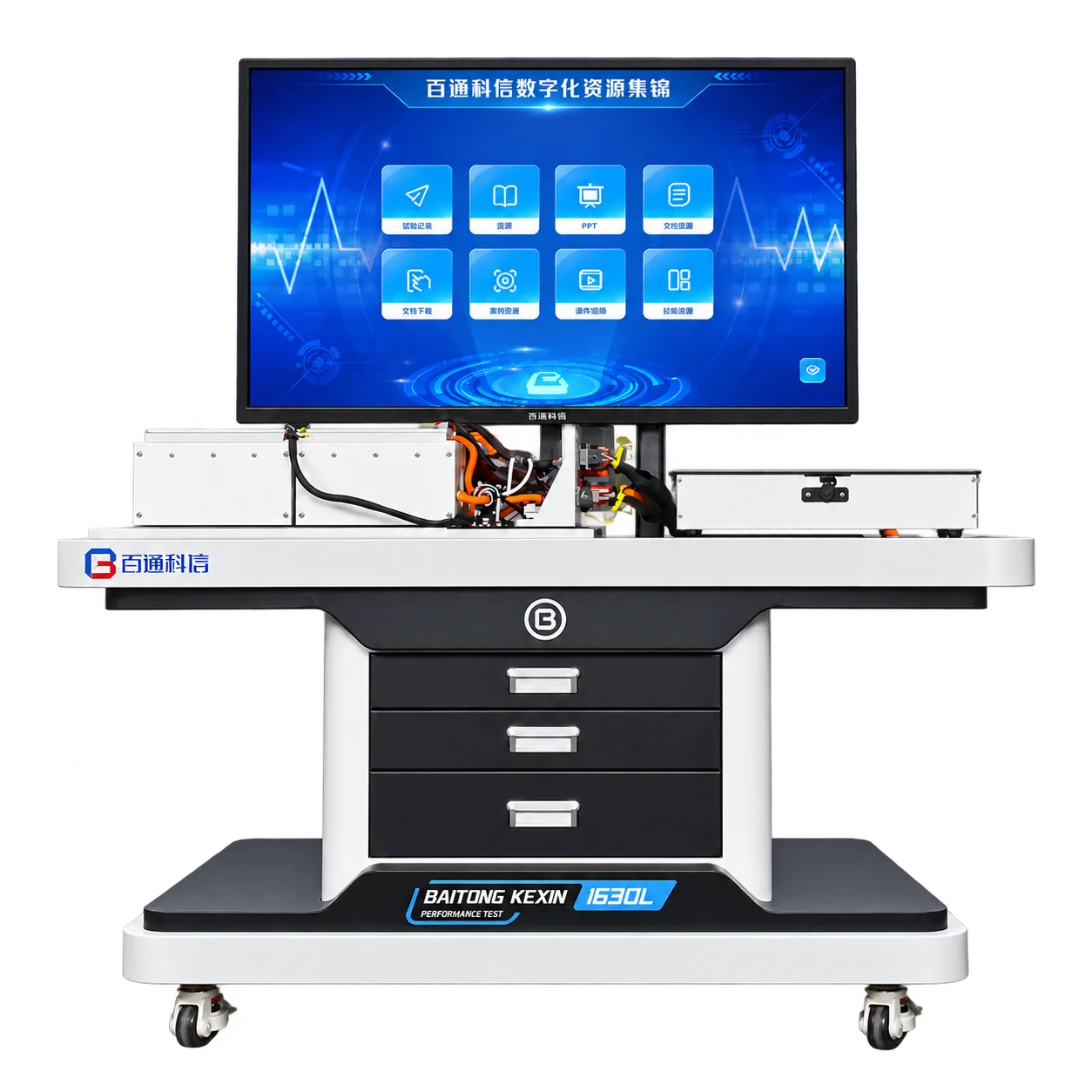
The documented configuration uses LFP cells and a nominal pack voltage of at least 60 V. It is not automatically equivalent to a target manufacturer’s traction battery or a dedicated long-duration cycling laboratory. Define any additional chemistry, sustained performance testing or vehicle communication requirement before ordering.
6. Teach motor assembly before asking for performance curves
Motor quality cannot be judged by appearance alone. Students should learn how assembly condition, dimensional checks and the agreed inspection sequence affect readiness for testing. The T036 motor assembly platform and the T076 motor performance platform therefore belong to distinct purchasing decisions.
A sensible manufacturing-oriented lesson asks students to submit an assembly inspection record before they receive operating data. They then explain what the inspection can establish and what requires a performance test. A service-oriented class might instead use the same record to consider whether the reported symptom could arise from mechanical condition, electrical control or another vehicle system.
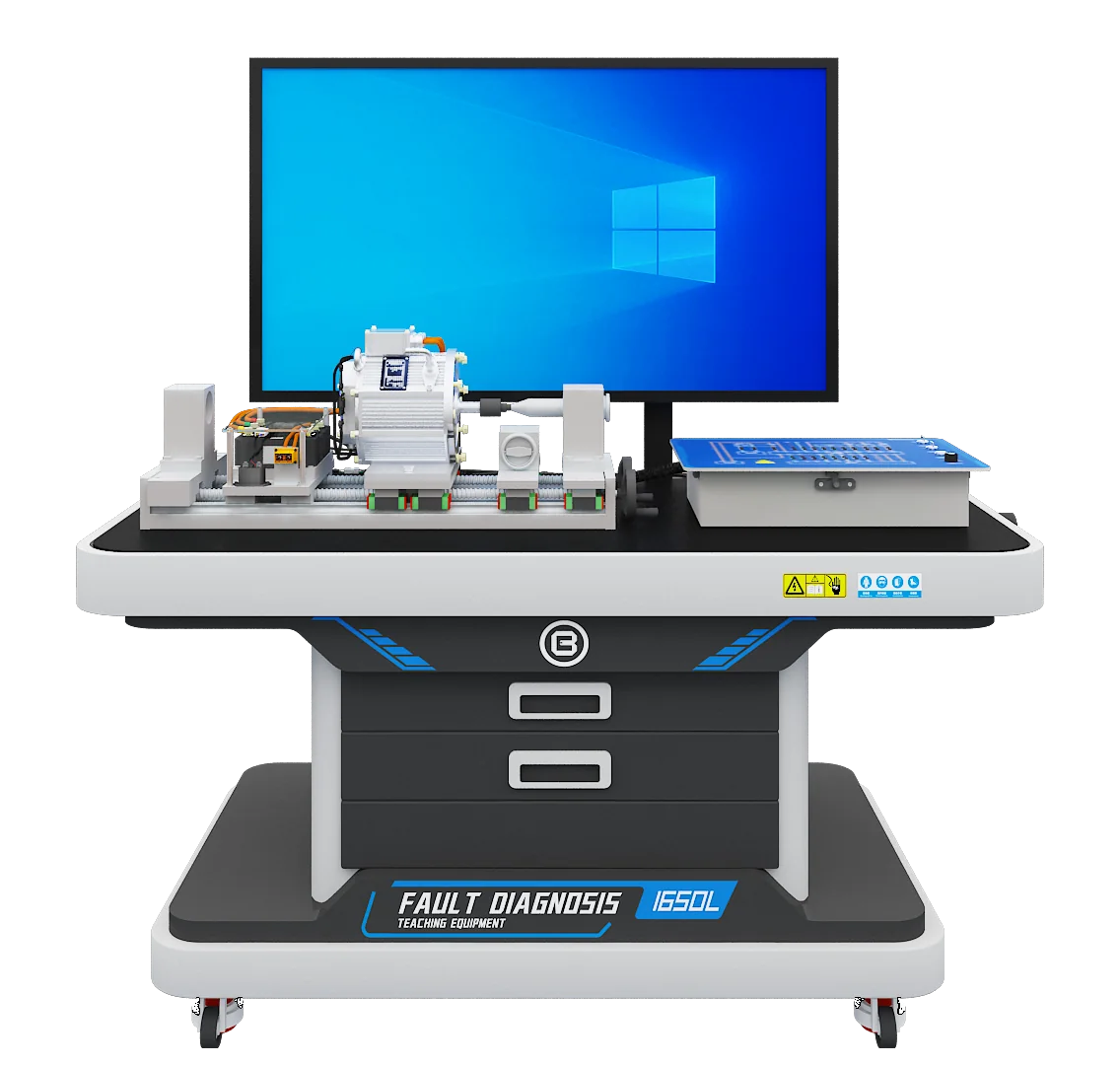
Require the supplier to identify the selected motor, controller, coupling, instruments and load arrangement. The documented T076 supply is 380 V AC three-phase five-wire; the actual ordered schedule must be checked against the building installation. Buying a performance bench before that check can create an expensive scheduling and commissioning problem.
7. Define charging lessons by interface and task
A college serving Moroccan vehicle workshops should ask which vehicle interfaces its employers actually use. Connector appearance is only one part of the question. The teaching task also depends on control signalling, protection behaviour, the available test method and the documentation students are expected to interpret. Include a sample charging-state problem in the procurement brief.
BTKX’s T040 AC charging assembly platform can support component assembly and guided electrical checks. The charging infrastructure training application describes teaching hardware at ≤1.5 kW and ≤7 A. Those ratings are appropriate to a defined educational purpose; they do not describe commercial DC fast-charging capacity.
For a first phase, ask learners to explain why a permitted charging sequence starts or remains inhibited, then document the observed state and probable cause. Add infrastructure design or commercial charger commissioning only when the programme has separately defined equipment, instructor competence and local installation expertise. Educational success and approval of a public charging installation are different deliverables.
8. Buy a complete teaching task, not a catalogue heading
The phrase “EV laboratory” can conceal substantial differences in scope. One proposal may provide visible components, another operating systems, and another a mix of simulation and demonstration equipment. A comparison becomes meaningful only when the institution specifies the student task, required accessories and evidence produced during acceptance.
| Task family | Relevant BTKX route | Evidence to request |
|---|---|---|
| Battery assembly and data | T028 battery/BMS system | Component check, measurement record and BMS comparison. |
| Motor assembly quality | T036 assembly platform | Inspection sequence and justified release decision. |
| Motor operating behaviour | Compatible T076 performance configuration | Defined test conditions and interpreted operating data. |
| Charging components | T040 with confirmed interface | State explanation, electrical checks and reset record. |
| Vehicle diagnosis | EV fault diagnosis training | Symptom, hypothesis, measured evidence and verification. |
Append an instrument list and the expected number of active students per station. An accessible system without enough instruments can become an instructor demonstration, even when its product description promises extensive practical content.
9. Design French and Arabic teaching resources deliberately
Ask instructors which task instructions, diagrams, software, assessments and maintenance documents need French, Arabic or both. Confirm the operating interface and fault library in the quotation; a translated brochure alone does not establish their language.
Commission a small terminology sample before translating the whole package. Use one battery worksheet and one motor inspection sheet to agree component names, units, warning text and the treatment of English manufacturer terminology. Then test the sample with students. If learners can recite the label but cannot explain the physical component, improve the teaching aid.
BTKX’s international TVET cooperation service is the appropriate route for discussing the agreed language scope. Request editable source files where permitted, a named reviewer and a revision process. The institution should retain control of local curriculum terminology while the manufacturer confirms that translated instructions preserve the intended equipment operation.
10. Train teachers through a complete lesson cycle
In March 2023, the official Renault–OFPPT and SNOP announcement explicitly included equipment and instructor development within its training arrangements. The practical lesson is to procure teaching capability alongside hardware. It is not a reason to assume that any imported trainer arrives with locally approved course recognition. [2]
A useful instructor programme requires each teacher to prepare a task, demonstrate it, introduce a documented fault, assess a learner and restore the station. Peer review then examines whether the instructions were clear and the marking decision was supported. Teachers also need to know which faults they can introduce and which equipment conditions require manufacturer support.
Specify this cycle through BTKX teacher training programmes. Include backup instructors and technical staff so the lab does not depend on one person. Record the resources used during training and schedule a follow-up after the first student cohort, when real questions about timing, resets and learner misconceptions become visible.
11. Use simulation to protect physical practice time
Simulation is most useful when it prepares students to make better use of scarce equipment. Before a motor session, students can identify components and rehearse the inspection sequence. Before a battery session, they can interpret the circuit and plan the evidence they will collect. Physical assessment should then require observation and reasoning on the real teaching system.
BTKX’s virtual simulation lab application and simulation development service can support that arrangement. Confirm the actual software modules, computer requirements, licences, offline behaviour and teacher access. A collection of videos is different from an interactive fault exercise with an assessable learner response.
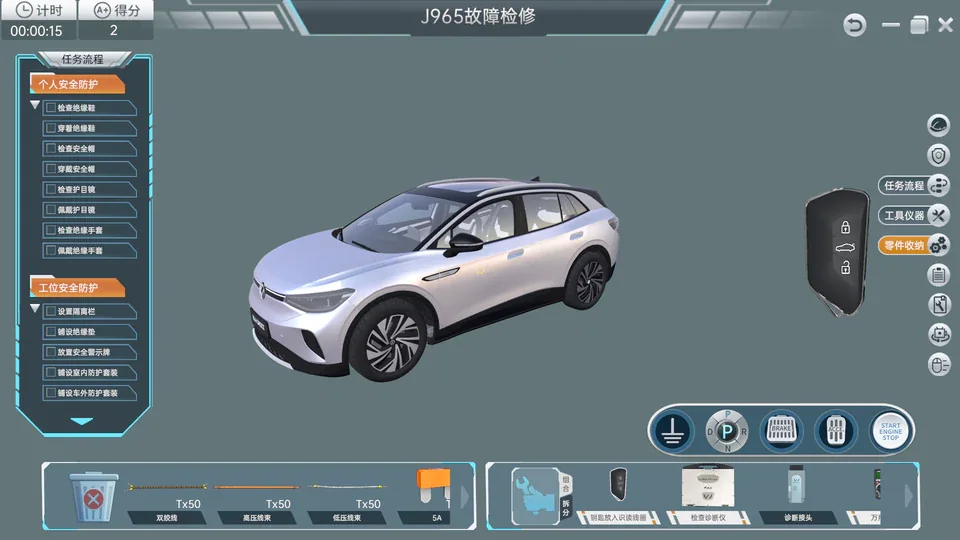
Measure whether preparation reduces avoidable setup questions and improves the quality of student records. Screen time alone is a poor measure of learning. If students complete simulations quickly but still cannot explain their instrument selection, the bridge to the workshop needs revision.
12. Size capacity around active learners
OFPPT’s September 2024 announcement described an extensive training network and the opening of CMC provision in several regions. This is useful evidence that training expansion involves networks and diverse programmes; its national capacity figures should not be mistaken for demand for a particular EV product. [3]
For an individual centre, calculate active practical time. A hypothetical class of 24 students with three stations can use three groups of eight, but eight learners gathered around one component may have very different participation. Break each group into operating, recording, reviewing and preparation roles, then rotate the roles. Some assessments will still require a smaller group or additional sessions.
| Learning station | Active task | Independent preparation |
|---|---|---|
| Battery/BMS | Permitted measurement and evidence comparison | Diagram reading and hypothesis selection. |
| Motor assembly | Inspection and measurement record | Work instruction and acceptance criteria. |
| Diagnostic review | Explain and challenge the conclusion | Review anonymised records from earlier cases. |
| Individual check | Teacher observes a selected practical action | Reflection and correction of the task sheet. |
13. Make factory and site acceptance teachable
An acceptance plan should demonstrate more than the arrival of equipment. Before dispatch, ask for a complete lesson using the quoted hardware, instruments and software. The instructor should see the starting condition, student access, expected evidence, controlled fault and reset process. Record configuration identifiers so a demonstration on another model does not substitute for the ordered system.
At the Moroccan site, repeat a selected task using the installed utilities and the institution’s computers. Confirm access clearances, earthing and supply requirements through the responsible site engineer. The teaching team should check translated resources, software activation, spare parts and the ability to restore a known starting condition between groups.
Use the EV lab planning and construction service to connect the floor plan to those demonstrations. A room can be visually attractive yet difficult to supervise. Locate displays so students can see both the physical component and its evidence, with clear space for the instructor to stop and review the exercise.
14. Phase investment by teaching readiness
A first phase should close the most important teaching gap. For a centre with strong mechanical provision and limited electrical practice, that may mean instruments, accessible circuits and a battery/BMS module. For a centre already teaching EV diagnosis, the gap may be motor assembly quality or instructor preparation. The starting inventory matters as much as the national industrial direction.
| Phase | Main deliverable | Evidence before expansion |
|---|---|---|
| Foundation | Electrical measurement, task resources and teacher preparation | Students produce interpretable records without continuous prompting. |
| Component depth | Battery/BMS and motor assembly modules | Repeated lessons run reliably with documented resets. |
| Vehicle integration | Locally relevant diagnosis and charging interfaces | Employers review student diagnostic evidence. |
| Specialist testing | Performance equipment for a defined advanced syllabus | Qualified staff, suitable utilities and scheduled practical demand. |
This sequence supports a defensible budget discussion. It also avoids buying several complex systems that compete for the same limited instructor time. Keep provision for instruments, consumables and replacement teaching components within each phase.
15. Ask employers to review evidence, not the showroom
A lab tour can generate enthusiasm without showing whether students are ready for work. Invite manufacturing and service supervisors to examine anonymised task records instead. Ask whether the records identify the component, describe the condition, justify the test and support the decision. Their comments are more actionable than a general opinion about whether the equipment looks modern.
Use separate feedback sessions for production and aftersales pathways. A manufacturing supervisor may emphasise traceability and adherence to an instruction; a service manager may question whether the student ruled out an alternative cause. Both perspectives improve the common foundation while preserving the purpose of each course.
BTKX’s vocational school solution can frame the equipment discussion, but local employers should validate the employment assumptions. Review the pathway after the first cohort. If placements reveal a different balance of electrical, mechanical and communication skills, revise the task schedule before adding more specialist machinery.
16. Questions from Moroccan training planners
Should a Moroccan college start with a complete EV vehicle?
Start with the learning gap. A complete vehicle is valuable for integrated diagnosis, but students may learn component measurement more effectively on an accessible teaching platform. Combine both when the syllabus, supervision and practical timetable justify the investment. Specify the local vehicle and diagnostic access rather than assume all models provide the same teaching opportunities.
Can one motor station serve manufacturing and service students?
Yes, with different exercises and marking criteria. Manufacturing students can inspect assembly quality against an instruction, while service students investigate a symptom and justify a diagnosis. Confirm fixtures and instruments for each task. An assembly station does not automatically include the operating load and data acquisition needed for performance analysis.
Are French and Arabic resources included automatically?
Agree the language scope in the quotation. Identify manuals, student worksheets, software, diagrams and teacher training separately. Approve a terminology sample before full translation, and ask a local instructor to check that the finished resources are understandable during practical work. Website language availability does not establish delivered software language.
Does the battery trainer reproduce a Moroccan manufacturer’s pack?
The T028 provides documented LFP assembly and BMS teaching. It should not be described as a particular manufacturer’s traction pack without technical evidence. If the objective is employment on a specific system, add validated vehicle documentation, diagnostic practice and the appropriate employer or manufacturer procedures.
Can the charging trainer support commercial charging installation courses?
It can support specified educational tasks in component assembly and electrical checks. The documented reference teaching power is limited. Infrastructure design, public charger commissioning and local approval requirements need a separate scope, suitable hardware and competent local installation input. Request a demonstration of the precise interface students will study.
What should be sent with a Morocco lab enquiry?
Send the city, programme, learner level, existing equipment, class size, intended employer roles, room plan, utility schedule and language needs. Add two sample student tasks. These details help BTKX propose a usable configuration and make the resulting quotations easier for teachers and procurement staff to evaluate.
Build a Morocco training brief around measurable skills
Share whether your centre serves industrial assembly, independent workshops or both. BTKX can discuss automotive and NEV teaching equipment, practical resources and instructor preparation as one coordinated scope. Begin with the tasks graduates must perform and the evidence employers expect.
Discuss your Morocco training projectSources
Research checked 20 October 2026.
- Morocco Ministry of Industry and Trade: Automotive sector overview. Undated page; 2014–2020 industrial plan.
- Ministry: two agreements strengthening automotive training, 23 March 2023.
- OFPPT: 2024–2025 training-year announcement, 4 September 2024.


