

Africa · Côte d’Ivoire Market Guide
Technical Training in Côte d’Ivoire: Machinery Maintenance and a Practical EV Pathway
Connect agricultural machinery maintenance, reliable electrical diagnosis and phased electric-mobility teaching to the needs of Ivorian institutions and employers.
On This Page
The planning answer
How should Côte d’Ivoire equip a practical technical training centre?
For Côte d’Ivoire, a strong technical training investment connects agricultural machinery maintenance, dependable electrical diagnosis and a carefully phased introduction to electric mobility. The balance should follow the institution’s catchment: a centre supporting rice and maize mechanisation needs different practical tasks from a programme serving Abidjan vehicle workshops. Accessible machinery systems, French teaching resources, instructor preparation and spare-part planning make that investment usable after delivery.
BTKX has a published agricultural teaching-equipment reference for the Côte d’Ivoire Luban Workshop. The project covers agricultural teaching equipment. Define any EV or production-farm machinery requirements separately when discussing your programme.
1. Put maintenance capability at the centre of the investment
A machine creates value when people can inspect, adjust and maintain it through its working life. For a training centre, that means investing in the reasoning behind service work: how a mechanism transfers motion, what a symptom suggests, which inspection is useful and how a technician verifies that the intervention solved the problem.
The Ivorian agriculture ministry lists mechanisation within the remit of its rural modernisation structure. More concretely, a government announcement published in July 2026 records the launch of construction of a mechanisation centre in Tchologo and support for rice and maize producers. The centre was described as a future facility, not a completed operational installation. [1] [2]
Our planning interpretation is to connect agricultural machinery training equipment in Côte d’Ivoire to maintenance tasks that can be practised repeatedly. Begin with local machine inventories and service difficulties. A technically elaborate laboratory that omits routine adjustment, electrical troubleshooting and parts identification may fail to address the reasons machines actually remain unavailable.
2. Learn from the documented Luban Workshop scope
The published Côte d’Ivoire Luban Workshop equipment case describes a January 2024 award to Baitong Kexin of CNY 3,729,200 for ten agricultural teaching-equipment categories. The contracting institution was Heilongjiang Agricultural Engineering Vocational College in China; the overseas end users were instructors and trainees at the Workshop. The buyer and the end site therefore had different responsibilities. [4]
The named categories include a tractor whole-vehicle teaching platform, BT-NJVR-01 virtual simulation and assembly-and-adjustment platforms for engine, transmission, chassis and electrical systems. The account leaves the remaining supporting items defined by the tender schedule. It does not justify inventing four additional product categories or multiplying the category count into a machine quantity.
The useful procurement lesson is that physical systems, simulation, export preparation and teaching support should be discussed together. For a new project, request the original award notice and shareable acceptance records if the reference is material to evaluation. The case is evidence of a defined agricultural teaching scope; it is not proof that a different laboratory or EV programme will have the same configuration, price or delivery conditions.
3. Build different pathways for Abidjan and agricultural catchments
A national procurement can use common standards without prescribing an identical room for every institution. Local workshops, cooperatives, equipment service businesses and placement supervisors can identify the practical jobs graduates need. The groups below are proposed planning conversations, not claims about the number of technicians employed in each city.
| Catchment | Question to investigate | Potential priority |
|---|---|---|
| Abidjan | Which vehicle-service and fleet tasks can employers offer to trainees? | Electrical diagnosis, service documentation and EV awareness. |
| Bouaké–Yamoussoukro | Can regional centres share specialised equipment and teacher support? | Tractor systems, practical assessment and planned rotations. |
| Korhogo–Ferkessédougou | What maintenance skills support the locally used rice and maize machinery? | Mechanisms, drivetrain adjustment and machinery electrical work. |
| San Pedro and surrounding catchments | Which service organisations can validate learners’ maintenance records? | Mixed mechanical/electrical diagnosis and service handovers. |
The 2026 transport ministry training announcement names Grand Abidjan, Korhogo, Odienné, San Pedro, Yamoussoukro and Bouaké as pilot locations within its electric-mobility project. That geographical scope supports regional planning discussions, but it is not evidence that an EV teaching lab is already installed in every city. [3]
4. Use the tractor as an anchor for systems understanding
A tractor can connect engine, transmission, chassis, hydraulics and electrical concepts through one recognisable machine. Students should be able to trace how an operator input becomes a mechanical action and explain where an observed problem could interrupt that chain. Begin with the machine family employers actually use, then identify the transferable principles.
BTKX’s agricultural machinery teaching range and the published Luban reference offer a basis for this discussion. A whole-vehicle teaching unit provides integration; a component assembly platform provides access that a complete machine may conceal. They should be complementary. The syllabus should state which tasks require each form and which depend on field access.
For example, a classroom task may ask students to trace transmission power flow, identify the relevant adjustment and explain the expected effect. A later supervised machine session tests whether they can recognise the equivalent system on the local tractor. This bridge prevents learners from becoming familiar only with the teaching model while remaining uncertain around an employer’s equipment.
5. Teach harvesting mechanisms through a loss-and-adjustment question
A harvesting lesson becomes more useful when it begins with a practical symptom: uneven feeding, poor cutting or an unexplained vibration. Students map the movement of material through the visible mechanism, identify plausible causes and select an inspection. They should explain how a change in adjustment might affect the symptom before touching the setting.
The BTKX grain combine harvester teaching platform can support guided study of visible header mechanisms. Confirm the exact configuration and the relationship to the crop and machine types in the programme. A visible reel, cutter and auger make mechanism teaching possible; they do not establish complete competence in field harvesting, crop-loss measurement or every combine design.
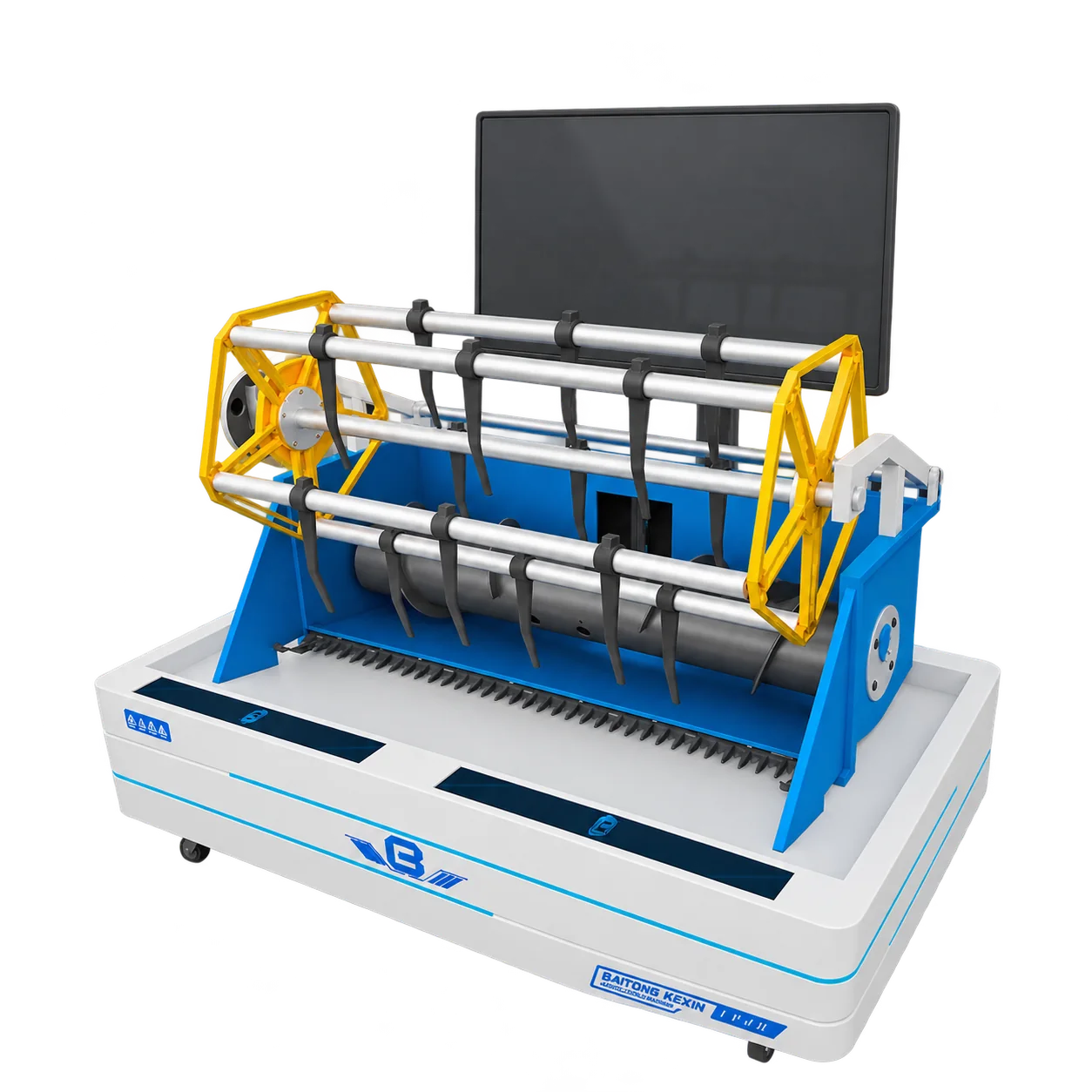
Work with a local operator to obtain an anonymised maintenance scenario and photographs of the relevant machine. Students can compare the training mechanism with that evidence, then identify what still needs confirmation during field practice. This produces better reasoning than memorising a list of header parts.
6. Give agricultural learners a strong electrical foundation
Mechanical courses should not leave electrical diagnosis to an isolated final module. Starting, charging, sensing and control problems can be explored through a common method: understand the circuit, identify the expected condition, choose a permitted measurement and compare the evidence with the symptom. The complexity increases as learners become more confident.
Use the agricultural electrical assembly-and-adjustment scope described in the Luban case as a teaching reference, then confirm what is available in the chosen equipment schedule. Where a centre already owns automotive electrical training systems, some measurement lessons may be shared. The final task still needs to connect to the machinery students will service.
A good assessment includes a handover. Students describe what they checked, what they found and what they recommend next. If the evidence is insufficient, the correct decision may be to ask for additional information. This habit helps graduates avoid unnecessary component replacement and allows a supervisor to understand the diagnosis without repeating every step.
7. Connect each equipment family to an observable result
Procurement should distinguish a machine used for demonstration from a system intended for repeated student practice. Ask how learners access the assembly, how a documented fault is introduced and how the instructor restores the starting condition. Include the instruments, fixtures and task resources that make the practical lesson possible.
| Teaching family | Practical question | Student deliverable |
|---|---|---|
| Tractor integration | Where does the symptom sit within the machine’s systems? | System map and justified inspection plan. |
| Engine assembly | Which documented condition must be checked before the next stage? | Assembly and measurement record. |
| Transmission/chassis | How does adjustment affect motion or control? | Observed condition, adjustment explanation and verification. |
| Machinery electrical | Does the evidence support a circuit or component fault? | Circuit reading and permitted measurements. |
| Virtual preparation | Can the learner identify the sequence before physical access? | Preparation record followed by observed practical work. |
The agricultural machinery training application helps frame this conversation. Match the final quotation to the approved syllabus rather than treat every available catalogue model as essential.
8. Make simulation a bridge to limited machinery access
A centre may have enough students for several groups but only one whole machine. Simulation can prepare learners to identify components, interpret a symptom and plan an inspection before they reach that machine. The value is additional readiness, not a claim that screen-based practice replaces tactile assembly, measurement or field operation.
The Luban account names BT-NJVR-01 agricultural virtual simulation within its scope. For another project, request a demonstration of the exact modules, available language, instructor controls and learner records. Licence terms, computer specifications, offline operation and the process for reinstalling software should be explicit, particularly when technical support is shared between institutions.
BTKX’s virtual simulation lab application offers a route for discussing the physical/digital relationship. Test whether students arrive at the workstation with a useful inspection plan. If they complete the software exercise but still do not recognise the real assembly, revise the transition activity.
9. Commission French resources around actual learner tasks
French resources should cover the actions students must perform, not just the supplier’s product introduction. Agree component terminology, diagrams, worksheet instructions, software menus, assessment criteria and maintenance records. Teachers should review a small sample before a full translation, including a task where an ambiguous term could change the intended operation.
Use short instructions with labelled illustrations and space for evidence. A machinery worksheet can ask for a sketch of power flow, a measured condition, a reason for selecting the inspection and a verification result. Include the terminology used by local employers, while keeping the manufacturer’s technical identifiers where needed to avoid confusion during support.
The curriculum and course development service should be discussed alongside international TVET cooperation. Specify which files the institution can adapt and who approves revisions. Translating the assessment after equipment arrives usually costs teaching time and can conceal mismatches between the ordered system and the planned lesson.
10. Prepare instructors to teach and restore the equipment
An agricultural trainer is useful only when staff can run repeated sessions without losing the known starting condition. Teacher preparation should therefore include setup, student supervision, documented fault introduction, assessment and restoration. Technicians need the maintenance tasks and spare-part identifiers that keep the station available between teaching periods.
Ask every participating teacher to deliver a complete sample lesson while another teacher acts as a learner. The review should examine whether the instructions are clear, access is sufficient and the marking decision follows from observable evidence. A confident manufacturer demonstration does not establish that the local teaching team can repeat the lesson independently.
BTKX’s teacher training service can be specified around this practical cycle. Name a lead and backup instructor for each specialist system. Schedule a follow-up after the first cohort, when recurring learner difficulties and reset problems become visible. Keep a shared issue log so support requests contain the configuration, condition and steps already checked.
11. Introduce electric mobility without displacing core maintenance
The transport ministry reported a national electromobility workshop in Abidjan on 11–12 June 2026, including vehicle technologies, charging, maintenance, fleet data and business models. It also described the 2030 objective associated with the 2024 decree: electric vehicles representing 10% of the vehicle fleet. This is a stated policy objective, not an observed 2026 market share. [3]
For an institution beginning this pathway, start with electrical fundamentals and the difference between vehicle systems. Learners should understand battery data, motor function and charging-state reasoning before attempting advanced vehicle work. Maintain the agricultural and conventional vehicle pathways where employer demand supports them; a new EV module does not make existing machinery skills obsolete.
The T028 battery/BMS teaching system provides documented LFP assembly and measurement tasks. It can support a carefully scoped introduction, but it is not automatically a replica of a local car, motorcycle or commercial battery. Define the vehicle-specific practice that follows the common principles lesson.
12. Keep battery, motor and charging scopes distinct
An entry-level EV package should explain a connected system without merging different equipment capabilities. Battery assembly and BMS comparison, motor assembly inspection, motor performance testing and charging component checks require different fixtures and resources. The institution should decide which of those tasks belongs in the first course.
The T036 motor assembly platform addresses a different teaching purpose from the T076 performance platform. Similarly, the T040 AC charging trainer is educational hardware; the reference application describes ≤1.5 kW and ≤7 A, rather than commercial DC fast charging.
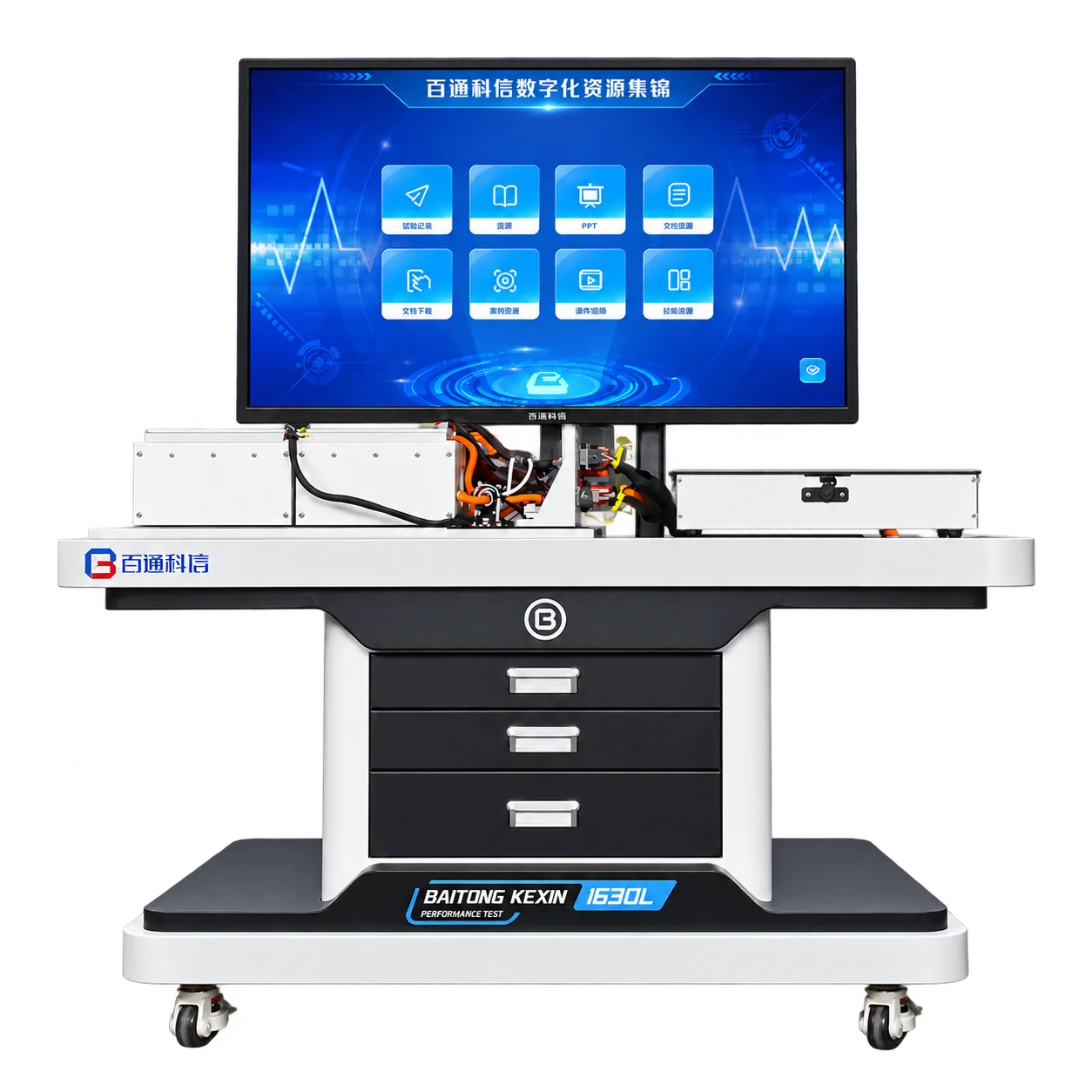
Confirm overseas connectors, communication interfaces and operating supplies against the exact order. The charging training application is a useful starting point for task discussions, while commercial installation instruction needs its own local technical scope.
13. Treat overseas delivery as a teaching-readiness project
The route from a Beijing factory to an Ivorian classroom involves more than shipping dimensions. Equipment must arrive with an identifiable configuration, accessible documentation, agreed assembly responsibilities and a realistic commissioning plan. Ask the supplier and institution to identify who will resolve a mismatch between the site utility schedule and the ordered equipment.
Before shipment, witness a representative lesson on the actual configuration. At site, repeat it with the local computers, language resources and installed utilities. Inspect transport condition, component identifiers, instruments and spare parts. Record the starting state and reset method so teachers inherit a usable training station rather than a collection of unfamiliar assemblies.
The government and NGO TVET project route can help structure multi-party discussions, subject to confirmation of the final project scope. The public Luban account demonstrates why purchaser, end user and delivery team must have clearly defined roles. Do not infer exact acceptance dates or local service arrangements from the award alone.
14. Budget for availability through the first teaching year
Technical teaching equipment creates recurring needs: instruments require checks, leads and connectors wear, students consume practice components and software needs recoverable access. Budgeting only for the main platform can reduce practical availability during the very year the institution is trying to establish the programme.
| Budget line | Question before award | Operational benefit |
|---|---|---|
| Teaching consumables | Which components are intended for repeated assembly? | Predictable student practice and replacements. |
| Instruments and fixtures | Can each active group collect its own evidence? | Less waiting around a single demonstration. |
| Software recovery | Who can reinstall and reactivate the purchased modules? | Reduced interruption after computer replacement. |
| Teacher support | What follow-up is included after the first cohort? | Faster resolution of real teaching difficulties. |
| Maintenance and spares | Are identifiers and replacement routes documented? | Quicker diagnosis and clearer support requests. |
Track cancelled practical sessions and their causes. Those records reveal whether the next investment should be another specialist platform, better resources or a modest stock of frequently needed parts.
15. Use a first-term plan with clear review gates
The first term should establish dependable lessons before expanding the catalogue. Select a small set of agricultural or vehicle tasks that teachers can repeat, assess and improve. A centre can then demonstrate educational value through learner records and available practical hours rather than rely on equipment photographs.
| Stage | Action | Review evidence |
|---|---|---|
| Before teaching | Confirm configuration, utilities, French resources and teacher readiness. | A complete lesson independently repeated by local staff. |
| Initial sessions | Run a small group through one mechanism and one electrical task. | Student access, timing and usable task records. |
| Mid-term | Invite an employer to review anonymised evidence. | Specific corrections to inspection and handover tasks. |
| Term review | Compare teaching availability, assessment results and support issues. | A justified next-phase equipment decision. |
BTKX’s vocational school solution can support a coordinated configuration. The centre should own the review process so the programme continues to reflect local machine use, employer feedback and student needs.
16. Questions from Côte d’Ivoire training projects
Was the Luban Workshop reference an electric-vehicle project?
No. The published account concerns agricultural teaching equipment, including tractor and component-system platforms with virtual simulation. It records a January 2024 award and ten item categories. Use it to discuss the documented overseas teaching scope, while requesting separate evidence for a proposed EV configuration.
Should a regional college prioritise agricultural machinery or EV equipment?
Start with employer tasks and the existing workshop. Where graduates support agricultural mechanisation, maintain strong machinery, drivetrain and electrical provision. Add EV modules where there is a defined course and vehicle access. A staged investment can share electrical fundamentals while preserving separate practical assessment for each pathway.
Can a harvester teaching platform replace field practice?
It provides access to visible mechanisms and repeatable inspection tasks. Field operation, crop behaviour, machine setup and performance under working conditions require supervised access to relevant machinery. Define the bridge between classroom mechanisms and local equipment so students understand both transferable principles and model-specific differences.
What French materials should be included?
Specify teacher instructions, student worksheets, diagrams, assessment criteria, software language and maintenance records separately. Approve sample terminology with local teachers before full production. Include the ability to adapt task sheets where agreed, so the centre can incorporate locally used machines and employer scenarios.
Does BTKX provide a local office or an automatic service agreement?
The public agricultural case establishes a project reference, not a local office. Agree commissioning responsibilities, training, response arrangements, spare-part routes and language support for the actual order. Put the contacts and escalation process into the handover file so teaching staff know how to obtain useful assistance.
How can a small institution make limited equipment useful?
Use preparation, physical practice and evidence-review rotations, with individually observed checks. Maintain a known starting condition and sufficient instruments for active learners. Measure practical participation rather than room occupancy. Reliable lessons on a modest configuration are a stronger foundation for expansion than an overcrowded collection of advanced stations.
Plan an Ivorian training centre around machinery and people
Share the institution’s location, course scope, locally used machines, room conditions and French resource needs. BTKX can discuss agricultural and automotive training equipment, simulation and teacher preparation around an agreed set of practical outcomes.
Discuss your Côte d’Ivoire projectSources
Research checked 20 October 2026.
- Ministry of Agriculture: rural modernisation directorate, undated institutional page.
- Government: Tchologo mechanisation centre construction launch and support for rice and maize producers, 21 July 2026, reporting the 17 July event.
- Transport ministry: national electromobility training in Abidjan, 14 June 2026.
- BTKX: Côte d’Ivoire Luban Workshop equipment supply case, public account of the January 2024 award.


