

Africa · Tanzania Market Guide
Training Equipment for Tanzania: Agricultural Maintenance First, EV Skills Where Needed
Prioritise locally relevant agricultural maintenance, connect indoor mechanisms to field practice, and add a separately planned EV foundation where Tanzanian employers need it.
On This Page
The planning answer
Which technical training equipment should Tanzania prioritise?
A Tanzanian institution serving agricultural maintenance employers should start with machinery mechanisms, adjustment and service evidence, then add a distinct EV foundation where local vehicle demand justifies it. Match equipment to the crops, machines and workshop tasks learners will actually encounter. Indoor teaching platforms should prepare students for supervised field practice, rather than be treated as complete production machines.
For TVET colleges and training centres, the strongest brief connects an equipment list to the agricultural calendar, instructor readiness, spare-part access and individual assessment. BTKX's agricultural machinery, conventional automotive and EV ranges can support separate pathways within one institutional plan.
1. Start with the work the local economy needs
For buyers researching technical training equipment in Tanzania, an EV-only brief may miss the most relevant first investment. A college serving machinery maintenance, agricultural service businesses or mixed workshops should ask which practical tasks employers cannot currently teach well. Those tasks may involve transmission, adjustment, crop intake or electrical measurement before they involve a traction battery.
FAO's August 2024 report describes sustainable agricultural mechanisation training in Morogoro with TARI and partners. Participants included maintenance technicians, extension staff, researchers and rice farmers, and the programme included equipment support. [1] This is a concrete example of machinery and skills being developed together, rather than evidence that every Tanzanian campus has identical requirements.
Our planning interpretation: build an agricultural-maintenance pathway around identifiable mechanisms and service records, with complementary field access. If local vehicle employers also need electric-mobility skills, introduce that as a clearly scoped second route. A coherent mixed institution can share foundations without blurring different occupations.
2. Translate Tanzanian catchments into employer interviews
Ask each prospective employer which machines it maintains, what downtime problems recur and which tasks an entry-level technician can perform under supervision. Record crop and machine details rather than relying on a broad label such as “agricultural equipment.” A rice transplanter lesson, a maize-header lesson and tractor electrical work require different resources.
| Catchment | Question to validate | Possible training emphasis |
|---|---|---|
| Morogoro and rice-oriented partners | Which planting, crop-care and harvesting mechanisms need accessible teaching? | Rice-related mechanisms, adjustment and maintenance records. |
| Mbeya, Iringa and southern highland catchments | Which tractor, tillage or planting tasks recur in local maintenance? | Power transmission and machine-specific service practice. |
| Arusha and Moshi | Will graduates enter mixed workshops or agricultural service businesses? | Mechanical foundations, electrical diagnosis and maintenance planning. |
| Dar es Salaam and coastal centres | Do placement partners need vehicle service, machinery support or an EV introduction? | Separate mixed-fleet and electrical/EV teaching routes. |
| Mwanza and Lake Zone catchments | Can a regional centre share equipment and supervised field access? | Modular instruction, instructor development and serviceable stations. |
The Morogoro example has a direct source in FAO's 2024 programme. [1] Other rows are proposed interview starting points. Validate the actual crops, employer tasks and transport arrangements before making them a tender requirement or describing them as an established BTKX local project.
3. Make a service record the core assessment
A machinery course should produce evidence of observation and judgement. Ask a learner to identify the mechanism, state the permitted inspection, record the result and explain the next action. Where adjustment is part of the documented teaching scope, the learner should explain what the adjustment changes and how the result will be checked.
Use one service-record structure across indoor and field tasks. It should include machine identity, reported symptom, initial condition, inspection evidence, action and verification. The field supervisor can then see what the student already practised and what still requires workplace instruction. A generic completion certificate reveals much less about practical readiness.
The World Bank's March 2026 ESPJ-II factsheet emphasises market-relevant skills, employer partnerships and work-based learning in Tanzania. [2] Our recommendation follows that practical logic: connect the equipment to a reviewable task. Discuss the evidence matrix through BTKX curriculum development, while the institution retains responsibility for local qualification mapping and assessment requirements.
4. Begin with mechanisms that explain several machines
A broad foundation can reduce the need to purchase a large demonstrator for every machine in the local fleet. BTKX's mechanical transmission principles platform provides a route for studying how motion is transmitted and transformed. Its electric drive principles platform connects basic circuits, measurement and guided fault teaching.
Build lessons around cause and effect. Ask learners to trace the motion path, identify the function of an element and explain how a permitted adjustment affects the represented mechanism. For electrical foundations, require a documented measurement rather than a guess based on whether a component moves.
The tractor power-system teaching route can be discussed where tractor maintenance appears in the syllabus. Confirm the actual physical configuration and available product evidence before ordering. A product category or teaching description should not be taken as proof that all tractor models or every service operation are represented in one platform.
5. Select rice equipment by the operation being taught
FAO's Morogoro programme included a rice value-chain focus and described equipment such as seed drillers, motorised paddy weeders and land levellers, with additional items planned. [1] These examples help frame local consultation, but they are not a ready-made purchasing list for a different college or evidence that the planned items were all already delivered.
The BTKX rice transplanter training platform represents seedling placement through a working mechanism, conveyor adjustment and seedling recovery. A useful lesson asks what movement is being simulated, which placement relationship can be observed and which real-field conditions are absent from the classroom demonstration.
Ask local agricultural partners to review the intended seedling and machine relevance. Specify approved demonstration materials, cleanup and storage. If the objective is operator competence in a paddy field, the indoor platform should prepare learners for that work, while actual field operation needs its own supervised machine access and assessment. The teaching value is clearer when the distinction is written into the course.
6. Teach the harvester header without calling it a complete combine
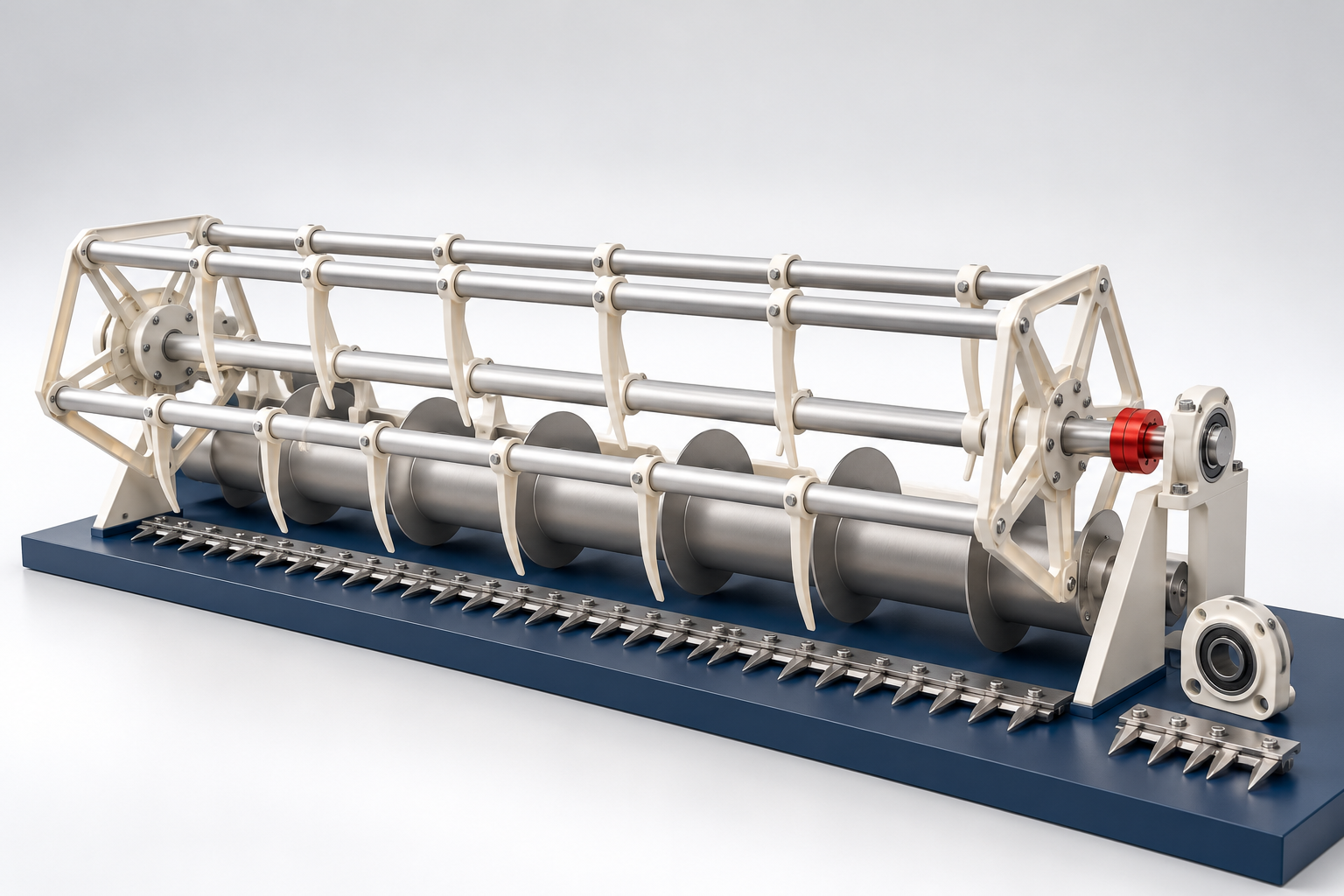
The grain combine harvester teaching platform is particularly useful for discussing a visible intake mechanism. The documented scope focuses on the header: reel, reciprocating cutter, auger and transmission. Threshing, separation and cleaning are outside that stated configuration.
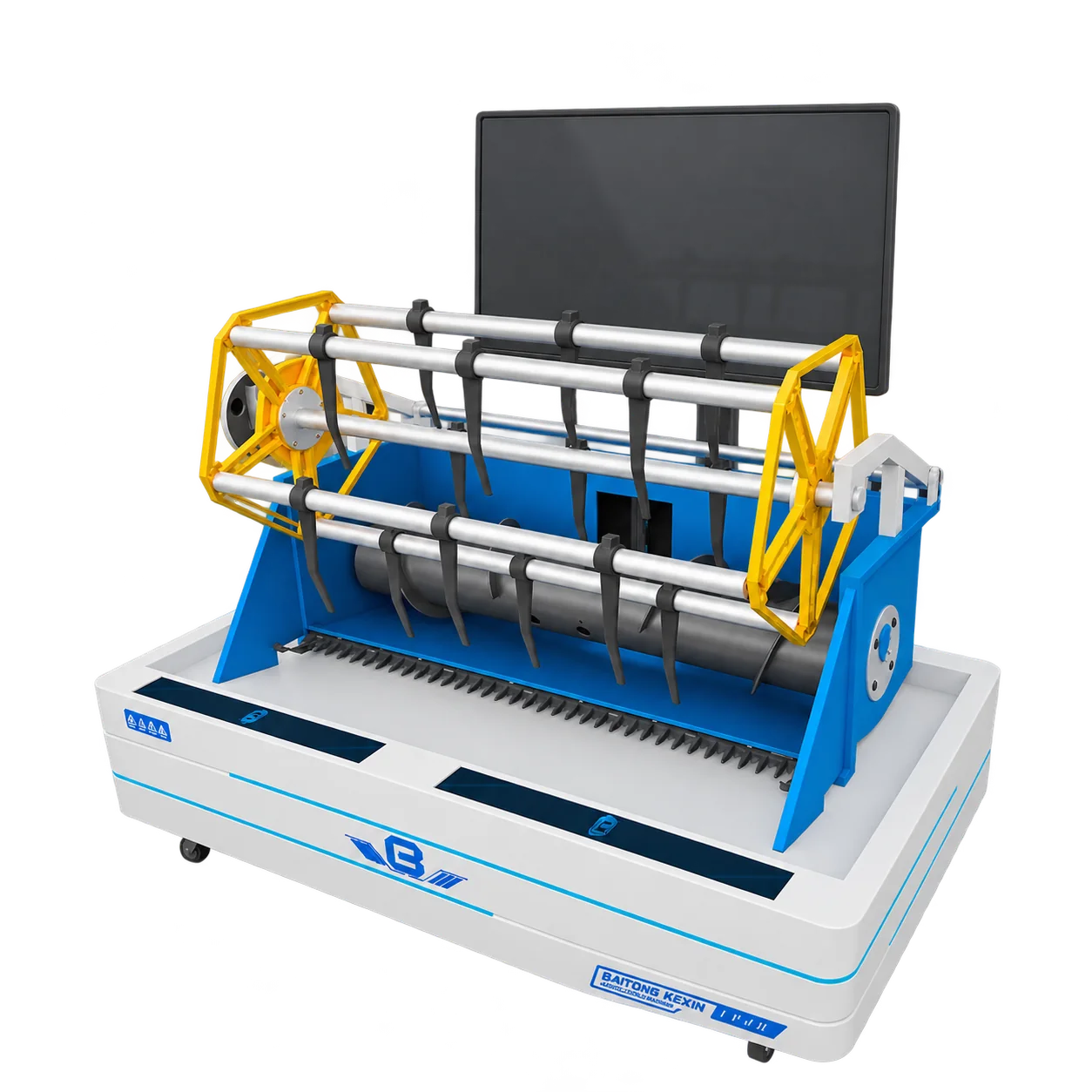
A proposed indoor task can ask the learner to trace crop intake, identify the relationship between components and document a permitted inspection. For a field-related case, the instructor can supply observations and ask which header checks would be relevant before escalating to other machine systems. That develops system boundaries as well as component recognition.
Do not promise whole-machine maintenance competence from a header-only lesson. If the course needs threshing or cleaning systems, identify the additional teaching equipment or field machine. Likewise, the maize-header route should be chosen for its own mechanism and crop context, rather than assumed identical to the grain-header platform.
7. Design the indoor-to-field learning bridge
Indoor platforms offer visibility, repeatability and planned access. Field machines add operating context, variable material and the realities of maintenance. A strong course uses both deliberately. Start with a mechanism lesson, then ask learners to identify what changes when they meet the actual machine and workplace procedure.
Prepare a field-observation card with machine identity, task conditions, permitted actions and supervisor sign-off. Students should record the differences between the college platform and the workplace machine. A mismatch is a learning opportunity: the student must identify which principle transfers and which details need the correct documentation.
Schedule field access with employers before buying equipment that relies on it for the final assessment. If access is seasonal or limited, decide what can be completed indoors and which competence remains unassessed until the field session. Do not replace that missing assessment with a simulation score. This makes the qualification evidence honest and helps the institution calculate the real time and cost of the practical pathway.
8. Use the agricultural calendar to organise teaching
The most useful machinery course may not follow the same sequence as the equipment catalogue. Ask employers when machines are available for training and when service demand makes access difficult. Put foundational observation and documentation before the intended field period, so learners arrive ready to recognise components and ask relevant questions.
For a proposed rice-oriented module, one sequence could connect mechanism recognition, permitted adjustment, supervised field observation and a post-activity service record. A tractor-focused pathway may need a different order. These are course-planning examples, not a single Tanzanian crop calendar; the institution must set dates for its actual region and partners.
Use the quieter period for instructor development, resource review and routine maintenance of the teaching equipment. Keep a reserve date for field access rather than allowing one cancelled visit to remove the only practical assessment. This approach gives the laboratory a clear purpose throughout the year and makes equipment utilisation more meaningful than simply counting the number of rooms occupied.
9. Compare machinery packages through teaching outputs
A course-to-equipment matrix prevents a visually impressive package from hiding missing skills. Link each proposed platform to its mechanism, permitted task, student evidence and field complement. Ask suppliers to identify accessories, demonstration materials and operating conditions explicitly.
| Teaching block | BTKX route | Evidence and complement |
|---|---|---|
| Foundation mechanisms | Mechanical transmission and electric-drive principles. | Motion path or electrical measurement record. |
| Tractor systems | Confirmed tractor power-system configuration. | Component and inspection task, plus relevant field machine access. |
| Rice planting | Rice transplanter teaching platform. | Placement-mechanism explanation and separate field-operation evidence. |
| Harvesting | Grain or maize header platform selected by the course. | Intake-mechanism inspection, with whole-machine topics separately covered. |
| Crop-care or water systems | Sprayer or sprinkler teaching where relevant. | Documented flow, pressure or adjustment observations within the approved task. |
Include tools, storage, cleanup and teacher preparation. A complete lesson needs more than the represented mechanism; it needs a workable routine before, during and after the student activity.
10. Add an EV foundation where local demand supports it
UNEP's African project overview, updated in February 2024, lists Tanzania among countries where it works on electric two- and three-wheelers and low-emission buses. [3] This establishes a relevant development context, not a national sales share or proof that every rural maintenance course should become EV-focused.
Where local vehicle employers identify a real need, begin with electrical measurement, battery/BMS interpretation, motor principles and a clear diagnostic record. The T028 LFP battery assembly and BMS system can support documented battery assembly, measurement and instructor-selected fault teaching.
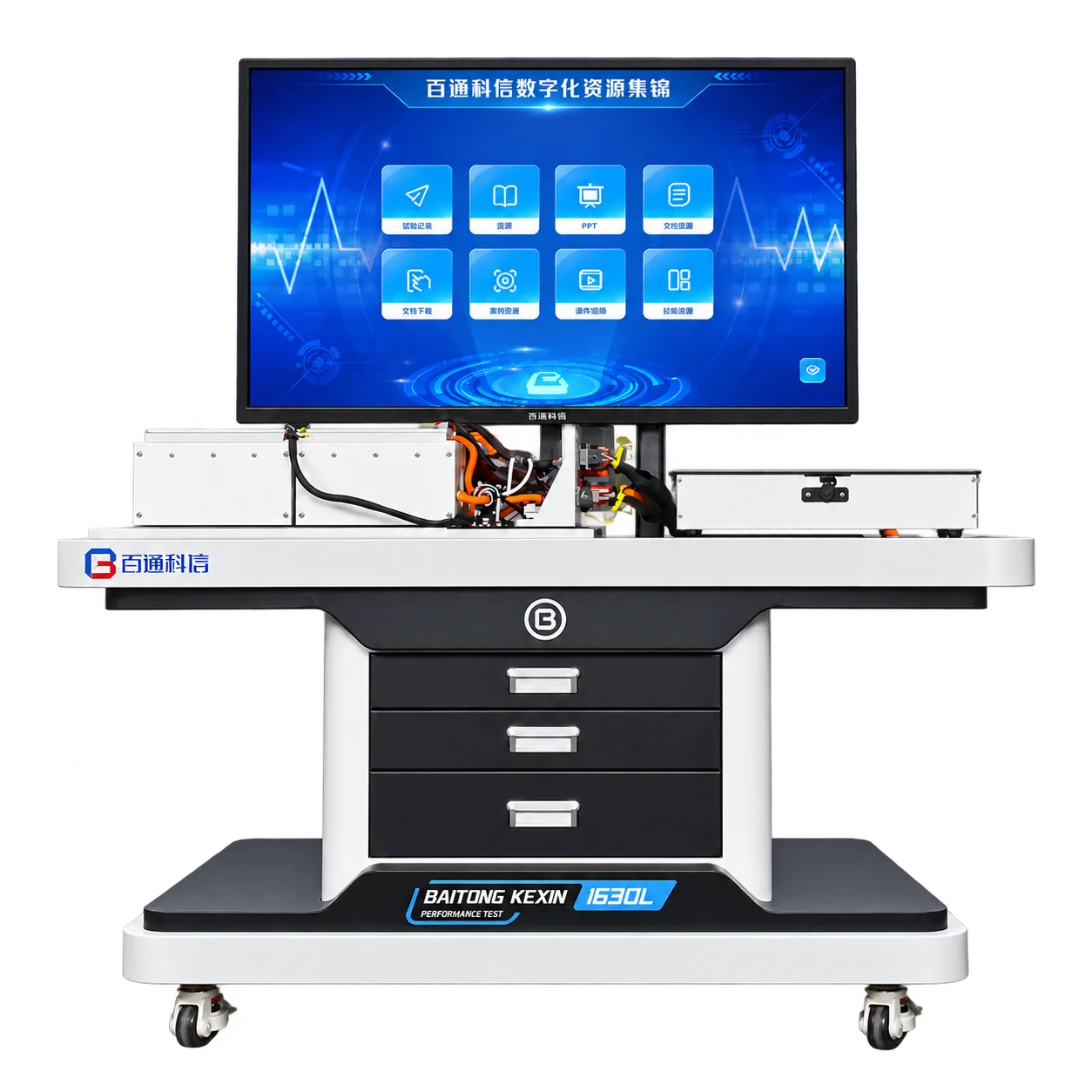
Keep the pathway distinct from agricultural machinery. A general battery trainer does not establish compatibility with every electric motorcycle, and a car-oriented motor system is not automatically a local conversion kit. State the actual vehicle models, interfaces and service permissions before adding vehicle-specific practical work.
11. Keep EV motor and charging scope proportionate
The T036 motor assembly platform supports an assembly-and-inspection discussion. The separate T076 performance platform addresses operating measurements within a confirmed compatible configuration. An introductory course should not purchase advanced performance testing before it can use foundational inspection regularly.
For charging, the T040 AC assembly platform can support selected component and circuit lessons. The charging training reference describes educational hardware rated at ≤1.5 kW and ≤7 A. It is not a commercial fast charger, a swapping cabinet or a complete installer qualification.
Agree the connector, communication interface and intended learning task before ordering. A useful starting lesson asks students to explain a charging-state sequence and the evidence of an authorised interruption. Local commercial installation work needs its own appropriate expertise and assessment. Separating these scopes keeps a modest EV introduction affordable and educationally complete.
12. Localise Swahili teaching and prepare instructors
English technical documents can support procurement, while Swahili explanations and worksheets may improve practical teaching. Define the required terminology, diagrams, service records and instructor notes. Ask a Tanzanian teacher to review a sample machinery lesson before the full resource set is translated.
For agricultural equipment, words must refer consistently to the same mechanism across the platform, drawing and assessment. For the optional EV route, confirm software language separately from worksheet translation. The availability of a market page in a language does not demonstrate that every delivered interface already uses that language.
Discuss BTKX teacher development around a teach-back. The instructor should set up the station, run the permitted task, assess a student record, reset the equipment and identify routine maintenance. Include the limits of the indoor platform so teachers do not accidentally assess whole-machine competence from a partial mechanism. This is especially important where one instructor teaches several machinery categories.
13. Specify digital resources and a maintainable site
The agricultural machinery range describes physical and virtual teaching within a planned project scope. Request the actual agricultural simulation edition, represented machines, licences and computer requirements. A generic automotive simulation should not be credited as covering rice planting or harvesting mechanisms.
Use digital preparation to identify components and plan observations before the physical lesson. Keep virtual scores separate from observed practical competence. Confirm offline functionality, backups and access after computer replacement, especially where the timetable cannot depend on continuous connectivity.
Survey the actual room for utilities, handling access, storage, supervision and maintenance space. Identify locally available consumables and manufacturer-specific parts. Agree final-campus delivery and commissioning responsibilities, rather than assuming a port delivery is a classroom handover. The institution's site team should validate the proposed arrangement and the requirements of each ordered platform.
14. Phase investment around a complete first course
A first phase should produce a teachable course with the tools, resources and instructor competence it needs. Do not buy a header platform now and defer all worksheets, instruments and teacher preparation to an uncertain later budget. Likewise, do not add EV hardware to an agricultural package without a course owner and timetable.
| Phase | Complete teaching scope | Progression test |
|---|---|---|
| A: foundations | Mechanisms, measurements and service records. | Learners explain an observation and justified next action. |
| B: local agricultural operations | Selected planting, crop-care or header lessons. | Tasks match actual local machines and instructor readiness. |
| C: field connection | Supervised machine access and employer-reviewed evidence. | Indoor and field assessments form a coherent pathway. |
| D: separate extension | EV introduction or specialist equipment with a defined course. | Local demand, staff and timetable support expansion. |
Calculate practical capacity honestly. An illustrative group of 24 learners needing a 10-minute individual task requires 240 station-minutes, before setup or feedback. Two stations in a two-hour class provide exactly that amount, leaving no margin. Plan more time rather than counting observation as individual operation.
Include a maintenance-service costing exercise in the first course. Give learners an illustrative job with travel, inspection time, a proposed part, follow-up work and a customer record. Ask them to separate the cost of diagnosing the problem from the cost of a repair that has not yet been justified. This is useful preparation for machinery-hire and service businesses without promising a particular income or repair saving. A learner should be able to explain what is included in a quotation and what depends on findings.
After the first teaching cycle, review the quality of completed service records and the practical time each student actually received. Ask field supervisors which observations were missing or unclear. Use those findings to choose the next machine mechanism or duplicate station. The expansion decision then follows evidence from the course, rather than a desire to fill every equipment category in the catalogue.
15. Accept the equipment through the first teachable lesson
Agree a sample lesson and handover evidence before ordering. For a header platform, demonstrate the documented mechanism and a permitted inspection, then ask the college instructor to explain the observation and reset the equipment. For an EV extension, use its own separate task and approved operating conditions.
| Area | What to verify | Evidence to retain |
|---|---|---|
| Configuration | Models, mechanisms, instruments and accessories match the order. | Item list, serial numbers and technical documents. |
| Teaching | Instructor runs the agreed task and assesses its record. | Sample worksheet and teach-back notes. |
| Digital and language | Correct edition, licences and resources work on intended computers. | Resource inventory and access information. |
| Continuing operation | Maintenance, cleanup, parts and fault reporting are usable. | Maintenance plan and named responsibilities. |
BTKX's vocational schools solution connects equipment to teaching support. Its Côte d'Ivoire Luban Workshop equipment-supply case offers an agricultural TVET reference, rather than evidence of a Tanzanian installation. Request documentation relevant to the actual new scope and delivery conditions.
16. Questions Tanzanian training-equipment buyers ask
Should a Tanzanian college start with agricultural machinery or EV equipment?
Start with the occupations and machines served by local employers. An agricultural maintenance catchment may benefit first from mechanisms, adjustment and field-linked service teaching. Add a distinct EV pathway where vehicle employers and the syllabus support it.
Does the grain harvester trainer represent a complete combine?
The documented platform focuses on the header, including reel, cutter, auger and transmission. Threshing, separation and cleaning are outside that stated configuration. Whole-machine competence requires additional teaching and supervised machine access.
Can indoor planting equipment replace paddy-field practice?
It can make mechanisms and adjustments easier to observe and repeat. Actual field operation adds conditions the classroom does not reproduce. Define indoor outcomes and the separate supervised field assessment rather than treating them as interchangeable.
What Swahili resources should be requested?
Agree worksheets, service records, diagrams, terminology and instructor notes around a sample lesson. Confirm software-interface language separately. Local instructor review helps keep the same component name consistent across all resources.
Can an introductory EV module cover local electric motorcycles?
General battery, motor and charging principles are transferable foundations. Compatibility with actual motorcycles, packs, connectors and software must be verified separately, along with the tasks trainees are authorised to perform.
How can a rural campus keep the lab usable?
Specify offline resources, replacement-part identifiers, routine maintenance and a clear fault-report route. Include final-campus transport, site preparation and commissioning. Buy a complete teachable first module before adding specialist equipment.
17. Prepare a Tanzanian machinery-and-skills brief
Provide the campus location, learner level, class size, existing equipment and target occupations. List the actual crops, machine mechanisms, local service tasks and available field partners. If EVs are included, give that route its own vehicles, outcomes and course owner.
Ask BTKX, a Beijing-based equipment manufacturer with digital resources and teaching support, for a course-to-equipment matrix, resource sample, instructor-development plan and itemised delivery scope. Compare the proposal with the agricultural calendar, individual practical time and acceptance lesson. The result should be a laboratory that supports locally useful work and can be maintained between teaching seasons.
Planning technical training equipment for Tanzania?
Discuss an agricultural machinery pathway and any separately scoped automotive or EV teaching extension.
Discuss your Tanzania projectSources
Research checked 20 October 2026.
- FAO: Sustainable agricultural mechanisation training and equipment for TARI. 23 August 2024.
- World Bank: Second Education and Skills for Productive Jobs programme. 31 March 2026.
- UNEP: Electric mobility projects in Africa. Updated 28 February 2024.


