
Middle East · Saudi Arabia Market Guide
Automotive Training in Saudi Arabia: From Industrial Ambition to Practical Skills
Connect automotive manufacturing, EV service and charging pathways with practical equipment, bilingual teaching resources and a complete first training phase.
On This Page
The planning answer
What should Saudi automotive training equipment prepare learners to do?
A Saudi automotive training laboratory should distinguish manufacturing readiness, vehicle-service diagnosis and charging support. These career paths share electrical foundations, but require different practical evidence, equipment access and employer involvement. Build an initial programme around measurement, assembly inspection and explainable diagnostic decisions, then add specialist stations when the relevant job tasks are established.
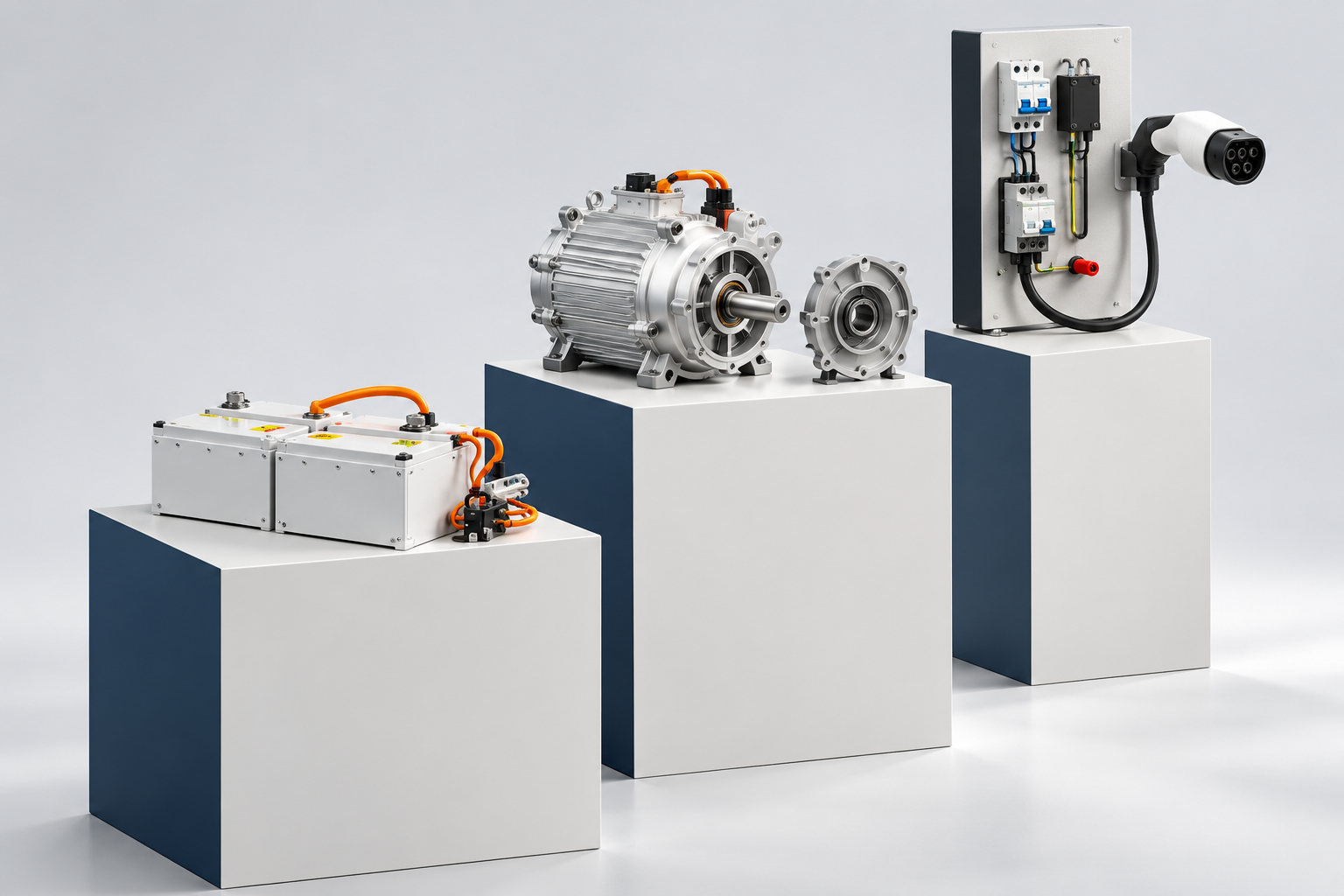
BTKX battery/BMS, electric-drive and charging teaching systems can support that foundation alongside curriculum development and instructor preparation. Select them against an institution’s course outcomes and target interfaces. A training workstation is neither a vehicle production line nor a shortcut to manufacturer-authorised service access. The useful procurement question is what learners will be able to demonstrate when the first class finishes.
1. Read Saudi automotive growth through the jobs it creates
Saudi Arabia’s automotive opportunity should be translated into occupations before it becomes an equipment order. An assembly technician inspecting a harness, a workshop technician investigating a charging complaint and an instructor assessing a battery lesson work with related technology, but their decisions and evidence differ.
PIF’s May 2024 mobility overview connects investment in Ceer and Lucid with supplier development and support for the National Automotive & Vehicles Academy, NAVA. This is an industrial-development context for training, rather than evidence that every college needs the same EV laboratory. [1] A strong institutional proposal identifies which part of that emerging ecosystem its graduates are intended to serve.
For procurement, convert a phrase such as “support Vision 2030” into an observable outcome: read and explain an inspection record, reconcile a measured value with software information, or communicate a justified diagnostic conclusion. Those outcomes make the industrial ambition teachable and give employers a clear basis for reviewing the programme.
2. Separate industrial, service and charging pathways
NAVA’s published programme list distinguishes Automotive Technology, EV Industrial Technician and EV Service Technician routes. Its mission centres on preparing young people for manufacturing and automotive careers. [2] This distinction is useful for other Saudi training providers even where their courses, partners and qualifications are different.
The proposed matrix below turns those career directions into equipment questions. It is a planning framework, not a description of NAVA’s equipment or an assertion that BTKX supplies the academy. Start with one principal pathway and identify shared resources only where the teaching tasks genuinely overlap.
| Pathway | Useful practical outcome | Equipment decision |
|---|---|---|
| Industrial technician | Explain an assembly inspection, measurement and nonconformance record. | Accessible battery or motor assembly stations with matched fixtures. |
| EV service technician | Use symptoms, circuit information and measurements to justify diagnosis. | Battery/BMS teaching plus validated vehicle-specific practical access. |
| Charging support | Distinguish an interface-state problem from an equipment or site issue. | Confirmed charging protocol and supervised teaching/test configuration. |
| Instructor development | Run, assess and reset a repeatable lesson. | Task materials, preparation time and a teach-back assessment. |
A single impressive demonstration station cannot automatically fulfil all four rows. Sharing can reduce duplication, but the timetable must still provide the individual practice and assessment required by each pathway.
3. Build a regional brief around actual placement partners
King Abdullah Economic City is a relevant starting point for manufacturing discussions: PIF’s September 2023 announcement describes the opening of Lucid’s Saudi facility there, initially reassembling vehicle kits manufactured in the United States. [3] That historical description should not be treated as a current production-volume statement or as proof that a teaching trainer reproduces the factory process.
For a provider in the Jeddah–KAEC catchment, ask placement partners which inspection and documentation tasks new entrants can perform under supervision. A Riyadh brief might place more emphasis on service diagnosis and charging-system learning; EVIQ’s published R&D facility announcement is specifically located in Riyadh. [4]
For Dammam, Al Khobar or another intended catchment, conduct the same discovery rather than copying either brief. Request examples of workshop reports, common learner knowledge gaps and the language used in technical instructions. These regional questions are proposed research routes, not a ranking of local demand or a claim of existing BTKX facilities.
4. Assess electrical understanding before specialist equipment
Saudi institutions may enrol school leavers, experienced mechanical technicians and employer-sponsored trainees in the same investment programme. They should not automatically start at the same practical level. A short entry assessment can test circuit reading, instrument selection, units, component recognition and the ability to describe a result.
Use the findings to decide how much protected electrical practice precedes EV-specific work. A learner who can repeat a battery-system definition may still struggle to distinguish a measured voltage from a software estimate. Another may understand the circuit but need structured practice recording evidence clearly.
BTKX’s conventional automotive training range can form part of this bridge where the selected stations match the curriculum. Avoid replacing useful existing resources merely to create an entirely new-looking room. The practical objective is a consistent foundation across the cohort, with additional support directed at the gaps identified in the entry tasks.
5. Use battery training to connect assembly with quality evidence
The BT-NEV2-T028 EV Battery Assembly & BMS Training System supports LFP battery assembly, measurement and guided fault diagnosis. For an industrial-technician pathway, organise the lesson around identification, approved assembly records, measurement consistency and the explanation of an inspection decision.
For a service pathway, change the assessment emphasis. Ask the learner to compare permitted physical measurements with the BMS display, identify the evidence that supports a suspected circuit issue and explain what further vehicle-specific information would be required. These are related but distinct uses of the same teaching platform.
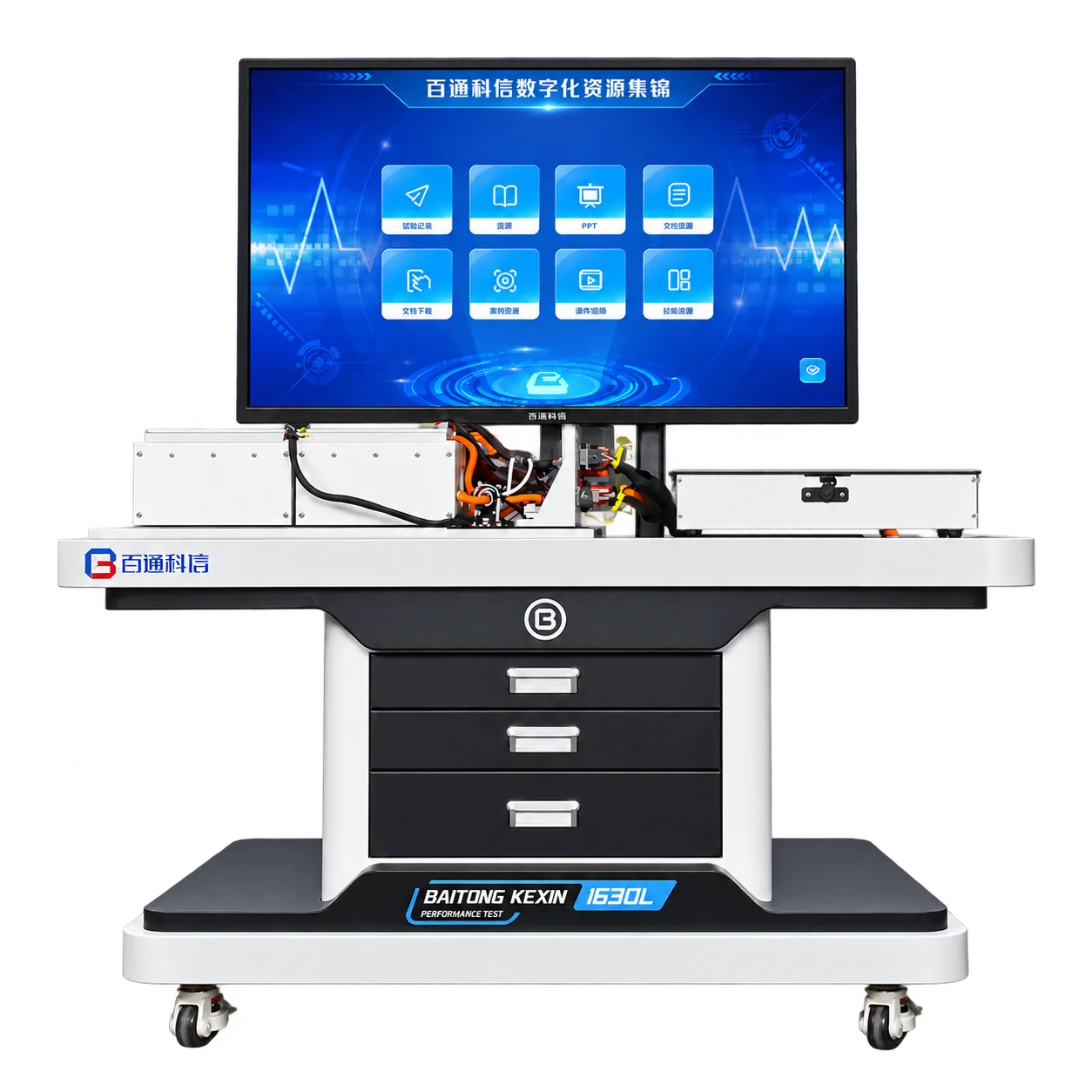
Its documented reference uses LFP cells and a nominal battery voltage of ≥60 V. That provides a defined teaching configuration, not a replica of a Lucid or Ceer traction battery. Extended performance cycling, manufacturing process validation and manufacturer-specific repair procedures require separately established capabilities and access.
6. Make motor inspection a gateway to powered testing
Electric-drive teaching is especially useful when learners must connect a mechanical assembly decision with an electrical or operating result. The T036 motor assembly platform provides a route for discussing assembly, resolver alignment and dimensional inspection. A relevant assessment asks what the record proves about the work completed.
The T076 performance station has a different role: instrumented testing within its selected motor, load and controller envelope. It should be purchased when the syllabus actually needs learners to interpret operating-performance data, rather than because a dynamometer makes a proposal look more advanced.
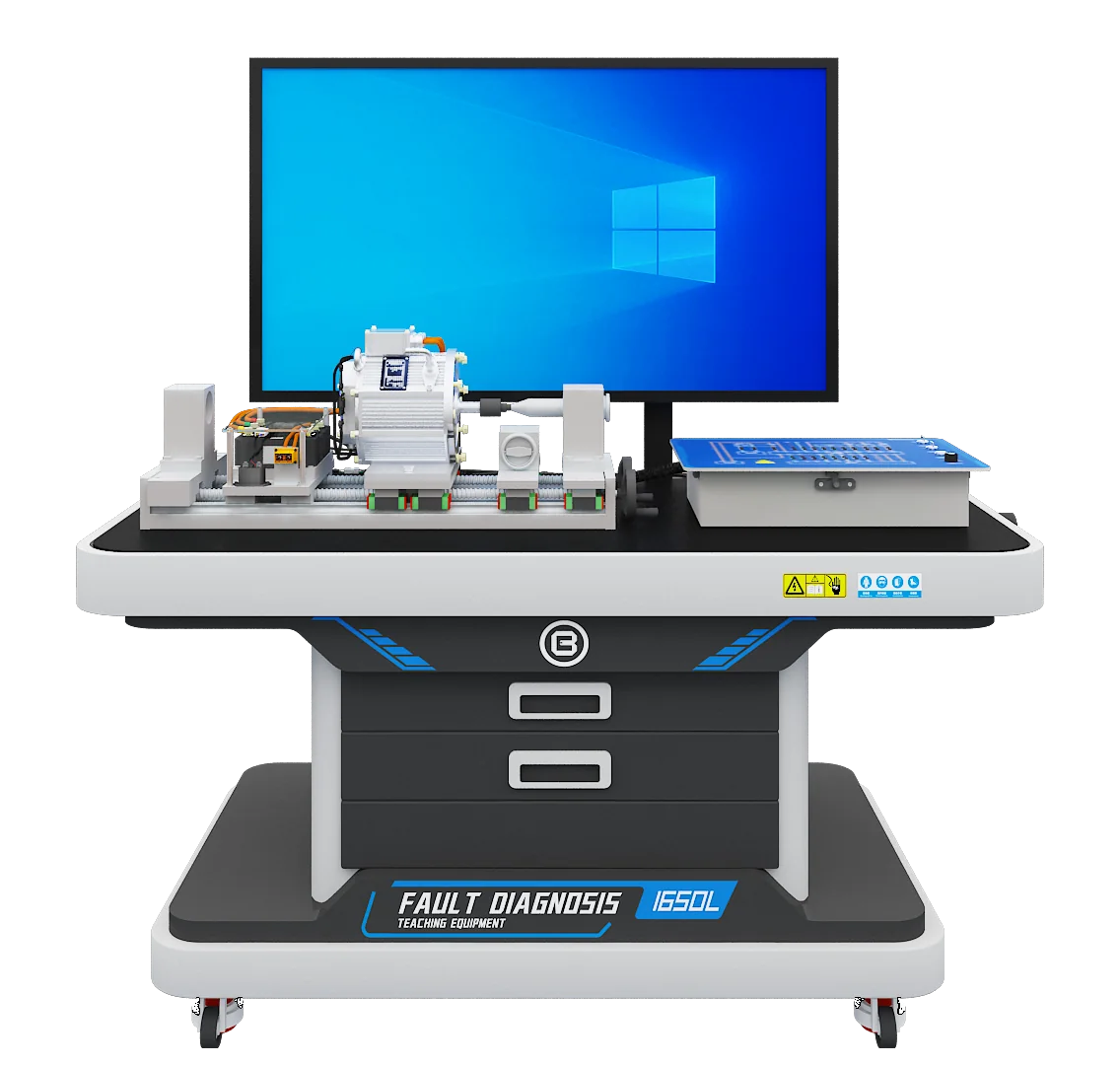
Request an example showing how an inspection record becomes an input to the next lesson. The educational value lies in the continuity of evidence. A powered test cannot compensate for missing inspection criteria or establish that an incorrectly assembled motor was acceptable.
7. Treat charging as an interface and diagnosis subject
EVIQ announced its Riyadh R&D facility in December 2023 to test chargers and associated software before deployment. [4] The useful curriculum insight is that charger behaviour depends on a complete system, not just a cabinet or a connector.
For a technical college, begin with component recognition, charging-state interpretation, documented inspection and the distinction between the teaching unit, the vehicle interface and the site supply. BTKX’s T040 AC charging assembly platform can support its documented component-level tasks. The reference teaching charger described on the charging application page is ≤1.5 kW and ≤7 A.
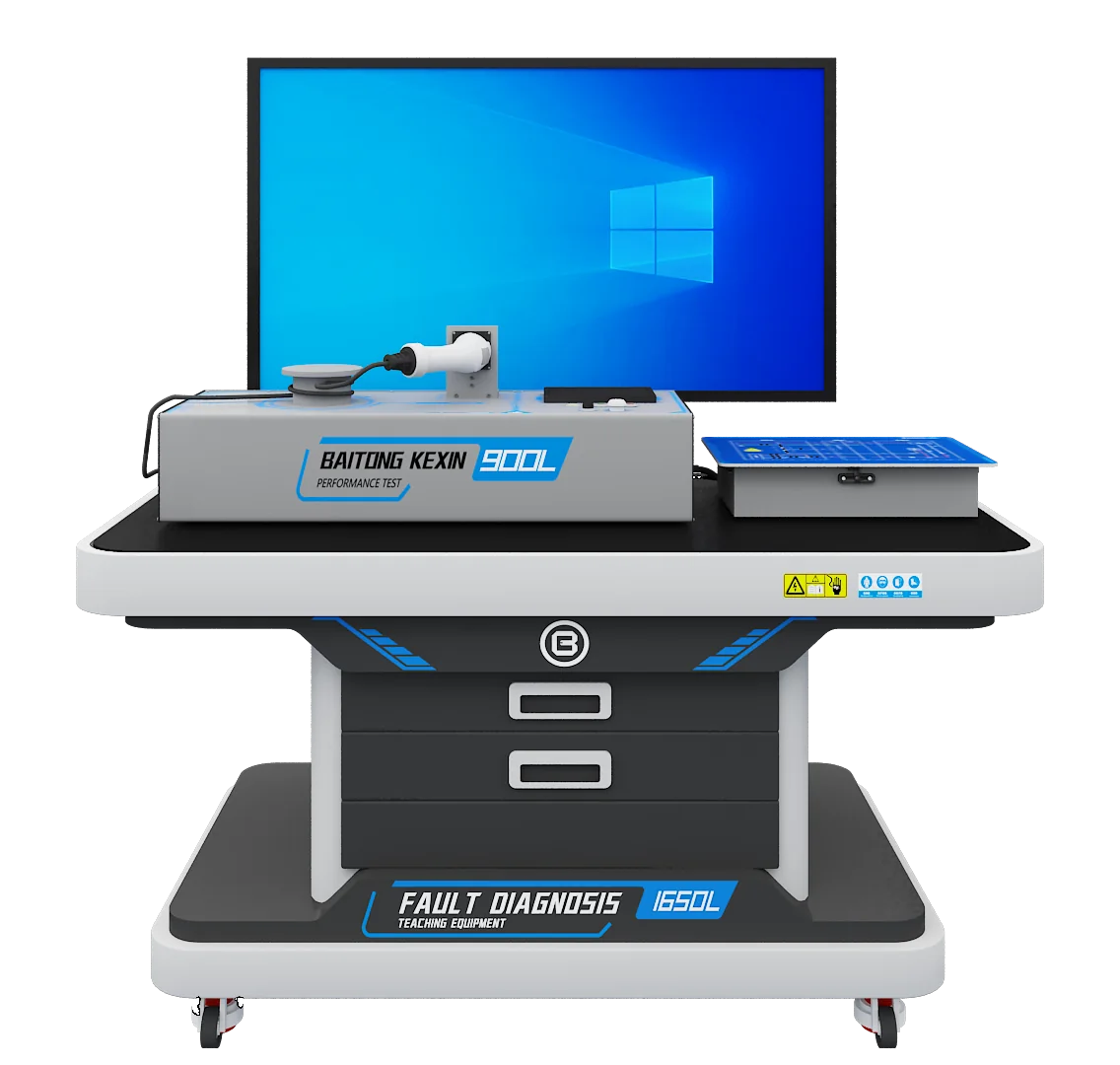
Do not equate this educational scope with commercial DC charging, network operations or charger approval. If those are employment objectives, add the appropriate hardware, software access and specialist instruction explicitly rather than leaving them implied in a general equipment description.
8. Ask employers to review a task, not a catalogue
Employer involvement becomes more useful when the discussion contains a concrete student deliverable. Present a sample inspection sheet or diagnostic report and ask whether a supervisor could follow the learner’s reasoning. This reveals gaps that a discussion of product names often misses.
For a manufacturing placement, the employer may want stronger attention to component identification, traceability and escalation of an abnormal finding. A service workshop may instead prioritise a clear symptom description and the distinction between a verified finding and an untested assumption. Record the feedback without assuming that one employer’s preference represents the entire Saudi market.
Use BTKX’s curriculum-development support to discuss how equipment tasks and teaching materials can be aligned with that brief. Keep ownership clear: the college defines its course and assessment responsibilities, the employer advises on workplace relevance, and the supplier confirms the functions available in the quoted configuration.
9. Connect Arabic learning with English technical information
A bilingual learning environment needs consistency more than a translated cover page. Specify which task sheets, diagrams, software menus, instructor notes and assessment criteria are required in Arabic, English or both. Confirm availability through examples of the actual proposed resources.
A practical glossary should connect the term on the screen with the term on the worksheet and the component label on the station. Ask an instructor to review a complete lesson, including numeric formats, units, diagram legends and the explanation expected in a student report. This is more revealing than reviewing a list of translated product names.
Where English technical documentation is part of the employment objective, use it deliberately. Learners might identify a component in both languages and then explain the measurement in the language used by their assessment. Translation should support technical understanding rather than conceal unresolved terminology. The quotation should identify who approves terminology, who maintains translated resources and what happens when the software or equipment version changes.
10. Specify the first usable teaching package
An equipment list becomes a workable package when every line has a course, task and supporting resource. The matrix below is a proposal for discussion, not a universal Saudi laboratory schedule. A provider with strong existing automotive facilities may need fewer foundations and more targeted EV resources.
| Learning block | Possible BTKX route | Required supporting evidence |
|---|---|---|
| Electrical foundation | Selected automotive electrical teaching resources | Entry assessment, instruments and circuit-reading tasks. |
| Battery quality / diagnosis | T028 battery and BMS platform | Assembly or diagnosis worksheets matched to the pathway. |
| Motor assembly inspection | T036; compatible T076 where performance is taught | Fixtures, inspection criteria and separate performance objectives. |
| Charging interface | T040 and confirmed test/interface accessories | Protocol demonstration and permitted charging-state exercises. |
| Teaching preparation | Teacher training and matched digital resources | An instructor teach-back and individual practical assessment plan. |
Include accessory quantities and software licences in the working schedule. An institution should be able to tell whether a quoted “station” means usable student access, an instructor demonstration unit or a physical item waiting for additional resources.
11. Engineer the teaching environment for the actual site
Saudi project planning should document the real room conditions rather than extrapolate from a component’s temperature specification. Ask the institution’s site team to define cooling, dust control, power, storage, equipment access and the conditions under which classes will operate.
A BMS electronics operating range does not establish the allowable environment for the entire workstation, display, battery, tools and computers. Similarly, an ingress rating on a charger component does not make an indoor teaching laboratory suitable for outdoor use. Identify the limiting requirements of the complete ordered configuration.
Plan handling and maintenance access before fixing the station layout. Consider how instructors can see student activity, where task records are completed and how tools are returned and checked. Connect these questions through BTKX lab-planning support and the institution’s competent facilities specialists. The resulting layout should help staff run a normal teaching day, including preparation, changeovers and maintenance, not only accommodate the equipment for a project photograph.
12. Purchase capacity in assessed learner minutes
An illustrative programme of 18 learners requiring 15 minutes each for one individually observed practical task needs 270 learner-minutes. Three stations available for a 90-minute session offer 270 station-minutes before demonstrations, equipment resets or changeovers. That apparently balanced schedule has no allowance for ordinary teaching overhead.
This arithmetic is not a station-capacity or supervision recommendation. It shows why procurement should begin with task duration and assessment conditions. If two learners collaborate, establish which part each must still demonstrate independently. If the instructor must observe each measurement decision, adding unattended stations may not increase effective capacity.
Use simulation for preparation, component recognition and rehearsal where it matches the physical task. Keep a record of the work still requiring direct observation. The virtual simulation application is relevant to that preparation stage, but digital completion should not be silently counted as physical service competence. The capacity plan should be reviewed by the instructors who will actually deliver the course.
13. Compare complete scope rather than headline equipment price
Saudi institutional buyers should request a priced scope that separates equipment, resources, installation responsibilities and ongoing support. Two proposals with similar product titles can describe very different teaching capacity if one excludes tools, translation or software access.
| Cost group | Clarify in the quotation | Why it changes the comparison |
|---|---|---|
| Hardware | Models, quantities, fixtures and instruments. | Defines what can be used simultaneously and measured. |
| Teaching resources | Language, software licences, computers and task materials. | Determines whether the delivered station supports the course. |
| Site and delivery | Freight, unloading, utilities, commissioning and responsible parties. | Separates a shipped product from an operational teaching installation. |
| Service life | Training, maintenance, spare parts, updates and warranty scope. | Makes recurring responsibilities visible before award. |
Ask the purchaser and logistics specialists to confirm destination documentation and delivery arrangements for the actual order. No universal price, shipping time or local support commitment is assigned here. The useful benchmark is a complete first teaching phase with clearly owned responsibilities and a realistic timetable.
14. Make instructor readiness part of acceptance
A delivered system should be accepted through an agreed lesson, not only a count of crates and a successful switch-on. The instructor should be able to identify the supplied configuration, prepare the task, explain the permitted controls and assess a learner’s evidence.
| Demonstration | What is observed | Record retained |
|---|---|---|
| Configuration check | Hardware and accessories match the technical schedule. | Signed inventory with model and version references. |
| Teaching task | The agreed measurement or inspection lesson works. | Completed sample worksheet and assessment criteria. |
| Instructor teach-back | College staff prepare, deliver and reset the lesson. | Training attendance, findings and follow-up actions. |
| Digital and support check | Licences, language, backup and fault-reporting route are usable. | Access record and clearly assigned support responsibilities. |
Resolve any gap against its responsible party and retest the affected task. Acceptance should establish a usable teaching baseline that the college can maintain when the supplier’s commissioning team has left.
15. Use BTKX as a teaching-system partner within a defined scope
BTKX combines Beijing-based vocational equipment manufacturing with digital resources, course support and instructor development. That is relevant to a Saudi college seeking a connected learning sequence across battery, motor, charging and conventional automotive subjects.
Its Beijing Commercial School reference describes a four-zone practice centre connecting system awareness, whole-vehicle practice and battery and motor performance. Use it to discuss how a sequence can be organised, while configuring a Saudi project around its own learners, partners and facility.
Start with the vocational-school cooperation route or the government and NGO TVET route as appropriate. Ask for current documentation, language examples and delivery responsibilities.
16. Saudi training-equipment questions
Should a Saudi college start with manufacturing or service training?
Choose the principal employment pathway with the institution’s placement partners. Manufacturing inspection, service diagnosis and charging support need different assessment evidence. Shared electrical foundations are useful, but should not hide those differences.
Can the equipment reproduce a Lucid or Ceer production process?
BTKX teaching systems support their documented educational tasks. A production-process replica or manufacturer-specific service course requires separately validated equipment, information and access. Company investment announcements do not establish that compatibility.
Can T028 cover battery manufacturing quality?
It can support the specified assembly, measurement and BMS lessons. Industrial production validation, cell manufacturing and extended cycling are separate capabilities. Define which inspection principles learners need and select equipment accordingly.
Is Arabic software supplied as standard?
Confirm the proposed software and materials through a working sample and a written resource list. Specify which interface elements, worksheets and instructor notes require Arabic, English or bilingual delivery.
Does a charging trainer replace commercial charger training?
No. Its teaching voltage, current, interfaces and exercises define its use. Commercial DC hardware, network operations and site-installation training require a separately specified course and equipment scope.
What should be ready before commissioning?
Agree the room provisions, delivered configuration, instructor availability, resource language and acceptance lesson. Allocate responsibility for logistics, utilities, software setup and follow-up support before the equipment arrives.
17. Prepare a Saudi project brief that can be priced
Give BTKX the intended training location, learner profile, employment pathway, class size and assessment tasks. Include existing equipment, proposed vehicle interfaces, room drawings, site utilities and the required Arabic/English resource mix. Identify which functions belong in the initial funded phase and which are future options.
Request a response that links each quoted station to the course, supporting resources and practical capacity. Add a preliminary layout, instructor preparation plan and acceptance demonstration. This gives the institution a proposal that can be compared on educational usefulness rather than product count alone.
Planning automotive or EV training in Saudi Arabia?
Share the career pathway and first teaching phase to discuss an equipment and resource configuration around your institution.
Discuss your Saudi projectSources
Research checked 20 October 2026.
- PIF: How PIF is accelerating the future of mobility, 16 May 2024.
- National Automotive & Vehicles Academy: About us and published programme list, undated page; checked October 2026.
- PIF / Lucid: Opening of the Saudi vehicle manufacturing facility, September 2023.
- EVIQ: Riyadh R&D facility for EV chargers, 17 December 2023.


