

Middle East · United Arab Emirates Market Guide
EV Training in the UAE: Build Skills Around Fleet Availability
Connect workshop diagnosis and charging support with fleet availability, clear service handovers and practical training adapted to your UAE programme.
On This Page
The planning answer
What makes an EV training laboratory useful for the UAE?
A UAE EV laboratory should prepare learners to distinguish a vehicle fault, a charging-interface issue and an operational handover problem. Battery/BMS measurement, electrical reasoning and clear service records form a useful foundation. Select additional motor or charging equipment according to the actual fleet, workshop role and course level.
For technical institutes and company training centres, the practical outcome is a better-supported service decision: what has been observed, what has been tested and who should act next. BTKX component-level teaching stations can support that reasoning with digital preparation and instructor development, while vehicle-specific procedures and commercial charge-point operations remain separately defined parts of the programme.
1. Build the course around fleet availability
For a UAE fleet workshop or vocational programme, an EV lesson becomes valuable when it improves a service decision. A learner should be able to explain the evidence behind a diagnosis and provide the next person with a usable handover. Simply identifying more components does not establish that capability.
The UAE Ministry of Energy and Infrastructure’s July 2023 national EV policy announcement describes coordination of charging infrastructure, standards and stakeholders, alongside wider electric-mobility development. [1] For training planners, the useful inference is that vehicle and charging skills need to connect across organisational boundaries.
Start with a service scenario: a vehicle is unavailable for its next scheduled duty because charging did not complete. The training question is not immediately which part to replace. It is what information separates a vehicle-side concern from a connector-state issue, an unavailable charge point or an incomplete operational record. Build equipment access and assessment around that distinction.
2. Separate vehicle, charge point and operations evidence
A charging complaint can arrive as one sentence while involving several systems. The laboratory should teach learners to identify the boundary of their evidence and communicate it clearly. This is especially important when a workshop, facilities team and charge-point operator have different responsibilities.
| Evidence stream | What learners should explain | Training resource |
|---|---|---|
| Vehicle | Relevant symptoms, permitted measurements and battery/BMS information. | A documented battery platform and validated vehicle-specific tasks. |
| Charging interface | Connector and pilot-state behaviour within the supplied teaching setup. | A confirmed AC teaching interface and matching lesson. |
| Charge-point operation | What the status or session record does and does not establish. | Authorised operational examples or a separately scoped software environment. |
| Service handover | Observed facts, unresolved questions and the next responsible team. | A structured diagnostic and escalation report. |
Do not assume that one piece of hardware covers every row. A component teaching station can make electrical reasoning visible, while a network-management lesson may depend on different data and access. List the interfaces between lessons as carefully as the stations themselves.
3. Give each emirate’s programme its own brief
DEWA’s EV Green Charger information explains that its connected charging network exposes station status and location information through digital channels. [2] A Dubai training programme can use this as context for teaching the difference between an operator-facing status and a measured technical diagnosis, without assuming access to DEWA systems or equipment.
For Abu Dhabi or Al Ain, start with the institution’s learners and placement partners. ACTVET’s 2025 Skills Camp handbook included automobile maintenance and electrical-vehicle learning, providing a concrete example of conventional and EV topics appearing together in local skills activity. [3] A short skills camp is an educational signal, not a complete occupational qualification framework.
For Sharjah and the Northern Emirates, apply the same discovery process: identify the intended workshops, fleet types and existing facilities before selecting specialist equipment. These are proposed planning routes, not market-size rankings. Record which site will host practical assessment and which learners will travel or share digital preparation across locations.
4. Distinguish school learners from working technicians
A foundational institute course and an experienced-technician programme need different starting points. The former may require explicit work on units, circuits, measurement tools and component recognition. The latter may need to connect existing mechanical diagnosis skills with battery and charging information.
Use an entry task rather than job title alone to establish readiness. Ask learners to explain a simple circuit, choose a relevant instrument from an approved set and distinguish an observed value from an inferred condition. Include a short written handover so the teaching team can see whether technical understanding survives communication.
For a mixed cohort, define preparatory resources and assessment expectations before the practical session. BTKX’s conventional vehicle teaching range may help bridge electrical and chassis foundations where existing resources are insufficient. Preserve useful equipment already available and invest in the missing learning experience rather than replacing an entire workshop by default.
5. Teach battery evidence that a workshop can use
The T028 EV Battery Assembly & BMS Training System connects an accessible LFP teaching battery with measurements, BMS information and instructor-selected diagnostic exercises. For a UAE service course, organise those functions around an explanation a workshop supervisor could follow.
A learner’s report should identify the starting symptom, the permitted information used, the comparison between a measurement and displayed data and the limits of the conclusion. The instructor should be able to tell whether a learner understands the evidence or has simply memorised a screen value.
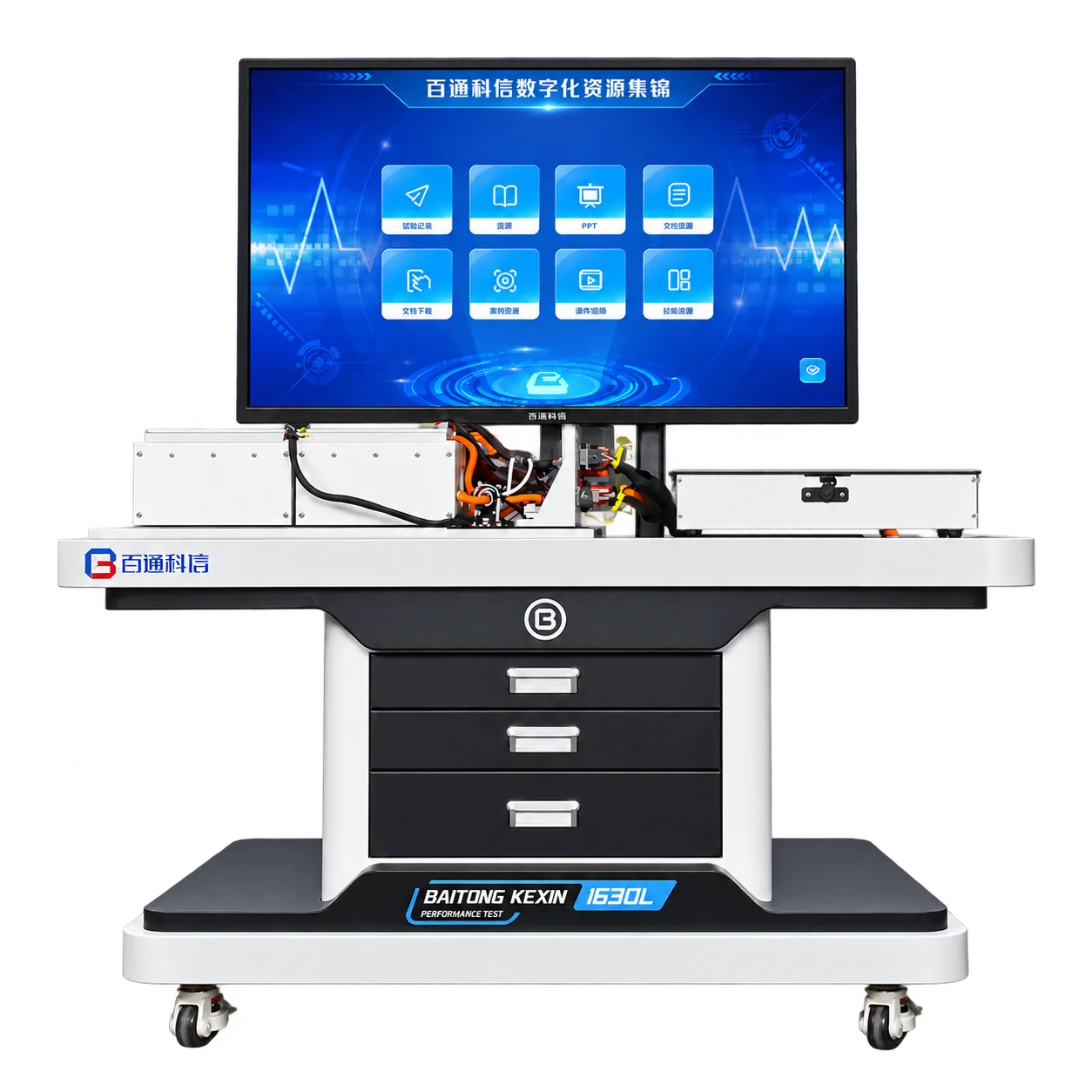
The documented reference uses LFP cells and ≥60 V nominal battery voltage. Do not treat that as a representation of every fleet pack or as proof of compatibility with a named vehicle. If a programme needs extended performance cycling, degradation analysis or model-specific service work, establish those capabilities separately and retain a clear boundary between general principles and the target vehicle.
6. Make thermal claims depend on recorded conditions
Where the proposed UAE workshop brief includes high ambient temperatures, long dwell times or intensive fleet duty, teaching should distinguish battery behaviour from the conditions under which the observation was made. Record the relevant environmental and operating context instead of attributing every unexpected result to a defective component.
A component’s temperature specification does not establish the environmental rating of the full battery station, display, instruments and computers. Ask the supplier for complete-system limits and the site team for actual room conditions.
A valuable classroom comparison can use approved recorded datasets alongside measurements from the station. Learners explain what is comparable, what changed and why an apparent difference does not automatically identify a fault. If controlled environmental testing is a course objective, specify the appropriate equipment, procedures and expertise as an additional scope. Do not imply that ordinary laboratory cooling or an electronics rating supplies that capability.
7. Use a charging trainer for the interface lesson it supports
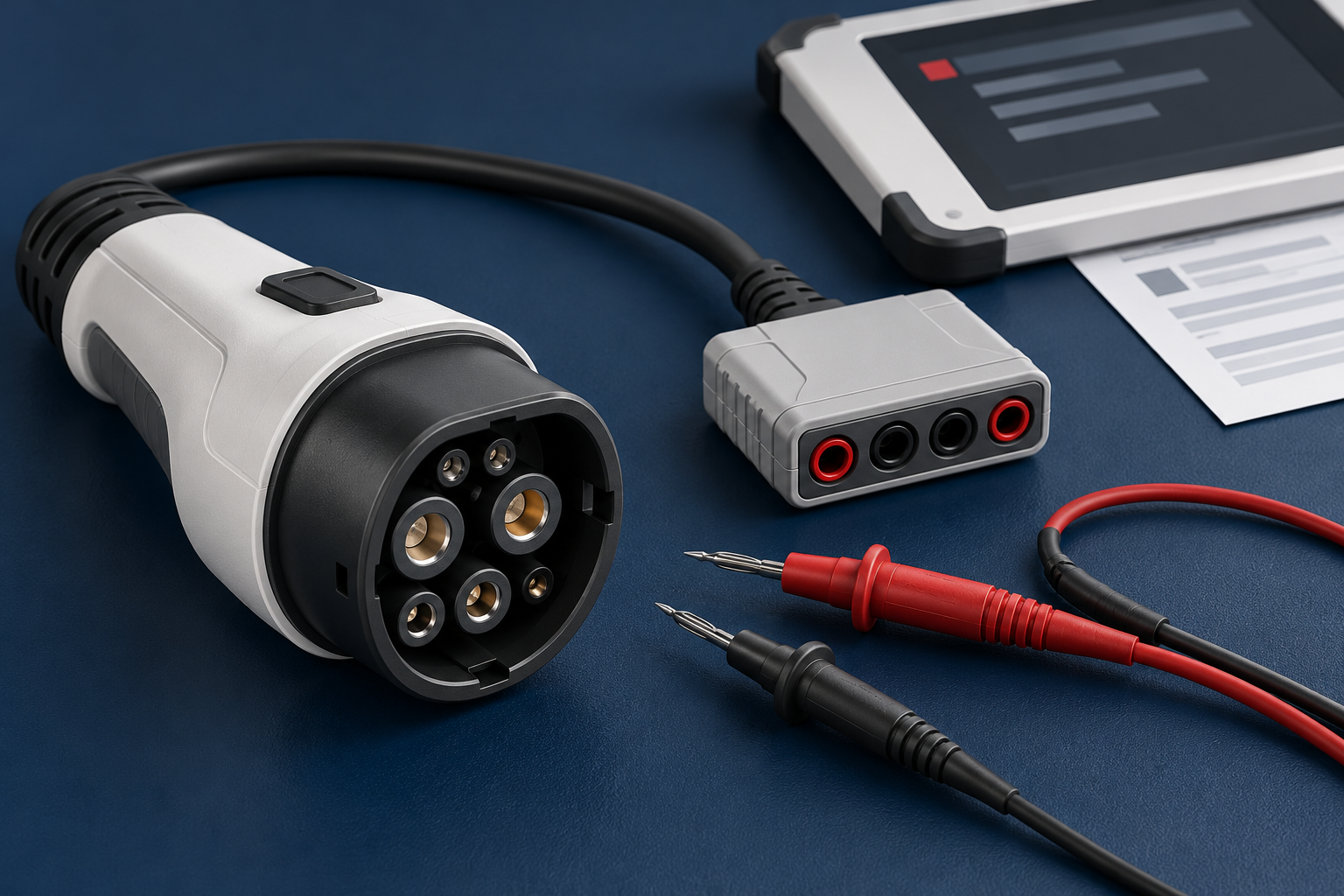
The T040 AC charging assembly platform is relevant to component recognition, documented inspection and its approved charging-state exercises. BTKX’s charging training application describes a reference teaching unit limited to ≤1.5 kW and ≤7 A.
For a UAE institution, request a demonstration of the exact connector, pilot protocol and test accessories being proposed. The lesson should show which information comes from physical measurements, which is supplied by a simulator and which belongs to a vehicle or commercial network outside the station.
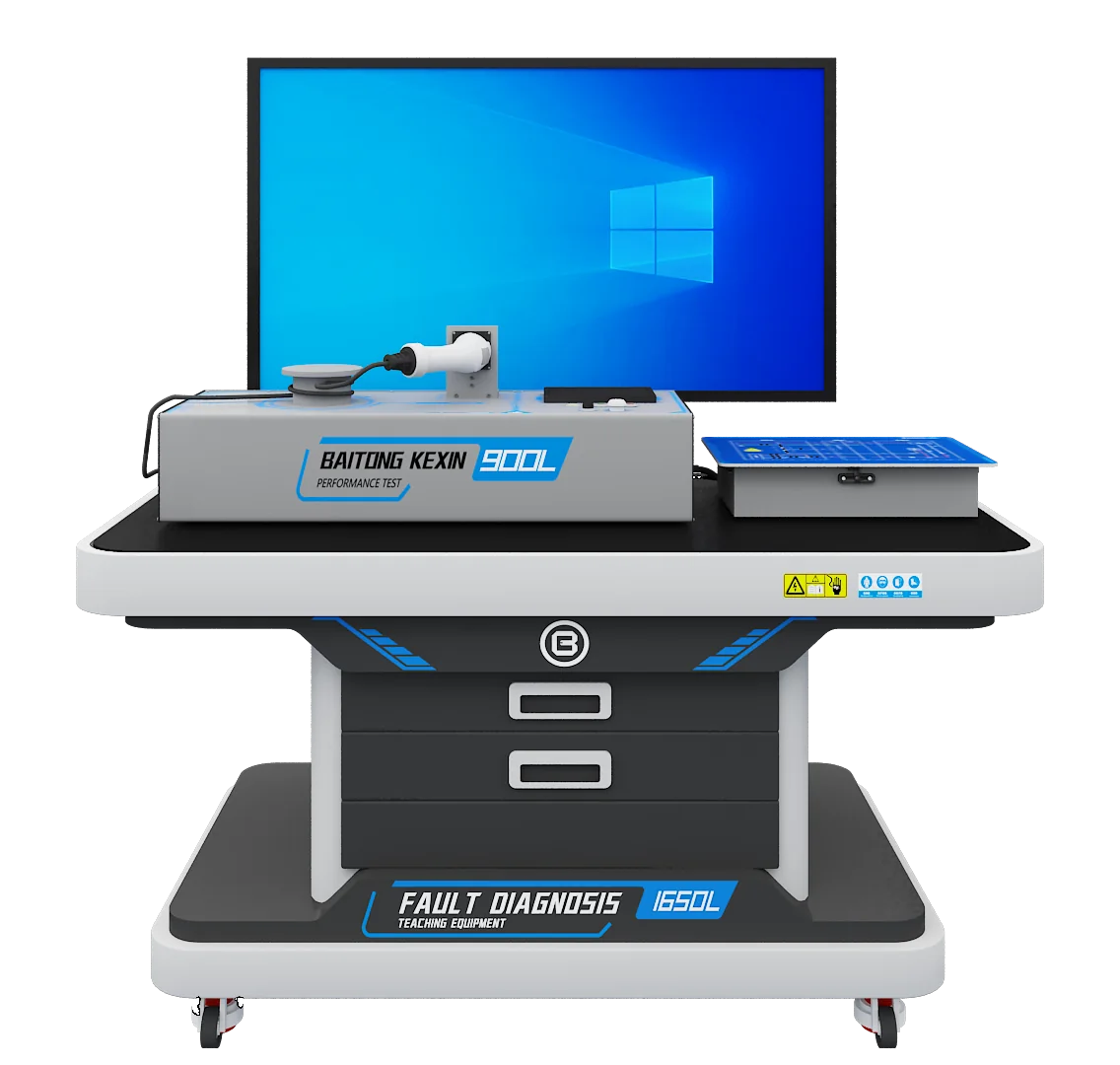
The best initial task may be explaining a charging-state mismatch and preparing a clear escalation record. A course for installation specialists, DC charger technicians or charge-point operators will require additional defined resources. Keep those pathways visible in the brief so the college does not purchase a component lesson while expecting an entire operational charging programme.
8. Make the diagnostic handover an assessed output
A technically correct finding can still be operationally weak if the next team cannot understand it. Include the service record in the assessment rather than treating communication as a separate classroom topic. The record should distinguish reported symptoms, observed facts, work completed and unresolved questions.
For example, a learner might document an approved battery/BMS exercise and state which finding belongs to the teaching platform. They should also identify what model-specific information would be needed before applying the reasoning to a real fleet vehicle. This encourages useful technical judgement without overclaiming compatibility.
Ask workshop partners to review anonymised sample reports. Can a supervisor identify the next action without repeating every earlier check? Does the report clearly distinguish a verified measurement from the customer’s description? Use that feedback to shape course and task-resource development. A good handover does not merely make the document look professional; it preserves the reasoning needed to continue the service process.
9. Add motor testing when the course needs its evidence
Motor assembly, inspection and performance analysis should not be bundled under a single vague requirement. The T036 assembly platform supports its documented assembly and inspection role. The T076 performance station addresses a separately matched operating-test requirement.
A workshop-oriented programme may initially gain more from explaining inspection evidence than from operating a performance bench. A technical programme studying motor behaviour may need the measurement ranges, test conditions and data interpretation offered by a suitable performance arrangement. Let the assessment determine the purchase, using the motor-training application to distinguish the tasks.
Confirm the complete motor, controller, coupling and load configuration. The teaching team should be able to explain why the selected measurement range is meaningful for the exercise and how repeat runs will be compared. Avoid using an attractive curve on a display as the sole acceptance criterion. The underlying data and documented conditions must support the learner’s intended conclusion.
10. Specify the equipment around a service workflow
The proposed sequence below connects separate teaching resources to a practical workflow. It can support a college laboratory or an employer academy, but the task level and vehicle access must be adapted to the intended learners.
| Workflow stage | Possible teaching resource | Evidence learners produce |
|---|---|---|
| Clarify the concern | Service scenarios and technical-information exercises. | A precise symptom and context record. |
| Investigate the battery system | T028 and the confirmed instrument/resource set. | Measurements compared with BMS information. |
| Explain charging behaviour | T040 with matched interface and permitted simulator. | A charging-state explanation tied to the supplied configuration. |
| Check assembly evidence | T036 where motor inspection is a course outcome. | An inspection record and justified decision. |
| Apply and hand over | Validated vehicle diagnosis resources. | A model-specific report and clear next responsibility. |
Every selected row needs supporting materials and instructor preparation. If a required operational dataset, diagnostic interface or licence is outside the equipment package, identify it before the proposal is treated as a complete training solution.
11. Design the reporting language for the actual cohort
Specify the language learners need for instruction, interface reading and assessed reporting. Arabic and English may have different roles in the same programme, but neither should be assumed to be included simply because it appears on a marketing page.
Review one complete sample lesson with the intended teaching team. Check that component terms, units and labels remain consistent between the physical station, software, diagram and worksheet. Decide whether bilingual explanations help learners connect technical concepts or create unnecessary duplication in the assessment.
Where a fleet uses a particular reporting format, adapt the educational handover to that format without copying confidential material. BTKX’s teacher-training programmes can be scoped around delivering and assessing that lesson. Record who validates translated terminology and how revisions will be maintained. The quality target is a learner who can explain the evidence clearly, not a document that merely contains both languages.
12. Prepare digitally, then observe physical competence
Digital preparation can reduce the time spent identifying components and learning the order of a task at a scarce physical station. Use matched virtual resources where they represent the same system and exercise that learners will later encounter.
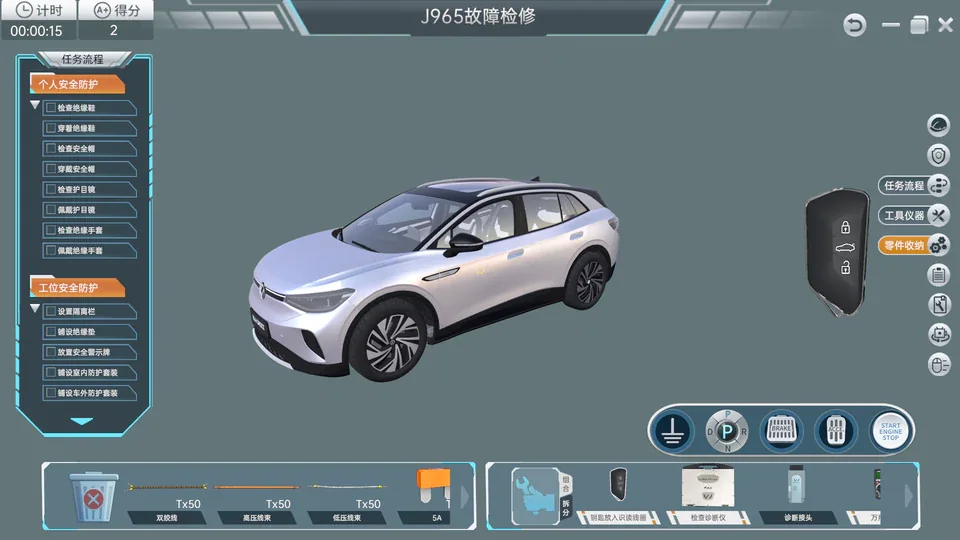
Keep the digital task distinct from the assessed physical output. A completed simulation can show preparation, but it does not establish that the learner can perform a permitted measurement, handle the specified tools or explain an unexpected physical observation.
For a programme shared across sites, agree which activities can be prepared remotely and where individual practical assessment occurs. Confirm licence concurrency, computer requirements and offline behaviour. A blended plan should improve access to the same learning objective rather than add an unrelated computer lesson to a hardware purchase.
13. Protect training time from service-workshop interruptions
An employer academy may share space or equipment with an operational workshop. Make the availability assumption explicit. A timetable that uses every workshop bay during a quiet week may fail when vehicles need urgent attention.
For illustration, 16 learners needing 18 minutes each for an individual activity require 288 learner-minutes. Four stations reserved for 90 minutes offer 360 station-minutes before setup, observation and changeovers. If one station returns to service work for half the session, the available capacity falls by 45 minutes. The remaining margin may no longer support the planned lesson.
This is a planning example, not a recommended group size or operating ratio. Use the actual task and supervision requirements to decide whether dedicated teaching equipment is justified. A component station can be valuable because it is reliably available for a repeatable lesson, even when complete vehicles and workshop bays remain essential for later model-specific practice.
14. Price a complete first cohort
Comparing hardware prices alone misses costs that determine whether the first cohort can learn. Request an itemised proposal that connects the equipment to instruments, resources, instructors and the conditions needed to run the course.
| Scope | Confirm | Effect on delivery |
|---|---|---|
| Stations and tools | Quantities, instruments, fixtures and interfaces. | Sets simultaneous practical capacity. |
| Digital resources | Computer needs, licences, languages and update scope. | Defines preparation and classroom access. |
| Site and handover | Utilities, handling, commissioning and acceptance lesson. | Determines when the equipment becomes teachable. |
| People and continuity | Instructor preparation, maintenance, spares and support responsibilities. | Protects course delivery after commissioning. |
Destination and installation arrangements should be confirmed for the real project by the responsible purchaser and specialists. Use the equipment procurement checklist to compare these scope lines. A useful first phase can be modest, provided it is complete and assessed. An expansion plan should identify the new learning capability added at each later stage.
15. Accept the lesson and the operational handover
Choose an acceptance task that represents the programme’s intended service decision. The demonstration should leave a usable record and show how the next learner or instructor can repeat the lesson.
| Check | Demonstration | Retained record |
|---|---|---|
| Configuration | Confirm the delivered hardware and software revisions. | Signed equipment and resource schedule. |
| Technical reasoning | Run the agreed measurement or charging-state task. | A completed diagnostic evidence sheet. |
| Instruction | The institute instructor delivers and assesses the lesson. | Teach-back findings and follow-up actions. |
| Handover and continuity | Explain the next responsibility, reset and support route. | Instructor checklist, maintenance plan and contacts. |
BTKX’s lab-planning service can be discussed alongside the institutional cooperation route. The agreed scope should make clear what BTKX supplies and which site, vehicle and operational resources remain with the institution or its partners.
16. UAE EV training-equipment questions
Should a UAE programme focus on vehicle diagnosis or charging?
Choose the principal job role and then define the handover between the two. Workshop technicians need vehicle evidence; charging specialists need interface and operational information. Shared electrical reasoning does not make the complete courses interchangeable.
Does T028 recreate the battery in a particular UAE fleet?
No compatibility should be assumed. It teaches the documented battery/BMS tasks in its supplied configuration. Fleet-specific packs, interfaces, procedures and diagnostic information must be confirmed separately.
Can the laboratory reproduce outdoor heat exposure?
Ordinary indoor equipment does not automatically provide controlled environmental testing. Define the required lesson and complete-system operating limits. Use separately specified facilities if environmental testing itself is an objective.
Does the AC trainer include charge-point management software?
The hardware category does not establish that capability. Specify the software environment, authorised data access and operational tasks separately, alongside the connector and protocol supported by the physical teaching setup.
Can Arabic and English resources be combined?
Yes, if the proposed resources are available and reviewed as a complete lesson. Confirm terminology, interface language, worksheets and instructor guidance, with clear responsibility for maintaining translations.
Why buy a teaching station when the workshop already has vehicles?
A dedicated station can provide repeatable access without depending on service-bay availability. It is worthwhile when it fills a defined learning gap and connects to later validated practice on the intended vehicles.
17. Define the first service decision your learners must explain
Send BTKX the UAE training location, learner level, target workshop or fleet role, existing equipment and required practical tasks. Include the relevant vehicle and charging interfaces, proposed reporting language, room conditions and assessment timetable.
Request a course-to-equipment map with the supporting resources, instructor preparation and acceptance exercise. The proposal should show how learners move from information gathering to a supported technical conclusion and a clear handover. That makes equipment selection serve the programme’s operational purpose.
Planning an EV training programme in the UAE?
Share the fleet or workshop task and the first cohort requirements to discuss a matched laboratory scope.
Discuss your UAE programmeSources
Research checked 20 October 2026.
- UAE Ministry of Energy and Infrastructure: National Electric Vehicles Policy details, 13 July 2023.
- DEWA: EV Green Charger Initiative, undated service information; checked October 2026.
- ACTVET: Skills Camp 2025, Summer Edition handbook, 2025.